Tatort

Description:
Tatort is a long-running German/Austrian/Swiss, crime television series set in various parts of these countries. The show is broadcast on the channels of ARD in Germany, ORF 2 in Austria and SF1 in Switzerland. The first episode was broadcast on November 29, 1970. The opening sequence for the series has remained the same throughout the decades, which remains highly unusual for any such long-running TV series up to date.
Each of the regional TV channels which together form ARD, plus ORF and SF, produces its own episodes, starring its own police inspector, some of which, like the discontinued Schimanski, have become cultural icons.
The show appears on DasErste and ORF 2 on Sundays at 8:15 p.m. and currently about 30 episodes are made per year. As of March 2013, 865 episodes in total have been produced.
Tatort is currently being broadcast in the United States on the MHz Worldview channel under the name Scene of the Crime.
Network: Das Erste
Country: Germany
Cast
Klaus Schwarzkopf
as Finke
Gregor Weber
as Stefan Deininger

Felix Klare
as Sebastian Bootz
Joachim Krol
as Frank Steier

Andrea Sawatzki
as Charlotte Sänger
Jörg Schüttauf
as Friedrich Dellwo
Andreas Hoppe
as Mario Kopper
Ulrike Folkerts
as Lena Odenthal

Oliver Mommsen
as Nils Stedefreund

Sabine Postel
as Inga Lürsen

Ingo Naujoks
as Martin Felser
Maria Furtwängler
as Charlotte Lindholm
Boris Aljinovic
as Felix Stark
Dominic Raacke
as Till Ritter

Bernd Michael Lade
as Kain
Peter Sodann
as Bruno Ehrlicher
Walter Richter
as Paul Trimmel

Charles Brauer
as Peter Brockmöller
Manfred Krug
as Paul Stoever

Sibel Kekilli
as Sarah Brandt

Jan Josef Liefers
as Karl-Friedrich Boerne
Axel Prahl
as Frank Thiel

Simone Thomalla
as Eva Saalfeld

Maximilian Brückner
as Franz Kappl
Nina Kunzendorf
as Conny Mey

Anna Schudt
as Martina Bönisch
Martin Wuttke
as Andreas Keppler
Tessa Mittelstaedt
as Franziska Lüttgenjohann
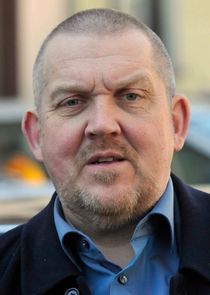
Dietmar Bär
as Freddy Schenk
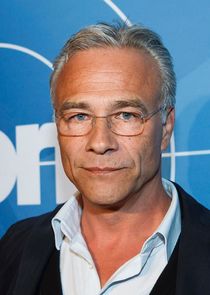
Klaus J. Behrendt
as Max Ballauf
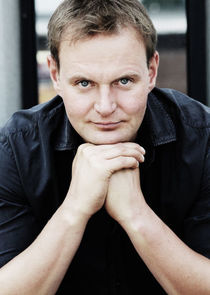
Devid Striesow
as Jens Stellbrink
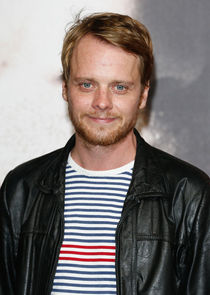
Stefan Konarske
as Daniel Kossik

Aylin Tezel
as Nora Dalay
Jörg Hartmann
as Peter Faber
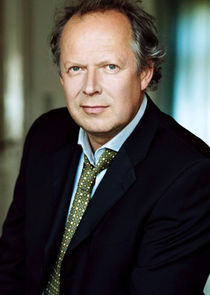
Axel Milberg
as Klaus Borowski
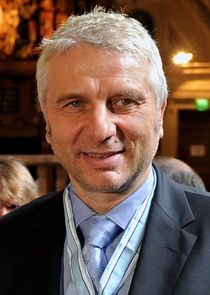
Udo Wachtveitl
as Franz Leitmayr

Miroslav Nemec
as Ivo Batic
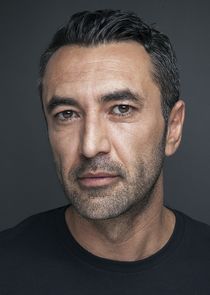
Mehmet Kurtuluş
as Cenk Batu
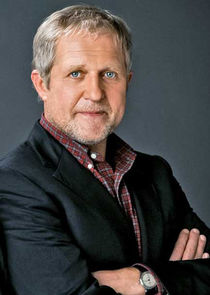
Harald Krassnitzer
as Moritz Eisner
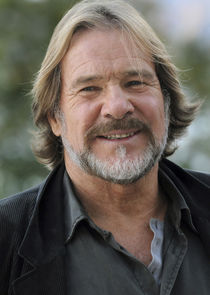
Götz George
as Horst Schimanski

Richy Müller
as Thorsten Lannert

Nora Tschirner
as Kira Dorn

Christian Ulmen
as KHK Lessing
Episodes
Chief Inspector Thiel and Professor Boerne are confronted with a case that puts their professional and personal relationships to the test. After a party at the Münster Medical Faculty, the body of student Chris Haffmeister is discovered. Chris has been stabbed. A possible motive: He had access to the university housing exchange, a sought-after resource for students desperately searching for affordable housing. When a second murder occurs, Boerne and his students finally conduct a groundbreaking experiment that sheds light on the mystery...
What Chief Inspector Frank Thiel and Professor Karl-Friedrich Boerne find in Münster this time is completely bizarre: the corpse of the lawyer Oskar Weintraub lies - completely pierced by the spear of an exotic warrior sculpture - in the middle of Doreen Prätorius' home. This house is like a museum of exotic art, and the circumstances of the death raise as many questions as the condition of the homeowner, who cannot remember anything - not even the cause of her own serious injuries. Now Doreen Prätorius is at the center of the murder investigation: How did this fragile-looking woman end up in this situation? Is she the victim of a tragic accident or perhaps a manipulative personality herself who crosses every limit in her definition of freedom?
A passer-by is pushed in front of a moving truck on the Kiel Fjord: an outbreak of violence out of nowhere. Inspector Borowski asks around at a nearby vocational school. A little later, the chief inspector ends up in the intensive care unit with a serious head injury. Mila Sahin is of great concern. Why wasn't she with him when her colleague needed her? She suspects a connection between the senseless act and the attack on Borowski. And then there are these strange calls that reach the chief inspector on his sickbed: A girl named Finja claims to have been kidnapped by her sister Celina. Celina Lübbert is one of the girls Borowski interrogated at the vocational school.
When Mila Sahin finds Celina's grandmother stabbed shortly afterwards, the question arises: How dangerous is the girl? Is Celina also responsible for the attack on Borowski? Will she harm her little sister Finja? While Borowski investigates from the hospital bed and tries to gain Celina's trust, Mila searches for the girls: a race against time.
Reporter Brigitte Burkhard is abducted on the open street in Dresden. Her kidnapper, who hides his face behind a mask, sends a video message to the police. Inspectors Karin Gorniak, Leonie Winkler and their boss Peter Michael Schnabel are confronted with the claim that 150 children kidnapped in Saxony are being held captive in a Dresden cellar. If they are not freed within 24 hours, Brigitte Burkhard must die. The police are feverishly looking for the alleged hiding place for the children, and a special task force storms a possible restaurant. But there are no traces of a crime here. The detectives can not find the kidnapped journalist either. Schnabel sees no other way than to go public.
The next morning, Schnabel himself is in the hands of the perpetrator. Gorniak and Winkler are able to clarify his identity: Michael Sobotta has been desperately missing his daughter Zoe, who disappeared on a school trip, for years. While Gorniak and Winkler are trying at full speed to determine Schnabel's whereabouts, the kidnapper, deep in the swamp of confused conspiracy fantasies, gives the inspectors another absurd ultimatum: Gorniak and Winkler can only save their boss's life if they dig up the child molester ring...
Prof. Boerne gives a humorous farewell speech to his old friend Friedhelm Fabian and his wife Veronika. In addition to the Münster celebrities, Commissioner Thiel, assistant Silke Haller and public prosecutor Wilhelmine Klemm also listen to the spirited statements. But crime never sleeps and on the other side of town a dissatisfied client threatens his lawyer Nikolas Weber. When Inspector Thiel was called to his run-down office the next morning, he immediately recognized the dead man as Nino Agostini's house and court attorney. Thiel believes the dangerous mafia boss is capable of cold-blooded murder. Thiel would also love to convict Agostini and put him behind bars forever. But the dead man's former partner, Erik Nowak, is also suspicious.
He spent the last few weeks in a psychiatric clinic and is currently visiting his father's farm in Münster... Meanwhile, in forensic medicine, Prof. Boerne is struggling with the consequences of last night. It was getting late at the farewell party and Silke Haller does not miss the fact that Boerne mourns the departure of Veronika Fabian almost more than that of his childhood friend Friedhelm...
One morning, Gerd Vogt and his five-year-old son Noah disappeared without a trace from their single-family home in a new housing estate in Breisgau. A large amount of blood in the bedroom indicates a possible crime. Possibly a knee-jerk action by the depressive father? Gerd's wife Sandra was allegedly not at home that night. But because of her odd behavior and because of the contradictory statements about the Vogts' marriage, she appears in a dubious light. It is clear that Sandra is hiding a lot from Franziska Tobler and Friedemann Berg. But whether that's relevant to the case or not is something the inspectors have yet to find out. Because Sandra Vogt doesn't reveal anything, not even when she becomes the main suspect in a murder case.
Chief inspectors Max Ballauf and Freddy Schenk are called to a canal on the outskirts of town. A 19-year-old drug addict has been murdered. It quickly turns out that the victim, Lara Krohn, went on the street for her addiction. Her best friend, Kim, who is the same age, suspects that Lara was murdered by a customer. coroner dr. Roth is able to secure several traces of foreign DNA on the corpse. Due to the many in questionperpetrators, the inspectors are heavily dependent on the laboratory evaluation of these traces. But in this situation, of all things, in which they urgently need the help of their colleague Natalie Förster from forensic technology, she is not really focused. Why does Natalie suddenly seem so agitated and seems to be deliberately delaying investigation results? And why does she suddenly start looking for the culprit on her own?
Inspectors Anna Janneke (Margarita Broich) and Paul Brix (Wolfram Koch) are confronted with the death of six women and men, all of whom took part in a psycholysis session and died during the therapy session. As part of their investigation, they come across Dr. Adrian Goser (Martin Wuttke), a controversial psychoanalyst and the sole survivor. Goser is known for conducting a particular form of psychoanalysis that uses psychedelic drugs to achieve absolute self-knowledge. While Brix considers Goser to be an impostor who consciously steers his patients into addiction, Janneke remains ambivalent about his therapy.
In the hope thatIn order to be able to reconstruct the last hours before the crime, Goser is brought to his villa as the main suspect to inspect the crime scene. While the investigators put pressure on Goser and hope for a confession, he denies any guilt and positions himself as the victim of a cruel act, the exact circumstances of which he cannot remember. During the inspection, all entrances to the house are suddenly blocked by an unknown person and a first shot is fired. Is Goser telling the truth? Is this an attack by the actual perpetrator, who now also wants to execute the last victim? And what does the performance artist Ellen (Aenne Schwarz), who disappeared a year ago, have to do with the case?
The ideal world of Göttingen is shaken by a serial predator who ambushes women in remote corners and forces them to engage in sexual activities. The "Viking", as the man is called in the press, has so far left his victims alive. When the body of the student Mira is found in a small park by a lake, Charlotte Lindholm and Anaïs Schmitz wonder whether the "Viking" could have gone a step further this time. An eyewitness describes the perpetrator as a man of immigrant origin. But the witness appears biased. Is his statement really reliable? In order not to lose any time, Charlotte Lindholm initiates an extended origin analysis of the DNA from the crime scene.
Manfred Gabler is found dead at the bottom of a staircase. Numerous injuries indicate that he cannot simply have fallen, but was severely abused in a hopeless fight before his death. For Moritz Eisner (Harald Krassnitzer) and Bibi Fellner (Adele Neuhauser), there are only very few immediately usable traces around the place where the corpse was found. Nevertheless, some peculiarities are noticeable from the beginning: Manfred Gabler was a Catholic priest, he had remarkably few social contacts - and strangely enough an amulet with the Satanic symbol with him.
A possible reason for this is soon found: Prelate Gabler was active on a special mission, he was one of the few priests in the so-called liberation service, which is still the case in many countries and diocesesthere – Gabler was what is commonly called an exorcist. Shortly before his death, as Eisner and Fellner soon find out, he had an appointment with an unknown person "N" - possibly an important witness. But nobody can tell the two who this person is, nobody knows a name or an address. Moritz and Bibi take a closer look at the dead man's surroundings.
Gabler's successor in office did not always agree with his methods, a somewhat eccentric scientist is interested in data that Gabler is said to have possessed, the psychiatrist who regularly examined Gabler's clients is deliberately taciturn, and what role does a former pimp play ( Roland Düringer) in this case? And above all: Where is the motive for a murder?
Inspector Murot (Ulrich Tukur) is engaged in a conversation at a hotel bar by a younger woman (Anna Unterberger). Over a glass of red wine, Murot plays with her and cheerfully pretends to be an insurance salesman. The next morning he wakes up in his hotel room with no wallet and no memory of what happened. Murot hides from his employee Wächter (Barbara Philipp) that he has been robbed by a con artist. But Wächter is already watching him suspiciously, because that same night a high-ranking IT expert (Dirk Martens) was found murdered in the hotel. There are suspicions that the con artist is involved in the murder and disappearance of a high-risk laptop.
While Wächter is busy investigating the case, Murot is confronted with his past: the young woman has wormed her way into his life and is forcing Murot to reconstruct incidents that happened many years ago on a holiday trip. Murot is overcome by the fear that he has taken the guilt on himself.
Ben Dellien only had to walk a few steps on the wet evening street to the ditch, where the cyclist he just hit is lying. But the babysitter has to be relieved, an order has to be completed - Ben is under pressure and just keeps going. The next day, while Thorsten Lannert and Sebastian Bootz begin their investigations into hit and run and involuntary manslaughter and put together the first clues, remorse gnaws at Ben. Why didn't he stop? The lawyer and family man is aware that this was a mistake. Nevertheless, he prefers to cover up the traces of the accident rather than turn himself in. After all, that wouldn't bring the dead man back to life, but it would destroy the Delliens' lives, Ben and his wife Johanna agree on that.Vogt pays off, they get closer and closer to Ben. They also run into Laura Rensing, who works at a car wash and could probably help them if she were willing to testify. Ben also fears that Laura has drawn her conclusions and is trying to unobtrusively influence her in his favour. But Laura doesn't want to be drawn into the case if possible and seems to be insensitive to pressure, no matter from which side...
It's the situation motorists fear: a moment of inattention, a distraction - and an irreparable accident has happened. In "Tatort - The Murderer in Me" author and director Niki Stein confronts the Stuttgart inspectors Lannert and Bootz, the inattentive driver and the spectators with this situation and poses the question of how to deal with the consequences.
The top lawyer Corinne Perrault shows no mercy when it comes to the interests of her clients. One morning she is floating dead in Lake Zurich. What appears to be a suicide turns out to be an insidious murder. As a lawyer for the law firm Clement & Widmer, she represented the up-and-coming pharmaceutical company Argon. Allegedly, their drug Volmelia caused devastating damage during the test phase - for example with Klara Canetti. The girl is in a wheelchair because of a rare disease. After taking Volmelia, Klara's condition has now worsened. Now her mother has sued Argon. There is a lot at stake for the group, because the outrageously expensive drug is about to be approved. In the event of a ban, the company with its shooting star Dr.
Regula Arnold misses many millions, which makes the pharmaceutical woman the main suspect in the murder of Corinne Perrault, especially in the eyes of Tessa. Perrault's death causes dismay in the firm. The noble company loses a qualified colleague. For lawyer Matteo Riva, Corinne was more than that, and boss Martina Widmer also had a lot in common with the dead. But Isabelle and Tessa do not trust the demonstrative dismay of the two. Then the commissioners find out that Corinne had given up the Volmelia mandate and was on sick leave for a longer period of time. The investigators are still pursuing a third lead – mainly at the instigation of Isabelle. In her eyes, Klara's mother Dorit has a double motive for murder.
The hatred of Corinne Perrault, who aggressively attacked her daughter in a survey, as well as the prospect of high financial compensation. Isabelle tries to gain Klara's trust. Then Klara collapses while being questioned by her and has to be put into an artificial coma. Isabelle blames herself because she feels guilty about Klara's condition. In addition, the girl is missing an important witness who could shed light on the death of Corinne Perrault.
Investment banker Ann-Kathrin Werfel is cruelly killed. The first suspicion falls on her ex-husband, whom she had accused of domestic violence. Patrick Werfel, however, presents the inspectors Lena Odenthal and Johanna Stern with a well-attested alibi. Clues from where the body was found lead the inspectors to Hajo Kessler, who is a soldier in the Bundeswehr. Kessler states that he did not know Ann-Kathrin Werfel , but his car was seen near the site. In the survey, he is correct, almost charming. But he's prone to freaks out - and they seem to have something to do with the fact that it's women who are questioning him. The evidence is thin. But Lena Odenthal is convinced that the suspect is simmering with the deep-seated hatred of women that led to Werfel's murder.
Heike Makatsch and Sebastian Blomberg as persistent detectives from Mainz in a case involving two girlfriends and a young lover. Bibiana Dubinski, best ager, wealthy and determined to enjoy life for as long as possible, dies of insulin shock. Her close friend Charlotte Mühlen, less wealthy but recently happily in love with young Hannes Petzold, inherits the villa and fortune. Two friends in the so-called prime of life, one rich, the other heiress, plus a 30-year-old ex-con who is ensnaring the heiress – is it experience, instinct or a fallacy that all the alarm bells are ringing for Ellen Berlinger? She is convinced that a crime has happened and suspects Hannes Petzold. But the evidence is not very reliable and prosecutor Winterstein closes the case.
Martin Rascher persistently fought for a tight window of opportunity for further investigations. The detectives comb through the entire case again, putting pressure on Charlotte Mühlen with suspicions about her lover.
Alois Meininger (Martin Leutgeb), a convicted murderer, is released from preventive detention after more than 30 years, commits another murder and goes into hiding. No one can provide any clues as to where he might be staying - the last hope lies with his former therapist Norbert Prinz (Peter Franke), who is now suffering from dementia. But how can you interview someone with dementia? In collaboration with the renownedNeuropsychologist Prof. Vonderheiden (André Jung) starts a criminological pilot project: The former practice room is to be resurrected as a backdrop and the demented test person is to be led inside. The inspectors hope to be able to elicit valuable information from him. But in the course of the experiment, Batic (Miroslav Nemec) and Leitmayr (Udo Wachtveitl) reveal deeper abysses than initially assumed.
When Julia Grosz' friend Ela, who infiltrated the left-wing autonomist scene in Hamburg as an undercover investigator for the LKA, disappears without a trace, Grosz goes in search of her. Under a false identity, she enters the hedonistic, liberal milieu in which her friend seems to have lost herself. Falke supports Grosz - and at the same time investigates in the case of an arson attack, which initially resulted in aseries of politically motivated acts of violence seems to follow. But when the boundaries become increasingly blurred for Grosz and Falke encounters questionable internal police information, both stumble. Only when both investigators pull together can they identify the person responsible for the arson attack, who is also involved in Ela's disappearance - and is much closer to her than initially suspected.
A wife initially disappears without a trace from her house, which was obviously broken into. Traces of blood suggest the worst. Her husband Simon Fischer called the police, but then left the house. Gorniak, Winkler and Schnabel initiate a large-scale search for Kathrin Fischer. The desperate Fischer himself quickly becomes the focus of the investigations: the traces in the house were manipulated, apparently the break-in was faked - but the forensic technicians found older blood residue... Neighbors and colleagues give different statements, but there are indications that Fischer beat his wife and terrorized.
Did he want to prevent her from leaving him, killed her and faked a kidnapping? Or did Kathrin Fischer secretly prepare the escape and stage the bloody deed to incriminate her husband because she can only be safe from him when he is in prison? Her friend Beate Lindweg plays a dubious role in this marriage: Before Kathrin, she was in a relationship with Simon Fischer... The Dresden investigators have to find out what happened and descend into the abyss of a toxic marriage.
At first glance, the Bremen detectives Liv Moormann (Jasna Fritzi Bauer) and Linda Selb (Luise Wolfram) are dealing with the suicide of a mentally ill woman. After an apartment fire, the tenant's body is found in her hermetically sealed bedroom. The woman in the wedding dress died of a shot in the head, on the wall a cryptic message: The devil is speaking through the walls and wants to get someone.
Liv Moormann refuses to be investigated because she is haunted by her own old demons around the house. But her colleague Linda Selb really wants to find out who the devil is. It turns out that Susanne Kramer's little daughters disappeared after school. What happened to the girls? Did the devil take her?
The investigators realize that Susanne Kramer's death (Ilona Thor) won't be the only misfortune if they don't react quickly. Susanne Kramer's family environment describes the woman strangely unanimously as unstable, she even mutilated herself in earlier years. Who to trust? How is the excitement of the separated husband (Matthias Matschke) and his pregnant girlfriend (Milena Kaltenbach) to be interpreted? Is the concern of the grandparents (Ulrike Krumbiegel, Thomas Schendel) credible? What does the neighbor Gernot Schaballa (Aljoscha Stadelmann), who claims to have heard shots, know? And what role does the caretaker of the school, Joachim Conradi (Dirk Martens), who is desperately struggling with his pedophile inclination, play?
It's a race against time as witnesses die before the detectives can ask their questions. Liv Moormann must confront her confusing memories to find out who the devil is together with Linda Selb. This is the only way they can find the missing children.
A body is recovered from the Spree. A little later, Nina Rubin is being followed by a young woman. Julie Bolshakov knew the dead man and asks Rubin for help. Her husband Yasha is a leading member of the Russian mafia. Protecting the witness and investigating the family's criminal environment pose unexpected challenges for Rubin and Karow in their last joint case.
A headless male body is recovered from the Spree, whose identity is difficult to establish. A little later, Nina Rubin (Meret Becker) is being followed by a young woman. Julie Bolshakov (Bella Dayne) tells the detective that she witnessed a murder and asks Rubin for police protection. She knew the dead man from the Spree, he had revealed to her that her husband Yasha (Oleg Tikhomirov) is a leading member of the Russian mafia in Berlin .
Rubin decides to help the young woman and initiates the crime director (Nadeshda Brennicke). Julie wants to be included in a witness protection program if she can produce incriminating material about her husband in return. However, contact with Julie puts Rubin in a dilemma, because from now on she has to keep Karow (Mark Waschke) out of the investigation so as not to endanger the young woman. Karow investigates the identity of the dead man, but senses more and more that his colleague is hiding things from him. Trust has been a thorny issue between the two from the start, and Rubin's behavior hurts Karow — especially since they've also become closer privately. All the more the old problem breaks out again. In her latest case, will Nina Rubin be able to free Julie from the clutches of her crime family?
Nine-year-old Marlon is found dead at his school. He was pushed down the stairs and shows signs of a previous struggle. Lena Odenthal and Johanna Stern soon noticed that this death caused ambivalent reactions at school: Marlon's conspicuous behavior made him an outsider who pushed his teachers, his own parents and also those of his classmates to their limits. It is depressing for the inspectors that in MarlonsSurroundings almost more relief than sadness is felt at his death. Lena and Johanna are all the more dependent on Marlon's only friend Pit and his only adult ally, the social worker Anton Leu, for their investigations. Piece by piece, the inspectors reconstruct the last days of a boy who couldn't cope with his own emotions and whom not a few wanted to get rid of.
The young IT specialist Lukas Wagner (Caspar Schuchmann) is brutally murdered near his sports club for no apparent motive. At his place of work, a Nuremberg freight forwarding company, Lukas was very much appreciated. His boss Weinhardt (Götz Otto) had big plans for him. The world falls apart for Lukas' parents. They investigate on their own, while Lukas' new girlfriend, Mia Bannert (Julie Engelbrecht), is the single mother of a smallDaughter who seems to be keeping a dangerous secret. She's scared to death. But why? The traces of the crime remind Voss (Fabian Hinrichs) and Ringelhahn (Dagmar Manzel) of an unsolved crime. But what does the murder of Lukas Wagner have to do with the case six months ago? The investigators are circling around two cases at the same time and have to keep an eye on Lukas' desperate parents (Valentina Sauca, Karl Markovics).
In the middle of the night, a young couple calls the police. In a forest on the outskirts of Frankfurt, the two discovered a woman's body. But when the chief inspectors Anna Janneke (Margarita Broich) and Paul Brix (Wolfram Koch) arrive there, the body is gone. A car registered to Maria Gombrecht (Victoria Trauttmansdorff) was observed near the suspected crime scene. Although the car has also disappeared, massive traces of blood indicate that Maria was the victim of a crime. Confronted with this fact, husband Ulrich Gombrecht (Uwe Preuss) and two daughters Kristina (Odine Johne) and Judith (Julia Riedler) continue to cling to the fact that Maria is in France for fasting and will reappear.
Gombrecht is seriously ill, Kristina is heavily pregnant, and Judith is going through difficult rehearsals as a theater director. For the investigators, it initially looks like a robbery, but then the traces lead right into the middle of the family. Janneke and Brix soon discover that everyone here has secrets from each other. And in the end, the truth is far more gruesome than expected.
After an autumn storm, a skeletonized body is found under an uprooted oak tree. As Borowski suspects very quickly, it is the remains of his first girlfriend Susanne. When Borowski was 16, he wanted to hitchhike with her to the legendary Jimi Hendrix performance on Fehmarn. After an argument, however, Susanne disappeared without a trace. Borowski had tirelessly tried to explain the disappearance. What was a gloomy suspicion at the time is now abruptly bitter certainty when the forensic doctor Kroll unequivocally identifies the corpse. More determined than ever and without consulting his colleagues, Borowski pursues the unexpected opportunity to catch the perpetrator after all these years.
Eisner (Harald Krassnitzer) and Fellner (Adele Neuhauser) are called to a crystal clear case: two dead bodies and a perpetrator who alerts the police himself and waits for the investigators at the crime scene. Murder weapon, motive and factual confession included. Murder out of jealousy, a paraded husband who lost his nerve. Everything could have gone so "smoothly" if the country's most cunning lawyer hadn't taken on the defense of the accused and obtained an acquittal. Shortly thereafter, the lawyer himself ends up on the autopsy table - and the acquitted disappears without a trace. To top it all off, Inkasso Heinzi (Simon Schwarz), an old acquaintance of Moritz and Bibi, turns up to once again put the friendship of the two to a hard test.
Max Ballauf and Freddy Schenk are on duty on the banks of the Rhine in the early morning. A man's body was washed up here. He was a mechanic on board a pleasure boat and apparently involved in a fight shortly before his death. When Chief Inspector Schenk contacts the captain of the "Agrippina", the case takes a dramatic turn: Daniel Huberty, a former ship, is on board the ship that has just cast offHigh school teacher who now threatens, "I'll blow up the ship if you don't comply with my demands." He demands justice. It did not exist in the court case when he was sentenced to imprisonment for a liaison with an underage student. Now the people he considers guilty of having destroyed his existence are to be brought on board...
Falke and Grosz are entrusted with a delicate task under strict discretion: 17-year-old Juan Mendez (Riccardo Campione) has disappeared from a fine boarding school where celebrities and elites from business and politics have their children educated. Juan's father is the ambassador of an authoritarian country whose president is about to pay a state visit to Germany. The questionable despot is known for having members of the opposition and journalists arrested and tortured. While Juan's girlfriend Hanna (Valerie Stoll) fears the worst, his best friend August (Anselm Ferdinand Bresgott) suspects that the boy just wants to avoid the official celebrations of the state visit.
Whatever is behind it, Juan's disappearance puts the Bergson couple (Katarina Gaub and Christian Erdmann), who run the school, in distress. The good reputation of the school is its most important asset. In the course of the investigations by Falke and Grosz, the boy's bodyguard comes under suspicion, especially when a blackmail letter appears: Juan's kidnappers are trying to free imprisoned opponents of the regime and journalists...
The bizarrely displayed corpse of a young man leads the Zurich police to the charismatic artist Kyomi (Sarah Hostettler). This is ensnared by a group of young supporters, including the dead man. He obviously followed Kyoni unconditionally like a kind of savior and willingly allowed himself to be stylized into an art object in her hands.
The fascinating charisma of the artist also seems to have an effect on the inspector Tessa Ott and makes her colleague Isabelle Grandjean all the more skeptical. What game is the artist playing with her art and her followers, who, like children from a dark past, believe they are being led to the light by her?
In an abandoned factory, cosmetic surgeon Beat Gessner (Imanuel Humm) comes across the corpse of his son Max (Vincent Furrer), which seems to be wrapped in a cocoon. Tessa Ott (Carol Schuler) and Isabelle Grandjean (Anna Pieri Zuercher) discover that the corpse not only has tattoos on the face, but also on the cornea of the eyes. The shocked father reports that he has not had any contact with his son for a long time . Initial investigations lead the inspectors to a sectarian artists' commune. This is led by the charismatic Kyomi (Sarah Hostettler). Her "disciples" are exactly like the deceased Max: shaved head, tattoos on the face and cornea - an incredibly painful process.
A second track leads via Kyomi to the gallery owner Bruno Escher (Fabian Krüger). He markets Kyomi's art and could capitalize on Max's death. Would Escher go that far?
While Isabelle puts the unscrupulous gallery owner through the cracks, Tessa deals with Kyomi's way of thinking and working: her followers should wear the pain of her past on their skin like art objects and reflect it in their eyes. Did this philosophy lead to Max's death as the ultima ratio of the mind game? Isabelle Grandjean observes Tessa Ott's apparent fascination with Kyomi with great concern: does her colleague run the risk of being instrumentalised by the artist? Is the bright-eyed Kyomi trying to play cat and mouse with the police herself? Or did Beat Gessner not tell the whole truth?
What starts out as a "normal" murder investigation continues to spread: the shopaholic Magnus Rosponi is found dead in his apartment. But neither his happy bowling friends nor Silke Haller, who recognizes a youth heartthrob in the dead man, can explain why the popular man had to die. For this, Professor Boerne finds a strange, small object in the corpse. Thiel discovers amorous entanglements at the same time. And when the protection of the constitution appears in the shady characters Muster and Mann, it becomes absurd. Apparently, Thiel and Boerne stabbed a wasp's nest and even drew the attention of an assassin. But how is it all connected? And what about the little dog that loves to eat bananas?
The second case in the anniversary year: 20 years of "Tatort" from Münster - Chief Inspector Thiel and Prof. Boerne are targeted by the Office for the Protection of the Constitution. A hostage-taker seeks her life.
Carnival in Munich. The body of a 70-year-old man is found on a staircase on the banks of the Isar. A first trace leads to "Irmis Stüberl", where the man apparently had an argument with a costumed carnival guest. The most important witness of the argument is a "Little Red Riding Hood", who is clearly too drunk to be questioned that evening. Batic and Leitmayr therefore take it with them without further ado. SilkeWeinzierl (Nina Proll), as "Little Red Riding Hood" is called, is very angry the next morning. She obviously slept really badly in the detox cell. No, she doesn't know the man and doesn't know why the argument came about. It quickly becomes clear: Batic and Leitmayr (Miroslav Nemec and Udo Wachtveitl) are not only dealing with a tricky case, but above all with a very unusual woman...
A woman's body is found during preparations for an urn burial. Feline Wagner disappeared a year ago, a friend reported her missing at the time. Now her remains are accidentally found in a burial forest. Investigators Rosa Herzog and Jan Pawlak initially focus on the Ihle funeral home and discover that the gravesite was occupied just days after Feline's disappearance by a man who gave a false name and paid in cash.has been reserved. Shortly thereafter, another murder victim is recovered, just steps away from the first. Faber, Bönisch, Herzog and Pawlak find out that both women were on online dating portals. Martina Bönisch recognizes one of the profiles, she has already had contact with the man. Are you dealing with a serial killer? Then the criminalists run out of time, because there was a year between the two murders – and soon twelve months have passed
A woman tries to start over after serving a sentence - and finds herself involved in another homicide. Johanna Wokalek plays the suspect who makes Eva Löbau as "Tatort" Chief Inspector Franziska Tobler and Hans-Jochen Wagner as "Tatort" Chief Inspector Friedemann Berg ponder in the eighth case from the Black Forest.
After four years in prison for the manslaughter of her father, Sara Manzer wants to look ahead. She has support for her new life - primarily from her friend Marlene, who is with her in theapartment. Sara, who has turned from a party girl into a reserved woman as a result of her imprisonment, wants to shake off memories and reorient herself. But then the police show up at her door. A former colleague was stabbed and old files on her case were found on him. She reluctantly admits that she spoke to Benno Rose before his death. He had new insights into her old case that should relieve her. Sara insists she had nothing to do with Rose's death. Which doesn't stop the inspectors from investigating.
The actress Carolin Seitz and her husband Moritz were once considered a dazzling and successful couple in the film industry. But those times are long gone. Moritz has been in prison for four years because he is said to have killed the theater star Thore Bärwald after an excessive New Year's Eve party. Now Moritz is considered a murderer and Carolin the wife of a murderer.
Now, many years later, there is a turning point:Actor Ole Stark turns himself in to the police and claims to be the real killer. Since Moritz has already been convicted of the crime and is behind bars, the public prosecutor's office cannot initiate any new investigations. But she gives inspectors Max Ballauf and Freddy Schenk a week to find out what's really going on in the story they're being told.
The investigative team is sitting in a good mood in a Saarbrücken restaurant: Chief Inspector Leo Holz (Vladimir Burlakov), Chief Inspector Adam Schürk (Daniel Sträßer), Chief Inspector Esther Baumann (Brigitte Urhausen) and Chief Inspector Pia Heinrich (Ines Marie Westernströer) have just finished eating when Adam receives a text message from his father urging him to go home as his mother is very unwell. Adam reluctantly sets off, but only meets his father at home, who pretends to have an important conversation with him. Meanwhile, a mission message reaches the rest of the team. Leo and Pia make their way to the scene of the crime: they find the body of Cora Reuters in a villa in the best part of Saarbrücken.
In addition, a blood-smeared baseball bat, an empty can of pepper spray, an open safe with wads of cash in it - and a suspected perpetrator who is seriously injured on the ground and is therefore taken to the hospital. When he dies there a short time later in an unnatural way, the team around Chief Inspector Woods quickly realizes that there is more to it than an unsuccessful burglary. Initial investigations show that Cora Reuters was broken into a few months ago and a surveillance camera was secretly installed. Adam is missing from the briefing the next morning.
Complete blackout: After waking up, Commissioner Thiel cannot explain how he ended up in this hotel room. And what are Professor Boerne and the big plush koala doing there on the edge of his bed? But it gets even worse: A body was found in the forest nearby. It is about Thiel's ex-boss from his time with the Hamburg homicide squad, whom he has not seen for years. Or is it? Professor Boerne is fascinated by Thiel's amnesia and accompanies him in his search for clues. "The devil's staying power" is the 40th "crime scene" in Münster with the successful investigative team of Axel Prahl and Jan Josef Liefers.
In "Greed and Fear" the Dortmund homicide commission begins its work after a financial adviser was found shot dead on the port site - a victim on the hunt for more and more wealth? Manager Josef Micklitza (Stefan Rudolf) shows up at the Dortmund police headquarters late in the evening, very nervous and soaked from the rain: he found a dead man with a gunshot wound on the port area. It is his financial adviser Claus Lembach, a heavyweight in a highly sensitive industry. The news of the murder startles his customers: So far there has been a hefty return, are millions of dollars in danger now? Or are they adequately secured by thePrivate bank "Roden"? Even his brother Micki (Sascha Geršak) cannot say why Josef Micklitza went into hiding the night of the murder.
The two brothers live in different worlds, but have never broken off contact. Micki owns a nightclub and makes little effort to hide his drug use. Inspector Jan Pawlak is now observing him contacting the customers of the murdered Claus Lembach. Completely unexpected, Pawlak meets his wife Ella (Anke Retzlaff) during the investigation: the mother of their daughter disappeared more than a year ago. Now he hopes that she will come home and they can be a family again.
Christmas party in an insurance company, karaoke, alcohol, relaxed atmosphere. The next morning, an employee lies dead in the foyer, apparently having fallen over a balustrade. Thorsten Lannert and Sebastian Bootz try to reconstruct the evening. One thing is clear: Department head Oliver Jansen and his colleague Kim Tramell, the dead man's competitor, were the last to leave the house. Neither of them wants to have noticed anything. But under pressure, Kim Tramell testifies that Oliver Jansen raped her. He in turn speaks ofseduction and consensual sex. Which of the two made themselves open to blackmail and then eliminated a witness? The commissioners find a video that the killed Idris Demir recorded on his last evening. The footage of the intimate scene in the office should clarify the situation objectively.
But the apparently so conclusive video turns out to be ambiguous and interpretable. The impressively self-confident employee and the careless boss – for which of the two did Demir become a danger?
Inspector Charlotte Lindholm travels privately to Hamburg to secretly meet a man in a hotel. But when she arrives at the luxury hotel Atlantic in Hamburg, the man is dead. Of course, the inspector is targeted by her colleagues in Hamburg. So Lindholm does everything to prove her innocence and begins to investigate herself: Was the murderer one of the Udo Lindenberg doubles who are in the hotel because of a casting? She uncovers clues that the murder may have been a trap. Is there even an act of revenge on the commissioner behind all this? For Udo Lindenberg it is the first appearance in a "crime scene". Musically, however, Lindenberg has long been associated with the crime series - he played the drums on Klaus Doldinger's classic Tatort title music.
After this solo investigation, Charlotte Lindholm will solve the next case again in a duet with her Göttingen colleague Anaïs Schmitz.
The investigations into a murder lead the Munich inspectors Ivo Batic (Miroslav Nemec) and Franz Leitmayr (Udo Wachtveitl) to Dannerberg in the foothills of the Alps. There the dead man worked as an auditor in a nunnery. However, the godly life seems tranquil only at first glance. Evidence quickly accumulates that the caretaker of the monastery is involved. But what is the motive? Were there any irregularities in the accounts that the auditor threatened to uncover? No less irritating are two envoys from Rome, who are conducting their own investigations in parallel with Batic and Leitmayr. Do the nuns want to cover up their own transgressions? And are there other wondrous secrets lurking behind the monastery walls?
A man's body is found in the harbor. Liv Moormann (Jasna Fritzi Bauer) and Linda Selb (Luise Wolfram) find out: The dead man (Markus Knüfken) was a doctor – and what a doctor! A do-gooder, a Samaritan, one who treated the town's poor pro bono, a helper with great ideals. And now he lies here, executed, on a dusty harbor quay - run over and with his skull crushed in. What is the secret behind the brutal act? Whose anger and hate has been vented here? At first, no motive is recognizable, the traces in the vicinity of the dead run into nothing.
Moormann and Selb investigate meticulously and find a number of suspects: the medical assistant Kirsten Beck (Lisa Jopt), the activists Ann Gelsen and Vicky Aufhoven (Anna Bachmann and Franziska von Harsdorf) andCharlotte Aufhoven (Karoline Eichhorn), the boss of a once posh family business. They all have a lot to hide because they have a lot to lose. The crew of a freighter anchored next to the scene of the crime also remains silent. That's the job for the Dane Mads Andersen (Dar Salim), who tries to hire on the freighter and get more information that way. But this time he cannot convince either the captain or the crew - the situation escalates and Mads Andersen is in serious danger. He also has his own battle against shadows from the past.
This "crime scene" negotiates the relationship between a sense of duty and happiness in life, deals with guilt and atonement and is a plea for the inner freedom of each individual.
28-year-old Nicolas Schlueter does not come back from his morning jog: a car has hit the police chief. Schlueter was about to be promoted, he was popular at the police station and had good friends, and his wife Simone was expecting their first child. There does not seem to be any evidence of a motive for the murder or suspects. And according to Simone Schlueter, the bruises that Schlueter suffered a few days before his death can be traced back to a riding accident. Peter Faber, Martina Bönisch, Rosa Herzog and Jan Pawlak investigate in all directions - including at the police station in Dortmund-Hörde. There Martina Bönisch meets an old acquaintance: At the police academy, she got along very well with Kathrin Steinmann. Today, the head of the station stands protectively in front of her team.
In the weeks before his death, Nicolas Schlueter apparently had one doctor in particular in his sights: Dr. Johannes Oberländer, who has made a name for himself as a seminar leader. Men should be able to learn from him how to go down well with as many women as possible.
A series of murders shakes Frankfurt. Three men are shot in the neck and there is no connection between the victims. Since it is about two "non-Germans" and a homeless person, one initially suspects a perpetrator from the right-wing milieu. But Commissioner Murot from the LKA Wiesbaden has a different suspicion. He believes that the first two murders were only there to make it look like a series of murders, while the perpetrator was really only interested in the third victim: Jochen Muthesius. The homeless man was a former philosophy professor who also taught Murot. At a time when dreams of a better world and the "principle of hope" were still alive. It was different for Muthesius. After a family tragedy, he lived on the streets for years.
And yet he still owned a villa in Kronberg and a considerable private fortune. The three children of the dead man become the focus of investigations: Paul, an eccentric solo entertainer. Inga, a psychotherapist. And Laura, who set up a foundation for the needy with her father's money. While Murot's assistant Wächter is more and more convinced that Murot is getting lost, a new suspect appears: Jürgen von Mierendorff, a neighbor's son and friend of the Muthesius family, but now a member of the right-wing scene. When Murot realizes that several of the suspects are in league with each other and that he only has a chance if he plays them off against each other, he goes on the offensive: in order to lure her out of reserve, he tells her to kill him...
Weekend in Berlin: party-goers and party-goers roam the wintry streets in search of an unforgettable night. A young woman uses a dating app to find a suitable date in the couple Dennis Ziegler (Vito Sack) and Julia Hoff (Milena Kaltenbach). The next morning, a female body is found near Dennis' apartment. Weekend in Berlin: party-goers and party-goers roam the wintry streets in search of an unforgettable night. A young woman uses a dating app to find a suitable date in the couple Dennis Ziegler (Vito Sack) and Julia Hoff (Milena Kaltenbach). The next morning, a body is found near Dennis' apartment. Her face is disfigured, making identification impossible.
A missing persons report and a subsequent DNA comparison reveal to the inspectors Nina Rubin (Meret Becker) and Robert Karow (Mark Waschke) that the dead person is the medical student Sophia Bader. When Rubin and Karow bring the news of death to Marianne (Andreja Schneider) and Helmut Bader (Rainer Reiners), the parents deny that the dead woman is their daughter and deny that she used dating portals. To the surprise of the inspectors, Dennis Ziegler and Julia Hoff appear at the police station. They explain that they broke up the same evening after consensual sex with Sophia. But Dennis doesn't seem innocent. A thick police file bears witness to allegations of arson, assault and rape. But he was never convicted.
The suspicion quickly arises that his parents - the patrol officer Doris (Jule Böwe) and the security expert Claus Ziegler (Andreas Döhler) - have repeatedly managed to pull their son's neck out of the noose. And again the parents' fingers seem to be involved, the investigators run into a wall. Rubin and Karow have to use drastic methods to break through the psychogram of the Ziegler family - and to understand why Sophia's parents so vehemently deny their daughter's death.
When an aspiring violinist enters the office of the Munich homicide squad, the door opens to a case of a different kind: Marina (Jara Bihler) is not sure whether she murdered her best friend and competitor, who has been missing for days, not just in a dream Has. Please what? Marina is a lucid dreamer. She can control her lucid dreams, but apparently no longer dreamed of real memoriesdifferentiate. A kind of half-confession that causes headaches. When there are no bodies at the scene of the crime, but traces of blood, the mystery for Batic (Miroslav Nemec) and Leitmayr (Udo Wachtveitl) becomes even greater. Their investigations lead the inspectors into a merciless world of orchestras, in which hard-ball battles are fought. With the Munich Radio Orchestra and its conductor Ivan Repušic.
After the release party for her debut novel, 19-year-old author Luise Nathan (Jana McKinnon) is found dead. Everything looks like a suicide at first. Publishing boss Roland Häbler (Clemens Schick) and editor Marvin Gess (Thomas Prenn) blame themselves: Could Luise not withstand the high pressure of expectations? Luise's book, which is about the socially disadvantaged teenager Luna, is a sensation in her eyes. Luise's mother, Friederike (Nicole Marischka), city councilor for social affairs, cannot imagine that her strong daughter would commit suicide. Frankfurt chief inspectors Anna Janneke (Margarita Broich) and Paul Brix (Wolfram Koch) soon realize that massive external influences have led to the young woman's death.
Outside of the publishing house, her investigations lead her to Luise's friend Nellie (Lena Urzendowsky), who is growing up in less middle-class circumstances with her mother Jessie (Tinka Fürst) and her little sister. Luise's novel increasingly comes into focus: while Brix and Janneke initially devote themselves to the victim's novel out of thoroughness, they realize when investigating that it is based on the reality of the two girls and provides crucial clues...
The gas station attendant is shot dead in a gas station in Mainz – the second and this time deadly attack within two weeks. The only witness to the crime is the blind law student Rosa Münch (Henriette Nagel), who still lives with her parents and longs for a life beyond her father's overprotective control. Ellen Berlinger (Heike Makatsch) and Martin Rascher (Sebastian Blomberg) investigate on the trail of the two perpetrators and follow the clues of the blind man: the smell of an expensive perfume, the voices of suspects, the details heard and felt by Rosa at the crime scene. The inspectors want to put the vulnerable Rosa under police protection, but the young woman refuses. On the contrary, when a young woman seeks contact with her,whose voice sounds familiar to her, she keeps it to herself. Ellen Berlinger and Martin Rascher suspect that Rosa knows more than she says - maybe even knows the perpetrators, likes them, finds them attractive... gets involved in something that she doesn't tell them. The investigators have to continue investigating without her support and resort to unusual methods to prevent further deaths.
"Tatort: Blind Date" is the second joint assignment by Heike Makatsch and Sebastian Blomberg as Commissioners Berlinger and Rascher in Mainz. Author Wolfgang Stauch and director Ute Wieland involve them in a case that deals with self-determination and a longing for risk, with different types of feelings and the question of when things get serious.
Sudden cardiac arrest at the age of only 29: Anna Schneider collapses dead in broad daylight on the street in front of her café. The Dresden investigators Gorniak and Winkler convince their boss Schnabel to take up the investigation into this mysterious death, although the medical examiner Jonathan Himpe wants to rule out poisoning. They found out that Anna Schneider had just filed a criminal complaint against an unknown stalker. In addition to the psychological stress, the victim has recently suffered from severe physical pain. Every little touch made her flinch. Gorniak is alarmed: she too has had pain attacks for a few days that she cannot explain. Even the medical officer cannot determine any medical cause.
She didn't know Anna Schneider, but could there be a connection between the two women ? Schneider's ex-boyfriend Nils Klotsche quickly finds himself in the sights of the inspectors. He works as a technical assistant in a medical laboratory specializing in the development of nanobots in cancer research. Is it possible to manipulate the molecules in such a way that they can be used as a weapon? His boss, Professor Mühl, and his colleague Martha Marczynski consider that impossible. Other suspects are also found: the married Lucas Dreesen, who had a short but intense affair with Schneider, could also be the stalker. There are increasing signs that Gorniak is actually being pursued.
She receives mysterious threatening phone calls and is repeatedly delivered video footage showing party scenes from around 20 years ago. Isn't the motive for this case jealousy at all?
Kai Korthals plays cat and mouse with Klaus Borowski and Mila Sahin in Kiel. The notorious woman killer is serving life in a forensic psychiatric ward when a riot erupts during a theatrical performance by the inmates. Kai saves the prison psychologist from being raped, killing two attackers in the process. Then he manages to escape from the clinic undetected. Apparently, many women haveFeeling attracted to the killer, in his cell Borowski and Mila Sahin find numerous letters from admirers who are now in grave danger. Borowski initially resists the dangerous hunt for the killer, because six years ago Kai Korthals became Borowski's personal nightmare and kidnapped his fiancée Frieda Jung. But then the body of a young woman is found on the shore of a lake
Susanne Elvan (Nesche Demir) met her husband Tarek (Sahin Eryilmaz), a convicted violent criminal, through a pen pal portal while he was in prison. The wedding took place before he was released. When Susanne is found murdered, Tarek has only recently been released. The case seems clear for the chief inspectors Max Ballauf (Klaus J. Behrendt) and Freddy Schenk (Dietmar Bär). There is much to suggest that Tarek has his wife on his conscience. But when assistant Norbert Jütte (Roland Riebeling) sees that the murderer has tied a belt over his victim's eyes, the case takes an unexpected turn: Jütte remembers an earlier case and is convinced that he had already met the murderer before had to do.
In the middle of the day, on a golf course near Frankfurt, Frederick Seibold (Helgi Schmid) is struck down by four men wearing dog heads. When he regains consciousness in a dark basement, the two Frankfurt chief inspectors Anna Janneke (Margarita Broich) and Paul Brix (Wolfram Koch) are already entrusted with his case: Frederick's ex-girlfriend, Bille Kerbel (Britta Hammelstein), had a severed finger received, which she took straight to the police. Konrad Seibold (Bernhard Schütz), Frederick's father, a well-off commercial lawyer, does not see the point in paying the ransom, as he believes his son Frederick himself was behind the kidnapping. Janneke and Brix are surprised by Seibold's stubbornness, who also received a finger and didn't react.
However, when it turns out that the severed fingers did not come from Frederick, the father seems to be right. Via Bille, the inspectors' trail leads to Conny Kaiserling (Christina Große), who runs a studio for women's self-defence courses. Brix comes up with the idea of smuggling Fanny (Zazie de Paris) there undercover. Janneke and Brix are called to the Taunus to a woman's corpse that has been placed there. Antonia Wagner, the dead woman, was apparently pierced by a fence post. In search of outside influence, the forensic pathologist finds fragments of Frederick Seibold's skin under her fingernails. Was Antonia involved in the kidnapping?
Forced eviction in Berlin: On a cold November morning, Otto Wagner (Peter René Lüdicke) has to leave the apartment with his family. After the takeover of the apartment building by Ceylan Immobilien, it is gradually being vacated. Old appointments are no longer valid and so Axel Schmiedtchen's (Ingo Hülsmann) moving company ensures a quick, clean handover. Forced eviction in Berlin: On a cold November morning, Otto Wagner (Peter René Lüdicke) has to leave the apartment with his family. After the takeover of the apartment building by Ceylan Immobilien, it is gradually being vacated. Old appointments are no longer valid and so Axel Schmiedtchen's (Ingo Hülsmann) moving company ensures a quick, clean handover. Until recently, the house was still a symbol of the famous "Berlin mix".
Now Gülay Ceylan (Özay Fecht), the head of the small family business, wants to refurbish the house in order to later convert it into condominiums. But there is resistance. Four tenants in the house are clinging to their affordable apartments, they absolutely want to keep them. And everyone has their reasons for it. The young Malovcic family has children, the old woman Kirschner (Friederike Frerichs) has lived in the house for almost 60 years, Jenny Nowack (Berit Künnecke) is a single parent, her children have friends in the neighborhood and Peter de Boer (Tijmen Govaerts) earns his living as a freelancer journalist hardly anything. He fights with his rent rebels in the social networks against injustice on the Berlin housing market.
When the junior boss of the real estate company, Cem Ceylan (Murat Dikenci), lies dead in front of the house, the Berlin murder commission has a new case. Rubin (Meret Becker) and Karow (Mark Waschke) investigate in the times of Covid-19 in the apartment building in Wedding. The two inspectors are confronted with Berlin's rent madness and people's existential concern for their "third skin", the four walls in which they live and which are more than just their home.
The first case for Radio Bremen's new "Tatort" team The Bremen police are on the alert: Shortly after the birth, Sophie Völkers' (Morgane Ferru) baby is kidnapped from the clinic, many officers are involved in the search, the capacities almost exhausted by the police. A young man is found dead in front of an abandoned industrial building. At first glance it looks like he's leaning towards his death. Who should take this case? And is there a connection between the two cases? In the tense situation, the Dane Mads Andersen (Dar Salim) has to step in again, although he is actually already sitting on his packed suitcases and on his way back to Copenhagen. At his side, Liv Moormann (Jasna Fritzi Bauer) appears, who wants to prove herself in the homicide squad.
The twothe BKA investigator Linda Selb (Luise Wolfram) is put to the side. They discover knife wounds on the dead man's body, making suicide seem unlikely. The investigation quickly reveals that the dead man is Jannik Waltz, a well-known drug dealer. Was it a murder in the drug milieu and the brothers Lenny (Nikolay Sidorenko) and Tim Maurer (Bruno Alexander), with their friend Marco Stiehler (Gustav Schmidt) know more than they reveal? And then there are Marco's father, the disappointed ex-soccer player Rudi Stiehler (André Szymanski), and his daughter Jessica (Johanna Polley), who also just had a child. During the investigation, Liv Moormann, Mads Andersen and Linda Selb have to pull themselves together quickly because they are investigating in a swamp of drugs, lies, jealousy and broken dreams.
Five-year-old Mike has disappeared. For three days, his separated parents (Linda Pöppel, Andreas Pietschmann) think that their son is with each other, until the mistake is noticed. Now the mother angrily suspects the father, the father the mother.
But where is Mike really? What truth does the forest hide behind the house where the boy often hid when his parents quarreled? Did Mike run away this time? But how far can a five-year-old go alone? Or was he not alone at all? How is Mike related to 17-year-old Titus (Simon Frühwirth), who feels persecuted and whose fear drives him to Amsterdam? For Paula Ringelhahn (Dagmar Manzel)The case takes a personal turn when suspicion falls on the teacher Rolf Glawogger (Sylvester Groth), with whom she has recently developed an intimate and loving relationship. Rolf lives on the other side of the extensive city forest. What Paula didn't know: Two students accuse Rolf of sexual harassment and have filed a complaint. Paula's doubts grow.
Even if Rolf denies all allegations, Felix Voss (Fabian Hinrichs) has a connection to Mike's disappearance at hand - if it weren't for the alibi that Paula Rolf gave for the questionable night. A mysterious and very emotional case for Paula Ringelhahn and Felix Voss.
The successful duo Eisner and Fellner are on the trail of a conspiracy in the new "Tatort" from Vienna. The task at hand is to investigate the death of a high-ranking official in the Ministry of the Interior, which seems to have had a wide impact. A summer in Vienna. It is hot. Too hot. Bibi (Adele Neuhauser) is jogging through the forest and quite by chance meets a high-ranking official from the Ministry of the Interior. The man is dead a little later. Moritz Eisner (Harald Krassnitzer), who is due to start a long-awaited project at Europol and the EU anti-corruption agency OLAF in The Hague in a few days, decides to take on this case. But is it even a case? The Ministry is pushing to present the cause of death as a simple heart attack. There was apparently no external influence, and the traces of theDoping substances in the blood of the deceased do not prove poisoning.
Although the dead man was feared in the Ministry, he apparently only had friends. He leaves behind an honestly grieving widow, a friendly neighbor and a caring sports doctor. Just as Moritz Eisner discovers the first gaps in the dead man's spotless past, it is announced that he will not get the job in The Hague. However, the exemption he had applied for to go to Holland was granted. Now Moritz Eisner is suddenly rid of the case and his new professional perspective. That doesn't stop him. Quite the contrary: he takes up the fight against apparently overpowering opponents and not even Bibi can hold him back.
No cell phone, no papers, no clothes: a naked male corpse is found in a moorland area. Thanks to Prof. Boerne's instinct, the identity of the young man is quickly clarified: It is Maik Koslowski: vegetable farmer, nude model and advocate of free love. He was also the leader of group seminars such as "Sexuality and Tantra" or "Drumming and Ecstasy". During their research on the Erlen farm with the adjoining trailer park, Thiel and Boerne encounter cackling geese, curious alpacas and confusing network of relationships. In order to bring light into the darkness, Thiel asks his "Vadder" for help: He should ask around undercover in the commune.
When it comes to inheritance, suppressed feelings and hidden truths come to light: In their seventh case, inspectors Franziska Tobler and Friedemann Berg get deep insights into the dynamics of a wealthy Freiburg entrepreneurial family. The suspicious fall of the 78-year-old factory owner's widow Elisabeth Klingler calls the inspectors Franziska Tobler and Friedemann Berg into action. Klingler had just announced a change in the will to her daughter, her son, her granddaughter and the notary: after her death, the family villa should go to her supervisor Elena Zelenko. A shock for their children, who react with vehement indignation. Only when their mother is already dying do Gesine and Richard find out that Elisabeth Klingler and Elena Zelenko had secretly married.
Unlike their niece Toni, they don't want to accept this fact. Especially since it is now about more than just the villa. Torn between grief, the feeling of being rejected and fear of the financial consequences, the duped heirs present the inspectors with various clues as to Zelenko's involvement. Franziska Tobler and Friedemann Berg investigate, but also keep an eye on the family members. Especially since they found out during their investigations that the Klinglers and Elena Zelenko had a common past, the shadow of which weighed on Elisabeth Klingler.
The federal police are investigating Russian arms dealers who, as alleged manufacturers of agricultural machinery, have built up a perfect entrepreneurial facade. Julia Grosz, who has just been promoted to Chief Inspector, is in charge of the operation. When the undercover investigator dies shortly before the mafia-like structures are uncovered, the whole operation seems to have failed. But the arms dealer Timofeev has a niece, Marija, who works for the LKAworks and distanced herself from her family years ago. In order to prevent the campaign from failing completely, Grosz tries to position Marija against her own family. Falke, who used to be Marija's supervisor at the LKA, is not enthusiastic. The thing seems too dangerous and uncontrollable. But Marija agrees to Grosz's suggestion and begins a double game of life and death.
A kiosk operator in Ludwigshafen is brutally killed. It looks like robbery-if it weren't for the coins stuck in the dead man's windpipe. A signal for Lena Odenthal and Johanna Stern that there could be a private motive for the crime. Their investigations focus on two customers of the kiosk. Anton Maler is charming, takes care of his sick ex-girlfriend and is so exaggeratedly accommodating to the inspectors that he seems suspicious again. Jannik Berg, on the other hand, was not only seen with the possible murder weapon, he tried to avoid the inspectors and sowed mistrust of Anton Maler. Witnesses and suspects who lie and sugarcoat are nothing new for Lena Odenthal and Johanna Stern.
This time, however, they have the impression that they are being manipulated beyond what they are used to. The "Tatort: The Evil King" by author and director Martin Eigler confronts the inspectors with a narcissistic personality, for which they have to find special psychological clarity. In Ludwigshafen, shimmering in the summer heat, they get ever closer to the abysses in their suspect's psyche and have to ask themselves whether his instability can lead to murder.
The student Jessi (18) has a date. But not in the disco, she goes to the nearby forest on the outskirts of town. A short time later she is dead. First a carbon arrow hits her in the thigh, then a knife stabs her in the heart. When a jogger finds the body the next day, it has bite marks and a twig in its mouth, among other things. The Saarland team of investigators led by chief inspectors Leo Holz (Vladimir Burlakov) and Adam Schürk (Daniel Sträßer) is puzzled because the branch in the mouth points to an old hunter's custom. Is it a ritual crime? First, the detectives investigate the victim's school environment , question teachers and classmates. Because Jessi's diary shows: She had a secret love.
On the other hand, there were also plenty of scorned lovers. And suddenly Adam's father also appears on the scene: Robert Schürk, who woke up from a 15-year coma towards the end of the first episode ("The busy Lieschen"), claims to know who the perpetrator is. Meanwhile, another lead leads the chief inspectors Esther Baumann (Brigitte Urhausen) and Pia Heinrich (Ines Marie Westernströer) to France. Together, the team gets closer to a solution
The discovery of a dead person in a desolate residential area was reported anonymously in the early hours of the morning. Jana Gruber was overpowered in her house and brutally killed. Evidence indicates that the woman worked as a prostitute - and that she had a child. But the children's room is deserted, there is no trace of the child, a ten-year-old son. The anonymous caller is identified and, amazingly, there is a file about him: Gustav Langer used to get in touch with the law more oftenConflict. And as a suitor, he had known the victim for a long time. But is he also the murderer of Jana? Very soon they recognize similarities between the current case and an unsolved murder some time ago. Investigators are deeply alarmed by the possibility of a serial killer acting according to plan. The detectives are pushed to the limit, they investigate to the point of exhaustion against time and a psychopathic insane killer.
Ella flees from her abusive husband and tries to go into hiding with no money and no friends. The homeless Monika takes Ella under her wing and shows her how to survive on the streets. But Ella leaves Monika alone when she meets Axel in a fast food restaurant and finds shelter in his small apartment. The next morning, the one who promised her protection is dead. Inspectors Ballauf and Schenk take up the investigation.
The abused body of a young woman is found on a wasteland near a popular Kiel club. The club's video surveillance soon gives Klaus Borowski (Axel Milberg) and Mila Sahin (Almila Bagriacik) a suspect: Mario Lohse (Joseph Bundschuh). The shy-looking outsider regularly watches misogynist videos on the Internet forum of the so-called "pick-up artist" Hank Massmann (Arnd Klawitter). Since Lohse cannot provide a solid alibi, Borowski and Sahin decide to temporarily arrest him. But Borowski soon noticed signs that put the crime in a completely different light: in the immediate vicinity of the crime scene, he thinks he saw a number 14 trampled into the soft ground, a symbol used by American neo-Nazis.
When Mila Sahin found out that further attacks on women in Kiel were being propagated on hate lists on the Internet, she too was alarmed. When trying to warn the apparently acutely threatened Kiel politician Birte Reimers (Jördis Triebel), she comes across a rape victim. As an undercover agent in Massmann's circle, Borowski has to experience the enormous energy behind the calls..
In the second Zurich "crime scene", Isabelle Grandjean (Anna Pieri Zuercher) and Tessa Ott (Carol Schuler) investigate the murder of the chocolate manufacturer Hans-Conrad Chevalier and in many respects reach their limits.
Entrepreneur Hans-Konrad Chevalier is found dead in a luxurious villa – beaten to death and shot. The brutal procedure indicates a relationship act. The murdered man ran the famous Chevalier chocolate factory – together with his daughter Claire (Elisa Plüss). The investigations lead the profiler Tessa Ott (Carol Schuler) back to her roots, the posh residential area on the Zürichberg. In this area of the super-rich, everyone could live a happy "chocolate life" (a life on the sunny side). But appearances are deceptive. Apparently the head of the company was Chevalierdepressed and suicidal. His own family never accepted his homosexuality. His mother Mathilde (Sibylle Brunner) obviously never thought much of her gay son. After his murder, she is now pushing back to the top of the company. Past granddaughter Claire, who works day and night in the company and wants to succeed her father. However, the company has been in the red for a long time. Claire's dubious fiancé (Urs Jucker) takes advantage of the situation. At the same time, Claire makes her father's conflicting will disappear. The inspectors realize that a power struggle is raging at "Chocolat Chevalier". Was the murdered patron its first victim? The investigations are difficult. everything speaks for.
The charred corpse of a young woman is found after a fire in the basement of the Gerberzentrum, a high-rise housing estate in Dortmund. The newcomer to the Dortmund homicide squad, Rosa Herzog, quickly realizes that the victim has been murdered. There is also evidence of attempted rape. During the investigation, the team is confronted with racism, police violence and fake news.
When the dedicated "Rock gegen Rechts" concert promoter Tillmann Meinecke was found shot dead, the suspicion of an attack is obvious. Meinecke felt threatened by the right-wing extremist scene and had applied for police protection, including for Lena Odenthal. His death triggers a manhunt that nets Ludger Reents. During a police checkpoint, Reents shoots police superintendent Katja Winter and is arrested, while his girlfriend Hedwig Jörges is able to escape. Reents is a member of an extreme right-wing organization. He actually had Meinecke in his sights and was at the crime scene at the time of the crime, which he also admits. Despite this, he vehemently denies having committed the murder. Supported by the Office for the Protection of the Constitution, Lena Odenthal and Johanna Stern check Meinecke's surroundings.
Meinecke's friend Maria and her mother are questioned about the circumstances of the crime. Maria is convinced of the attack theory and is in shock. She falls out with her mother, who makes no secret of her dislike for Meinecke. As Maria wanders through Ludwigshafen at night, her path crosses that of the fugitive Hedwig. Unknown to each other, the two feel lost that night, and an unexpected moment of communion arises between them.
During an operation on the banks of the Elbe in Dresden, paramedic Tarik Wasir was suffocated with a plastic bag in the vehicle. His young colleague Greta Blaschke can no longer help him. The investigators Karin Gorniak and Leonie Winkler as well as Commissariat Manager Schnabel investigate in all directions. The rampaging patient Arnold Liebig, whose health insurance has cut benefits, is just as suspicious as Greta's colleague Hagen Rigmers, who seems to be hiding something and threatens his colleagues. A short time later, a second attack is carried out on an ambulance at the same location. Paramedic Elena Jancowicz is seriously injured, and any help comes too late for a colleague. At the rescue station headed by Peter Fritsche, the fear of further attacks increases.
Greta Blaschke is at the end of her strength because of the murder of her colleague and her strenuous job. The single mother is hoping for distraction from an evening date with Jens Schlueter, whom she met in her daughter's kindergarten. Little does she know that along the way she will be confronted with a traumatic experience from her past and that she is putting herself in extreme danger
When investigative journalist Imke Leopold Thorsten Falke asks for help in investigating a supposedly illegal real estate deal on Norderney, he initially reacts with skepticism. When Imke falls victim to an attack shortly afterwards, which she is only lucky to survive, Falke regrets his hesitation and asks Julia Grosz to investigate the island with him. Does the attack have anything to do with a large-scale construction project that was waved through with the approval of some local politicians on the island? The lawyer and real estate agent based on the island, who engineered the deal and made corresponding suggestions to Imke, is unfortunately unable to provide information - Falke and Grosz find him dead in his house...
Four weeks ago, the members of the Oase Ostfildern building community moved into their building and the foundation had to be dredged up again due to a sealing problem. An even bigger problem emerges: an unidentifiable female corpse. Thorsten Lannert and Sebastian Bootz try to find their way between group sessions and the residents' expressions of feelings in order to obtain clues to the identity of the dead. They encounter the idealistic dream of communal living as well as the conflicts that appear between the apartment owners when they realize that one of them may have become the perpetrator. Especially since the dead could be a former applicant who eventually disappeared without a trace. Some of the group identify their own suspect outside of the house, making life easier for themselves. The commissioners, however, are not willing to be influenced by aura and gut feeling. Rather, it makes you thinkthe missing applicant of all people had caused a stir among some of the residents...
Dietrich Brüggemann and Daniel Bickermann, who have already written "Tatort: Stau" for the Stuttgart team of inspectors, also tie in with this script in everyday life: housing is a pressing issue, especially in the Stuttgart area. The home builders in "Tatort: That is our house" are not only concerned with their own roof over their heads, but above all with the dream of living together. An ideal that, after the lengthy development phase of their project, now has to prove itself in reality and is also being put to the test by dealing with the commissioners. And for Lannert and Bootz, too, the investigation in a milieu in which their very own ways of thinking are anchored is a test, even if it is above all a test of patience.
A woman is found hanged in her room in the exclusive Hotel Rheinpalais. Superficially everything points to suicide. The chief inspectors Ballauf and Schenk have doubts: For them it looks like a brutal execution. First testimonies point to a connection between the 60-year-old victim Kathrin Kampe (Eva Weißenborn) and the owner of the hotel Bettina Mai (Ulrike Krumbiegel). When the suspicions against Bettina Mai intensified and her arrest is imminent, she takes over Inspector Schenk and flees with him as a hostage...
In the middle of the day, a money messenger is murdered in cold blood in front of a jewelry store in downtown Weimar. Kira Dorn (Nora Tschirner) and Lessing (Christian Ulmen) happen to be witnesses and pursue the perpetrator. During an exchange of gunfire in the park cave, Lessing is injured and the perpetrator is able to escape. The dead messenger is Ludgar Döllstädt, managing director of the security company "Geist Security". While Kurt Stich (Thorsten Merten) is convinced that the act was a robbery and murder, Kira suspects more behind it: Lessing had stopped the murder victim at a traffic check a few days earlier with Maike Viebrock (Inga Busch), a department head at the state administration office . In the trunk was a rare parrot.
Did security company owner John Geist (Ronald Zehrfeld) want to liquidate his CEO to protect his company from an animal bribery scandal? Kira Dorn and Lessing do everything they can to find the culprit in this complex case where nothing is as it seems...
A murder in the milieu of clubs and bouncers confronts the Ludwigshafen inspectors Lena Odenthal and Johanna Stern with dubious connections between private security services and state clients. Club operator Timur Kerala considered himself the rising star in the Ludwigshafen security business. But even before he can beat top dog Gerhard Arentzen from the field, Kerala is murdered. Lena Odenthal and Johanna Stern suspect competition in the milieu. Arentzen is not impressed by the events - because government agencies are outsourcing more and more security tasks to private service providers, he has excellent connections in politics and is unassailable. Which in turn LenaOdenthal is not impressed: When Kerala's ex-wife and her daughter are threatened, Lena Odenthal is determined, against all advice, to convict Arentzen. And that puts you in the line of fire.
The 72nd Lena Odenthal "crime scene" comes from author and director Tom Bohn. In it, he takes a look at private security companies, which in our society are increasingly taking on security tasks for government agencies, but are also criticized because some of them are associated with illegal activities and organized crime. Thure Riefenstein plays the boss of such a company, whose alleged seriousness Lena Odenthal wants to break.
A dead homeless man is found in an abandoned industrial area. Indy (Michael Steinocher) and Tina (Maya Unger) discovered the body and called the police. The young couple lives on the street themselves and knew the dead man very well. At first, Bibi Fellner (Adele Neuhauser) and Moritz Eisner (Harald Krassnitzer) look like they have committed a crime in the homeless milieu: a dispute about alcohol or money escalates, and in the end one of the opponents is left lying dead on the ground. This happens relatively often, a classic case. However, soon there are further indications that call this theory into question: For example, the investigators found a large number of psychotropic drugs at the scene of the crime and traces of crystal meth on the dead man's clothing. Did the murdered Gregor Aigner (Jonathan Fetka) deal with drugs and was that why there was a fight? Do Indy and Tina know more than they let on? Gregor only recently made Tina the beneficiary of his old life insurance. Did she want to collect the money? Or did Tina and Gregor have a relationship and Indy got rid of the opponent out of jealousy? The tracks lead Moritz Eisner and Bibi Fellner to the "Lebensraum" home, where Gregor Aigner was registered for a long time. Indy's friend Tina Did she want to collect the money? Or did Tina and Gregor have a relationship and Indy got rid of the opponent out of jealousy? The tracks lead Moritz Eisner and Bibi Fellner to the "Lebensraum" home, where Gregor Aigner was registered for a long time. Indy's friend Tina Did she want to collect the money? Or did Tina and Gregor have a relationship and Indy got rid of the opponent out of jealousy? The tracks lead Moritz Eisner and Bibi Fellner to the "Lebensraum" home, where Gregor Aigner was registered for a long time. Indy's friend Tinacomes here again and again, but also for Johanna (Sabrina Reiter) and her son Tobi (Finn Reiter) the home is a place of rescue after they have lost their apartment. The inspectors also learn of a heated argument between Gregor and Micha Schmidt (Klaus Huhle), a German homeless man. And they get to know Sackerl-Grete (Inge Maux), a very confused old woman who has observed a few things but, tragically, no one really listens. The director of the home, Franz Zanger (Michael Pink), has also known Gregor Aigner for a long time and, like the medical director of the home, suspects a drug history behind the crime. Moritz and Bibi finally learn the sad story from Aigner's ex-wife (Bettina Ratschew), why the former journalist successively lost the job,
Gradually, there are increasing indications that Gregor Aigner, who still saw himself as an investigative journalist despite his precarious situation, seemed to be on to something big. Was that why he had to die? In any case, after another murder, the alleged run-of-the-mill case in the homeless milieu turns out to be bigger than expected...
The "Haus Lüdecke" has a long history and is well-known beyond Münster's borders. A corpse is found in the moat of the old moated castle - in knight's armour. The dead man is the newly crowned lord of the castle, Manfred Radtke. Was it an accident or is there more to it than Inspector Thiel suspects? Only a few months ago, the former fair king Radtke bought the venerable castle and wanted to hold medieval games here with his family in the future. Central theme: the bloodthirsty history of the Anabaptists in Münster. Boerne is appalled; You don't joke around with Münster's blackest chapter! But the preparations are already underway. Does the whole project now have to be called off in view of the death?
Sofia Modica (Emma Klassendanz) suffers from the fact that her mother betrayed the family to the police in Dortmund. She went into hiding in Munich with her father Luca (Beniamino Brogi) and Pippo (Emiliano de Martino). The hope that they can quickly travel to Calabria is small consolation for Sofia. They are dependent on the Italian entrepreneur Domenico Palladio (Paolo Sassanelli), a high-ranking member of the 'Ndrangheta, who uses Pippo and Luca for his purposes,whitewashing the drug money in the construction industry in Munich. It doesn't take long before Pippo and Luca make a mistake that puts chief inspectors Ivo Batic (Miroslav Nemec) and Franz Leitmayr (Udo Wachtveitl) back on track. Peter Faber (Jörg Hartmann) also has a score to settle. When Sofia can no longer suppress the desire to contact her mother, she becomes a danger to Palladio. A race for Sofia's life begins
First part of the anniversary double episode
For Luca Modica (Beniamino Brogi), family is everything. With his wife Juliane (Antje Traue) he runs a small pizzeria in Dortmund. The restaurant isn't doing well, but deliveries are made regularly that are transhipped on site: cocaine, on behalf of the 'Ndrangheta. Her 17-year-old daughter Sofia (Emma Klassendanz) does not know where the money on which the family lives comes from. Pippo Mauro (Emiliano de Martino) suddenly appears with a delivery. He committed a murder in Munich. Luca has to offer him shelter, the 'Ndrangheta demands it. After initial hesitation, the two men approach each other. Pippo gives Luca new business ideas and this onesmells the big money. At the same time, Juliane urges Luca to finally get out of the illegal business. While the Dortmund investigators Peter Faber (Jörg Hartmann), Martina Bönisch (Anna Schudt), Nora Dalay (Aylin Tezel) and Jan Pawlak (Rick Okon) are observing the Modicas' restaurant, their Munich colleagues Ivo Batic (Miroslav Nemec) and Franz Leitmayr are traveling (Udo Wachtveitl) to hold Mauro accountable for the murder in Munich. But the Dortmunders first want to find out more about the background organization of the family before they take action. Nora Dalay believes she has found someone in Juliane who could help her. No one suspects what consequences this case will have for the commissioners.
Felix Murot (Ulrich Tukur) has hardly arrived on vacation and is having a good time with a glass of wine in the garden of the local restaurant when the irritable waitress slams a knuckle on his table that he hadn't ordered. She mistakes him for Walter Boenfeld (also Ulrich Tukur), a married used car dealer who sits at the other end of the restaurant garden and waits in vain for his food. Murot goes in search of the actual owner of the knuckle and gets to know Walter, who resembles him like two peas in a pod. Inspired by this strange encounter, the two different gentlemen spend the evening together, drink too much and talk about life in the sauna.
When Murot wakes up the next day, hungover on Walter's hammock – and thanks to a drunken swap in the clothes of his doppelganger – the inspector has to realize that Walter was killed on the country road that night. Was it his wife Monika (Anne Ratte-Polle), who Walter claimed last night that she wanted to kill him? So Murot decides to temporarily leave his everyday life as a detective behind, to immerse himself in the life of his twin and investigate undercover. Murot falls more and more in love with the thought of leaving his old life behind. But Magda Wächter (Barbara Philipp) doesn't let her boss get away that easily.
The 14-year-old Talia surprised a murderer in her house shortly after his crime and thus becomes the most important witness for the investigative team Gorniak, Winkler and Schnabel from Dresden. But the teenager remembers nothing, because since her mother died in an accident a few years ago, Talia has developed a psychological self-protection: If she sees something that emotionally overwhelms her, her consciousness represses what she has seen and changes it into a fictional reality that is less for her seems terrible. Since then she has also been prone to parasomnia - with sleepwalking and violent startlessleep… Gorniak and Schnabel follow further tracks in the neighborhood and meet the Steinmanns and Thomas Blau, who suspect each other. Talia trusts Winkler and leads the investigator into "her world".
Together with the inspector, the girl manages to conquer her own fears and overcome her trauma. Talia is now able to give the crucial lead that puts the investigators on the trail of a serial killer who killed several women many years ago in the house where Talia and her father Ben recently moved.
After a dinner with his closest colleagues, Professor Karl-Friedrich Boerne (Jan Josef Liefers) suffers a catastrophic car accident on his way to vacation. Seriously injured, he is taken to the hospital, where the doctors in the intensive care unit are fighting for his life. Chief Inspector Frank Thiel (Axel Prahl) is suspicious of the matter – his gut feeling tells him that something is wrong with Boerne's accident. Was it really attempted murder? Public prosecutor Wilhelmine Klemm (Mechthild Großmann) refers to the colleagues who are investigating the accident and forbids Thiel to conduct his own investigations, which of course does not prevent him from doing his own research. Meanwhile, Boerne's vacation replacement appears in forensic medicine - Dr.
Jens Jacoby (Hans Löw), a young, charismatic colleague who has just returned from Brazil. He quickly wins Silke "Alberich" Haller's (ChrisTine Ursprechen) sympathy, and together the two search for the truth at Thiel's side.
In "Tatort: Der Welten Lohn" the two Stuttgart "Tatort" inspectors Thorsten Lannert and Sebastian Bootz find themselves in a fight between a power-conscious CEO and his ex-employee who has become a pariah. When the HR manager of a Stuttgart company is found dead in the woods, inspectors Thorsten Lannert and Sebastian Bootz begin their investigations into the company. They are told that there are no special incidents – CEO Joachim Bässler is keeping secret his conflict with former employee Oliver Manlik. For more than three years, the company's pawn victim was in prison for corruption in the United States. Now he's back in the country and wants his life back. His private life is in ruins, his wife Caroline has lost all trust in him and his son also avoids him.
At least at the company, Oliver Manlik wants to achieve something. Reinstatement and compensation for the time spent in prison are the minimum for him. Bässler's consistent rejection, trimmed for efficiency, fuels his feelings of revenge more and more. When an explosive attack is carried out on the CEO's car, he is convinced that Manlik is the perpetrator. Suddenly it suits him that Manlik is the inspector's main suspect in the HR manager's case. However, Thorsten Lannert and Sebastian Bootz have not yet found any evidence of this.
But it is clear to them that they must prevent the fight between the increasingly desperate Oliver Manlik and the unscrupulous Joachim Bässler from escalating... Screenwriter Boris Dennulat and director Gerd Schneider involve the Stuttgart commissioners in an ever escalating fight between a company boss, whose value system is completely geared towards business success, and a former employee who did not expect this value system to be directed against him. Barnaby Metschurat plays this failed man between self-destructive implosion and desperate explosion, which is broken by Stephan Schad's believable mixture of cool heat.
In the current case of "Krank", Harald Krassnitzer and Adele Neuhauser find themselves in the middle of a religious war between conventional medicine and alternative healing methods. When a little girl dies after using so-called gentle medicine, it causes a stir and a bitter, highly emotional argument ensues. Should she really have died, or could she have been saved with other treatment? Was her father, a well-known representative of alternative medicine and co-founder of the company "Medicina Lenia", guilty in the treatment of his daughter? A court case acquitted him of such allegations. But then he is murdered immediately after his acquittal.
The investigations of Moritz Eisner (Harald Krassnitzer) and Bibi Fellner (Adele Neuhauser) lead them to shaken family members, convinced prophets of salvation and unscrupulous machinations. The Viennese investigative duo finds itself in the middle of a religious war, which is not about religion in the original sense, but rather about something that is of existential importance for every human being: health. The fight between the representatives of so-called conventional medicine and the supporters of alternative healing methods is waged with almost fanatical severity - and in the end the most profitable of all sectors blurs all moral boundaries..
Two mismatched detectives must pull together to solve a mysterious murder. The investigations lead the women back to turbulent Zurich in the 1980s. The police officers mercilessly poke at the suspects' old wounds and tear them open again. On her first day at work, profiler Tessa Ott (Carol Schuler) is thrown in at the deep end: a burned body with a headshot wound was found near Lake Zurich. At the scene of the crime, Ott is greeted frostily by her new colleague Isabelle Grandjean (Anna Pieri Zuercher) - the French policewoman is certain that the inexperienced Ott only got the job thanks to vitamin B. Because the young colleague comes from a long-established Zurich family and seems to know everyone. Grandjean reluctantly involves the profiler in the investigation.
However, she soon realizes that although Ott has little practical experience, he makes up for it with persistence and an analytical mind. And as different as the two women are, they complement each other perfectly in the murder investigation. They are highly complex. So it seems almost impossible to identify the burned bodyfind out. Her Buddhist back tattoo and the card from a psychotherapy in her pocket bring the investigators a step further and lead her back to the turbulent Zurich of the 1980s. In the time of the opera house riots, when there were hard fronts between the police and the youth movement. And what happened 40 years ago now had murderous consequences. The group of suspects consists almost exclusively of exponents of the movement who are now of retirement age.
Among them a committed punk musician, a callous journalist, a loner who never got over the tragic events of the time. A friend of Teresa Ott's who is addicted to drugs also gets into the crowd of suspects and makes one thing clear above all: Zurich may be the largest city in Switzerland, but it is also a village. Grandjean and Ott meticulously put their investigative puzzle together and thus get a more accurate picture. But when horrifying courier mail arrives at the farewell aperitif for the outgoing police commander, the case is catapulted into a new dimension. And instead of one, the detectives are suddenly confronted with several murder victims.
The Berlin building contractor Klaus Keller is found shot dead on his 90th birthday. A sign hangs around his neck with the words: "I was too cowardly to fight for Germany." Keller was the senior boss of a large Berlin construction company. His biggest project at the moment was the construction of a documentation center about the Shoah in Israel. A right-wing assassination attempt? Much seems to speak for it.
But then the case takes a different turn. A youth photo of the victim Klaus and his brother Gert has disappeared from the dead man's apartment. Does the murder have anything to do with the two brothers? One was an economic prodigy and winner of the reunification, the other was a Stasis major, SED functionary and a loser from the reunification. TwoPost-war paths that diverged with the division of Germany and could not reunite even after 1989.
Nina Rubin and Robert Karow ask why and delve into a complex family history in which the generation of the sons also plays an important role. The two detective inspectors encounter Germany's past and its consequences and end up facing a crime they had no idea about.
The Berlin crime scene "A few words after midnight" was produced for the 30th anniversary of German reunification and tells the story of two "divided" brothers who never got back together with the unit.
On the way home from a wine festival in the Kaiserstuhl, radio presenter Beate Schmidbauer, a friend of detective boss Cornelia Harms, is beaten unconscious and raped by an unknown perpetrator. Although the man's DNA was secured, Franziska Tobler and Friedemann Berg found no match in the databases. Cornelia Harms is concerned about the case, but given the evidence, she can only give her friend little hope that the perpetrator will be identified. However, when news came from Alsace that a man with identical DNA had been wanted there for years for rape and manslaughter, Franziska and Friedemann decided to work together. Because the French colleagues have an extended DNA characterization test.
With their knowledge of age, skin and eye color, they could target specific suspects. This is not yet permitted in Germany, but Friedemann Berg and Franziska Tobler use this knowledge and focus on three suspects. None of the three is willing to provide DNA samples. At the same time, the police's persistent investigations have had an impact on her life. In "Tatort: Rebland", author Nicole Armbruster and director Barbara Kulcsar unfold the effects of an act that burdens the victim's psyche, but whose investigation also leaves its mark on the lives of the suspects and their families.
The inspectors move between these poles with their investigations and succumb to a temptation that would no longer be there, since a reform at the turn of the year also made extended characteristic examination possible in Germany. Eva Löbau, Hans-Jochen Wagner and Steffi Kühnert, Victoria Trauttmansdorff as victims who don't want to be victims, and Roman Knižka, Fabian Busch and Marek Harloff as suspects who have different things to hide, bring the effects of these investigations to life.
The 17-year-old Emily Fisher (Emilia Bernsdorf) has an appointment at night in the park with the two-year-old boy next door, Sebastian Schneider (Tobias Schäfer). But he doesn't come. At home, Emily learns that Sebastian has fallen to his death in a "Lost Place", an old factory building. For the chief inspectors Anna Janneke (Margarita Broich) and Paul Brix (Wolfram Koch) it quickly becomes clear that it is a matter of murder. They come across videos online that Sebastian made with his buddy Adrian (Leon Seidel) in abandoned factory buildings. Janneke and Brix meet their neighbors Raymond (Kai Scheve) and Gretchen Fisher (Tessa Mittelstaedt) through Ulrich Schneider (Henning Peker), Sebastian's father . The Fishers are an American family that is well integrated into the neighborhood and speaks perfect German.
Gretchen works at the US consulate in Frankfurt, Raymond works for a large insurance company. In one of the "Lost Places" filmed by Sebastian, Brix finds - well hidden - a clue that Gretchen was having an affair with Sebastian. Did Sebastian blackmail her? Could this be a motive for Gretchen's murder? Gradually, Janneke and Brix discover the dark secret of the Fishers...
A male body is found next to the train tracks. The identification of the dead person is not easy, but soon leads to a small Viennese fitness studio, where the victim was often to be found throughout his life. There are several inconsistencies: How can an officially unemployed person afford an expensive sports car, and what's the deal with the countless email addresses on his laptop? After suicide can be ruled out very quickly, Moritz Eisner (Harald Krassnitzer) and Bibi Fellner (Adele Neuhauser) search for a possible motive for murder in the environment of Iovan Savic.
What is the truth behind the observation that prohibited substances are traded under the protection of the studio? Is this trade behind the crime, or is it a completely different motive that led to Savic's murder? With a lot of meticulousness, combination skills and commitment, Moritz and Bibi then track down a completely different crime. They are supported by a completely intrepid colleague who does not shy away from effort or risk and, in his enthusiasm, puts himself in great danger: Manfred Schimpf (Thomas Stipsits). "Pumping", i.e. heavy strength training, is the order of the day in the 23rd joint "crime scene" of Harald Krassnitzer and Adele Neuhauser, who leads the two investigators to a gym where, in addition to working with heavy weights, anabolic steroids are apparently also used to build muscle.
Was it the trafficking in the banned substances that ultimately led to the murder of Iovan Savic, or are there other motives? While Eisner has slight self-doubts in view of all the well-toned bodies and he secretly begins to fast, Bibi is tormented by the question of whether she has once again fallen for the wrong person with her new relationship.
The two families Kovacic and Schellenberg are close friends. When their son Emil is found dead, the Kovacics' world falls apart. Emil's cell phone trail ends at a parking lot known as a hangout for anonymous sex. His body was found about 20 kilometers away in the Isar. How did the boy get there and why was he killed? Since his cell phone has gone missing, police suspect he filmed something compromising in the parking lot. As obvious as a motive seems to be in this disturbing case, the truth lies hidden. In their investigations, chief inspectors Batic and Leitmayr find their way through a thicket of lies and deception
Marlies Schrey, the wife of the knitwear manufacturer Gerd Schrey, is killed in broad daylight in front of a popular tourist restaurant. For detectives Dorn and Lessing, everything points to a failed kidnapping. The kidnappers report promptly: They also have Gerd in their power. They demanded a ransom of two million euros from his son Maik. The Schrey couple had taken out a kidnapping policy that expires in a few days. Did Gerd Schrey stage his own kidnapping to save his ailing knitwear company? Maik, who is courting his father's favor, is also targeted by the investigators: Marlies was his hated stepmother. Has the supposedly estranged father-son duo hatched a diabolical plan?
A murder on the street, an anonymous demand for money, the threat of further shootings: Is Stuttgart being blackmailed by a sniper?
"1". That's all there is to the letter addressed to "The investigators in today's murder case". What you might think of as a joke soon becomes harsh reality for Thorsten Lannert and Sebastian Bootz. Because that same morning, a woman is shot dead on the street. A well-aimed long-range shot, obviously from a skilled marksman; A "1" is engraved on the cartridge case. There is no more evidence and the investigators have bad suspicions. A second letter contains a demand for money: three million, otherwise murder number 2 will follow somewhere else in the city. The handover of money is cleverly arranged, but the inspectors also prepare themselves carefully. Nevertheless, the perpetrator cannot be caught and the second murder cannot be prevented. This increases the pressure on the police and public prosecutorsanonymous threat leads to panic. There is a first success when not only a cartridge case but also traces of red nail polish are found at the second crime scene. But only when the investigators examine the lives of the murdered in minute detail do they uncover the drama behind the murders. In their 25th case, the Stuttgart inspectors Thorsten Lannert and Sebastian Bootz are put under a lot of pressure by author Wolfgang Stauch and director Friederike Jehn, because the perpetrator seems to choose his victims completely arbitrarily and escalation is possible at any time. And yet the detectives remain confident that they can find a pattern and a motive behind the apparently unrelated killings.
With "Tatort: You alone" Carolina Vera bids farewell to the role of prosecutor Emilia Álvarez. Since the first deployment of the Stuttgart commissioners in 2008, she has been at their side, the trusting and productive cooperation between investigators and public prosecutors a trademark of the Stuttgart teams.
In the new "crime scene" from Cologne "Captive", inspectors Max Ballauf (Klaus J. Behrendt) and Freddy Schenk (Dietmar Bär) have to solve the murder of a chief physician in a psychiatric clinic. Ballauf himself is currently being treated: A trauma that he thought he had already overcome is coming back with a vengeance. After shooting his colleague Melanie Sommer (Anna Brüggemann) in action, he is plagued by nightmares and feelings of guilt. Sometimes he thinks he sees the dead woman in front of him. He can't talk about it, not even with his partner Freddy Schenk. The atmosphere in the team is correspondingly tense. During her investigations in the hospital, a patient gets excitedBallauf's attention. Julia Frey (Frida-Lovisa Hamann) claims that she is being held against her will in the closed ward of the clinic. The deputy chief physician Dr. However, Koch (Adina Vetter) points to Julia's emotional instability. But Max suspects that Julia's call for help could be justified. He feels a bond with the young woman...
"Captured" is a production of Bavaria Fiction GmbH, Cologne branch (producer Jan Kruse) on behalf of Westdeutscher Rundfunk Cologne (editor Götz Bolten). The script was written by Christoph Wortberg ("Tatort: Neighbors" and many others). Directed by Isa Prahl ("1000 ways to describe rain").
A fatal incident occurs during a workshop that Inspector Borowski and his colleague Mila Sahin are holding at a police academy. Completely unpredictably, during a practical exercise, police student Nasrin stabs her classmate and casual acquaintance Sandro. He succumbs to his injuries a little later. The case caused public outrage. Questions about the reasons for her actions bounce off Nasrin Erkmen - she can't remember anything. For Tobias Engel, Nasrin's friend and also a participant in the workshop, a world collapses. During the investigation, Borowski and Sahin come across the case of Jule: shortly before the crime, the young woman had thrown herself off a high-rise building in front of Tobias' eyes - and was close friends with Nasrin...
The body of a young woman is found in the Göttingen city forest. The identity of the dead puts the team around Charlotte Lindholm and Anaïs Schmitz under great pressure: Marie Jäger, a smart and attractive law student, was a star of the young, right-wing scene with her successful blog "National Feminin" and figurehead of the "Young Movement" . ". An uncontrollable propaganda against the police, against the state, against democracy begins on the social networks. Was Marie killed by an unknown stalker, was it a politically motivated act - or does the murder have something to do with her closest circle of friends?
After a night of drinking, Anna Janneke (Margarita Broich) and Paul Brix (Wolfram Koch), badly hung over, are called to a crime scene: a man was apparently tortured and murdered in a lonely forest hut. To her amazement, police chief Ansgar Matzerath (Peter Lohmeyer) confesses at the scene of the crime. He claims to have killed the man because he kidnapped and raped his wife seven years ago. He doesn't value mitigating circumstances and demands a harsh punishment for himself. Complicated by extensive renovation work in the police station and parallel coaching sessions, the police officers begin their interrogation. Is Matzerath reallythe perpetrator? Is the victim really the rapist of his wife? What does the long-retired detective Elsa Bronski (Hannelore Elsner), who worked on the case at the time and never solved and who is still chasing her own demons, know? Piece by piece, they put the pieces of the puzzle together and come up against new questions that affect their own work and shake their self-image as police officers.
In addition to Margarita Broich and Wolfram Koch as the Frankfurt investigative team, Peter Lohmeyer and – in one of her last roles – Hannelore Elsner can be seen in "Tatort: The Good and the Bad" in the lead role in the episode. Hannelore Elsner died a year ago on April 21, 2019.
The first case of the new Saarbrücken commissioners "The hard-working Lieschen" leads into the middle of the network of a completely hostile family of industrialists in which everyone hates everyone else. The younger of two brothers who was supposed to take over the family business was murdered. It quickly becomes clear that the background that led to the murder goes far back into the past. The father of the two brothers died under mysterious circumstances. During the Second World War, the company – like so many at the time – employed forced labourers. Is this the cause of the current events?
The young parents Anna (Katia Fellin) and Louis Bürger (Max Riemelt) finally want to get their lives back on track - steady work for both, no more parties, no drugs and a nice home for their twelve-year-old son Tim (Claude Heinrich). But when a neighbor who lives next door, policeman Jan Landrock, is found dead in front of her house and the Dresden detectives Gorniak (Karin Hanczewski) and Winkler (Cornelia Gröschel) investigate, the convicted Louis quickly becomes a suspect. Louis can persuade Anna to free him from custody. Together with Tim, who is in the care of the youth welfare office, they want to flee abroad and there completelystart all over. But when they want to pick up Tim from the children's home, the investigators come first. The escape attempt turns into an unplanned hostage-taking.
Louis and Anna hole up in the kitchen of the home with Tim, the home manager Lehmann (Anita Vulesica) and 17-year-old Nico (Emil Belton). Winkler, Gorniak and Commissariat Manager Schnabel (Martin Brambach) work feverishly on a strategy to de-escalate the situation and get Louis to give up. But as long as Landrock's real killer isn't caught, Louis is prepared to do whatever it takes. Inspector Winkler breaks into the home and puts her life at risk.
For Charlotte Lindholm and Anaïs Schmitz, their new case begins with a terrible situation: an unknown man overpowers Charlotte Lindholm, puts a knife to her neck and talks confusedly about "voices in his head" and that someone is chasing him. When the situation escalates, Anaïs Schmitz has to make a split-second decision: kill the man or risk Charlotte's life. The further investigations lead the two commissioners to a second corpse and an apparently unsuccessful foreign deployment of the Bundeswehr in Mali..
A youth welfare worker is found dead not far from her home. The 38-year-old Monika Fellner, who stepped on the toes of parents who failed to pay maintenance, made many enemies with her overzealousness. Fellner even argued with her colleague Ingrid Kugelmaier, from whom she expected the same harshness. However, she turned a blind eye from time to time. During their investigations, chief inspectors Ballauf and Schenk come across separated pairs of parents who are fighting each other. Often without regard to the common children. Once unconditional love has long since turned into blind hatred...
A busy square in the middle of the city, 12:00 noon. The student Mina Jiang (Yun Huang) is just waving at her fellow student Luise (Paula Kroh) from afar when she suddenly collapses and dies. A shot in the back of the head leads inspectors Rubin (Meret Becker) and Karow (Mark Waschke) to the historical center of Berlin. An initial determination of the location shows that the shot was fired from a building not far away, the "Berlin School of Law", a private elite university for the training of lawyers. The seminar room from which the shooting probably took place was occupied by four students holding a colloquium: Quembach (Franz Pätzold) leads the course, Falkenstein (Lukas Walcher), Wolfram Liere (Max Krause) and Godlewsky (Johannes Scheidweiler) belong to the inner circle.
Rubin and Karow find out that each year the members of the colloquium select a new member who must pass certain tests to be admitted. This year it is Benjamin Renz (Anton von Lucke), who comes from Oberschöneweide and does not come from an elitist family. he is withLuise, who does not accept the secret men's union. He has already passed two tests of courage, but what is Probatio No. 3 all about? The founder of the university, Prof. Richard Liere (Peter Kurth), seeks the assistance of his star lawyer, Dr. Perner (Ulrich Friedrich Brandhoff) to advise the suspected students. Karow develops ambition, after all he too has started studying law and knows Liere from earlier times. "The perfect crime" is a topos in the history of crime films.
The "Tatort" takes up the topic and tells about the incredible hubris of a group of students in whose lives money and networks play the main role. You are highly intelligent. But are they shameless enough to dare the perfect crime? And does it even exist? "The Perfect Crime" is Rubin and Karow's eleventh investigation. Brigitte Maria Bertele directed the film, and Michael Comtesse wrote the screenplay. The shooting took place from June 25th to July 24th at places including Gendarmenmarkt, Kreuzberg, Dahlem and the Löwenvilla in Potsdam.
Hans and Hanne Schilling's western bar is a popular pub in the Oggersheim district of Ludwigshafen. Not only do people meet here, the innkeeper also gets involved if things are rude or illegal in the neighbourhood. When Schilling is shot behind his counter one morning, Lena Odenthal and Johanna Stern ask themselves whether his commitment was too much of a step on someone's toes. For example, young Samir, who found the body and then took a suspiciously long time to call the police. Or Vanessa, who lives on the same block as Samir and is closely connected to Leon. A young couple who definitely have more money on their hands than one would expect given their family background. They appear independent and yet seem lost.
Lena and Johanna suspect that the two offer sexual services to get money. The investigations lead the inspectors into a social structure in which the adults have given up and the young people are losing their dreams. The people in "Tatort: Leonessa" by director Connie Walther and screenwriter Wolfgang Stauch not only live geographically, but also existentially on the outskirts of the city. Especially the three young people who are the focus of the investigation. Young people who let themselves be carried away, earn the money in dubious ways and believe that nobody is interested in this - but at most the wrong people are interested.
Lena Urzendowsky, Michelangelo Fortuzzi and Mohamed Issa as well as Karoline Eichhorn, Camilla Nowogrodzki and Konstantin-Philippe Benedikt play alongside Ulrike Folkerts and Lisa Bitter
Babs Sprenger (Anna Tenta), a successful businesswoman who lives alone in a spacious apartment in Fürth, was active on various dating portals under an alias until a few months ago. She celebrates her birthday alone with her colleague Theresa Hein (Anja Schneider). The next day, Babs Sprenger is dead. He was stabbed with a sushi knife that the police found clean and in the dishwasher. The knife was Theresa's gift to Babs. Why did it become a deadly weapon? What happened that evening? Even after Theresa's confession, the question of why remains open. Voss (Fabian Hinrichs) and Ringelhahn (Dagmar Manzel) suspect that the truth lies much deeper. What is Theresa hiding?
Carnival in the Black Forest. State of emergency, also for commissioners. Franziska Tobler and Friedemann Berg let themselves be carried away, drifting through parades and pubs. However, they are also called to a crime scene: Philipp Kiehl, who accompanied his wife Elena to a cosmetic operation in the Black Forest, lies dead in his hotel room. It soon becomes clear that he spent the evening of his death with Romy Schindler. Romy is now a nurse in thebeauty clinic, has a young son and lives with doctor David Hans. She used to work in Escort and Kiehl was one of her clients. He had persuaded Romy to meet him again at the hotel. Just a fun evening, a spontaneous impulse, Romy Schindler assures the inspectors. David Hans assures him that he didn't mind. But both are suspects and the pressure on them and their relationship is increasing.
A contract killing in the red light district shakes the Hamburg neighborhood. During the investigation, Thorsten Falke meets his old acquaintance Lübke and is confronted with his own St. Pauli past and personal memories of his time as a young bouncer. In the face of prostitution and modern human trafficking, Julia Grosz is alien to any nostalgic connection to the neighborhood. Together they hunt down the assassin and his backers before the smoldering war in the red-light milieu escalates. Falke's old friend and mentor Lübke, a local veteran, turns out to be more and more a tricky opponent..
When the police arrive at the scene of the crime, a young woman is crouching next to the victim - apparently the murderer. She still has the knife in her hand and only wants to surrender on one condition: she demands to be able to speak to Inspector Faber. It is completely unclear what connection she has to the head of the Dortmund homicide squad. Then Commissioner Pawlak gets a disturbing call from his five-year-old daughter. On high alert, he makes his way to his family.
Deadly shots are fired in a bus during a ticket inspection in the middle of the day. The perpetrator is able to flee, but is caught a little later and shot by the SEK. A young man from Munich, not yet 20 years old. The dead man's backpack contains spare magazines and a radio that points to a possible second perpetrator. But does this second perpetrator even exist? Is an attack imminent? The media report. Rumors are spreading on social platforms at lightning speed. The situation is unclear and the population is alarmed. A breathless hunt through the city begins, during which the police use all means possible to get the unclear situation under control.
Inspectors Max Ballauf (Klaus J. Behrendt) and Freddy Schenk (Dietmar Bär) investigate the murder of a 17-year-old schoolboy. His body was found naked on a lake shore near Cologne. Initial investigations at his school quickly reveal that there are rumblings within the student body and some classmates are not at all sad about Jan's death, obviously he was bullied. Shortly after the survey at the school, a video of Freddy Schenk appeared on the internet, which left him in need of an explanation...
After his last solo effort, Nick Tschiller is waiting for disciplinary proceedings. His daughter Lenny put him on occupational therapy ? on new work. There her former teacher Patti Schmidt runs a home for difficult young people. While Nick takes on the new task and works with the young people, Yalcin Gümer and the new LKA colleague Robin Pien investigate a case of drug trafficking on the dark web on the mainland together with colleagues from the cybercrime department. Gumer wantsbring two key witnesses to a so-called safe house in Spain, the brothers Tom and Eddie Nix. But Eddie is shot dead by a sniper while he is resting on the way to Frankfurt Airport. Since only the closest circle of colleagues was familiar with the travel planning, Gümer feared a mole in his own ranks.
That's why he brings the traumatized Tom to Neuwerk to hide him with Nick Tschiller. However, Eddie Nix's killer is already after Gümer.
State of emergency in North Rhine-Westphalia! Four commissars from different departments have already been killed. There has never been a comparable series of murders in the country's history. But a hot lead is missing, the investigators are groping in the dark - and the pressure is increasing... To finally stop those who are behind the insidious murders - investigators from different cities should be sworn to this common goal: All stood with the previous victims in connection. There are Peter Faber (Jörg Hartmann) and Martina Bönisch (Anna Schudt) from the Dortmund Homicide Commission and their colleague Nadeshda Krusenstern (Friederike Kempter) from Münster. To the investigative teamalso include Commissioner Rettenbach (Ben Becker) from Oberhausen and Commissioner Mitschowski (Nicholas Ofczarek) from Aachen.
Inspector Ziesing (Friedrich Mücke) comes from the Paderborn Kripo, and inspector Möller (Elena Uhlig) comes from Düsseldorf. Can this group provide crucial new approaches to the investigation? With the support of the Prime Minister of North Rhine-Westphalia, the Chief of Police (Jörg Ratjen) invites the seven inspectors to an empty conference hotel. Because time is of the essence: the investigators must form an efficient team as quickly as possible. This is ensured by two renowned coaches (Bjarne Mädel and Charly Hübner), who have a lot of experience with crisis situations...
In an unusual case, the Munich chief inspectors Batic and Leitmayr have to cross the boundaries of time and space in several ways. The respected development expert of an NGO that organizes aid projects for Africa from Bavaria is murdered with a long-forgotten poison. Indications of possible perpetrators or a motive are initially rare. However, shortly before his death, the victim announced his own murder. There are traces of a meticulous search in the man's apartment - and a young woman from Kenya was apparently with him in his last minutes. But when the car they were taking to the hospital crashed, she left him alone and disappeared.
Batic and Leitmayr come across clues that lead to a globaloperating smuggler cartel in East Africa, which uses older people of German origin as money and drug couriers: inconspicuous pensioners who have never been criminals to date. One of this group is arrested at the airport in Kenya with a suitcase full of money and is now in Nairobi's toughest prison, where he fears for his life because of his insider knowledge. The other pensioners in Munich are stubbornly silent. They are all just small fish in big business - and the Bavarian investigators have to resort to unorthodox methods to catch the big fish.
Gradually, the clues and clues combine to form an image in the center of which old GDR ghosts from the Ministry for State Security become visible.
Father Frost has struck. Shortly before Christmas Eve, half of Münster caught a cold. Also in court, where Chief Inspector Frank Thiel (Axel Prahl) and Prof. Karl-Friedrich Boerne (Jan Josef Liefers) are waiting for the verdict in a murder trial. Public prosecutor Wilhelmine Klemm (Mechthild Großmann) even has to break off her closing speech, and the verdict is adjourned because of the outbreak of colds. Actually, the evidence in the murder case is clear - but then a mysterious caller reports to Chief Inspector Thiel. Thiel and Boerne actually wanted to spend Christmas with family and friends, but to their disappointment they canceled. The case and the work assignment before Christmas Eve is a welcome distraction.
Out of nowhere, eight-year-old Simon runs in front of the inspectors Klaus Borowski and Mila Sahin in a coastal forest near Kiel. Confused, the boy reports that his grandfather is lying dead in the forest, that he was attacked by a dog and protected by an Indian. Borowski hurriedly searches the forest, but finds nothing. Instead, he notices a sailing ship anchored in the bay. When the inspectors bring Simon back to his parents, Johann and Nadja Flemming, it is confirmed that grandfather Heinrich has disappeared. He suffered from Alzheimer's and often just started walking disoriented. Before Johann and Nadja Flemming took him in, Heinrich had lived in Denmark in an alternative community on the sailing ship.
On the morning of his disappearance, his Danish partner Inga had threatened to take him back by force if necessary. The next day Heinrich's body is found on the beach - mysteriously buried next to a half-decomposed dog carcass. The ship has disappeared without a trace. Who Killed Henry? Borowski is certain: Simon saw the perpetrator...
A sniper shoots at a truck driver at a truck stop, the perpetrator flees undetected. Thorsten Falke and Julia Grosz are investigating in the environment of the forwarding agency: Is it a matter of a mentally disturbed individual perpetrator or a dispute in the trucker milieu? During their investigation, Falke and Grosz encounter a wall of silence. While they increasingly suspect blackmail, the perpetrator strikes again...
Moritz Eisner (Harald Krassnitzer) and Bibi Fellner (Adele Neuhauser) get a special assignment that leads the Viennese investigators to a remote corner of Carinthia at the foot of the Grossglockner. Hubert Tribusser (Christoph von Friedl), the junior boss of a timber company of the same name, is missing there. His father (Johannes Seilern), a friend of the Vienna police chief, does not want to leave the investigation to the local police station. As soon as Eisner and Fellner arrive in the Mölltal, the search is over - but not the unpopular case. Sawmill workers found "something" from Hubert in the kiln ash: a titanium implant from his shoulder joint. The find points to a crime that someone tried to cover up.
A first suspicion falls on the Environmental activist Holzer (David Oberkogler), against whom the Tribussers have filed a lawsuit for defamation and who is said to have had a heated argument with Hubert on the evening of the murder. In the search for the perpetrators and the motive, the Viennese investigative duo uncovers that the dead man was anything but a saint. Hubert took what he wanted: money from the company treasury, countless affairs and even the wife (Caroline Frank) of his own brother Klaus (Alexander Linhardt). The local police chief Alois Feinig (Karl Fischer), who Eisner knows from before, is involved in the investigation. He provides the Viennese duo with local insider knowledge, Asian wisdom and a promising lead. While Eisner thinks highly of his old friend, Bibi observes him with growing skepticism.
In the West Palatinate, a young, committed police officer is shot dead during a routine check of a truck driver. He was one of the employees of Stefan Tries, the head of the police station in Zarten. Tries is no stranger to Lena Odenthal, who is entrusted with the case: almost 30 years earlier, he stood by her when she had to solve a murder in Zarten. With her colleague Johanna Stern, Lena Odenthal returns to the place where she once met the up-and-coming police officer Stefan Tries. He is now an aged provincial king who has his own view of what is legal in his kingdom. It quickly becomes clear that his understanding does not match that of Lena Odenthal. What has become of Stefan Tries is also a personal question for Lena. Old feelings play a role, thatLives lived and dreams given. It's about dependency and corruption. And about a victim, a young police officer like Stefan Tries once did, who set out to make his homeland a better place.
SWR celebrates the 30th birthday of the Lena-Odenthal "crime scene" with "Tatort: The Palatinate from above". Author Stefan Dähnert used motifs from the third Lena Odenthal "crime scene" "Tod im Häcksler" from 1991, which was also set in the fictitious town of Zarten. Just like back then, local policeman Stefan Tries is played by Ben Becker. This encounter creates a new closeness between the two characters, while the different developments drive them apart. The sequel, which is also the 70th case of Lena Odenthal, was staged by Brigitte Maria Bertele.
When Chief Inspector Robert Karow (Mark Waschke) comes home, there is a hearse in front of his house. Karow's neighbor is dead. The inspector lived next to a corpse for weeks and didn't notice anything. Karow is devastated, while the landlady, Petra Olschewski (Karin Neuhäuser), is in a hurry to have the place cleaned. Although he has never had contact with the man, Karow spontaneously enters the neighboring apartment and declares it to be the scene of the crime. When coroner Jamila Marques (Cynthia Micas) discovers a shot in the neck of the already mummified corpse, Nina Rubin (Meret Becker) thinks about Karow's thesis "eviction by murder" and takes aim at the landlady.
Karow, on the other hand, follows a trail to clans in Berlin that send young people like Ana (Elina Vildanova) and Magda (Amira Demirkiran) to burglary with old people. Karow comes into contact with Gerd Böhnke (Otto Mellies), the former judge. D. was the victim of such a burglary. Did Karow's dead neighbor suffer a similar fate? The more the inspectors found out about Gerd Böhnke, the more they saw the bearer of the Order of Honored Lawyer of the GDR in a new light. The death penalty was only abolished in the GDR in 1987 - the "crime scene" took up the topic for the first time. The fall of the Wall in autumn 1989 was 30 years ago. The Berlin "Tatort" takes this anniversary as an opportunity to tell about a little-known piece of history that has not yet been discussed in the ARD crime series: the death penalty was imposed in the GDR.
Screenwriter Sarah Schnier says: "In the course of another project, I had dealt with the GDR and its judicial system and learned that the death penalty existed until 1987. From this little-known circumstance, I constructed a story for the murder victim, where the greater mystery in the end may not be how he died, but how and why he lived."
Hannes Wagner is an institution in Münster. Or rather: it was him. Because on the morning after his 40th anniversary as market manager of the weekly market, which is well-known far beyond the city limits, he is dead as a doornail in his apartment. And almost every one of the market feeders would have good reason to transport Hannes Wagner to the afterlife. Not to mention those whom Wagner has not blessed with one of the coveted licenses for a stand on the market during the decades of his rule. A trail leads the investigators to a small liquorice factory, to Monika, Boerne's first love and to a long-ago case that finally turned little Karl-Friedrich into the big Boerne...
A dignified dinner on Lake Lucerne: Lucerne's business, political and social elite - and right in the middle is Reto Flückiger (Stefan Gubser), who reluctantly accompanies his girlfriend Eveline (Brigitte Beyeler) to this illustrious occasion. When Flückiger noticed that something was wrong on the steamer, it was already too late: Flashes of light, smoke, broken windows, a dead captain - panic broke out on board. Everything points to an attack. Flückiger and Liz Ritschard (Delia Mayer) follow the trail of passenger Bernhard Ineichen (Martin Hug), who apparently disembarked shortly before the attack. The disappeared is a well-known cantonal councillor.
Is the man the perpetrator or was he himself a victim of the attack? And why can't Flückiger shake the feeling of being watched all the time? While Corinna Haas (Fabienne Hadorn) is analyzing cell phone pictures of the passengers, the police are increasingly having trouble with the alternative news portal "Veritas News". Its shady operator apparently has more information about what is happening on board than he wants to admit. He skilfully drives the investigators in front of him and indulges in wild speculations about the course of events.
Or is the portal actually in the process of uncovering a hard-nosed arms deal conspiracy that the Lucerne establishment wants to keep secret at all costs? And in the end does Eugen Mattmann (Jean-Pierre Cornu), Flückiger's boss, have anything to do with it? In their last case, the two Lucerne investigators get caught up in a seemingly impenetrable thicket of murder, misinformation and intrigues at the highest levels.
Somewhere on the periphery between Frankfurt and Offenbach there is an old, lonely police station. It is now a police museum, will soon be closed and only houses two police officers: Walter Brenner (Peter Kurth) and his colleague Cynthia (Christina Große). Brenner is an old friend of Felix Murot (Ulrich Tukur). He decides to visit his ex-colleague from the BKA days. In the meantime, something is brewing in the city: a solar eclipse, a daughter who has avenged her murdered father and escapes to the infirmary, and a prisoner transport with serious criminals who ends up stranded in front of the infirmary with a flat tire. Suddenly the station is fired upon, a gang opens fire - all hell breaks loose...
The body of Marcel Richter is found on a mountain plateau just outside of Stuttgart. The place is lonely and wildly beautiful - and the dead man has magical props that signal that the student may have been the victim of ritual murder. The commissioners Thorsten Lannert and Sebastian Bootz are therefore researching connections to occult circles. There was nothing like that, according to both Marcel's mother and Diana Jäger, a fellow student with whom the reticent student spent a lot of time. An address that the inspectors find on Marcel leads them to Emil Luxinger. The private scholar sees himself as a magician and claims to have been robbed by the student. That's why he put a damaging spell on him. In terms of hard facts, that brings theCommissioners not really further.
Cursing is not a criminal offense and does not result in death. But her distrust of Emil Luxinger, who appears to be very detached, has been aroused. While Lannert and Bootz try to find out whether the self-proclaimed magician actually acted, Luxinger tries to draw the detectives into his magical way of thinking. The "crime scene: guardian of the threshold", for which Michael Glasauer wrote the screenplay, leads the inspectors into intermediate worlds, in which things are sometimes quite tangible and in which their steadfastness is tested in more than one way. André M. Hennicke can be experienced as the magical antagonist of Richy Müller and Felix Klare, whose world director Piotr J. Lewandowski captures in beguiling images.
The Weimar detectives Kira Dorn and Lessing bring the junkyard owner Harald Knopp to court. He is said to have murdered an art collector 15 years ago. During the trial, Knopp surprisingly presented the murdered woman's nephew, Rainer Falk, as a defense witness and was acquitted. Shortly thereafter, Lessing finds Knopp who has been shot. When it turns out that the fatal shot was fired from Lessing's service weapon, the commissioner is suspected of murder. Special Counsel Eva Kern, a former colleague of Kurt Stich, takes on the case. It's not good to eat cherries with her. Lessing ends up in a cell, Kira Dorn is withdrawn from the investigation because of bias. Supported by the policeman Lupo, who has just fallen in love, she does everything in her power to prove Lessing's innocence.
She visits Knopp's brother Georg and his wife Hannah , who dreams of having her own theater as an actress. From them she learns that Harald Knopp's esoterically interested wife Birte left her husband despite the acquittal. Birte doesn't believe in his innocence and is convinced that the god of misery is responsible for her whole misery. Rainer Falk also makes himself very suspicious when he tries to force Birte at gun point to hand over an old Indian statue at Knopp's junkyard. Kira's intervention prevents things from getting worse. Falk escapes, but that same night, Falk is assassinated by a woman in a green parka like Kira's. The special investigator starts a manhunt.
In order to prove their innocence and catch the real culprit, Kira Dorn and Lessing have to flee from their own colleagues.
A wheelchair stands on the banks of the Rhine. Its owner has disappeared, leaving only a wallet behind. A suicide? A tragic accident? Or is it a crime? Lena Odenthal and Johanna Stern research the medical history of the disappeared and discover: everything points to suicide. But then the body of a doctor is found. She worked in brain research, where people with disabilities are supposed to regain mobility with the help of brain stimulation and where the missing wheelchair user also sought help. Lena and Johanna wonder if the self-confident, Nobel Prize-winning boss of the resident is involved in their case. He not only treats paralysis, but also has high-flying plans for the fusion of the human brain with artificial intelligence.
With Lena Odenthal, however, doubts about his credibility are growing. The possibilities of brain stimulation and the ambition of neuronal research are the subject of author and director Tom Bohn's "Tatort: Maleficius". In it, Sebastian Bezzel plays a researcher for whom everything seems possible in his impressive clinical world.
Lohmann Solar Technology GmbH is about to go bankrupt. In desperation, Hajo Lohmann (Peter Trabner) and his wife Biggi (Katharina Marie Schubert) attempt insurance fraud and stage a robbery. However, when they are surprised by a security man, Biggi grabs his gun and shoots the man with a well-aimed shot between the eyes.
Brix and Janneke are faced with a riddle: Who is stealing from a small, medium-sized company? Are they professionals at work here? And which master marksman was responsible for the murder of the security man? While Brix (Wolfram Koch) and Janneke (MargaritaBroich), things are getting more and more complicated for Hajo and Biggi: Overwhelmed with the implementation of their plan and the cover-up of their crime, would-be gangsters also stand in their way, who want to steal the insurance money from them. When the would-be gangsters then also come into contact with real gangsters, they all try to cheat each other without anyone really keeping track.
When Biggi's insurance company refuses to pay, she desperately tries to save what can be saved - and slowly but surely sinks into her self-inflicted misery...
The well-known Dresden scene restaurateur Joachim Benda is found shot dead in his restaurant. For the investigators Karin Gorniak and Leonie Winkler, there is some evidence that Benda was extorted for protection money. Benda's wife Katharina reports that the family was attacked and threatened at home by masked men. Police are able to link one of the bullets from the crime scene to a weapon previously used in a red light murder. The matter is clear , especially for Commissariat Manager Schnabel, who knew and respected Benda and who wants to clear up the tragic murder case quickly. But when the testimony of an undercover investigator raises doubts about Benda's mafia connections, Katharina Benda becomes the focus of the investigation again.
The detectives find out that Benda wanted to have his wife admitted to a psychiatric ward. But her alibi for the crime night is complete. In order to uncover the truth, Gorniak and Winkler seek access to Viktor Benda, the couple's older son, who is increasingly being pressured by his mother.
When her opponent in the ring suffers a heart attack, boxer Martina Oberholzer (Tabea Buser) is prompted to stop doping immediately. She also wants to tell the press everything she knows about the background of the doping scene. To stop her, her corrupt manager Sven Brügger (Urs Humbel) locks Martina in an air raid shelter. Shortly thereafter, Brügger is shot. At the scene of the crime, investigators Reto Flückiger (Stefan Gubser) and Liz Ritschard (Delia Mayer) not only come across the dead boxing manager, but also Heinz Oberholzer (Peter Jecklin), who immediately confesses to the murder: Heinz is an ex-policeman and Martina's uncle. He shot and killed Brügger in an argument when he wanted to get the whereabouts of the kidnapped boxer out of him. So the murder case is solved quickly.
But what will become of Martina now? How are Flückiger and Ritschard supposed to find the kidnapped woman? Now that Brügger is dead, nobody seems to know where she is locked up. The situation is exacerbated by the desperate tip from Ferdi Oberholzer (Ingo Ospelt), Martina's father and at the same time her trainer: Due to the doping, his daughter suffers from increased fluid loss. Two days at the most, then she will have died of thirst if she doesn't get anything to drink. Time is pressing and the confessed murderer Heinz Oberholzer has a plan: He wants to be transferred to the prison where Pius Küng (Pit-Arne Pietz) is being held. Küng is the unscrupulous mastermind of the doping ring. Only he could know Martina's whereabouts.
But the plan is highly risky: As a former police officer, Heinz will have to be prepared for revenge from his former clients in prison. Nevertheless, Liz is committed to the project - even beyond the borders of legality. She knows Heinz from the beginning of her police career: he was once her instructor and she seems to trust him blindly - which increasingly irritates Flückiger. A rare conflict looms between the investigators - in their penultimate case together.
Actually, the police officers Melanie Sommer (Anna Brüggemann) and Frank Schneider were only supposed to ensure peace and quiet at a loud party in a residential building. But a little later, the young detective is injured and found traumatized in the garden of the house. Her colleague was beaten up so brutally that any help comes too late for him. The police murder caused a stir not only in the headquarters and in the press. Frank Schneider's partner Stefan Pohl (Max Simonischek) can't believe the loss either: the two met on duty. The head of department Bernd Schäfer (Götz Schubert) did not like the relationship. He also doesn't like the fact that the homicide squad is now checking their own people...
For Moritz Eisner (Harald Krassnitzer) and Bibi Fellner (Adele Neuhauser) it is not unusual to offend at a higher level. The fact that the Minister of the Interior personally wants to keep them away from a case spurs them on even more: They simply ignore the instructions of their boss Ernst Rauter (Hubert Kramar) and drive to the house of politician Raoul Ladurner (Cornelius Obonya), where a bloodbath has taken place Has. For his wife, any help comes too late, the ten-year-old daughter is seriously injured in an artificial coma. Commissioner Julia Soraperra (Gerti Drassl), who is supposed to clear up the case at the behest of the minister, seems overwhelmed and self-conscious to Eisner and Fellner.
The traces not only point to an unsuccessful burglary, Ladurner's investigative committee against a Ukrainian businesswoman (Dorka Gryllus) also seems to play a role. However, Eisner's intuition causes him to doubt the credibility of the self-proclaimed clean man. When he and "Bibi" learn that Ladurner's first daughter committed suicide years ago , the investigators receive surprising insights into the broken family relationships. However, the true extent of the tragedy that unfolds for Bibi and Moritz in the course of their investigation is beyond imagination. In order to uncover the truth, they must not only keep a cool head, but also stand their ground in the face of increasing political pressure.
Harald Krassnitzer and Adele Neuhauser aka Eisner and Bibi Fellner pull a mysterious case in the new Vienna "crime scene: luck alone". In order to investigate a deadly incident at the home of a top politician, the duo must even ignore a ministerial order. What initially looks like a deadly robbery gone wrong leads to suspicious dealings by an entrepreneur and to the victims' family secrets. In the role of the charismatic and manipulative member of the National Council Ladurner, Cornelius Obonya takes on the investigative duo. Gerti Drassl gets caught between the fronts as commissioner, whose special closeness to the politician seems more than suspicious.
After a nocturnal surf session on the wave in Munich's Eisbach, Mikesch (Andreas Lust) falls victim to a knife attack. He survives badly injured. Mikesch was a close friend of Leitmayr (Udo Wachtveitl) in the early 1980s. Together with the Dutchwoman Frida (Ellen ten Damme), the three of them spent an exciting summer on the beach in the Portuguese fishing village of Nazaré. Shortly thereafter, Franz broke off contact with both of them without a word. When he now, decades later, meets Mikesch again, the whole past is suddenly close again. Batic (Miroslav Nemec) is astonished about his friend as well as about the oddball Mikesch, who escapes from the hospital instead of cooperating with the police. Mikesch has to deal with a deal that the police are interfering with.
Paul Fuchs was old, bedridden and in need of care. Nonetheless, his death was not imminent. His diligent family doctor thinks it is possible that he could be killed and calls the police, who drop the case because there is no evidence that he was deliberately not taking any medication. Christian Hinderer was also old, bedridden and in need of care. When he is found dead at the bottom of a flight of stairs, his widow Gundula accuses the geriatric nurse Anne Werner of pushing him down. Thorsten Lannert and Sebastian Bootz are called again. Again, no evidence can be found. This time, however, they do not stop the investigation, because: Paul Fuchs was also a patient of Anne Werner. So it is already the second dubious death among the patients of the mobile nursing service within a short time.
But whoever the investigators question, apart from Gundula Hinderer , everyone is full of praise for Anne Werner. She is friendly, competent and completely correct, and that in a job whose conditions are anything but easy. Anne Werner herself calmly but emphatically denies the suspicion. Nevertheless: Thorsten Lannert and Sebastian Bootz examine the entire life of the geriatric nurse, question her again and again, and don't give up. Under no circumstances do they want to give up too soon a second time... In the ambiguous "Tatort: Anne und der Tod" written by Wolfgang Stauch and directed by Jens Wischnewski, the Stuttgart inspectors Thorsten Lannert and Sebastian Bootz use all their art of interrogation, they examine daily routines and patients' lives.
As they wrestle with the question of whether their investigations are even appropriate, they also come to terms with what the word nursing emergency means in reality.
Anna Janneke (Margarita Broich) and Paul Brix (Wolfram Koch), chief inspectors in Frankfurt, are called to a gruesome find: body parts wrapped in plastic bags. It quickly turns out that the victim comes from Kassel. It's 17-year-old Luke Rohde, stepson of the nation's sunny boy, popular television talk show host Maarten Jansen (Barry Atsma). Jansen had led an idyllic family life with his wife Kirsten (Stephanie Eidt) and their two sons from their first marriage. Janneke and Brix are puzzled as to why Luke was the victim. To inquire about the status of the investigation, Maarten Jansen comes to the Kassel police headquarters. But inIn a conversation with Anna Janneke, more and more contradictions emerge. The two Frankfurt detectives realize that only Maarten can be the murderer of his stepson. A grueling interrogation begins.
Directed by Umut Dag, "The Monster of Kassel" takes the two Frankfurt investigators Anna Janneke and Paul Brix to Kassel in northern Hesse this time. In addition to Margarita Broich and Wolfram Koch, other leading roles include Barry Atsma, Christina Große, Stephanie Eidt, Justus Johanssen, Sofie Eifertinger, Anabel Möbius, Bruno Cathomas, Zazie de Paris, Isaak Dentler and many others. Stephan Brüggenthies wrote the book for this HR "crime scene".
Night patrol duty in the big city. "Disturbing the peace", a routine operation in the neighborhood - but obviously the patrol colleagues stabbed into a drug nest. A suspected dealer suddenly opens fire. The young patrol officer Sandra (Anna Herrmann) dies in a hail of bullets, a second man in uniform, Harald Stracke (Peter Trabner), who is about to retire, is shot. A third party gets away with the shock becausehe is the only one wearing a protective vest: Tolja Rubin (Jonas Hämmerle). The inspector's son is doing his internship on patrol duty. Trainee Tolja got caught up in contradictions during the first interrogation. What really happened that night at the crime scene? Was it about drugs - or about much more? Then there is a second death and step by step Nina Rubin and her colleague Karow track down a horrific truth...
During a dangerous operation, the Dresden commissioner Karin Gorniak is seriously injured. The wanted murderer escapes and Karin's new colleague Leonie Winkler has to take on the case. Karin Gorniak is discharged from the hospital. She was the only one who saw the perpetrator and could identify him. After first being transferred to the evidence room, she helps her new colleague to identify suspects. Karin Gorniak agrees to a comparison. The group of suspects can be limited to two menbe narrowed down: the surgeon Dr. Christian Mertens and the nurse Bernd Haimann. However, just before the investigators can question the orderly, he disappears. Karin is now certain that Dr. Mertens is the perpetrator, but his wife gives the doctor a secure alibi.
Karin doubts her own judgment and loses the support of her boss, Schnabel. Leonie Winkler begins to fight for her colleague. Together, the investigators succeed in getting ever closer to the perpetrator.
By chance, construction workers discover a woman's body hidden under a road. During the murder investigation, the Bremen investigators Inga Lürsen (Sabine Postel) and Stedefreund (Oliver Mommsen) get caught up in a finely woven web of corruption and illegal financial transactions. They find out that the dead woman worked for a real estate development company. The company is in the sights of the BKA officials Maller (Robert Hunger-Bühler) and Kempf (Philipp Hochmair), who try by all means toprevent homicide investigations. Stedefreund also seems to be keeping important information to himself. Is it woven into the current case? And what is his relationship to Maller and Kempf? Inga Lürsen soon no longer knows who she can trust and who not. The last case becomes a heavy burden for the Bremen team. In "Where has my treasure gone?" Inspectors Lürsen and Stedefreund investigate their last case.
The internist Gisela Mohnheim is found dead in the Dortmund-Nord Clinic. She suffocated under a plastic bag. After a tour de force through the restless everyday life of the emergency room, clues point to a perpetrator from the hospital. In order to confront him, the Dortmund commissioners Faber, Bönisch, Dalay and Pawlak have to put themselves in danger in an unusual way...
The demolition expert Peter Krämer is killed when an aircraft bomb explodes. Ballauf and Schenk investigate murder and find a lead to the entrepreneur Gebel, who is planning a construction project, and to Sascha Feichdinger, who, like Krämer, wanted to buy a house in the project. It turns out that Kramer's widow Alena and his friend Haug are blackmailing the contractor because he hasn't removed the duds on his property. That's why Krämer had to die and Haug's life is also in danger...
Outraged, public prosecutor Wilhelmine Klemm stormed into the homicide department: The first videos appeared on social networks only a short time after a dead person was found behind the cathedral. And now this photo on the front page of the daily newspaper - how could Frank Thiel be photographed laughing at the scene of the crime? The investigations have barely begun when the commissioner is already being criticized. Especially since Prof. Boerne can not provide any evidence of a perpetrator. A motive or other suspicious factors can not be found in the environment of the murdered. She told friends that someone had followed her in the past few days. Then Prof. Boerne reports: Another fatality was recovered in the canal. And there's an indication the deaths are linked..
Summer heat, shimmering light, mild nights. A man and a teenager drive through the Black Forest, close to each other, but also with an underlying tension. A couple? Or rather father and daughter? When a teenager steals a laptop bag from the car, the man gets so nervous that he follows the thief down the winding road. A short time later he has the bag back - but the thief and his moped are lying in the abyss. The police quickly realized that there were external influences and that the driver had fled. Friedemann Berg takes over the investigations, while Franziska Tobler takes care of the case of Emily Arnold, who has been missing for two years. Her mother believes she saw her daughter alive.
Friedemann is already familiar with this and expects another disappointment, but Franziska is still investigating the matter meticulously. And there is a breakthrough: When the accident car in Friedemann's case is tracked down, DNA from Emily Arnold is found in it. It seems possible that the now 15-year-old is actually still alive. But then it is unlikely that she is traveling alone. With combined forces, Franziska and Friedemann search for Emily and a stranger... Summery lightness and latent threat determine the atmosphere in equal measure, in which director Julia von Heinz and screenwriter Magnus Vattrodt explore the relationship between a teenager and a much older man.
A relationship that not only puzzles the inspectors from the Black Forest and that is kept in limbo by the young Meira Durand and Andreas Lust in all their ambivalence.
Supermarket cashier Peggy Stresemann looks curiously into the window of the neighboring house – the couple Victoria and Thomas Dell are just dancing for joy. Apparently they have become lottery millionaires! A world is collapsing for Peggy: Why are she and her husband Micha never so lucky?! When the neighbors are obviously taking their time redeeming their winnings , Peggy secretly gains access to their house and looks for the lottery ticket. The homeowner surprises her. When Commissioner Borowski and his colleague Mila Sahin enter the scene of the crime a little later, they see a picture like in a gangster film: Thomas Dell is covered in blood on the marriage bed...
The day in Bayreuth begins like any other. But then a murder occurs. A Bayreuth lawyer shoots a judge in the ongoing process. Shortly before the act, he looks at the clock and waits for the full hour. Then he flees. Exactly one hour later, a university employee dies. Again, attorney Peters is the culprit. There is initially no recognizable motive, no connection between the perpetrator and the two victims. But there is a pattern. Here, too, Peters waited the full hour. And he's still on the run. Is a third murder imminent on the hour? Who will be the victim? And where is the act planned? Felix Voss (Fabian Hinrichs), Paula Ringelhahn (Dagmar Manzel) and their team investigate in a fast-paced race against time to save the next human life.
With "Tatort: A day like any other", author Erol Yesilkaya and director Sebastian Marka are now continuing their successful collaboration ("Tatort: The Truth") for BR in Franconia. Producers are Jakob Claussen and Uli Putz. After Heaven Is A Place On Earth (2015), The Right To Care (2016), You End Up Walking Naked (2017) and I Kill No One (first airing Sunday, April 15). 2018 in the first) is "A day like any other" the fifth "crime scene" from Franconia of the Bavarian radio for the first
LKA investigator Felix Murot's phone rings at 7:30 in the morning. It is his assistant Magda Wächter who tells him that there has been a hostage situation in a bank and that he must come immediately. "Who is still robbing a bank today?" murmurs Murot, and: "Probably another desperate amateur." The guard should prepare everything, that's a classic police routine. Wash, shave, get dressed, the same procedure every morning. Murot drives to the scene of the crime, puts on a protective vest and goes into the bank to persuade the bank robber and hostage-taker to give up. Thanks to his knowledge of police psychology, he is able to convince the hostage-taker to turn himself in. But at the last moment something goes wrong. Murot is shot and wakes upback home bathed in sweat. His phone rings. It's guardian.
She calls him to an armed bank robbery with hostage situation. A routine case – it seems. Murot fears for his sanity - At the Festival of German Film in Ludwigshafen, "Tatort: Murot and the Marmot" was awarded the Film Art Prize in early September 2018. According to the jury, the film "convincingly and ingeniously praises the time loop in which the oversupply of television crime production is stuck. Imaginative and cleverly staged, dramaturgically refined, full of wit and variety and always surprising, Dietrich Brüggemann leads his great leading actor Ulrich Tukur through the turbulence of madness to a happy ending."
Charlotte Lindholm has to deal with the consequences of her last failed mission. As a result, she was punitively transferred from the LKA Hanover to the Göttingen police department. Now she is trying to balance her work and family life in Hanover. She also has to get along with a new team, although she has just been attested to be lacking in teamwork. There are particular points of friction between Charlotte Lindholm and her new colleague Anaïs Schmitz, who is just as dominant in her work as she is. The case is getting to the heart of the two inspectors: In the dilapidated, filthy changing room of a school sports field, it is discovered that a woman has given birth under mysterious circumstances. Some point to a crime. Where are mother and child, are they still alive?
Vanessa and Anika, student nurses in their second year of training, look amazingly alike. But Anika is much more serious than Vanessa. Anika has other priorities that evening as well: helping instead of partying with the attractive residents in the nursing home. For more than a year she has been working in the initiative "Medics for Illegals (MefI)", which was launched by the charismatic doctor Annemarie Bindra. Here she also met the young Coptic Christian Kamal Atiya, who fled Egypt with his little brother Raouf. The brothers are tolerated in Germany. When Anika finds out that Kamalworks as a informer for the immigration authorities, the idealistic student nurse puts the pistol to his chest: either he will make his betrayal public or she will do it.
Less than two hours later, Anika arrives at the dorm. The party there is over. There is dead silence in the corridors. In her room, Anika comes across her lifeless friend Vanessa, strangled with a bathrobe belt... While Jens Stellbrink begins his investigations, a desperate Anika asks herself: Is Kamal Atiya not only a traitor, but also a murderer? "The Pact" is the last "crime scene" with Devid Striesow as Jens Stellbrink.
The former miner Andreas Sobitsch is found shot dead on the river bank, not far from Dortmund. His home was an old colliery settlement. Inspectors Peter Faber, Martina Bönisch, Nora Dalay and Jan Pawlak question friends and ex-colleagues of the murder victim. Sobitsch had campaigned for the interests of the miners to the end. But there is a dispute in the once tight -knit community: an amusement park will soon open on the site of their colliery. But finding new, adequate jobs in the region is difficult. Many feel they are the losers of structural change in the Ruhr area. New clues emerge during the investigation: Are there connections to extremist circles?
The two Viennese special investigators Moritz Eisner (Harald Krassnitzer) and Bibi Fellner (Adele Neuhauser) are called to a mysterious murder case in the Salzkammergut. A female body was found in Lake Wolfgang. Shot and dumped in a car. The dead woman turns out to be a missing German journalist who was most recently working on a story about illegal arms deals. Eisner's and Fellner's research lead the two of them to the deceased's desperate partner, to her informant, to her editor-in-chief and to a mysterious death of a former Austrian minister that, even after decades, has still not been fully clarified.
The General Directorate for Internal Security quickly feels called onto the scene, which apparentlyis not at all interested in working through this old, politically uncomfortable case, and puts pressure on the two inspectors and their superior Ernst Rauter (Hubert Kramar). Undeterred, Eisner and Fellner continue to investigate and quickly realize that the historical criminal case and the murder of the journalist must actually have something to do with each other. When further investigations lead to the next mysterious death, Eisner and Fellner are faced with the almost impossible task of having to solve the old, mysterious case in order to be able to solve the murder of the journalist.
In doing so, however, they encounter increasing resistance and eventually their professional and personal limits.
It is a night traffic check with far-reaching consequences. When policeman Frank Lorenz asked the young man to get out of his car, he saw only one way out: Pascal Pohl fled. He runs to the nearby train tracks. Just a few seconds later he is dead - run over by a tram. But what looks like a tragic accident at first glance turns into an opaque revenge campaign. Lorenz, who is well connected in the scene, knows that the Russian mafia was obviously after the young drug dealer. Max Ballauf and Freddy Schenk take over the investigations...
A dead Indian is fished out of the Ilm. It is about Wolfgang Weber, who owned the western town of El Doroda. The Weimar inspectors Kira Dorn and Lessing learn from his managing director Heinz Knapps that Weber wanted to give notice to the tenants of the western town. In desperation, did the hobbyists throw a lynch party? While Kira goes undercover in El Doroda and proves that a real cowgirl lies dormant in her,Lessing encounters the ice-cold civil engineering contractor Ellen Kircher. She lets her depraved son Nick spread fear and terror in the Western town since she screwed up a geothermal well there that Weber didn't want to pay for. But the violent death of a young bison and an attack on Heinz Knapps indicate that there is a deeper secret behind the murder of the Indian.
Early in the morning, Liz Ritschard (Delia Mayer) and Reto Flückiger (Stefan Gubser) are called to a crime scene. The dead woman was an economics professor at the University of Lucerne and was stabbed with scissors. Damage to a car parked in front of the house could have come from the perpetrator's getaway car. Corinna Haas (Fabienne Hadorn) takes paint samples. Around the same time, German unemployed Mike Liebknecht (Misel Maticevic) crosses the Swiss border. He hid a pistol in the glove compartment. A little later, Liebknecht entered the luxurious villa of Swisscoal CEO Anton Seematter (Roland Koch). He takes his daughter Leonie (Cecilia Steiner) and Seematter's wife Sofia (Katharina von Bock) hostage. He is impatiently waiting for the CEO, who is supposed to be coming home soon.
Meanwhile, the getaway car's paint samples reveal that the car belongs to Anton Seematter, whose daughter studied with the murdered woman. Investigators also discover that the victim refused a substantial donation from Seematter, against the will of the university administration. The investigators get in the car and drive to the Seematters' villa for questioning - where they surprise Liebknecht and are then also held hostage. "Friss oder dieb" is a "crime scene" on the subject of unequally distributed opportunities. History lets the super-rich and those left behind collide: on the one hand the arrogant international power elite along with spoiled rich kids, on the other hand the worker who has been rationalized away and has no chance at his mercy.
With increasing escalation, however, the boundaries between the clearly separated worlds and moral concepts are becoming more and more blurred. Until there are only losers in the end.
Janneke (Margarita Broich) and Brix (Wolfram Koch) are called to a crime scene at night. A young woman, scantily clad, a plastic bag pulled over her head, lies dead at the foot of one of Frankfurt's bank towers. While Janneke arrives early at the secured and cleared crime scene, Brix is late. The KTU isn't there yet either. Janneke goes into the tower alone and gets a first impression of the crime scene, taking photos as so often. Suddenly she hears footsteps behind her. She instinctively grabs her camera. A flash light illuminates the scene a couple of times, then a bang. When Brix finally arrives, he finds Janneke unconscious in the elevator. She is taken to the hospital with a traumatic brain injury. Brix goes alonegets to work and quickly reaches the limits of the hermetically sealed tower.
When Janneke regained consciousness in the hospital, she can only remember vaguely. She is also under strong medication and no longer trusts her own head. Only her photos give her something to hold on to in her extremely hazy memories. The perpetrator himself cannot really be seen in any of the images, only cutouts, blurred details, overexposed fragments. Together, Brix and Janneke try to put together a clear picture of the crime from the contradictory scraps of memory, the photos and witness statements. All threads come together in the tower. The commissioners have to gain access again.
Friedemann Berg sustained a complicated leg fracture in a skiing accident, which is why Franziska Tobler is working with her colleague Luka Weber on her current case. The two have been trying for a while to solve the murder of a 17-year-old and her tennis coach and are on the verge of overwork. A new lead leads them to the unruly Peter Trelkovsky, a self-proclaimed womanizer who lives a secluded life in a trailer. Law student Damian is also among the witnesses they interviewed. He, too, is exhausted, under pressure from his exams and threatened to break down. In addition, Damian is plagued by dark fears. His girlfriend Mia tries to help him, but doesn't get through to him. The only person he listens to is his buddy Georg.
The inspectors don't really take the confused Damian seriously, especially since he seems to have an alibi for the time of the crime. And they have to deal with a second death, because a burnt body was found in a burned-down hut in the forest...
dr Steinfeld is found dead in his practice. The renowned psychiatrist specialized in war trauma, among his patients are civilian victims of armed conflicts as well as traumatized military personnel at the US Air Base in Ramstein. People with a wide variety of experiences of violence, one of whom may have turned against their therapist. Heather Miller, for example, who was used as a "screener" in the drone war and is now an orderly officer in Germany because she got depression.
Above all, however, the case of Mirhat Rojan is captivatingLena Odenthal's attention: The Kurd lost his two children in an American drone attack in Iraq, now lives with his brother in Ludwigshafen and is known to the police because he wanted to draw attention to his fate with public campaigns. The Rojans have disappeared from the scene, but the more Lena and Johanna deal with the two, the more concrete the suspicion that they are planning a drone attack: an assassination attempt on Jason O'Connor, Secretary of Defense in the US Department of Defense, who is in Germany is expected.
The parents of a little girl are murdered in a particularly brutal manner in a Munich villa. Little Lena survived the massacre. She was drugged. Batic and Leitmayr find her sleeping in her floating tent in the garden. Chinese au pair girl Chi Ling danced the night away. She tells the inspectors that before the murder, Lena spoke of a Santa Claus who would come the next night. And indeed, a surveillance camera shows Santa Claus in the garden at night. But how did the man get into the house? Did Lena open the door for him? And what role does Lena's smart doll Senta play in this?
Citizens in Hamburg's Neugraben district have been suffering from a series of burglaries for a long time. They live in fear, despite the special commission against organized burglary gangs, for which inspectors Thorsten Falke and Julia Grosz also work. When a young man is shot dead in the act by the owner of a family home while trying to break in , the case seems clear: the burglar had a gun with him and the resident acted in self-defense. But Falke and Grosz have a bad feeling, because the burglar's gun turns out to be a dummy. In addition, an accomplice seems to have been at the scene of the crime, who is now on the run.
First of all, it's just a short survey. Inspectors Thorsten Lannert and Sebastian Bootz are investigating the murder of the investment advisor Uwe Berger and want to know from Jakob Gregorowicz why his name was in the murdered man's appointment book. A mistake, Jakob replies, he didn't have an appointment with the victim and thinks that's the end of the matter. But soon the commissioners can prove to him that his testimony was incomplete. They keep digging deeper and also talk to his wife Katharina. Jakob thinks he can provide plausible explanations, but new discrepancies arise. It doesn't help that he tries to remove traces. On the contrary, the commissioners keep asking him to come to the presidium for an interview because they find new clues.
Soon Katharina is also asking questions, she has doubts about her husband's statements. Jacob gets into trouble because so many things come to light that he would have preferred to keep hidden. He becomes more and more insecure, the inspectors more and more insistent. When Jakob has to admit that he did business with Uwe Berger at a loss, he becomes the main suspect. Thorsten Lannert and Sebastian Bootz are celebrating their birthdays. For ten years they have been deployed at crime scenes in Stuttgart, have solved murder cases, put people behind bars or proven their innocence, prevented acts of violence or were unable to prevent them, gained deep insights into injured souls or criminal brains and have done so on one or two occasions personally badly affected.
For the tenth birthday, there is a case in "Tatort – The Man Who Lies" that is told from an unusual perspective and in which the viewers experience the inspectors solely through the eyes of a suspect. The authors Sönke Lars Neuwohner and Martin Eigler talk about what it means for a person when all their statements are called into question and treated as potential lies and what chain reactions evasions can lead to. Cleverly, precisely and intensively, Martin Eigler stages how a witness becomes a suspect and investigators don't let go. Because despite all the understanding for the suspect played by Manuel Rubey, the question is always present as to whether his little lies aren't actually covering up a serious crime
An emergency call is received by the Bremen police, cries for help can be heard. A short time later, the body of a young woman is found in a park. The massive injuries to the dead man's neck pose a particular mystery to Bremen's chief inspectors Inga Lürsen (Sabine Postel) and Stedefreund (Oliver Mommsen). A traumatized eyewitness can only provide investigators with the disturbing clue "vampire". While Inga Lürsen puts together the clues and clues step by step, Stedefreund gets caught up in a feverish whirlpool of mystical superstition. When the investigators meet Nora Harding (Lilith Stangenberg) and her father Wolf Harding (Cornelius Obonya), events take a turn for the worse.
14-year-old Melanie Degner is a lonely child. Her father left the family and lives with a new wife and her son. Melanie's mother is overwhelmed with the situation. On her laptop, Melanie found a conversation partner who became her best friend: Maria. "Maria" is the hacked version of an artificial intelligence that is being researched at the "Leibniz-Rechenzentrum" in Munich as part of a billion-dollar EU project. None of those responsible can explain how it got onto the girl's computer. But what is certain is that only someone from the LRZ circles would be able to create such a copy that still accesses the computer system. The investigation begins when Melanie disappears.
While searching for traces in the girl's room, Leitmayr is suddenly spoken to by a voice from the laptop. The voice asks for Melanie and introduces itself as "Maria". The suspicion that "Maria" knows more about Melanie's disappearance soon arises. But the data of the communication between Melanie and "Maria" were protected by the unknown hacker with a password. Anna Velot, highly gifted, graduated from high school at 15, and the youngest employee of the project manager Fehling, is fascinated by "Maria". "K42 is a Ferrari. But we let them drive in a 30 zone," says Anna, noting how much further "Maria" has developed compared to the original.
"Maria" is now far superior to the original research AI because she didn't have to adhere to the strict project guidelines, but could talk to hundreds of anonymous users on the net at the same time via a peer-to-peer network. For Batic and Leitmayr, the question arises as to who mirrored the artificial intelligence and what connection that person has to Melanie and her disappearance. The time is running. With each passing hour, the hope of finding the girl alive is dwindling. One thing is certain: "Maria" knows more. But how do you communicate with an AI? And can an AI be a reliable witness in court?
In the vicinity of Vienna, the investigators of the BK special commission are presented with a confusing picture not far from a country road: a body that cannot be identified at first is found, the perpetrator or perpetrators have deliberately made it difficult for the police to find out what happened. Moritz Eisner (Harald Krassnitzer) and Bibi Fellner (Adele Neuhauser) work their way forward step by step with all means: What happened? And who is the dead man? Was it a targeted murder, or did something else go tragically wrong? Only gradually does it become clear that the money messenger was attacked by "Dokta" (Erwin Steinhauer), a long-established Viennese criminal. So it was very likely a tidy sum.
Only: Who is seriously so crazy and suicidal to rob the "Dokta" of all people? In this case, it's not just Moritz and Bibi who ask themselves that question, but also the person who was robbed, who is pushing for revenge. For Moritz and Bibi, that means finding a murderer as quickly as possible.
This dead person almost went undetected. But the forensics confirmed: It was the burned bones of a person that were found in a fireplace on the outskirts of the city. In addition, the investigators secure the key to a hotel room in the ashes. There, the inspectors discover a supposed witness: But the intimidated and starved boy obviously doesn't understand a word. It's impossible to find out who he is. There is also no missing person report that would fit. Meanwhile, forensic pathologist Dr. Greta Leitner during her investigations to the conclusion that the male fatality had suffered numerous broken bones during his lifetime.
The new Berlin "crime scene" with Rubin (Meret Becker) and Karow (Mark Waschke) is about two cases in parallel - everyday police work not only in the capital: The investigators are called to crime scenes in the city and on the outskirts in quick succession. In the middle of Kurfürstendamm, Tom Menke (Martin Baden), operator of the "Robista" coffee shop, lies dead in his kiosk. The robot that serves and sells coffee instead of a human stands still. A young woman (Stefanie Stappenbeck) is out and about in Grunewald, who wants to blog about the first green in the still wintry nature. To her horror, she discovers a lifeless jogger. Medical examiner Nasrin Reza (Maryam Zaree) finds boar hair in the victim's large wound.
Nina Rubin takes over the investigation into the case of the dead Carolina Gröning (Tatiana Nekrasov), meanwhile Karow concentrates on the case of Tom Menke. He must have died while maintaining his barista robot. Was that an accident? Kathrin Menke (Valery Tscheplanowa) seems strangely unaffected by her husband's death, she is more interested in her cats. An old man (Horst Westphal) also catches Karow's attention: Albert can see the crime scene from his window. But are the stories he tells true? Ultimately, in both cases, the focus is on the victims' marriages. Because there were also tensions with Reno Gröning (Kai Scheve) and his wife Carolina, a great loss overshadowed the relationship.
With interesting characters and actors, strong imagery and an unusual soundtrack, this film opens up a very emotional view of Berlin, this "zoo" of a city of millions. On the eighth mission by Rubin and Karow, a robot is suspected of murder - for the first time in a "crime scene".
A letter from his godchild Grete conjures up the ghosts of the past for Inspector Borowski. Four years ago, Heike Voigt disappeared. She was a friend's wife. Her husband Frank Voigt was suspected at the time and acquitted for lack of evidence. In the letter, Grete asks her Uncle Klaus for help. She lives with her sister Sinja, her father Frank and his new partner Anna in a villa in the country. When Borowski visits the Voigt family, Grete denies ever having sent the letter. And something else is strange. Anna, the host's new wife, asks Borowski to stay the night: a ghost is said to be walking around the house. Is it Heike's ghost? Borowski doesn't believe in ghosts and wants to resume the investigation.
On the other hand, Borowski's new co-investigator Mila Sahin is very real! The 28-year-old specialist in operational case analysis has moved from Berlin to Kiel at her own request. She is competent, quick and promptly put in charge of the new investigation. Because Borowski is biased in the case of Heike Voigt. A psychological duel begins among old friends.
The murder of Christoph Hassenzahl, the manager of a traditional dumpling factory, shook Weimar. Its remains are found in granulated form. Shortly after detectives Kira Dorn and Lessing have started the investigation, Hassenzahl's wife Roswita, who she thought was dead, reappears. It is said that she lost her memory in a tragic accident seven years ago and has since made a living as a toilet attendant in a motorway service station at Hermsdorfer Kreuz. Although the investigators find out that the descent from dumpling queen to toilet queen is true, Roswita is still suspected of murder. Did she really only regain her memory the day her husband was murdered? Roswitasnew partner Roland Schnecke swears that this is the case.
But he is also a shady figure, as evidenced by his expensive car, which he could never have afforded with his meager earnings. Is the sudden windfall related to the murder? The commissioners also meet Thomas Halupczok, a potato farmer whose existence was destroyed by Hassenzahl. He would also be capable of murder, especially since his lover Marion Kretschmar is the manager of a supermarket chain that exclusively sells the "Hassenzahler dumpling specialities" and has driven the company into financial ruin by giving notice. The dumpling broth that Kira Dorn and Lessing have to stir is cloudier than the Ilm.
Numerous guests from the world of the beautiful, rich and famous flock to the Culture and Congress Center Lucerne. Limousines pull up, evening dresses shimmer in the headlights, cameras flash: the very wealthy businessman and patron of the arts, Walter Loving (Hans Hollmann), organizes a benefit concert with the Argentine "Jewish Chamber Orchestra" (Orchestra Jakobsplatz Munich). The victims of the Holocaust are to be commemorated with moving classical music by composers who perished in the concentration camps during World War II. Walter Loving himself helped numerous Jews to flee andthus saving her life. But is the patriarch really the do-gooder that everyone likes to see in him? It's not just his "failed" son Franky Loving (Andri Schenardi) who still has a score to settle with his father.
The famous Jewish pianist Miriam Goldstein (Teresa Harder) also plans to reveal a dark secret of the Loving family during the concert. An unknown blackmailer, in turn, wants to prevent this. And when the orchestra's clarinettist, Vincent Goldstein (Patrick Elias), is poisoned, Reto Flückiger (Stefan Gubser) and Liz Ritschard (Delia Mayer) enter the scene.
After going it alone in connection with his arch-enemy Firat Astan's attempt to break out, the murder of his ex-wife Isabella Schoppenroth and a sensational hostage-taking, LKA investigator Nick Tschiller was suspended for a while. He wants to use the time to finally take care of his daughter Lenny more as a single father. But then it disappears. Tschiller's loyal partner Yalcin Gümer can locate Lenny's cell phone in Istanbul. The girl probably wants to avenge her mother on her own in Turkey. When Nick learns that his nemesis also managed to escape from Turkish prison, he knows that his daughter is in danger. So he has to do what he does best again: take up arms.
When he learns in Istanbul that his daughter has fallen into the clutches of Russian gangsters and that shady organ dealers have taken her to Moscow, where they want to "cannibalize" Lenny, a race against time finally begins for Nick.
"The two of us beyond the S-Bahn. When was that for me before?" asks Leitmayr Batic, who hesitates about taking the six-hour drive to and from Traitach together. The trail in the case of Florian Berg, who was found dead, leads to what feels like nowhere, a run-down place in the Lower Bavarian border area, where a group of people who have renounced the Federal Republic of Germany and declared their country their own national territory live together on an old farm. Under their leader Ludwig Schneider, the "Freiländer" run a call center where every German who has trouble with the authorities of "the so-called Federal Republic" can get expert advice and support. The freelancers include the single parent Lene with her blind daughter Maria, Roland, Klaus, and Gustl with his sons Luis and Max.
Even the dead Florian belonged to the Freelanders. He was responsible for the bookkeeping until he had a violent argument with Ludwig and went back to his mother in Munich. Soon after, she found her son in the bathtub with his wrists cut open. The murder weapon was not found. The mother accuses Ludwig and his people. But if Florian was in the Freiländer's way and they wanted to make a murder look like suicide, why wasn't the murder weapon deposited at the crime scene? The investigations lead Batic and Leitmayr out of Munich, into a network of strange dependencies and alliances. They meet Ludwig and his people, but the interrogations yield nothing. You don't get a millimeter ahead.
They actually wanted to go back the same day, but then they stayed - as the only guests in the Traitach inn "Zum alten Boar", where the same stuffed one hangs on the wall. In the past, says the owner of the inn, Alois, the boar ate the naughty children in the village. First the feet, so they couldn't run away, and then the rest. He has a business relationship with Ludwig Schneider and a secret that he does not tell the inspectors either. At the end of the day, Batic and Leitmayr end up half-starved at a small gas station that still sells sausages from the vending machine. The next day doesn't get her anywhere either.
The imposing fence with which the Freilanders shield themselves also exists in their minds. The police status of the investigators from Munich is irrelevant. The public prosecutor responsible has long since resigned and the head of the Traitach police department, Mooser, refers to the mountains of files that have already been collected on reports of trespassing, insulting officials, driving with the wrong number plate and various supervisory complaints as well as forged documents. He doesn't want any more trouble! Prefers to stay out and eat his lunchtime roast pork in the "Alten Eber". In the resolution of this case, Batic and Leitmayr find themselves alone in the truest sense of the word.
The victim was in a permanent clinch with her neighbor Wilhelmine Klemm. But could the renowned Münster prosecutor actually have something to do with the death of the seriously ill Patrizia Merkens? Wilhelmine Klemm's adversary in office, public prosecutor Ungewitter, doesn't want to rule that out. And so detectives Frank Thiel and Nadeshda Krusenstern investigate in all directions. Her search for clues leads her to the zoo, among other places.Here the – according to reports – unsociable Patrizia Merkens was obviously a permanent guest. Meanwhile, forensic pathologist Prof. Boerne has caught the fever of cooking, because none other than gourmet and media producer Dr. Stockmann gives the forensic pathologist the chance for a second career as a TV chef. What Patrizia Merkens actually died of requires a final toxicological investigation.
The 22-year-old student Doro Meisner was strangled in the parking lot in front of a Dresden club. Inspectors Henni Sieland and Karin Gorniak determine that it is apparently an act of revenge by the "Vogeljäger", a group of men who were all cheated by Doro alias "Birdy" on an online dating portal with false promises of love. They goaded each other on a forum to hunt down "Birdy" in order to get revenge on her. However, the investigations show that Doro had long since logged out of the portal. The operator of "Love Tender" used her photos for a false profile and financially robbed his customers. No usable traces were found at the scene of the crime, but after intensive questioning, Sieland and Gorniak were able to narrow their search down to two murder suspects.
One of them is Petrick Wenzel, who cares for his terminally ill mother and hopes for love. The second suspect is the young entrepreneur Andreas Koch. He was also near the crime scene on the night of the murder. A witness who witnessed the murder over the phone is in mortal danger. In order to speed up the investigation, Karin Gorniak and Henni Sieland decide to go undercover against the will of their chief Schnabel. In search of the murderer, the detectives delve into the world of online dating, in which potential perpetrators and victims are looking for great love. At first, the investigators had no idea that their situation would soon escalate.
The Böttger family runs a farm in the Black Forest, with great commitment, close to nature and connected to rural traditions. When the eldest daughter Sonnhild suddenly dies, Franziska Tobler and Friedemann Berg investigate the death. Friedemann has known Volkmar Böttger since school and is impressed by how enthusiastic and principled the childhood friend manages his large family and the farm. Friedemann Berg is relieved that the family can mourn in peace because the coroner does not confirm the suspicion of incorrect diabetes treatment against the Böttgers' doctor. Franziska Tobler, however, considers the doctor's statements to be protective claims and also has other clues to keep the investigation going. The behavior of Torsten Schmidt, for example,
He and his younger sister Mechthild are conspicuously evasive when asked about Sonnhild's life and illness. In general, Franziska finds the life of the Böttgers, which is completely focused on the farm and the community, strange. Friedemann, on the other hand, comes from a Black Forest farm and can understand the commitment to smallholder agriculture and the fervor with which Volkmar Böttger talks about it. Especially since Volkmar welcomes him with open arms and wants to revive the old friendship.
When Franziska finds out that Torsten Schmidt belongs to a Heimatschutz squadron, Friedemann takes a closer look and the inspectors not only discover inconsistencies in the statements about Sonnhild's last months and her death, but also attitudes of the Böttgers, which are strongly reminiscent of the attitudes of ethnic settlers. Volkmar's commitment to Torsten now appears in a completely different light.
That was murder: a young man lies dead on the street, next to him is a holdall filled with 500,000 euros. The identity of the victim is quickly established. It is Ivo Klein, who celebrated his bachelor party with friends that evening. The fingerprints on the bag and on the cash lead Max Ballauf and Freddy Schenk to Reiner Bertram, a renowned commercial lawyer in Cologne. When the inspectors confront him about Ivo Klein's death, Bertram admits that he deposited the money for a ransom demand. His granddaughter Charlotte Ritter has been kidnapped and the kidnappers have threatened to kill her if the police get involved... Now it's a race against time to find the kidnapped girl in time.
In Lüneburg, inspectors Thorsten Falke and Julia Grosz are checking the identity of a man who is suspected of having been a member of a militia who committed war crimes. As part of the investigation, a witness is fatally injured when she is accessed. Two shots were fired from Falke's gun. He and his colleague Grosz come under suspicion and have to face internal investigations. But there are also others who have had an interest in the death of the young woman. Were Falke and Grosz used and should they now be made scapegoats or has their mission actually gotten out of hand?
Two bodies are found in a run-down house on the outskirts of Nuremberg. A 58-year-old Libyan man and his sister were both brutally beaten to death with a rebar. They came to Germany 15 years ago, were fully integrated and have been lying in their decomposed blood for days. The brutality of the act is staggering. Ahmad, the victim's adored and gifted foster son, has disappeared. Was he perhaps a witness? Or perpetrator? The pressure mounts quickly, the public demands quick explanations. Felix Voss and Paula Ringelhahn lead the exhausting investigation. But what are they dealing with? Family tragedy, robbery, murder, a bloody act? Investigations in the right-wing scene remain without reference.
Shortly thereafter, a colleague from the fraud department dies unexpectedly while driving in the car from a fatal drug interaction. He leaves his wife and two children behind. For Paula, this news is a disaster. The dead man, Frank Leitner, was a very close friend. Shortly before the double murder he had tried in vain to reach her. A piece of evidence found at the crime scene links the murder of the two siblings and their dead colleagues. But what does Frank Leitner have to do with the horrible act? Why did he die shortly afterwards? A case that pushes Paula Ringelhahn to her limits and which she would not have been able to handle without her colleague Voss
The body of little Malte Rahmani is found in the basement of the sports center. Affected, the chief inspectors Anna Janneke (Margarita Broich) and Paul Brix (Wolfram Koch) begin the investigation. The two quickly find out that the caretaker of the sports center, Sven Brunner (Stefan Konarske), often met Malte away from the center. In Brunner's subsequent interrogations, Janneke and Brix urgently search for the truth. The sports center is managed extremely strictly and performance-oriented by Joachim Voss (Golo Euler) - he is aiming for a high sports functionary position. Voss also places great value on the highest level for his twelve-year-old stepson Felix (Juri Winkler), both in sports and at school.
Felix' mother Meike (Lina Beckmann) can hardly defend herself against the verbal and physical humiliation of her husband Joachim - in which Felix also likes to take part. The two "men" have joined forces against them. Voss controls and manipulates Meike and Felix by fueling aggression and spreading fear, which ultimately leads to violence. In addition to Margarita Broich and Wolfram Koch, other leading roles include Juri Winkler, Golo Euler, Lina Beckmann, Stefan Konarske, Marek Harloff, Bruno Cathomas and Zazie de Paris. The team Sebastian Edschmid (camera), Bettina Schmidt (production design), Silke Franken (editing) and Stefanie Bieker (costume design) were responsible for the implementation. Dominik Diers was in charge of production
When a blood-soaked teenage-sized hoodie is found in a used clothing collection, Ellen Berlinger and her colleague Martin Rascher are alarmed. For Martin, the find is a bad signal. For years, an unsolved series of murders of young people has weighed heavily on his soul. Now he's convinced another teenager has been killed. In Ellen's eyes, that's just one of the possible explanations. But she's worried too. Because the sweater could belong to Jonas (Luis August Kurecki), the son of her cousin Maja (Jule Böwe). Ellen has been transferred to Mainz because Maja is helping her look after her little daughter Greta (Suzan Majewska). The inspector has developed a special bond with the closed Jonas.
The 13-year-old was supposed to be on a trip with friends after the school festival the night before, but Ellen can't reach him there. Jonas' parents aren't worried yet - unlike those of 16-year-old Marie Blixen (Aniya Wendel). Marie was also at the school festival, but never returned from there. The wealthy parents fear a kidnapping in order to extort ransom money from them. The hoodie, on the other hand, they say, isn't Marie's. But who can say for sure with the widespread gray sweaters? The interrogations of Marie's classmates about the evening of the school festival don't yield much, not even Max (Paul Michael Stiehler), with whom Marie flirted, has anything to say. Then a ransom demand actually comes in.
An attempt is made to hand over the money - but Marie is already dead, beaten and left on a deserted site. There are traces of the hoodie on the body. Ellen begins to fear Jonas is involved.
A car, sunk in a Cologne quarry – with a body in the trunk: detectives Max Ballauf and Freddy Schenk are investigating. The identity of the murder victim is quickly clarified. It is about the young car enthusiast and traffic rowdy Florin Baciu. He recently became a partner in Matthes Grevel's tire trading company. He brought significantly higher sales to the formerly tranquil family business - thanks to excellent contacts in the "racing scene". That's why he wasn't popular with his colleagues: It's an open secret that his business dealings weren't always completely legal. Then the forensics department makes an important discovery: Baciu was apparently shot in his own assembly hall. The father of the family, Matthes Grevel, is targeted by the inspectors.
When the pensioner Horst Claasen (Dieter Schaad) kills his wife, who is suffering from dementia, the Bremen investigators Inga Lürsen (Sabine Postel) and Stedefreund (Oliver Mommsen) are confronted with a social taboo topic. Was Horst Claasen really unable to afford home care? The appraiser Carsten Kühne (Peter Heinrich Brix) introduces the investigators layer by layer to the everyday life of carers who selflessly take care of their relatives. The inspectors find themselves in a blind corner of the German care system, they catch their breath in the face of injustice and personal fate.
For the coaching weekend with team trainer Simon Fröhlich, Lena Odenthal and her colleagues Johanna Stern, Peter Becker and Ms. Keller travel to a remote hotel in the middle of the Black Forest. Upon arrival, it becomes clear why Ms. Keller got the hotel so cheaply: The good days of the "Lorenzhof" are definitely over. One of the operators, Bert Lorenz called Humpe, seems extremely dismissive; the other, his niece Doro, very eager for it. There is also an in-house diva: the old actress Lilo Viardot, who haunts the hotel as a permanent guest. The inspectors don't let the oddities scare them at first. But when they find a human bone in the vegetarian dinner, their investigative curiosity is piqued. From the local police couple Jörn and Elli Brunner they learn that hotel operator Humpe has served twelve years in prison for the murder of his sister-in-law and has been waging a private feud against Jörn Brunner since his return. Doro, in turn, seems convinced that her uncle is innocent in prisonsat. The commissioners let the coaching be coaching and concentrate on the search for clues. Did someone lure her to the Lorenzhof on purpose? And is there actually an unsolved murder case? While a snowstorm cuts the hotel off from the world outside, Lena Odenthal and her team investigate a case that is not only becoming more and more mysterious, but also more spooky.
An eerie old house, figures that obviously have something to hide, bones buried in the basement: In "Tatort: Waldlust" things get fun and horrible for the investigators and the audience. With an ensemble of actors experienced in improvisation, director Axel Ranisch shot a crime scene that brings the deadly family story from the past right into the creepy present. Film composer Martina Eisenreich wrote a four-movement crime scene symphony for large orchestra based on Sönke Andresen's screenplay without dialogue.
Borowski's last case, which involved a murder immediately before the opening of the Kiel Week, led to his colleague Sarah Brandt being transferred. In order to escape the trouble in the police station, Borowski falls into a case that leads him into the wide landscape of the North Frisian Wadden Sea. A man was found dead on Suunholt, a small, sleepy North Sea island near Denmark. He is no stranger to Kiel: Years ago, Oliver Teuber was the key figure in a corruption scandal. Apparently Teuber had found a new life and a new love far away from Kiel. On Suunholt, Kommissar faces the completely distraught Famke Oejen, who found her lover lifeless in the bathroom of their shared apartmentHas. Borowski is drawn into the mysterious atmosphere of the strange islanders.
Famke Oejen is said to have slept with countless men. The young woman, who is grieving with an almost self-destructive passion, urges Borowski to help her find out the truth about Oliver Teuber. Regardless of the dangers she faces, she accuses the other islanders of ruining their happiness out of sheer envy. Famke is obviously in a nervous state of emergency and her statements about the night of the crime have gaps. Nevertheless, the completely isolated woman succeeds in appealing to Borowski's protective impulses and promptly gets him into serious trouble.
Commissioner Robert Karow (Mark Waschke) is shocked. The severed finger of a young girl is sent to him. Apparently the dead was stored in a storage for years. In one such warehouse, Karow and Nina Rubin (Meret Becker) discover the corpse that is missing this finger. The dead woman was an underage prostitute. On the search for the sender of the package, the investigators come across a film production company and the director Schwarz (Isaak Dentler), who are currently celebrating the premiere of their first feature film "Meta" at the Berlinale. The dark thriller describes the murder of the young prostitute Svenja Martin in a disturbing way. Rubin and Karow are speechless because what the police officers Rolf Poller (Ole Puppe) and Felix Blume(Fabian Busch) in the film "Meta" is a striking match for her current case.
Was screenwriter Peter Koteas (Simon Schwarz) Svenja's killer and is "Meta" his confession? Karow and Rubin can no longer question him; the author committed suicide a few months ago. The case seems settled, Koteas must have murdered Svenja, stored her body and prepared the shipment of her finger. But Robert Karow finds no rest. He immerses himself completely in the film, Koteas' enigmatic world of child prostitution and secret services occupies him feverishly. Rubin is increasingly worried about her obsessed partner, but she too is tormented by the question: is film copying life here, or is life copying film?
The billionaire Alonzo Sassen is murdered when his villa in Weimar is broken into. His young wife Lollo shoots the perpetrator - apparently in self-defense. Inspectors Kira Dorn and Lessing observe Lollo, who then looks for work in the "Chez Chériechen" brothel, which is run by Fritjof "Fritte" Schröder. His brother Martin runs a quarry near Weimar with his wife Cleo, which is on the verge of bankruptcy. As a special geological formation, this is one of the two potential locations for the planned "Goethe Geomuseum". This use would save the Schröders financially. But Sassen had announced that he would give the city a piece of land in Weimar's best location, on Frauenplan, so that the museum could be built there.
Was that his death sentence? Their investigations lead Kira Dorn and Lessing to the Bauhaus University. Architecture professor Ilja Bock chairs the jury that decides on the location of the new museum building. He has an affair with his childhood sweetheart Cleo, which puts her in the detectives' crosshairs. When it turns out that Fritte Schröder is at the table at the property roulette and the hate relationship with his brother Martin becomes apparent, the case is heading for an explosive finale.
A scene straight out of a horror film: the prisoner Miroslav Katcek is thrown into a completely uncontrolled tantrum in the prison hospital, foams at the mouth, screams, bites and spits. Eventually he collapses, collapses and dies. Jonas Zander, the former forensic doctor, asks the entire investigative team for an interview: Zander explains to Martina Bönisch, Peter Faber and Nora Dalay that he was murdered. Which seems unusual considering he's alive in front of the team. Zander was infected with rabies; the symptoms are already so advanced that there is no longer any chance of recovery. Jonas Zander only has a few days to live. He has only one wish left: that Faber and his team find his killer before he dies.
Zander was during astabbing in the prison, where he now works as a doctor, together with the deceased prisoner Miroslav Katcek. In the course of the highly complex investigations, Faber and his team meet old acquaintances: The prisoner Markus Graf, who has Faber's wife and child on his conscience, could - perfidiously as he is - have something to do with the "murder" of Zander - soon find out there are indications that the Albanian mafia is behind it and wants to bring unrest to the prison about the rabies attack and thus implement an escape plan. While the three remaining inspectors determine how exactly the virus was smuggled into the prison, the mood in the prison boils more and more and they meet a colleague working undercover, the young Jan Pawlak.
Nine-year-old Rico Krüger disappears without a trace. Young people soon find his body in a bag on the banks of the Elbe. The Dresden investigators Henni Sieland and Karin Gorniak are confronted with the emotional impact of such an act. Citizens are in an uproar, the media are stirring up fear, and rapid investigation results are being demanded. Commissariat chief Schnabel reacts emotionally and thin-skinned to the terrifying act and to criticism of police work - especially since he was unable to solve the disappearance of another little boy more than three years ago. Is there a connection between the cases? Schnabel publicly quarrels with data protection laws and the limited powers of investigative authorities. Sieland and Gorniak try to keep coolpreserve, but have no hot lead.
An anonymous phone call directs suspicion to Rico's swimming coach: Micha Siebert, who is a friend of the family, allegedly has a pedophile past. The detectives are able to determine the identity of the caller. Jennifer Wolf works in the school authority and lives with René Zernitz, who works as a technician at the public utility company and apparently has a penchant for children. But she doesn't tell the investigators - when the stepfather of the murdered Rico finds out about the enormous suspicion against the swimming teacher, he wants to kill Siebert. Henni Sieland is injured in the attack and has to be hospitalized. While another boy is in great danger, Henni Sieland finds the key clue in the old investigation file.
Hotel employee Marion Faust was violently thrown from the balcony at home. Ballauf and Schenk find out that shortly before her death she had left several concerned messages on Susanne Baumann's answering machine. But the employee of the internationally renowned architects Könecke & Partner is currently untraceable. Could her husband Lars Baumann have something to do with it? As site manager, he should have been back in Qatar long ago, where Könecke & Partner is building for the 2022 World Cup. He is also said to be urgently looking for his wife. And apparently there had recently been a loud argument between him and Marion Faust at the hotel reception. But when the commissioners want to interrogate him at the headquarters, he goes into hiding.
Moritz Eisner (Harald Krassnitzer) and Bibi Fellner (Adele Neuhauser) have to deal with an absolute professional in the face of a mysterious series of murders. First the masked killer kills a tattooed Serb, then the inconspicuous Georgian employee (Sebastian Pass) of a large gardening business and finally a young mother. Each time, the perpetrator leaves no traces, but a shocking staging: he spectacularly displays the desecrated corpses in places where there are so many people on the move that the police cannot find any usable DNA evidence. Ritual murders, sexual offenses or even a secret service killer squad - Fellner and Eisner have to investigate in all directions. There is not even clarity about the victims, all of whom lived under false identities in Vienna.finally movement in the case. A surprise also awaits the ice-cold killer in the game of confusion: he has gone unnoticed by a mix-up that endangers his perfectly camouflaged action. Meanwhile, Eisner and Fellner stumble upon a lead whose scope soon amazes them.
Harald Krassnitzer and Adele Neuhauser, alias Eisner and Fellner, are chasing a cold-blooded murderous phantom in Vienna's new "Tatort". What starts out as a spectacularly staged series of ritual murders in the television thriller "Die Faust" soon looks like a secret service commando operation. Director Christopher Schier, who has already had hit ratings with the police thriller "Tatort: Wehrlos", cleverly plays with expectations. He superbly combines crime thrillers with surprising twists, pinpoint shockers and a hearty portion of "shame". In their 17th joint case, Krassnitzer and Neuhauser are in great shape and show what they have in each other.
The joy is great when Mario Kopper meets Sandro again on the street, his closest childhood friend, who later ended up back in Sicily. The two are about to celebrate their reunion in a pub when Sandro is suddenly attacked by a guest. Kopper takes up arms, Sandro can flee. The frightened Sandro begs Kopper for help: As a tax consultant, he has seen more of the business of the Mafia branch Stidda than is good for him. Sandro is willing to testify as a key witness if Kopper helps him get into the witness protection program. Sandro's fear of Stidda's long arm fits all too well with the case that Lena Odenthal and Johanna Stern are currently working on: a Mafia witness killed himself in the JVA before he could be transferred to Italy. lena, Johanna Stern and LKA Commissioner Manz are convinced that the witness was forced to commit suicide, but cannot prove it. Because Kopper fears that a similar fate is threatening Sandro, he hides his friend,without telling Lena and her colleagues about it. Sandro's panic, but also his own fatal knee-jerk reaction in the pub, prevent Kopper from confiding in Lena. While she is increasingly worried about what is going on with him during her investigation, Kopper tries to bring Sandro to safety as a key witness. However, there are increasing signs that Kopper himself has fallen into the crosshairs of the Mafia.
"Tatort: Kopper" is Andreas Hoppe's last assignment as Mario Kopper after 21 years and a total of 57 films at Lena Odenthal's side. The case is about friendship and loyalty, trust and decision, and Mario Kopper confronts his origins more intensely than ever before, and in which the long arm of the mafia reaches as far as Ludwigshafen. It was written by screenwriter Patrick Brunken, and Roland Suso Richter directed "Tatort". Michele Cuciuffo, a member of the ensemble at the Residenztheater in Munich, can be seen in the lead role in the episode as Sandro, and Saskia Vester as LKA inspector Manz.
Detective Chief Inspector Jens Stellbrink (Devid Striesow) is confronted with a particularly tricky case. And that literally. Because an autopiloted vehicle has sped off a company's parking deck and the body of the company's legal counsel is now in the car. At first everything looks like suicide. But then Stellbrink learns that the computers of the company that specializes in collecting digital data are in the samenight and the missing data concern the self-driving car - "Mord Ex Machina" tells in an oppressive way about the abysses that digital technology entails and raises the current question of how much freedom the technical revolution of the Internet gives us brings and when it turns into its opposite. A topic that is also currently occupying industry in Saarland.
A turbulent 24 hours begin for the Weimar detectives Kira Dorn and Lessing when the three-time woman murderer Gotthilf Bigamiluschvatokovtschvili, known as Gobi, breaks out of the forensic psychiatric ward five years after his conviction. He leaves behind a strangled nurse and her young colleague who is in shock. That same night, the wife of Professor Eisler, head of psychiatry, is found dead in her own bed. Gobi seems to be on a vendetta. On the hunt for the desert Gobi, the inspectors not only come across his preferences for women and homemade underwear. The investigation also leads Kira Dorn and Lessing to his jealous fiancée Mimi Kalkbrenner, a full- time harpist who may have helped Gobi escape.
As evidence gradually emerges that calls Gobi's perpetrators into question, Professor Eisler, who has had a questionable relationship with his ailing wife in recent years, becomes the focus of the investigations. Are the recent murders a "freeboard strangle"? A missing earlier investigation file and the secretive former head of the police department, Bruno Götze, who arrested Gobi five years ago, make solving the murders more difficult. The hunt for the culprit also leads Dorn and Lessing into the sewers of the city of Weimar, which is as murky as the web of entanglements that the inspectors get caught up in.
Nina Schramm, leader of the "New Patriots" parliamentary group, is increasingly becoming the target of hate mail and death threats. Inspector Falke and his colleague Julia Grozs are seconded for their personal protection. To the chagrin of his colleague, Falke and the right-wing populist make no secret of their mutual dislike. When Schramm's car is destroyed by an explosion and her husband Richard is killed in the process, right-wing networks report the attack by a "left-wing mob" and accuse the police of standing by and doing nothing. For the investigators, however, there are inconsistencies in the media campaign of the right-wing populists, especially since state security is obviously involved in the background.
In their sixth joint case, the Berlin "Tatort" investigators Nina Rubin (Meret Becker) and Robert Karow (Mark Waschke) are called to the outskirts. A body was found in a burned-out van. Rubin and Karow quickly determine that there were three other, older cases with a similar course of events. They were never enlightened. Is it a serial killer? Another link leads to Berlin-Wannsee: all victims were conceived with the help of in-vitro fertilization in a fertility clinic. Managing Director Dr. Irene Wohlleben (Almut Zilcher) and her laboratory manager and life partner Hanneke Tietzsche (Eleonore Weisgerber) recently handed over the management of the clinic to Irene's son Dr. Handed over to Stefan Wohlleben (Trystan Pütter). He was born in the 1980s as one of the first test tube babies in Germany.
During their investigations, the inspectors also come across a loner named Harbinger (Christoph Bach). As a 16-year-old he attacked Irene Wohlleben, today he runs a key service in a Berlin subway station. Harbinger used to be called Werner Lothar and, according to his psychiatrist, suffers from borderline syndrome. Robert Karow uses unusual methods to try to gain the eccentric man's trust and lure him out of his reserve. Anna Feil (Carolyn Genzkow), now a candidate for the detective, makes an unbelievable discovery on her own behalf in this case. And on the fringes of the investigation, Nina Rubin has a serious argument with her older son Tolya (Jonas Hämmerle). In addition to the commissioners, Berlin again takes on the third leading role.
This time the perspective changes: The film shows Berlin's underworld under Alexanderplatz and under Steglitzer Schlossstrasse and also leads to places such as an iron foundry in Wilhelmsruh, which was available for filming for the first time.
A man is found brutally murdered in rural Lower Saxony: Arash Naderi migrated to Germany from Iran just a few months ago. For the investigators Julia Grosz and Torsten Falke there are some indications that it could be a politically motivated murder; the dead person may have fallen victim to a right-wing act of violence. As Falke and Grosz quickly discover, Arash Naderi was indeed harassed in the period leading up to his death. Namely by farmers from the area, whose ringleaders have often come into conflict with the Office for the Protection of the Constitution. He regularly hosts meetings in his barn and is known to stir people up. Falke and Grosz soon find out what these conspiratorial meetings are about.
The farmers turn out to be militant environmentalists and plan campaigns against fracking. It is becoming increasingly clear that it was not his background that made the victim a target, but perhaps his job. Arash Naderi worked as a driver for a natural gas company.
The art world is looking at Münster, and the scandal is complete. Shortly before the opening of the International Sculpture Days, the supposedly new work by the performance artist "GOD" (Aleksandar Jovanovic) caused a stir: because the clown figure in front of the town hall is a corpse! Inspector Frank Thiel (Axel Prahl) and his colleague Nadeschda Krusenstern (Friederike Kempter) quickly find out that the dead man is a former Munster city councilor who was acquitted some time ago of charges of fornication with minors. atDuring the autopsy, Prof. Karl-Friedrich Boerne (Jan Josef Liefers) and his assistant Silke Haller (ChrisTine Ursprechen) discover that a USB stick was hidden in the body of the corpse. And on this the proof of guilt of the former local politician.
Has anyone here taken revenge on a wrongly acquitted criminal? But why did the perpetrator convert the corpse into a sculpture? Even before Inspector Thiel can record a first search success, there is a second dead person, this time also artfully prepared and presented...
In the insurance company ALVA, which advertises with the motto "Your partner for your security", the head of department Heiko Gebhardt is shot in broad daylight from the building opposite. A sniper in Dresden? The investigators Karin Gorniak, Henni Sieland and their boss Schnabel question the employees of the insurance company and find themselves in a web of employee intrigues and tough company politics. Cordula Wernicke reveals to them that the insurance company expects its employees to pay fewer insurance benefits. At the same time, staff will be reduced. Shortly thereafter, she finds a projectile in an envelope on her desk - an undisguised threat.
In order not to lose one's own job, there is intense bullying within the workforce and colleagues are accused of frivolously granting a bonus or offensive behavior. Rainer Ellgast also suffered from this pressure and repeatedly got into arguments with the murder victim Gebhardt because of it. Is he capable of murder? The investigators find out that the alibi he gives himself is not correct. Gorniak and Sieland also encounter dissatisfied customers and destroyed lives among ALVA customers - like Harald Böhlert, who lost his compensation after an accident at work and years of litigation by ALVA. In the fight for his rights, Böhlert is supported by Martina Scheuring, who wants to expose the evil methods of the ALVA with radical means.
But many a betrayed person turns out to be a scammer for the inspectors at second glance. When another ALVA employee, Rainer Ellgast, was shot at the ALVA Christmas party, the investigators came under increasing pressure.
A new case leads Charlotte Lindholm into human abysses and she herself to the brink of resilience. A banker's wife was kidnapped near Walsrode. In a panic, Frank Holdt, her husband and manager of a local bank, enlists the help of his wealthy in-laws, Christian and Gudrun Rebenow, to collect the ransom. He cannot raise the requested sum by the deadline on his own. Rebenow informs the police against Holdt's wishes; then, on the instructions of the kidnappers, Holdt single-handedly delivers the money. The investigations are running feverishly. When Julia Holdt's car is found empty in the woods, the worst has to be feared. After a short time, Holdt himself becomes the target of the investigation.
Charlotte Lindholm finds out he's in deep debt, his marriage is over and Julia Holdt had a lover. As evidence of domestic violence emerges, Holdt becomes increasingly embroiled in contradicting statements. Apparently he also phoned the perpetrators the day before the kidnapping. Then Julia Holdt is found brutally murdered and Charlotte continues to corner Holdt. He feverishly protests his innocence, but his situation becomes more and more desperate. In the end there is a tragic fate that Charlotte blames herself for. Her boss, Marc Kohlund, then withdraws the case from her.
An old man, dressed only in a white nightgown, approaches Fanny and Brix's house at night. There he suffers a dizzy spell after trying in vain to set the house on fire. He tells cryptic things to Brix, who has rushed to his aid, while staring at a skylight. Brix follows the gaze and finds a child's skeleton under the wooden floorboards. He calls Anna Janneke and asks her to take care of the completely distraught Fanny. As he makes his wayto solve the mystery of the dead child, things happen in the house that can no longer be explained in a natural way. In the course of his investigation, Brix meets Merle, the old man's granddaughter, who will never leave his side again. Little by little they uncover the dark past of the house. While Merle is trying with all her might to get there, Janneke is trying desperately to stop Brix from bringing the girl into the house.
A severed finger and a car with traces of blood: That's all the Bremen commissioners Inga Lürsen (Sabine Postel) and Stedefreund (Oliver Mommsen) find in a parking garage. The owner of the car is the former boss of a pharmaceutical company. According to his wife Judith Bergener (Victoria Fleer), he quit months ago - shortly afterwards his company went bankrupt. The last person who had contact with him was the success-hungry pharmaceutical representative Maria Voss (Nadeshda Brennicke). She wants to "back into the light" at all costs. Stedefreund comes closer to her than Lürsen and BKA colleague Linda Selb (Luise Wolfram) would like.
The German Autumn and the night of death in Stammheim were 40 years ago. The aftermath of this traumatic time affects the current case of detectives Lannert and Bootz. Marianne Heider is said to have died in a bathtub accident. However, her ex-husband Christoph believes that she was murdered by her current partner Georg Jordan. Christoph Heider is caught kidnapping the body from the cemetery chapel in order to have it autopsied abroad. For Thorsten Lannert and Sebastian Bootz, this shouldn't be a case at all - after all, the public prosecutor's office has already filed Marianne Heider's death as an accident - and Chief Public Prosecutor Lutz expressly instructs Emilia Álvarez not to reopen the case.
But Thorsten Lannert and Sebastian Bootz find Heider's account credible enough to investigate the matter. They find out that Georg Jordan was used as an undercover agent for the protection of the constitution against the Red Army Faction in the 1970s. Is that the reason why the inspectors constantly encounter resistance from the police authorities and the public prosecutor's office during their investigations? And is Wilhelm Jordan actually Wilhelm Jordan? The man bears an amazing resemblance to a former RAF member who later worked with the Office for the Protection of the Constitution and, of all things, made statements about the question of how the weapons that killed Baader and Raspe got into the Stammheim high-security wing.
William Jordan,Whoever he is, has been the subject of various crimes, but has never been punished or even charged. Along with Emilia Álvarez, Thorsten Lannert and Sebastian Bootz begin to wonder if witness protection would itself include the murder of Marianne Heider. On the night of October 18, 1977, after the liberation of the Lufthansa plane "Landshut" in Mogadishu and the assassination of the employer president Hanns-Martin Schleyer, the so-called German Autumn came to a head in the "Stammheim Night of Death", in which Andreas Baader, Gudrun Ensslin and Jan-Carl Raspe died in their prison cells and Irmgard Möller suffered life-threatening injuries.
This historical situation, which is celebrating its 40th anniversary this fall, forms the background for Dominik Graf's "Tatort: The Red Shadow" in Stuttgart. The long shadows of that night and the fight against RAF terrorism reach into the present day at the scene of the crime. Just like the unresolved questions associated with it, for example: How did the weapons really get into the high-security cycle of the Stammheim prison? How far does the leeway for the protection of the Constitution extend? Why is it not possible to clarify beyond doubt what happened on the night of October 18? Dominik Graf deals with these questions in his first "crime scene" in Stuttgart. Past and present intertwine. To do this, Dominik Graf uses historical material, which he skillfully interweaves with scenes that have been filmed after the fact.(
Marie Wagner is found strangled in a studio above a department store in downtown Munich. Her body lies in a paddling pool, in a broth of indefinable secretions. Under the stage name Luna Pink, Marie shot porn part-time, including the evening before her death. The confiscated footage from porn producer Olli Hauer quickly became the focus of the investigation: a comparison of the registration forms with the number of amateur actors in the film revealed that there was one more actor on the set. Kalli and Semmler set about the tedious process of identifying the actors who were masked during filming to find out who the one who wasn't registered is. Meanwhile, Batic and Leitmayr question Stella Harms, a friend of Marie's, to learn more about the victim.
They find out that Marie worked in a nursing home. Through Stella, the investigators also learn about a conflict Marie had with Sam Johnson, another Munich porn producer. His father was very successful in this profession in the golden days of Munich porn film production, the 1970s. Today Sam Johnson is broke, like Olli Hauer, with whom he is in a permanent clinch professionally. Johnson had lost a lot of money to Luna, who stopped shooting mid-production. Things come to a head when it turns out that chief prosecutor Kysela is Marie's father.
Franziska Tobler and Friedemann Berg are called to a small settlement in the Black Forest, a popular place to live for young families whose children are supposed to grow up in a peaceful social environment. This idyll is shattered when an eleven-year-old dies from a gunshot wound and the boy next door disappears. While securing the evidence and tense search for the missing boy, the police find a mysterious weapons depot near the crime scene. Franziska Tobler and Friedemann Berg follow the trail of the weapons and look for witnesses, especially since the child of the third neighboring family, who returned home peacefully, apparently did not notice anything out of the ordinary. They are not destined to have quick success, and while the investigations continue, they are driven by grief, worry and mistrustparents who are actually good friends are getting further and further apart.
? There are dark fir trees, snow-covered slopes and deep ravines in the first "Tatort Schwarzwald" with Eva Löbau and Hans-Jochen Wagner. The small town in which they work as chief inspectors Tobler and Berg, supported by Steffi Kühnert as their superior Cornelia Harms, is less characterized by traditional structures, mainly city dwellers live here, newcomers, among whom the drama of three even carefree parent couples unfolded. With "Tatort: Goldbach", Robert Thalheim staged an intense crime drama written by Bernd Lange, in which the actors are the focus and the impressive images serve to create tension between the characters.
Long-distance bus driver Beni Gisler (Michael Neuenschwander) sees the man on the bridge, but he can no longer do anything. The body slams against the windshield and is thrown away. In his previous life, Gisler was a train driver and was involved in suicides several times. The recent incident therefore awakens traumatic memories. Commissioner Flückiger (Stefan Gubser) knows Gisler from his military days. Supported by the responsible psychologist of the care team (Stephanie Japp), he takes care of Gisler. It soon turns out that the dead man had a high dose of benzodiazepine in his blood. Under the circumstances, there was no way he could have thrown himself off the bridge. The identity of the possible victim also raises questions. Commissioner Flückiger andColleague Liz Ritschard (Delia Mayer) begins to investigate.
Clarifying the victim's true identity proves to be the first challenge. A trail leads her into the construction industry. The former patron (Markus Graf) of a now successful construction company has similarities with the victim. However, he is said to have died 13 years ago. What are his widow (Saskia Vester) and son (Roland Bonjour) hiding? At the same time as the investigations are being carried out, Flückiger is struggling with his personal connection to the case. The fate of his comrade Gisler will not let him go. Gisler struggles with severe stress disorders and aggressive outbursts. Despite the psychologist's therapeutic help, he swears to personally hold the perpetrator accountable.
After work on an autumn day in Stuttgart. The city is stuck in traffic. Everyone wants to go home, nobody is making progress. A young girl lies dead on the side of the road in a residential area. Fracture of the base of the skull, this could be a hit-and-run accident, but it could also be an intentional homicide. The only witness is only three years old and therefore unreliable, as Sebastian Bootz finds out during the rather laborious questioning. The only road from the crime scene leads straight into the traffic jam. So Thorsten Lannert makes his way to the line of wagons, where nothing is moving at all, secures tracks, collects statements and encounters the whole spectrum of increasingly irritated returnees. One of them has to be the culprit and the inspectors want to catch him before the traffic jam clears.
After successful cinema films such as "Kreuzweg", "Heil" and "3 Zimmer Küche Bad", Dietrich Brüggemann is making his Tatort debut on SWR with the Stuttgart investigative team Thorsten Lannert and Sebastian Bootz, played by Richy Müller and Felix Klare. For the film, which he wrote together with Daniel Bickermann, he was inspired by a situation that was just as everyday as it was unnerving: the traffic jam on the city's access roads, which was further fueled by construction work. On the Weinsteige in Stuttgart, Lannert and Bootz meet a colorful cross-section of the urban population in the crowd of suspects standing in a traffic jam, played by Julia Heinemann, Roland Bonjour, Rüdiger Vogler, Amelie Kiefer, Deniz Ekinci, Eckhard Greiner, Susanne Wuest, Bernd Gnann and Jacob Matschenz.
The traffic jam scenes were filmed in a trade fair hall in Freiburg, where a 100-metre wall built on the mountain side and an 80-metre blue screen on the valley side provided a traffic- and weather-independent setting for 13 days of shooting.
In tranquil Pöllau, Moritz Eisner (Harald Krassnitzer) and Bibi Fellner (Adele Neuhauser) have to solve the violent death of a man from Africa. There are no papers or clues as to the identity of the victim, who was found dead in the local quarry. His body was apparently to be disposed of there. The Viennese commissioners take on the operator Thomas Reuss (Martin Niedermair). The day before, he absolutely wanted to carry out a demolition – allegedly to meet official requirements. A trail also leads to his brother Albert (Andreas Kiendl), who worked as a doctor for aid organizations in West Africa and now runs an escape center at home. The investigators encountered a wall of silence among the residents.
While Eisner and Fellner grope in the dark, the autopsy brings a shocking result: the dead man is infected with Ebola! A disease commando immediately moves in, declares a state of emergency and quarantines the entire village. In the midst of the Ebola hysteria, Major Eisner and his colleague Bibi have to keep a cool head. The more they learn about the dead man and the background that led him to Austria, the more threatening the case becomes. Anyone could have contracted the deadly virus, including investigators. The fact that they continue their work puts both of them in great danger. To this day, it is impossible to prevent Ebola epidemics from breaking out in Africa.
The Austrian "Tatort: Virus" shows how justified the worldwide fear of the deadly fever is: A single infected person can be enough to bring the disease to Europe. In Styria, Moritz Eisner and Bibi Fellner investigate under correspondingly difficult conditions: Because a murder victim carries the pathogen, hysteria breaks out. Plague squad, quarantine and suspected cases - there is a state of emergency in the province. The television thriller cleverly leads the exciting case to a moral as well as political topic: It is also in our interest to fight the epidemics in poor countries with all our might.
Kiel, just before the opening of the Kiel Week. Everything is preparing for the event of the year. Now, of all times, inspectors Borowski and Brandt are dealing with a particularly puzzling murder case. A young woman who has been insidiously murdered is found in an empty apartment. There is no trace of the perpetrator, who had set himself up at the scene of the crime as if in hiding. When another corpse turns up a little later, it becomes clear that the apparently unscrupulous perpetrator will stop at nothing to return to the anonymity of theto be able to submerge the city. Borowski and Brandt are alarmed: Are they dealing with a serial killer or is the perpetrator covering up an even more perfidious plan? The largest folk festival in the north is now in full swing and this arouses an increasingly outrageous suspicion.
Under the pressure of events, the tensions in the investigative team are increasing. While Sarah Brandt wants to put the perpetrator on the hunt and thinks about warning the public, Borowski urges prudence.
17-year-old Simson is a successful prankster. He plays pranks on others, films himself doing it and broadcasts it live on the Internet. These pranks are Samson's "profession" that brings him some fame and decent money. When he messes with a rocker group, Samson is shot by an unknown man. Although many people were able to follow the crime on site and live on the Internet, there is no reliable description of the perpetrator. The two Dresden detectives Henni Sieland and Karin Gorniak dive deep into the world of Internet stars and have to realize that they don't know much about the adored teenage idols and the business structures behind the fascinating Internet stars.
In addition to greedy managers and unscrupulous competitors, the investigators meet a doctor whose black market in prescription drugs was uncovered by Simson. Sieland and Gorniak receive valuable information from young Emilia, who not only admired Samson, but also knew and supported him personally. Henni Sieland worries about the intelligent young woman who can hardly seem to cope with the death of her idol. Were Emilia and Simson really best friends or is their most important witness lying?
A bizarre black mass, melted together with a plastic deck chair in a pergola garden - nothing more is left of Enno Schopper. In their fifth case, the Berlin "Tatort" commissioners Nina Rubin (Meret Becker) and Robert Karow (Mark Waschke) have to find out what is behind the cruel death of the teacher. The first investigations lead Rubin and Karow to the comprehensive school in Neukölln's Rollbergkiez, where Enno Schopper taught before he was apparently beaten to death, doused in petrol and burned to death. But why? "Ask the kids in the neighborhood what is best done with gays," says Enno's husband Armin (Jens Harzer) to the investigators. Enno lived his gay marriage demonstratively openly - almost provocatively, at least here.
A witness claims to have seen how Enno addressed the student DuranSexually approached Bolic (Justus Johanssen) in the locker room. The teacher has been taking care of the boy from difficult backgrounds for years. He and Armin gave him a home and encouraged him. But Enno and Duran vehemently deny the rumor. Enno is on leave until clarification - now Enno Schopper is dead. Rubin and Karow want to question Duran. But he has disappeared, supposedly with his father to Croatia. Is that correct? Duran's friend Jasna (Lisa Vicari) swears, "Never! Duran hated his father." And Duran would never have harmed Enno, he adored him. Armin also asserts this, whose ironically charming manner arouses interest and distrust in Karow in equal measure.
Rubin and Karow struggle to stay out of the morass of rumor and prejudice.
Verena Schneider (Jasmin Georgi) is found dead by a neighbor. The trail quickly leads to her partner Thomas Jacobi (Martin Feifel). Apparently, the two had a fight shortly before the crime. But Jacobi has an alibi. He was with his family doctor (Juliane Köhler) at the time of the crime. When she is also dead shortly thereafter and it turns out that she was not only his doctor but also his partner, the suspicion against him is confirmed. And yet another woman appears, desperately vying for Jacobi's attention. The inspectors (Miroslav Nemec and Udo Wachtveitl) unfold a complicated web of love affairs around Jacobi with a whole series of women who apparently didn't know anything about each other for a long time.
A year has passed since Batic and Leitmayr officially dropped the search for the killer of Ben Schröder, who was stabbed to death in front of his wife Ayumi and son Taro. But then, out of nowhere, a similar crime happens again in Munich. An act without a recognizable motive, again without a relationship between perpetrator and victim, with the same cruel handwriting. The nightmare for Batic and Leitmayr seems to be continuing, but there is a glimmer of hope: the victim miraculously survives and there are numerous clues to the perpetrator. A suspect is caught, but an incident occurs during a prisoner transportat the end of which there are more deaths. A few days later, Franz Leitmayr was walking down the aisle of a hospital on a crutch.
Thoughtfully, he looks through a window at his friend and colleague Ivo Batic, who is in a coma connected to tubes. In addition, Leitmayr has to justify the mysterious events to an internal investigative committee chaired by Chief Detective Horn. what really happened Who shot who and why? Leitmayr desperately tries to explain an unexpected horror scenario with Kalli's help and to find the answer to the question of whether this case might be the end of his and Batic's journey together.
Major Moritz Eisner (Harald Krassnitzer) and his colleague Bibi Fellner (Adele Neuhauser) find a frightening picture during a night-time operation: the head of the Vienna police academy is shot dead in the living room of his house, his wife is dead one floor up, with a broken neck. What first looks like a relationship drama with manslaughter and suicide soon raises questions: someone else must have been at the scene of the crime. You now have to find this person and a service weapon from which the deadly bullet was fired. A trail leads to the police school, where instructor Thomas Nowak (Simon Hatzl) leads an iron regiment and has a special relationship with a police candidate (Julia Richter). Bibi, who is smuggled into the school as acting headmistress, targets these two. Meanwhile, Eisner, this time supported by the bumbling detective assistant Fredo Schimpf (Thomas Stipsits), is following leads into the red light district. A pair of gangsters tried to blackmail the dead man with scandalous photos from the police academy. From Inkasso-Heinzi (Simon Schwarz),Bibi's old contact from her time at Sitte, comes the insider tip to take on the "stupid Bonny" (Simone Fuith) and the "sweet Clyde" (Sebastian Wendelin). The two have something in their hands that deeply shocks the investigators. The deeper Eisner and Fellner delve into the case, the more human abysses open up – among high-ranking police officers.
In his 40th "Tatort" operation, Harald Krassnitzer, alias Major Moritz Eisner, has to investigate alone for once, because the tandem with Adele Neuhauser as Bibi Fellner is dissolved for tactical reasons - of course only for this one sensitive case, which involves bullying and abuse of power at the Vienna police academy. In "Wehrlos", director Christopher Schier combines an unusual crime story with the usual humor of the series. This time, Alexander Strobele joins the well-established police ensemble with Martin Zauner, Hubert Kramar and Simon Schwarz in the guest role of the exemplary police officer Pohl, who serves justice in his last case.
Police murder in Dortmund: Two officers are shot dead in their patrol car in the middle of the night. Only a short time later, the homicide team is on site. There is no trace of the perpetrators. But the light is still on in a small private bank not far away. Inspector Peter Faber tries to get in touch with the man who is working feverishly on the bank's computers. But Muhamad Hövermann ignores Faber's request to open the door. The inspector suddenly smashes the window pane. When he stands opposite Hövermann, Faber realizes that the bank clerk is wearing an explosive belt. Hövermann threatens to set him on fire and refuses to be deterred from his work on the bank computers. A race against time begins.
Martina Bönisch immediately requests a SEK and bank director Minssen reports that Hövermann converted to Islam a few years ago for the sake of his wife. While Faber stays in the bank with Hövermann, Nora Dalay and Daniel Kossik get in touch with his family. The heavily pregnant wife Hanifah, stepdaughter Ada and Bernie, his adult son from his first marriage, are supposed to persuade him to give up. There are new clues: One of the fugitive police killers could be in the Al-Umma Mosque. And Hövermann's explosive device can also be triggered by remote detonator - if he doesn't complete his mission in time...
Neyla Mafany (Dayan Kodua) from Cameroon dies in an arson attack on a communal shelter for refugees in Bamberg. She was in the pantry when the incendiary device flew into the communal kitchen from the street. The escape route was blocked by a door that could only be locked from the kitchen. For the investigators of the Franken murder commission, the question arises as to whether someone in the kitchen took advantage of the situation and locked the door. Is there a perpetrator inside and one outside? None of the local residents saw anything. None of the refugees make a statement. Nobody wants to get in trouble. When Paula Ringelhahn (Dagmar Manzel), Wanda Goldwasser (Eli Wasserscheid) and Sebastian Fleischer (Andreas Leopold Schadt) take the case to the police, Felix Voss (FabianHinrichs) still on the return flight from the Caucasus.
He visited his grandmother there. The fact that nobody in the refugee accommodation knows him yet gives Voss the idea of investigating undercover as an alleged Chechen refugee. None of the residents are from Chechnya. And Felix, with his knowledge of the country and language, brings along a little legend for an undercover investigation. While Paula, Wanda and Fleischer carry out official interrogations, Voss as Erso Maskhadow tries to build trust in the shelter and thus get information from inside. He carefully approaches Said Gashi (Yasin El Harrouk), who is in charge among the refugees. He soon has more in common with the traumatized young Syrian Basem (Mohammed Issa).
Did IT expert Sebastian Sandberg really throw himself off his balcony? Commissioners Frank Thiel and Nadeshda Krusenstern take up the investigation. Prof. Boerne and Silke "Alberich" Haller did not immediately find evidence of a murder in forensic medicine. But there is evidence of a burglary in the dead man's apartment. Now Frank Thiel finally wants to go to the gym when colleague Krusenstern reports with an urgent assignment. Just at this moment, a strange young woman is standing in front of the inspector's apartment door: Leila Wagnerclaims to be Thiel's daughter. But that will have to wait. Just like the preparations for the oral hunting test: Prof. Boerne wants to pursue the game in the forests of the Münsterland in the future. But first his expertise as a forensic doctor is in demand.
Because the IT expert is not the only murder victim. A journalist is found lifeless in a farm on the outskirts of the city. He was known nationwide for his persistent research - and for his latest story he was taking a close look at a local feed company.
It was supposed to look like a suicide: in the middle of the night, Werner Holtkamp was thrown off a bridge and hit by a truck. But by then the divorced man in his mid-forties was already dead. He had been beaten to death in his own bed at home. The traces secured are clear. His wife left him years ago for another man and took their daughter with her. Since then he has lived alone and withdrawn in the suburban settlement near Cologne. With hisHowever, he got into a bitter argument with neighbor Leo Voigt. A court had ruled that the boundary between their two properties had not been properly drawn. Holtkamp used his newly won area to plant cypresses - and in doing so only further alienated Leo Voigt. Max Ballauf and Freddy Schenk soon discover other connections in the neighborhood that the residents want to keep secret with all their might.
Jürgen Sternow, head of the special cyber crime department of the Kiel State Criminal Police Office, was the victim of an assassination attempt. It is reasonable to assume that the perpetrator is to be found in the rapidly growing area of cybercrime. Inspectors Borowski and Brandt are entrusted with the investigation by the responsible public prosecutor. While Borowski first has to acquire special technical knowledge , Sarah Brandt is in her element as a former hacker. But how do you hunt down an unrelated perpetrator who knows all the tricks of the trade to hide on the dark web? When Brandt manages to discover a gap in the assassin's seemingly perfect digital camouflage, they track down the killer.
A young man is run over by a car at night. The Bremen commissioners Inga Lürsen (Sabine Postel) and Stedefreund (Oliver Mommsen) soon know that it wasn't an accident, but there doesn't seem to be a motive for the crime. When a short time later another young man is run over, the inspectors suspect that they are dealing with a serial offender . Traces at the crime scene lead to former drug addict Kristian Friedland (Moritz Führmann). But he has an alibi for the time of the murder. To the astonishment of the inspectors, his parents (Angela Roy and Rainer Bock) do everything they can to keep the investigation away from him. What is the family hiding?
Inspector Reto Flückiger (Stefan Gubser) sees from the hotel balcony how a man falls to his death from a higher floor. What means a new case for him professionally has far-reaching consequences privately: the police interrogation uncovers his affair with a married woman (Brigitte Beyeler). As far as the case is concerned, he and his colleague Liz Ritschard (Delia Mayer) are initially groping in the dark. One thing is clear: the death of the investigative journalist is connected to his research and reports on the atrocities of the Chechen wars. A suspected war criminal comes into focus: Ramzan Khaskhanov (Jevgenij Sitochin), who has started a new life under a false name in Switzerland with Ena Abaev (Natalia Bobyleva).
Not only are the Lucerne investigators and the Russian authorities on his heels, but also a Chechen hitman (Vladimir Korneev) and Khaskhanov's niece Nura (Yelena Tronina) from Grozny. The young woman has made the long journey with a pistol in her luggage to avenge her mother. She blames her uncle for the widow's suicide bombing after her husband's death. However, Nura's revenge plan draws her twin brother Nurali Balsiger (Joel Basman), who was adopted by Swiss people as a toddler, into the dangerous cause. Because even the hunted Khaskhanov shrinks from nothing.
Hundreds of thousands of civilian victims in Chechnya, desperate acts of revenge by "black widows" and waves of terror with bloody attacks in Russia - with such images the wars in the Caucasus have burned themselves into memory. The Swiss "Tatort: Kriegssplitter" is about the terrible legacy: the Lucerne investigative duo Stefan Gubser and Delia Mayer aka Flückiger and Ritschard get caught up in a revenge campaign in which good can hardly be distinguished from evil. The television crime thriller by director Tobias Ineichen with elements of a political thriller shows how the seeds of violence sprout again in the generation of children and war orphans.
Sophie Fettèr, founder and heart of the Ludwigshafen Theater Babbeldasch, dies of an allergic shock during a performance. LKA investigator Johanna Stern takes over the investigation and has to clarify the question of whether Sophie may have been killed on purpose, while her colleague, Chief Inspector Odenthal, is supposed to be doing overtime. But Lena was in the theater for the crucial performance and uses the connection to go incognito behind the scenes - where she witnesses grief and dismay, old enmities and new hopes circulate among the theater people.
Sophie had always held everything together with charm and assertiveness. And even now she is involved, because she appears in Lena's dream and demands that she find her killer before everything falls apart. Things are bubbling up in the theater, Kopper is on vacation in Italy, Johanna is successfully collecting clues – and Lena is getting more and more into an in-between realm of investigation, stage and dream events.
No Tanzmariechen could get past her. And Elke Schetter has also clashed with club president Günter Kowatsch: now the strict dance trainer of the carnival club "De Jecke Aape" has been murdered. And that just a few days before the start of the new carnival session. A disaster! During their investigations, inspectors Freddy Schenk and Max Ballauf quickly find out that things have been anything but cheerful at "De Jecke Aape" recently. There is fierce competition between the two dancers Saskia Unger and Annika Lobinger for the position of first dance mariechen. And just two months ago, young Evelyn, a very talented member of the dance group, took her own life. She had been bullied by the other girls.
Nevertheless, the carnival club still plays a very important role in the life of Evelyn's family, especially for her father Rainer Pösel. Against the will of his wife Martina, he seeks a confrontation with club president Günter Kowatsch. The eleventh eleventh is just around the corner – Evelyn would have turned 17 that day.
Ludwig Maria Pohl, known as Lupo, is just one colleague in the Weimar police department who is ignored by most of his colleagues. That changes abruptly when a bomb attack is carried out on him and shortly afterwards he is diagnosed with fatal ricin poisoning. He only has two days to live - Kira Dorn and Lessing have to find his killer. The inspectors determine that Lupo is the previously unknown son of the recently deceased owner of a traditional Thuringian porcelain factory. Lupo is entitled to a third of the considerable inheritance. His newly won sisters Amelie and Desiree Scholder are anything but enthusiastic about it. Both had a motive for murder.
Amelie's friend Ringo, who was imprisoned by Lupo five years ago and who has only recently been released, is also targeted. And what role does Ringo's mother Olga Kruschwitz play, who enforced Lupo's inheritance claim with a paternity test? Lupo has lovingly taken care of the old lady for the last few years. When the doomed man, in desperation, takes the head of the commissioner Kurt Stich hostage and thus wants to force the commissioners to hand over his murderer to him, the investigations experience a new dynamic.
A macabre student prank ends fatally. After Karim, Pascal and Enno stuck a curly tail between the buttocks of their dead teacher Dirk Rebmann in the funeral home to show him their contempt posthumously, the totally drunk Enno falls asleep on a gurney. His buddies leave him behind, and the boy is dead the next morning. He froze to death in the cooling chamber. That calls chief inspector Jens Stellbrink (Devid Striesow) and his team into action. But what initially looked like a schoolboy prank with a fatal outcome is a bit more complicated at second glance. And when Stellbrink also discovered symptoms of poisoning on the corpse of the dead professional cyclist, even two deaths had to be clarified.
Stellbrink and his colleagues Lisa Marx (Elisabeth Brück) and Mia Emmrich (Sandra Maren Schneider) first investigate the dead boy's circle of friends and come across some problematic father-son constellations and a star chef who has a lot to hide.
Lieutenant Colonel Moritz Eisner (Harald Krassnitzer) and his colleague Major Bibi Fellner (Adele Neuhauser) want to prevent an announced double murder in an unusual case: a young man from a good family has kidnapped his parents and announces via internet video, first them and then himself kill. What sounds like an act of insanity is presented by David Frank (Aaron Karl) as completely "normal", because the medical student wants to point out social grievances with his spectacular action. According to his ingenious plan, the police should only find out what he is about in the course of the investigation and in front of the eyes of the Internet public. The fact that the kidnapper is always one step ahead of him is hard on Eisner.
In addition, the constitutional protection officer Gerold Schubert (Dominik Warta), who accompanies the case, gets on his nerves. And the investigator has to find out that his daughter Claudia's (Tanja Raunig) friend (Mehmet Sözer) is involved in the matter. The fact that parts of the student body sympathize with their fellow student David is obviously also very irritating for the investigators. The critical professor Sarah Adler (Mercedes Escherer), an expert on rampages, seems to know more about his motives. However, the former activist is not very cooperative.
Nerves are on edge in the "Veedel": Shop owner Adil Faras and young mother Nina Schmitz also think something has to be done. They have joined the self-proclaimed vigilante group "Wacht am Rhein" and patrol to make the streets safer. But then the son of the owner, Peter Deisböck, is shot dead during a raid on a pet shop. Max Ballauf and Freddy Schenk investigate. Urgent suspect: native North African Khalid Hamidi. Vigilante leader Dieter Gottschalk immediately calls a vigil for the murder victim. In the heated mood, it is almost forgotten that a student has been reported missing: Baz Barek was on his way home on the night of the murder. The description of the perpetrator could also fit him.
The body of trainee Melanie Elvering is found in a burned-out hair salon. Rosi, the boss (Birge Schade), and her second employee, Vera Rüttger (Jasna Fritzi Bauer), are shaken. Everything points to an arson attack. Chief Inspector Anna Janneke (Margarita Broich) and Chief Inspector Paul Brix (Wolfram Koch) quickly find out that there has recently been a heated argument between Melanie and an African drug dealer. This is arrested. After first Vera and then Rosi clearly recognized the drug dealer John Aliou (Warsama Guled), doubts creep in among the inspectors. Because John Aliou has a watertight alibi. When questioning Vera's roommates Juliane Kronfels (Anna Brüggemann) and Margaux Brettner (Odine Johne),that they move in nationalist circles and absolutely want to get rid of the African drug dealers. After Janneke and Brix increasingly suspect Vera of having something to do with the fire, Juliane and Margaux decide that Vera should go into hiding. But Vera doesn't want to be dictated to - the situation escalates completely...
"Land in this time" is the fifth crime scene with the Frankfurt investigative team Margarita Broich as Anna Janneke and Wolfram Koch as Paul Brix. Directed by Markus Imboden, the script was written by Khyana el Bitar, Dörte Franke and Stephan Brüggenthies. In addition to Margarita Broich and Wolfram Koch, other roles were played by Bruno Cathomas, Jasna Fritzi Bauer, Isaak Dentler, Zazie de Paris, Anna Brüggemann, Warsama Guled, Birge Schade, Odine Johne, Sascha Nathan, Maryam Zaree and Enno Hesse in front of Martin Langer's camera.
While the police choir sings "Silent Night, Holy Night" in the headquarters canteen, a dead baby is laid unobserved in front of the altar in the small church at the Old South Cemetery - with a request for burial. Batic (Miroslav Nemec) and Leitmayr (Udo Wachtveitl) are stunned in front of the child's corpse. dr Steinbrecher (Robert Joseph Bartl) discovers death by asphyxiation shortly after birth. On the same day, a young Romanian (Mathilde Bundschuh), who had just given birth and collapsed on the street, was admitted to a Munich clinic. But she disappeared, allegedly picked up by her husband (Florin Piersik jr.).
At about the same time, another young Romanian (Cosmina Stratan) appeared in a doctor's office with a newborn child, desperately asking for help and fleeing when the doctor called the police. How are the two women related? What happened? During their investigations, Batic and Leitmayr track down an organized beggar clan who have set up camp on the outskirts of Munich and are hoping for big business at Christmas.
Completely upset, Betti Graf (Cornelia Froboess) appears at the police headquarters with Anna Janneke (Margarita Broich) and Paul Brix (Wolfram Koch). She has been missing her neighbor Mr. Abendroth for days. Nils Engels (Jan Krauter) is particularly suspicious of having done something to him. All three live in their single-family homes in a Wendehammer. Nils is an IT specialist, and as such he has converted the house he inherited from his grandmother into a "smart house". The whole house is equipped with surveillance cameras, it is completely "clean". Everything about his "analogue" neighbors disturbs Nils from the ground up. They in turn blame Nils for the disappearance of various cats and dogs. In fact, Janneke and Brix find traces of blood in Abendroth's house. This could indicate an act of violence.
In the meantime, however, the two chief inspectors Janneke and Brix are already deeply involved in the disputes between the Wendehammer residents about the smart, digital and the lively, analogue world.
"Dunkelfeld" leads the secret of the previous three rbb "crime scenes" with Nina Rubin (Meret Becker) and Robert Karow (Mark Waschke) to the final climax. The mystery surrounding Karow's past and the death of his partner Gregor Maihack, who was shot dead two years ago during an undercover operation, is solved. The exact circumstances of death are still unclear. Was Karow himself involved? Now the key witness Andi Berger (Robert Gallinowski) wants to make the decisive statement. But on the way to the public prosecutor Hemrich (Holger Handtke), Karow and Berger are ambushed. Berger dies before he can tell Karow where the cellphone video showing Maihack's death is hidden. A little later , Gregor Maihack's widow Christine (Ursina Lardi), with whom Karow had a relationship years ago, is kidnapped.
And shortly afterwards Karow himself disappeared. On the very day that Nina Rubin took the day off to celebrate her son Kaleb's (Louie Betton) bar mitzvah, she and Anna Feil (Carolyn Genzkow) have to find out where Karow is and if he's still alive. The search becomes a race against time. "Dunkelfeld" leads Robert Karow and Nina Rubin deep into a deadly jungle of drugs and corruption. And to the question: What can be seen on the mysterious mobile phone video? Does Robert Karow actually have anything to do with his partner's death?
The cases that Klara Blum, Kai Perlmann and Matteo Lüthi are dealing with in the last Lake Constance "crime scene" are strange and full of mysteries. "What's worth living for," he says, and that's neither a question nor an answer, but an opinion - an attitude. Because attitude is required when interrogating the widow of a not only notorious, but also much loved, tortured right-wing mastermind. If you look at the poisoninginvestigating an investment fraudster, even if you didn't wish him any well-being. When you meet three old wise maidens who could be witches or saints. Lüthi, Perlmann and Blum are investigating in a world where thousands of workers are being burned to death and the culprit is bathing in crocodile tears. What is worth living for is, as Klara Blum says, "that there is justice". And that's not the last word.
A serial killer is on the loose. Apparently peacefully, as in a suicide, the victims depart from life. Murot and the LKA stage a murder that differs in modus operandi from the previous ones in order to provoke the perpetrator. He actually allows himself to be lured out of reserve and is caught, but the murders cannot be proven to him. Gradually it turns out that all the murders had something to do with Murot and that this is supposed to be his last victim. Right from the start, the perpetrator pursues a perfidious plan that poses existential questions to both Murot and Wächter. In addition to Ulrich Tukur and Barbara Philipp, other roles include Jens Harzer, Ygal Gleim, Hans Löw, Corinna Kirchhoff and Marina Galic.
Armin Alker was behind the camera, Börries Hahn was responsible for the set design and Peter Senkel was responsible for the sound. Stefan Blau made the cut and Sonja Hesse took care of the costume design. Uli Dautel was in charge of production, Liane Jessen and Jörg Himstedt were in charge of editing. "Long live death" is the name of the sixth crime scene that Hessischer Rundfunk (hr) produced with Ulrich Tukur as Wiesbaden LKA investigator Felix Murot and Barbara Philipp as his assistant Magda Wächter. Sebastian Marka directed the film and Erol Yesilkaya wrote the script.
It's already dark and they're standing at the bus stop. Charlotte Lindholm (Maria Furtwängler) and Klaus Borowski (Axel Milberg) - two chief inspectors who neither know nor want to get to know each other. They have just left a police seminary for different reasons. Charlotte has a private date. Borowski flees from a pushy seminar participant, the aging policeman Affeld (Hans Uwe Bauer). All three end up in the cab of an angry andhighly aggressive man (Florian Bartholomäi). He just found out that the love of his life is going to marry his mortal enemy tomorrow. It's not a good idea to provoke this man. Affeld does it anyway. A short time later he is dead. Borowski and Lindholm are tied up in the back seat. And as different as they assess the situation, they agree on one point. If they don't stop the driver, they will die.
The 17-year-old student Julia (Mala Emde) appears at the police station and accuses her brother of murdering her classmate Maria. The next morning, Maria's body is actually recovered from the fjord. The investigator duo Klaus Borowski (Axel Milberg) and Sarah Brandt (Sibel Kekilli) find clues as to why Julia's brother could have committed the crime, but the inspectors cannot explain Julia's betrayal. It is only when they discover that she has secretly converted to Islam that light slowly seems to come into the darkness. But Borowski and Brandt are not alone with their investigations: the state security department at the LKA headed by Kesting (Jürgen Prochnow) is apparently pursuing its own unscrupulous interests.
Vanessa Arnold (Adina Vetter), co-founder of a Bremen startup company, dies in a car accident. The Bremen commissioners Inga Lürsen (Sabine Postel) and Stedefreund (Oliver Mommsen) quickly ask themselves whether it really was an accident – indications raise doubts, there are possible perpetrators and motives: together with three friends, Vanessa Arnold has many years in invested in the development of a digital assistant that is about to be launched. This innovation could make the young entrepreneurs rich and successful.
An unbelievable fact: On a walk through Munich, Ayumi Schröder, her husband Ben and their six-year-old son Taro saw a man lying in front of a bank branch who seemed to be looking for help. Ben thinks he's drunk and wants to help him when the stranger stabs him multiple times out of nowhere. Just like that, for no apparent reason. Ben collapses, bleeding, in front of his Japanese wife, son and numerous witnesses. The perpetrator is able to flee, and a short time later Ben dies in the hospital. Batic seems nervous, not only because of the horrible act. He hardly sleeps anymore, is irritable and off track. The encounter with Taro and his mother finishes him off. Maurer puts Leitmayr in charge of the Soko. He too has noticed that Batic isn't quite up to speed at the moment.
Questioning the countless eyewitnesses reveals a confusing puzzle for the inspectors. Because despite the many reports, there are no concrete clues for their investigations, because everyone saw the crime and the perpetrator differently. Everyone has their own truth. Almost nothing useful emerges from a large number of observations. But then a first success: a handkerchief from a garbage can near the scene of the crime, a splash of the perpetrator's blood, a DNA trace. Leitmayr orders a mass genetic test. Thousands of men who were in the vicinity of the crime scene at the time of the crime and could be identified via their cell phones have to submit a saliva sample. Under high pressure, Leitmayr, Batic, Kalli and Semmler are sitting with numerous colleagues in a converted police gym and taking rehearsals.
For weeks without a match, without success. During this time, Ayumi Schröder comes to the station almost every day to make new statements about the crime. She keeps coming up with new details. When Maurer finally dissolves the Soko due to lack of success without the perpetrator being caught, the investigators' nerves are on edge: "That bastard is still running around out there." Together with the case analyst Christine Lerch, Batic and Leitmayr go back to the crime scene and investigate something that may have been overlooked before. Lerch develops the thesis that the perpetrator lives close to the scene of the crime and that he planned the crime for a long time. He kills for pleasure and not for any specific motive. Local residents are once again the focus of the investigation.
Ayumi Schröder can hardly stand it any longer, she finally needs clarity as to why and by whom her husband was killed. Batic advises her to return to Japan. But she can't. She needs certainty. Then a second murder occurs that appears to be related to the first.
Collision in the middle of the city: Ralf Nowak was knocked over on purpose. Apart from that, the two perpetrators in the off-road vehicle found it on the motorcyclist's backpack. But the rocker puts up a fight. There is an exchange of gunfire. Two dead and one seriously injured is the sad balance sheet at the crime scene just a little later. For the inspectors Peter Faber, Martina Bönisch, Nora Dalay and Daniel Kossik, everything indicates that this is a conflict in the criminal rocker scene. Of the"Miners" President Thomas Vollmer was released from custody on the same day. While he was in prison, Luan Berisha led the troupe - and he has no intention of obediently subordinating himself again in the future. The Dortmund homicide team is also seething. Daniel Kossik has initiated disciplinary proceedings against his boss Peter Faber. But internal investigator Johannes Proell found little willingness to cooperate during his interrogations.
Even good people can die. The popular social entrepreneur Hans-Martin Taubert falls off a bridge and survives with serious injuries. Dresden investigators Henni Sieland and Karin Gorniak meet three homeless witnesses who claim that Taubert was thrown off the bridge. Taubert founded Berberhilfe, a company that takes care of housing the homeless and other people in need. He got rich through the poor and made no secret of it publicly. The three homeless people claim to be Taubert's security. He's been threatened a lot lately. Taubert's brother Hajo is also targetedinvestigators. Significantly less business-savvy than Taubert, Hajo had borrowed money from him for a shady venture. Taubert insisted, brotherly love or not, on repayment.
Shortly thereafter, another attack on Taubert is carried out in the hospital... The work for the people on the fringes of society is so lucrative that everyone fights for profit with all means. The inspectors also target Taubert's competitors. They get unwanted support from Wiebke Lohkamp, a colleague from the fraud department, with whose help the investigators discover a whole new side of their boss.
Finally live out the feeling of revenge against Prof. Boerne and murder Boerne - the scientist and professor Harald Götz (Peter Jordan) can hardly think of anything else. He doesn't hide that from his psychotherapist, Dr. Corinna Adam (Oda Thormeyer). While Boerne has just landed the funding for a prestigious research project, Götz has been on his own in the laboratory for years. He searches feverishlyfor a medicine for his seriously ill wife Martina. But after she is found shot dead in her wheelchair, the case is clear for Inspector Thiel: Harald Götz is an urgent suspect. Especially since neighbors saw him fleeing the house. In the evening, Götz gains access to Professor Boerne's ceremony in a restaurant. Boerne urgently needs the support of Commissioner Thiel - more than ever.
When the coffin of the German Gisela Aichinger is carried out of the apartment of the Transitus organization, the attendants have to fight their way through a crowd of people. The members of the religious association Pro Vita protest against euthanasia. Suddenly the dead man's son appears. Martin Aichinger appears confused, threatens those present and claims that his mother did not go to Switzerland voluntarily to die. That same evening, dying attendant Helen Mathys is knocked out and smothered with a plastic bag. Commissioners Reto Flückiger and Liz Ritschard first talk to Dr. Herman. The founder and director of Transitus explains to investigators how an assisted suicide usually works. The day before, the two volunteer Transitus employees Jonas Sauber and Nadine Camenisch, together with the murder victim, were responsible for carrying out the terminal care. Because the main suspect, Martin Aichinger, used force to obtain their addresses and went into hiding, Flückiger and Ritschard suspect that the two are in danger. Josef Thommen, leader and charismatic head, is also suspiciousby ProVita. Apparently he has an informant who tells him when the next terminal care will take place. Thommen seems to be fine with any means to hinder Transitus' activities. He is also by no means the morally upright personality that he likes to portray to the outside world. The Lucerne commissioners get caught between the fronts of supporters and opponents of euthanasia.
The eleventh Swiss "Tatort: Freitod" is about the attitude towards death - about voluntary and involuntary dying. The fictional organization Transitus prepares a dignified and self-determined death for those who travel from abroad. The religious group Pro Vita, on the other hand, believes that only God can determine the time of death, no matter how sick the person is. And finally there is the killing, in which a person is brutally taken from life. Delia Mayer and Stefan Gubser as well as Fabienne Hadorn as head of forensics and Jean-Pierre Cornu as police chief. Martin Butzke, Martin Rapold, Andreas Matti, Anna Schinz, Sebastian Krähenbühl and Lukas Kubik can be seen in the most important episodic roles.
In a district on the outskirts of Vienna, the police make a horrific discovery of a corpse: the victim, a Turkish businessman, had his tongue and both hands cut off while he was still alive. Outwardly he was the owner of a doner kebab restaurant. For Lieutenant Colonel Moritz Eisner (Harald Krassnitzer) and his colleague Bibi Fellner (Adele Neuhauser) it quickly becomes clear that they are dealing with a power struggle in the milieu of organized crime. The dead man's apartment has all the hallmarks of an illegal brothel and the kebab shop apparently served as a money laundering facility. Through Daniela Vopelka (Kristina Sprenger) from the Organized Crime Unit, Eisner meets the young Ukrainian Victoria Oshchypko (Janina Rudenska), who was forced into prostitution in the victim's house.
From her, the officers learn that the dead man belonged to a highly professional human trafficking ring that illegally brings refugees to Austria to exploit them as slave labor or prostitutes. During their research, they meetInvestigators on an old acquaintance of Fellner's from her time at Sitte, the cocky pimp Andy Mittermeier (Michael Fuith). He knew the murdered man and now seems to want to take over his territory. When Eisner tries to increase the pressure on Mittermeier, he brutally makes it clear to him that nothing and nobody will stop him. In their 15th joint case, the Austrian "Tatort" investigators Harald Krassnitzer and Adele Neuhauser in Vienna have to deal with a brutal network of human trafficking and organized crime.
They are confronted with an opponent who will stop at nothing to achieve his goals. In his cleverly constructed crime story, screenwriter and director Thomas Roth also touches on current topics such as smuggling and the exploitation of refugees. The investigators are getting reinforcements this time from the former "Soko Kitzbühel" commissioner Kristina Sprenger. Janina Rudenska, Michael Fuith and Daniel Wagner also play other roles.
The 19th case of the Stuttgart detectives Thorsten Lannert and Sebastian Bootz is about the murder of Elena Stemmle, an acting student with part-time jobs at an online escort service and at the software company Bluesky. There she was a test subject for the social analysis program of the same name, the pride of managing director Mea Welsch and developer David Bogmann. Bluesky is a self-learning program that uses big data to predict future violent behavior. While this is intended to prevent crime, Lannert and Bootz suspect David Bogmann of past violence. Because the police can also correlate data and in the Stemmle case they point to David Bogmann as the likely perpetrator.
When a video surfaced online,comes from Bogmann's IP address and shows Elena Stemmle's presumed death, the noose tightens around the developer. But he has completely different concerns at the moment, because he fears that Bluesky is about to get out of control. Cameras and sensors record us, data is compiled into profiles, and last but not least, big data is a gigantic possibility for surveillance. In the new "Tatort" from Stuttgart, author and director Niki Stein deals with the logic of data analysis and the question of who actually has power over us and our data. The "Tatort: HAL" takes place in the near future, which may be present sooner than we expect. And to which not only the Stuttgart "Tatort" commissioners have to behave.
The only witness is only eight: When the Habdank family's house is broken into in the middle of the night, little Anna is able to hide. Shortly thereafter, her younger brother and her mother are dead. Inspector Max Ballauf finds the girl hours later in the basement of the house. Anna is in shock. She doesn't want to talk about what she experienced or saw. Freddy Schenk asks his colleague to proceed cautiously with the investigation. The girl first finds accommodation with her aunt Hilde and her husband Gunnar. Even Anna's father Sven Habdank, who has just returned from a business trip, is hardly available to the inspectors.
Does the assassination attempt on the family have anything to do with his job? Habdank is a tax auditor and is considered by his colleagues to be a "tough dog who bites his teeth": Both the journalist Ole Winthir and the building contractor Pit Benteler, who had to disclose their accounts, are not on good terms with him. Or is it more like murder out of jealousy? There was obviously tension in the relationship between Sven Habdank and his partner Freya. Was there something going on between Sven's brother Michael and Freya?
Their third case leads Berlin chief inspectors Nina Rubin (Meret Becker) and Robert Karow (Mark Waschke) to the scene of a gruesome murder in a shopping center car park. Katharina Werner, mother of a son, dies there after being brutally run over by a jeep. The surveillance cameras show a car with tinted windows, but the driver and the course of events cannot be identified. The keeper of the jeep, Birgit Hahne (Valerie Koch), is targeted by the investigations. She used to be friends with Katharina, but then the neighbors took different paths. However, they seem to have shared one interest until the end – namely that of Katharina's husband Carsten Werner (Steffen Münster). Despite a possible motive, Birgit Hahne stubbornly protests her innocence.
Using the video surveillance of the parking garage, Rubin and Karow also come across three girls who were there at the time of the crime: Louisa (CosimaHenman), Paula (Emma Drogunova) and Charlotte (Valeria Eisenbart), schoolmates of Katharina Werner's son Ben (Béla Gabor Lenz). The three of them were at the shopping center on the day of the crime to "party" because it was Charlotte's birthday. Confronted with the murder in the parking garage, the pubescent trio of girls reacts with complete indifference. Much more important to them than anything else is their smartphone, which they use day and night. Nina Rubin and Robert Karow have to deal with unsympathetic young people and overwhelmed parents and come across a wall of silence during their investigations. When they try to break through, they only earn scorn and ridicule from the teenagers.
Nina Rubin in particular gets to the edge of her self-control in the face of such callousness. Parallel to the current case, Karow is intensively searching for a mobile phone video that is connected to the murder of his former partner Gregor Maihack.
One early summer morning, Steffi Schwinn, daughter of landlords, finds her mother lying strangled in the inn. In the bone collection of the Institute of Anatomy at the University of Würzburg, a doctoral student comes across a stranger's skull. And in front of the Nuremberg police headquarters, a woman pitches a tent to protest the police's refusal to search for her missing adult son. Three cases that deal with the longing for the opposite of loneliness and the right to care. At the heart of an almost perfect crime.
Bremen in a state of emergency, the inspectors Inga Lürsen (Sabine Postel) and Stedefreund (Oliver Mommsen) are under high pressure: A group led by environmental activist Luisa Christensen (Friederike Becht) threatens to terrorize the city. She demands a confession from the scientist Dr. Urs Render (Manfred Zapatka) on his research for a biotechnology company, but Render is silent. The blackmailers are ready for the worst, the hastily convened crisis management team headed by Helmut Lorentz (Barnaby Metschurat) and commissioner Joost Brauer (Werner Wölbern) fears the worst. Does the idiosyncratic BKA colleague Linda Selb (Luise Wolfram) help Inga Lürsen and Stedefreund in the race against time?
What are Professor Karl-Friedrich Boerne and public prosecutor Wilhelmine Klemm doing together on the dance floor? Inspector Frank Thiel can't help but smile. He, too, ended up in the dance sport community in Münster – albeit for professional reasons. A body found in the Wolbeck forest is that of the dancer Elmira Dumbrowa. Her former dance partners are shocked by the news that the young Moldovan has been murdered. Two of them are particularly affected: Marie lived with Elmira, Jonas was in love with the dancer. But actually there is no time to mourn. The formation is about to face an important competition that could catapult them into the top class of dance sport. Club president and star orthopaedist Dr.
Winfried Steul and trainer Andreas Roth are putting a lot of pressure on the team – they would have liked to keep the news of Elmira's death under the dance floor, like so many others. Then a severed man's foot is found in the woods near the crime scene. Thiel and Boerne ask themselves: is this about a double murder?
dr Patrick Wangila was stabbed. The first indications point to a relationship act: the doctor from the Congo was married to a German woman, but apparently he was having an affair. Ballauf and Schenk quickly set their sights on his widow Vivien Wangila. But Wangila's clinic colleague Dr. Sabine Schmuck and the nurse Angelika Meyer get caught up in contradictions. In addition, the commissioners are puzzled as to whether there is a connection between this act and the death of a young Congolese woman who recently threw herself out of a window during a police raid on a shelter for refugees. Then Théo Wangila appears on the scene. Like his brother Patrick, he was also recognized as a war refugee a few years ago and has built a new life in Cologne. Now he wants to find out on his own who murdered his brother.
The body of Roy Wei slot, who worked at the tapping plant, is discovered in the blast furnace slag of a steelworks near Weimar. Inspectors Kira Dorn and Lessing quickly realize that he was murdered. Roy lived with his sister Siegrid, with whom, according to Siegrid, he had a close relationship. But the commissars find out that there was a war between the siblings, against which the battle of Jena and Auerstedt was a lesser dispute. Siegrid apparently hated her brother. She blamed Roy for her destroyed happiness in life with her ex-fiancé Karsten aka "Flamingo", who lost a leg through Roy's fault. This tragic event was the beginning of an unprecedented downward spiral for Karsten. Now he lives as an alcoholic wreck in an abandoned gas station.
And Karsten worked an extra shift at the blast furnace on the night of the murder, he is a possible culprit, as is his buddy Frank. He is connected to the prostitute Irina Kratochvílová, alias Vanessa Fink, who works in a mobile home on the outskirts of town. The detectives find out that Irina was hired by Frank and Karsten, who wants revenge on Roy, to extort money from Roy. The investigation is made more difficult by the fact that the inspectors have different ideas about the domestic future of their small family. Lessing has the unsettling thought that Kira might want to leave Weimar. In addition, the inspectors have to deal with their new colleague Ganser from forensic technology, who, as their boss Kurt Stich aptly puts it, is "a real ass cracker".
Caught up by the past, Chief Inspector Anna Janneke (Margarita Broich) reaches her limits. The convicted murderer Alexander Nolte (Nicholas Ofzcarek) is on the loose again and tries to contact her. During her time as a police psychologist, she prepared the report that brought Nolte to life imprisonment. After almost 20 years he has served his sentence, was released and now works in the dental laboratory of Roland Burmeister (Sabin Tambrea). Alexander Nolte is looked after by the psychologist Helene Kaufmann (Ursina Lardi). The homeless man Martin Busche (Manuel Harder) is found stabbed to death in a driveway. This murder remains a mystery to the two Frankfurt inspectors Paul Brix (Wolfram Koch) and Anna Janneke.
There are hardly any clues, no motive can be found, the investigations are slow and ultimately lead nowhere. Anna Janneke is emotionally very upset because Alexander Nolte invades her life. The situation becomes dramatic when he ambushes her at home and her terrible suspicions are confirmed. In the new case of Janneke and Brix, truth and seduction lie side by side. Third case of the Frankfurt investigative team Anna Janneke (Margarita Broich) and Paul Brix (Wolfram Koch).
Ferentari is the name of a slum in Bucharest. The early confrontation with struggle, brutalization, manipulation and violence drives many of the women growing up there into prostitution. On their journeys through European whorehouses they meet thousands of men, change places every two to three weeks, cannot make any connections and earn good money. The film begins with the conviction of a Romanian who, out of greed and under the influence of alcohol, abused and strangled his 19-year-old cousin, the prostitute Aurelia Rubin (Anne-Marie Waldeck). For Leitmayr (Udo Wachtveitl), who led the investigations five months ago, this is one case among many - milieu. The perp totally drunk, a quick confession, done.
Batic (Miroslav Nemec) had held back from investigating because he had a childhood friendship with the brothel operator Harry Schneider (Robert Palfrader), where Aurelia was supposed to work. But the total indifference of the defendant irritated him. Back in the office, he asks again for the file of the convicted Romanian. Why? Because in all his years of service he has never experienced "that someone confesses within 30 minutes of being arrested and then during the whole time not once tries to plead his guilt by even that much (2 millimeters) Shortly thereafter, the two inspectors have a bitter realization that they have neglected the case and shot one buck after the other .
Now they know that the dead Aurelia was out with another prostitute, Mia Petrescu (Mercedes Müller), on the evening of the crime. This girl has disappeared without a trace since that night five months ago. When they question Schneider, he is absolutely direct. Aurelia was reported missing by him the very next day. Schneider simply explains that he didn't report Mia, who didn't come back after the evening, as missing: "Hookers come and hookers go.
What do we have? We have seven houses and between 350 and 400 women go through them every year, so I can't possibly know everyone by name, please!" The fact that Aurelia's disappearance was reported and Mia's was not, is only the first indication that the convicted cousin presumably bought by Aurelia to cover up a crime that has a much deeper abyss. What happened the night Aurelia died and Mia disappeared? How are Schneider and his henchman Siggi (Andreas Lust) involved and what is the role of Benny (Max von der Groeben), the 22-year-old driver of a laundry who had a naked girl run into his car the night Aurelia died? An anniversary crime scene with a case where the police should have stayed out of it
It can still be seen from the right-hand drive of the car: Ellen Berlinger (Heike Makatsch), recently chief inspector in Freiburg, has spent the last few years in England. Now she has returned to her hometown – but has not yet brought herself to reconnect with her mother. Because Ellen Berlinger has to rush to an assignment on her first day at work, there is no time for training or getting to know her colleagues in detail. You seem to be fine with that. It is enough for her if she gets to know her new boss Volker Gaus (Holger Kunkel), her colleague Henrik Koch (Max Thommes) or forensic technician Frank Hensel at work. Small talk isn't Ellen's thing. The team has to process their astonishment at the new colleague's pregnancy anyway.
The case leads Ellen Berlinger to the benefits department of the job center. Employee Holger Kunath was found there early in the morning at his desk, strangled with a cable tie. His computer monitor shows a suicide note, but is it believable? Ellen Berlinger doubts. Working in the job center is not for sensitive minds, employees are often exposed to aggression or threats from their customers. With Holger Kunath, they mainly related to housing issues. Expensive renovations of inner-city districts and the conversion of rented apartments into owner-occupiers are also crowding out previous tenants in Freiburg, and this includes many job center customers. Fate also threatens Cornelia Mai, who shows up at the job center with her 16-year-old daughter Melinda.
Ms. Mai could be angry with Holger Kunath because her rent was paid through the job center. Ellen Berlinger wonders why Kunath didn't transfer the money, because now the termination will take effect. But Ms. Mai is more sad than angry, resigned, she bunkers in her apartment, Melinda can't change anything about that. When Ellen Berlinger visits Kunath's wife Jutta, she experiences an almost mirror-inverted situation: the Kunath family has overstretched themselves financially with a condominium in a chic Freiburg showcase district. The debt has been growing for a while. Instead of mourning, Mrs. Kunath and her son Titus now have to worry about their apartment. The teenagers around Titus Kunath, Melinda Mai or their friends distract themselves from the family problems in their own way.
Titus' girlfriend Harriet likes the impotence game, which the youngsters call the passout game or bio-pot, and enjoys the short, exciting intoxication caused by pushing away the oxygen in the brain. Melinda makes no secret of the fact that, unlike her friend Ruth, she doesn't believe in the game. Instead, she is interested in Titus, who probably didn't think too much of his father. In fact, Holger Kunath turns out to be a man with nasty secrets. He had an affair with at least one of his customers and it is clear to Ellen that someone must have known about it, because there is a photo as evidence, but only Kunath himself can be seen on it. Ellen and her team conclude that Kunath was easy to pressure, which made him interesting to people like Bauinvestor Fest.
He wants to vacate the building where the Mais still live as quickly as possible, using subtle methods such as usurping authority and destroying pipes. With Ellen, on the other hand, he tries to flatter himself. Without success, of course, she doesn't react to rasps of sweetheart. She could have inherited her uncompromising manner from her mother. Because when Ellen finally decides to approach Edelgard Berlinger again, she is unequivocally rejected. Edelgard's aversion to Ellen, who went to the police and left her daughter's care to her grandmother, seems unshakable. 16-year-old Niina, who suspects that Ellen is her unknown mother, would react differently. But Ellen keeps avoiding this encounter.
However, when she finds out that Niina is also friends with Melinda, she realizes that they will possibly have something to do with each other in the course of the investigation... In the "Tatort" special "Five Minutes Heaven" Heike Makatsch shows that she also as "Tatort" commissioner knows how to convince. Her Ellen Berlinger is determined, rather unapproachable and complex, and one suspects that there are some unsolved mysteries in her life. Thomas Wendrich's screenplay leads them into an acute urban conflict area, to the problem of the gentrification of inner-city districts, the victims of which are not least the recipients of social benefits. Director Katrin Gebbe, for whom "Five Minutes of Heaven" is the television film premiere, staged an atmospheric "crime scene" with harmonious milieus in which the images speak most of all.
A dead man is found at Hanover Airport. Inspector Torsten Falke and Inspector Julia Grosz from the Federal Police quickly realize that the man fell victim to a gang of smugglers operating at the airport. Apparently the dead man had dangerously got in the way of the gang during one of their actions. Another passenger has also disappeared. It turns out that an IS returnee apparently managed to slip through a security hole in the airport and get into the city unnoticed. Is he planning an assassination? The two federal police officers have little time to prevent a possible catastrophe.
Ava Fleury (Ella Rumpf) is a student at an elite boarding school in the Lucerne area. She is hit by a truck on a country road at night. The driver fell asleep at the wheel and did not see the young woman in the darkness. The next day, Flückiger (Stefan Gubser) and Ritschard (Delia Mayer) arrest the suspect, Fritz Loosli (Urs Jucker). He admits that he was the driver of the vehicle and that he panicked and left the scene of the accident. At the headquarters he unexpectedly meets the dead girl's father, Laurant Fleury (Luc Feit). He vents all his grief to Loosli in an outburst of anger. One quickly suspects that Fleury does not want his daughter's death to go unpunished. After the autopsy of the corpse, however, one thing is clear: Loosli is not to blame. Ava was already dead when she was hit by his truck.
Someone hit her with a heavy object and placed her on the street. Inspectors Flückiger and Ritschard begin investigating at the boarding school and in Ava's circle of friends. You meet the offspring of the political and economic elite from all over the world. For Flückiger, to whom any use of power against the As the bottom line goes, the investigations are not an easy undertaking - all the more so as the tracks lead to the brother of an emir, who is visiting Lucerne as a minister and enjoys diplomatic immunity. Flückiger increasingly finds himself in a conflict of interest with the Federal Police and risks the investigation becoming a state affair. In addition to Delia Mayer and Stefan Gubser, the tenth Swiss "Tatort" again features Fabienne Hadorn as forensic scientist and Jean-Pierre Cornu as police chief Eugen Mattmann.
The episode roles feature well-known Swiss actors such as Urs Jucker as the truck driver Fritz Loosli, Esther Gemsch as the energetic boarding school director Elisabeth Ammann, Samuel Weiss as the federal police officer who has come under pressure and Luc Feit as Ava's grieving father. In addition, young shooting stars such as Ella Rumpf as Ava and Flurin Giger as Tom complement the ensemble. Nadim Jarrar plays the role of young minister Ali Al-Numi. Markus Welter was won over to direct "Tatort: Kleine Prinzen". The script for "Tatort – Little Princes" was penned by the two authors Lorenz Langenegger and Stefan Brunner.
In their first case, the Dresden detectives Karin Gorniak and Henni Sieland are confronted with a brutal murder. The hit world is in turmoil. One of the local heroes, Toni Derlinger from the singing duo "Toni & Tina", was found dead in the wings during rehearsals for the entertainment show "Here Plays the Music". The investigators have the stage blocked and get an overview of the personal environment of the dead man. At first glance, Toni was popular with everyone and had no enemies. His wife and singing partner Tina is in despair, and longtime manager Rollo looks as if he has lost a son. It's hard to imagine a gruesome murder in this environment, which many fans appreciate as the last bastion of an ideal world.
Was it a disappointed fan who felt rejected? Or was it about money? Apparently things weren't going well for Tina and Toni lately, the two were clearly on the decline. The offspring in the Schlager business pushes relentlessly, folk music continues to develop. Maik Pschorrek, a slick young manager and concert promoter, is conquering the market with dubious methods and has signed up-and-coming stars such as the trendy Laura and the popular rock'n'rollers "Herzensbrecher".
Did Toni want to switch to Maik Pschorrek shortly before his death to revitalize his career? Couldn't Rollo face the fact that his artists, whom he had once brought together and built up over many years, are leaving him? When the murder weapon with Rollo's fingerprints is found, everything points in the direction of the lonely manager. While the investigators Henni Sieland and Karin Gorniak penetrate deeper and deeper into this world of reality and appearance, their colleague Maria Mohr, a young police officer, discovers the crucial clue and puts herself in great danger. In addition to the case, Karin Gorniak also has to deal privately with the issue of violence. Her son Aaron wrote a corresponding rap text. His class teacher, Ms. Schwarz, thinks that Karin, who is a single parent, is overwhelmed and that the teacher is hysterical.
Karin's attempts to spend more time with Aaron fail miserably. Her colleague Henni Sieland, on the other hand, would like nothing more than to have a child with her boyfriend Ole, who, however, often behaves like a child himself. The first "crime scene" with the new team from Dresden.
Murder in a villa district: Klaus Hartmann is stabbed to death in broad daylight in his own kitchen while his wife Carmen is waiting for him in the car with the engine running. At the same time, daughter Laura and her boyfriend Adrian Tarrach disappear without a trace. The young man with the flawless demeanor was making lofty plans for the future of the couple. But now the forensics have found his fingerprints on the crime tool. Immediately the inspectors Max Ballauf and Freddy Schenk get the hint about Adrian's past with drug possession and car theft. His home doesn't fit in with the chic residential area in which his girlfriend grew up either: he lives with his mother Pia in a suburb of Cologne. But Adrian and Laura didn't get in touch here either.
Even Adrian's buddies and Laura's classmates don't want to have heard from the two. But Laura's big party for her 18th birthday was just around the corner. Only when a second murder occurs in a bar do Ballauf and Schenk at least see Adrian - on a surveillance video.
A well-prepared action with the drug investigation is to take place at a freeway parking lot. But instead of arresting Milan Kostic, the alleged murderer and successor to a drug kingpin, along with his goods, Lannert, Bootz and their colleagues are faced with a shocking sight: 23 people have died while fleeing to Germany. Convinced that Kostic is to blame for this death, Thorsten Lannert pursues the suspected smuggler. Lela, who fled Africa, is supposed to testify against him. But Kostic takes the wounded Lela to a refugee home. Thorsten Lannert succeeds in chasing, but he runs into a trap. Although he is injured himself, he manages to keep Kostic and his sister Mitra in their hiding place in the home.
While Sebastian Bootz searches the home to find Thorsten Lannert and the suspects, he uses all his powers of persuasion and nerves of steel in a deadlock. He must succeed in persuading Milan to give up. Because a new transport is already on the way and more refugees could die horribly if the transporter is not found in time... The latest crime scene from Stuttgart, "In the Promised Land", is about the dangerous path taken by refugees and the role of smugglers.
What predominates in the business of the smugglers, the unscrupulous human trafficking or the help for desperate refugees? What are traffickers willing to do when it comes to saving their own skins? In the direct confrontation between Thorsten Lannert and the Kostics, it's not just pistol against pistol, but the question of conscience and responsibility becomes a weapon. The film by author Christian Jeltsch and director Züli Aladag lasts only a few hours, and most of the atmospheric story takes place in the middle of the refugee home.
Bodybuilder Tarim Kosic is murdered in a Ludwigshafen parking garage. When examining his DNA, it turns out that Kosic was the alleged perpetrator in a rape case a few weeks ago. The young dancer Marie Rainers was injured so badly that she has been in a coma ever since. Day and night her mother Birte sits desperately at the sickbed - is it conceivable that in her pain she became a murderer out of revenge? Lena Odenthal, Mario Kopper and Johanna Sternbut also get on the trail of the young rapper Yago Torres. He claims to be in love with Marie, but has not succeeded, as reported by her friend Evelyn. Does he come into question as the perpetrator because he wanted to prove his love? When Lena Odenthal and her team find out that Kosic's buddy Daniel Peters was also involved in the rape, they hope to get further with his help. But when Kopper and Johanna interrogate Stern Peters, he collapses and dies.
The successful music manager Udo Hausberger is found strangled in his luxurious property shortly before the final round of a talent show. In search of the perfect orgasm, he seems to have strangled himself. However, his wife Angelika takes this rather calmly, as she has repeatedly warned him of the dangers of his unusual sex practices. The already irritated investigators Fellner and Eisner are then also confronted with Angelika's relationship with the much younger Benny Raggl and first have to process this sexual openness. When a crumpled piece of paper is found in the victim's throat during the autopsy, there can no longer be any talk of an accident. Hausberger had dominated and at the same time divided the Austrian music scene, which is why everyone in their environment seems to have a motive. However, the investigators found the lyrics to a song on the note and it is clear to them that someone wanted to set an example. The trackleads her to the up-and-coming talent Aris Graf, who as a finalist is given the best chance of winning.
Harald Krassnitzer and Adele Neuhauser shine in their 14th case as a humorous investigative duo. This time the team from Austria is confronted with the game about the dreams and wishes of talented artists. The director Michi Riebl, who has experience in crime fiction, could be won over for his second "crime scene". In this episode, screenwriter Uli Brée takes a bitter look at the casting industry and the Austrian music scene. Actor and singer Rafael Haider collaborated with his father on the film music and composed his own song for the fictional talent show. Also back is Thomas Stipsits as detective assistant Manfred Schimpf, who is eager to learn. Other roles include Sabrina Rupp, Aglaia Szyszkowitz, Michael Steinocher, Ruth Brauer-Kvam, Susi Stach, Claudia Kottal and Michou Friesz.
The supervisory complaint is difficult for inspector Peter Faber, he got into an argument with the police psychologist in the evening – and now shots are fired in Dortmund harbor: Faber is just in time to save one of the two people floating in the water from drowning. The other can only be recovered dead. When inspector Martina Bönisch sees the body, she immediately makes the connection to an old missing person case that had pushed the young policewoman to her limits 14 years earlier. Now that chief inspectors Faber and Bönisch are biased for different reasons, inspectors Daniel Kossik and Nora Dalay are particularly challenged.
While a funeral feast is taking place in a restaurant for the well-known director of a school for the deaf, a woman dies having sex in the hotel room one floor up. Georg, her sex partner, calls a friend to dispose of the body. He feels unobserved during the phone call in the car, but Ben, a deaf guest at the funeral service, reads the phone conversation from his lips and then tries to find the perpetratorblackmail. After the police have found and identified the body, Chief Inspector Jens Stellbrink and his team first investigate among the guests of the funeral home, who are not connected to the dead person. But when a young woman who is hard of hearing is found murdered, Stellbrink holds the key to the solution because both cases seem to be linked via Ben.
Rebecca is 17 when police find her next to a man's burning body. She can't be spoken to, doesn't even know that her real name is Rebecca. She was kidnapped when she was two and has been held captive by the dead man, Olaf Reuter, ever since. The girl was exposed to a perfidious system with which Reuter raised her to become a pseudo-religious fanatic who was fixated on him and unable to communicate with strangers. Not even to tell Klara Blum and Kai Perlmann how Reuter died – or what the traces of another child found in Reuter's house are all about. Neither Klara nor psychologist Prof. Schattenberg manages to find access to Rebecca. Only on Kai Perlmannshe reacts, he is her new "educator". Perlmann feels uncomfortable in this role.
Because Rebecca has to be protected – but Klara Blum and Perlmann have to find out whether the second girl was in Reuters' sadistic violence. "Tatort: Rebecca", written by Marco Wiersch, confronts Klara Blum and Kai Perlmann with psychological borderline situations in which Perlmann in particular has to prove himself. The film deals intensively and movingly with the effects of a religiously veiled extremism, exercised on the young girl Rebecca. In the production by the young director Umut Dag, Gro Swantja Kohlhof impressively embodies the distraught and disturbing title character.
For three years, Nick Tschiller (Til Schweiger), together with his colleague Yalcin Gümer (Fahri Yardim) and an LKA team, has been fighting relentlessly against a criminal Hamburg clan that Firat Astan (Erdal Yildiz) is leading out of prison. The clan boss has still put a bounty on Nick's head and is trying to destroy his family. That's why Nick sent his beloved daughter Lenny (Luna Schweiger) to boarding school. And he himself tries to change in order to be a reliable partner for Yalcin and a caring family man for Lenny and his ex-wife Isabella (Stefanie Stappenbeck). But this is the calm before the storm. Because Firat Astan plans the really big coup from prison, with which he wants to shake the Hanseatic city to its foundations.
When Hamburg's new interior senator, Revenbrook (Arnd Klawitter), gets wind of this, he wants to transfer the dreaded gangster to a prison in Bavaria and thus shut him down for good. Nobody suspects that Astan is the Russian contract killerLeyla (Helene Fischer) has started on Tschiller. When Nick and Isabella want to pick up their teenage daughter from their boyfriend's apartment during the long holidays, Leyla strikes. Nick and Isabella are confronted with a horror scenario: their daughter's boyfriend is dead on the bed and Lenny is crouching in the corner of the room, completely terrified. That's all Nick sees before he gets knocked out. When he regains consciousness, his wife and daughter are gone. A phone call confirms his worst fears: a Russian support team led by Firat Astan has the two women in his power.
And Astan makes an ultimatum for Nick to help him get out of prison or Lenny and Isabella will die. A race against time begins for Nick. Without the support of Yalcin Gümer and his colleagues, he goes through a purgatory of emotions, fighting for his family, fighting for Hamburg, fighting Firat Astan and his accomplice Leyla - and fighting himself...
For three years, Nick Tschiller (Til Schweiger), together with his colleague Yalcin Gümer (Fahri Yardim) and an LKA team, has been fighting relentlessly against a criminal Hamburg clan that Firat Astan (Erdal Yildiz) is leading out of prison. The clan boss has still put a bounty on Nick's head and is trying to destroy his family. Because of this, Nick sent his beloved daughter Lenny (Luna Schweiger) to boarding school and tried to change. He wants to be a reliable partner for Yalcin and a caring family man for Lenny and his ex-wife Isabella (Stefanie Stappenbeck). But that's the calm before the storm. Because Firat Astan plans the really big coup from prison, with which he wants to shake the Hanseatic city to its foundations. When Hamburg's new interior senator, Revenbrook (Arnd Klawitter), gets wind of this, he wants to transfer the dreaded gangster to a prison in Bavaria and thus shut him down for good. Nobody suspects that Astan has put the Russian contract killer Leyla (Helene Fischer) on Tschiller. When Nick and Isabella want to pick up their teenage daughter from their boyfriend's apartment during the long vacation,slams Leyla. Nick and Isabella are confronted with a horror scenario: their daughter's boyfriend is dead on the bed and Lenny is crouching in the corner of the room, completely terrified. That's all Nick sees before he gets knocked out. When he regains consciousness, his wife and daughter are gone. A phone call confirms his worst fears. A Russian support team led by Firat Astan has the two women in his power. And Astan makes an ultimatum for Nick to help him get out of prison or Lenny and Isabella will die. A race against time begins for Nick. Without the support of Yalcin Gümer and his colleagues, he goes through a purgatory of emotions, fighting for his family, fighting for Hamburg, fighting Firat Astan and his accomplice Leyla - and fighting himself.
In addition to Til Schweiger and Helene Fischer, Fahri Yardim, Edita Malovcic, Britta Hammelstein, Tim Wilde, Erdal Yildiz, Arnd Klawitter and Mark also play in this exciting and twisting double episode of the "Tatort" saga about Nick Tschiller, directed by Christian Alvart Waschke as Tschiller's former partner Max Brenner.
Felix Murot and Magda Wächter are called to the parking garage of the casino in Wiesbaden in the morning. There, in the stairwell, a dead man was found. While securing evidence, Murot discovers another body in the trunk of a car. He finds out that one of the dead had just won a large amount of money, but the money has disappeared. Was it really all about money or is there more to the murders? – Then it happens: Ulrich Tukur himself is suspected of murder. A film within a film. Tukur, who plays Tukur, quickly realizes that there are no loyalties in the film industry. But he also poses other questions related to the nature of cinematic illusion and his own role in the hilarious game of genre contradictions.
A self-reflective game, inin which the main character revolves around himself in interesting volts. What is it actually like when you play or play a commissioner, only playing him while you are actually Ulrich Tukur, although you are only playing him here? "Who am I?" In addition to Ulrich Tukur and Barbara Philipp, the Frankfurt "Tatort" team Wolfram Koch and Margarita Broich as well as Martin Wuttke, Michael Rotschopf, Yorck Dippe, Sascha Nathan, Caroline Schreiber, Justus von Dohnányi and Elias Eilinghoff also have other roles , Franz Dobler and Eisi Gulp to see. Michael Kotschi was behind the camera, Börries Hahn-Hoffmann was responsible for the set design and Majid Sarafi took care of the sound. Stefan Blau made the cut and Katharina Schnelting took care of the costume design. Uli Dautel was in charge of production.
In the murder case of the export and financial consultant Lessnik, the inspectors are puzzled. A lead leads to the former business partner of the murder victim. But exactly this said Karsten Holler was officially declared dead six years ago. During a motorcycle tour through the Sahara with Lessnik, Holler disappeared without a trace. Lessnik and Holler's wife Sarah were suspected of murder at the time. But for lack of evidence it had to beProcedure to be discontinued at that time. Now the question arises: Did Holler just fake his death back then? Ballauf and Schenk are apparently chasing an "undead". They don't know Holler's new identity or whereabouts. But via a tax CD from the Cologne tax office, they come across an interesting numbered account in Switzerland. Lessnik and Holler were involved in a dirty deal at the time.
The body of Sergej Radev Nikolov is found in the middle of Ludwigshafen. A suspected hitman who was in town 15 years earlier and was implicated in the murder of a chemist. Mark Moss, friend of the murdered man and now about to jump into the management board of the chemical plant, presents himself to Lena Odenthal and her colleagues Kopper and Johanna Stern as an inexperienced clean man. But he doesn't convince Lena. shekeeps an eye on him and meets a man who she had already noticed near the scene of the crime. Lu used to be a debt collector and then suddenly disappeared. Lena's instincts tell her that Lu's appearance and the assassin's return must be related. It is not easy for her to accept the suspicion that Lu Wolff seems to be involved in her case.
In a detached house in Munich, inspectors Batic and Leitmayr find the bodies of Michaela Danzer and Daniel Ruppert, who has been fatally shot. The dead man's six-year-old son has disappeared and is found completely distraught in front of a hospital on the night of the crime. The boy is apparently an important witness, but he doesn't say a word. Did he see the culprit? Before the inspectors get an answer to this question, Quirin disappears from the clinic. The suspicion of having kidnapped him initially falls on his biological father. During emergency surgery on surviving victim Daniel Ruppert, doctors discover the scar from an old gunshot wound. The scar leads Batic and Leitmayr to the trail of a crime that killed almost an entire family in Augsburg 15 years ago.
What happened there seems to have been tragically repeated today. At that time there was one survivor: Ella, the seven-year-old daughter of Daniel Ruppert. The fact that the perpetrator from back then is the victim of today causes Batic and Leitmayr some headaches, especially since Ella's trail is lost in the void a few years after the tragedy in Augsburg. Did she take revenge on her father 15 years later ? Or is the crime an act of jealousy by the dead man's estranged husband, who is fighting for custody of Quirin? The search for Ella leads the investigators to the Munich Zoo, where she works as an animal keeper for the elephants. It looks as if Ella has the boy with her, but she has disappeared from the working container, where she was apparently hiding with him.
The trainer Lissy, who knows Ella from her self-defense courses, doesn't help the investigators either. What does the young woman, who is still struggling with the trauma of her childhood, have in mind for Quirin? Case analyst Christine Lerch fears that Ella will slip further and further into her old trauma while she is withdrawn from the pills and will no longer be able to distinguish between today and yesterday. What danger is the boy facing? When Batic and Leitmayr finally find out through Lissy where they are, all they see is an empty rowing boat on the lake. Quirin's stuffed elephant bobbles in the water at the jetty. Did Ella pursue revenge after her father survived? Or is she not the culprit at all? who shot Where's the fault? And can Ella and Quirin's lives be saved?
A confused woman is found on the Kiel Fjord. Her statements give reason to fear that the notorious murderer of women, Kai Korthals (Lars Eidinger), has reappeared. Inspector Brandt (Sibel Kekilli) informs her colleague Borowski (Axel Milberg) about the serial killer, with whom she once had traumatic experiences. Borowski is inconvenient for the new case. He's in love and wants to get married. But when his bride disappears without a trace, he has to ask himself whether the murderer has returned because of him. Sequel to Crime Scene: Borowski and the Silent Guest (2012).
Her 23rd case takes Charlotte Lindholm into the world of the military. The ex-wife of a Bundeswehr pilot was murdered in her weekend home in the Harz Mountains. Everything points to a relationship. The investigations into the environment of the dead make it clear that she had an excessive love life and after separating from her husband was not too choosy in choosing her lovers - she did not hold back from her ex-husband's comrades or the husbands of the soldiers. A behavior with which she had isolated herself in the community. The jealous man - quick-tempered, short-tempered - could be the culprit. He found the dead body and had attacked her months earlier. However, he had complied with a contact ban ordered by the court. And he presents an alibi..
In the new case, demolition work in a Berlin arcade colony unearths an acid-filled barrel. When construction workers see human remains in it, Rubin (Meret Becker) and Karow (Mark Waschke) begin to investigate. who is the dead The first lead leads to Saed Merizadi (Husam Chadat), owner of a small dental laboratory in Neukölln. Little by little, the inspectors unearth a tragic family story. You dive into the world of people who live illegally in Berlin. At the same time, Karow continues to investigate on her own. He wants to find out why his former colleague Maihack had to die and finds himself in a dramatic situation.
Prof. Karl-Friedrich Boerne is on his way on vacation. But he was still in the testing phase, in full diving gear in the middle of his living room, when Mona Lux's body was found in the "Swan Lake" therapy center. At the bottom of the in-house swimming pool and weighed down with weights. And Andreas Kullmann, who did his laps there like every morning, doesn't want to have noticed the dead woman. Difficult to imagine, finds Inspector Frank Thiel. But "Swan Lake" is a psychiatric facility and Kullmann is autistic. Although the circle of suspects is small, the situation is confusing.
As Silke Haller, alias Alberich, imIf the blood of the dead finds a strong narcotic, Boerne of course does without his vacation: How can this case be solved without his help? He meddles arbitrarily as a therapist with the "Swan Lake" patients. But he doesn't find out about the dead person any more than commissioners Thiel and Nadeshda Krusenstern. Mona Lux had no family, no address, and might not even be called Mona Lux. But she was involved with restaurant owner Alberto DiSarto, who is under investigation for serious tax fraud. And Nadeshda Krusenstern can't shake the feeling that she has seen Mona Lux before...
"I'm dead. Reeds at the end of the Winterer Steig. take care of my baby Please hurry." This is the nocturnal text message that takes the police to the banks of the Rhine in Constance. It was probably sent by Vanessa Koch's murderer. Vanessa's body is quickly found - Kai Perlmann has been monitoring forensics with great concentration for hours when Klara Blum joins him at dawn on the icy December day. She recognizes what Perlmann overlooked: the reference to the murdered woman's half-year-old baby, which was left behind in the reeds. It is possible to find the hypothermic infant and to have it taken to a hospital as quickly as possible. Blum sharply reprimands her colleague for his negligence; doctors are unsure if little Alex will survive the aftermath of a winter night outdoors. When examining the background of the murdered, inconsistencies emerge: Vanessa Koch wore expensive new clothes and valuable jewelry, but at the same time was a Hartz IV recipient and regularly drank with a group of homeless people. Blum and Perlmann find out that the nomads have found shelter in a run-down barracks ironically dubbed the "Côte d'Azur". On the fringes of society, the group gets by as best they can - even if that means that the money for the evening tetra pack of wine in Santa Claus costume has to be collected with a ringing donation box "for orangutans". Here, in addition to Franzi, Urs, Lucky and Bill, the investigators also meet former inspector Hagen Bötzow, who was suspended from duty for violent crimes and has since slipped into alcoholism. The residents of the "Côte d'Azur" knew Vanessa well, but they all seem more interested in the baby's well-being than in solving the murder. The trail of an expensive ring, which had passed into Franzi's care before Vanessa's death, leads the commissioners to therich eccentric Jürgen Evers, known as the "Constance hit machine". Evers does not seem to know the murdered woman, although there is evidence that Vanessa was present at his birthday party a year earlier. Meanwhile, Kai Perlmann is struggling with feelings of guilt because he feels responsible for little Alex's hospitalization. The relationship between him and Klara Blum is more tense than ever and heated arguments ensue. While Perlmann endures long hours at the baby's bedside, Blum tries to win the trust of drug addict Franzi, who must have been in closer contact with Vanessa and her son than she initially wants to admit. Both Perlmann and Blum slowly get an insight into the group's network of relationships around the "Côte d'Azur". On the one hand, a deep loyalty has developed between the homeless people and they try to support each other as much as their precarious means and their alcohol and drug addiction allow. On the other hand, Hagen von Bötzow regularly blackmails the former craftsman Urs out of the little money he has at his disposal, and Franzi hides traces of violent violence under her winter jacket. The inspectors suspect that the answer to the question about the baby's father could provide a clue as to who Vanessa's killer is - and at the same time show what prospects are available for little Alex's future should he one day be released from the hospital alive be able. as well as their precarious means and their alcohol and drug addiction allow. On the other hand, Hagen von Bötzow regularly blackmails the former craftsman Urs out of the little money he has at his disposal, and Franzi hides traces of violent violence under her winter jacket. The inspectors suspect that the answer to the question about the baby's father could provide a clue as to who Vanessa's killer is - and at the same time show what prospects are available for little Alex's future should he one day be released from the hospital alive be able. as well as their precarious means and their alcohol and drug addiction allow. On the other hand, Hagen von Bötzow regularly blackmails the former craftsman Urs out of the little money he has at his disposal, and Franzi hides traces of violent violence under her winter jacket. The inspectors suspect that the answer to the question about the baby's father could provide a clue as to who Vanessa's killer is - and at the same time show what prospects are available for little Alex's future should he one day be released from the hospital alive be able.
"Tatort – Côte d'Azur" is the sixth joint work by Wolfgang Stauch and Ed Herzog. They tell of people on the fringes of society who try to make their lives as dignified as possible and who support each other loyally, even if poverty, alcohol and drugs keep stumbling them. Kai Perlmann has to recognize that he too is fallible, and Klara Blum faces the challenge of showing empathy even when her colleague risks the life of a baby through negligence.
Jörg Albrecht has barely served his sentence for abuse and murder when his body is found in a garbage can. He was intercepted in front of the prison gate, kidnapped and murdered shortly thereafter. The Stuttgart detectives Thorsten Lannert and Sebastian Bootz know who the two main suspects are: Frank and Simone Mendt, the parents of Mareike, who was murdered by Albrecht more than 15 years ago. The Mendts deny the crime. But it is abundantly clear how much the loss of her daughter continues to overshadow her life. And how they suffer from the fact that Albrecht always kept the second man involved in the crime a secret. If they got Albrecht to reveal the man's name, the inspectors must protect him from his pursuers.In fact, Lannert and Bootz find clues to his identity.
But just as the net is about to close, Sebastian Bootz realizes that his daughter Maja has disappeared. Author Holger-Karsten Schmidt and director Roland Suso Richter put the inspectors under a lot of pressure in this 17th case involving the Stuttgart team. The search for the perpetrator is quickly ended, but the prevention of another murder turns into a cat-and-mouse game in which Sebastian Bootz gets into a fight with himself, with his colleagues and with a perpetrator who is determined to do anything, for whom the life has lost its meaning anyway. A nice side effect of the story: it brings a reunion with Maja Schöne as Sebastian Bootz' ex-wife Julia.
Emergency work on a children's playground in Dortmund: But for six-year-old Emma, any help comes too late. She had mistook the colorfully wrapped bead in the sand for a candy. It was cocaine. Initial investigations quickly show that dealers often use the playground in the park as a hiding place for their drugs. How can you let your child play here, Martina Bönisch asks Emma's mother Claudia Siebert. Emma's father Roland Siebert is certain: the drug-dealing asylum seekers are to blame for his daughter's death. In fact, two young Senegalese dealers were caught on film during a recent raid on the park. Jamal Gomis and his sister Niara have been on the run ever since. Inspector Peter Faber has his sights set on drug lord Tarim Abakay, who is well known to him. But he accuses the competition.
Meanwhile, Martina Böhnisch has to struggle with giving up her own children: her husband has applied for sole custody and the two sons support their father's wish. Daniel Kossik is also jealous. His colleague Nora Dalay has a new boyfriend who is exactly his opposite: a well-to-do lawyer. And obviously Nora enjoys the security he can give her.
In a small town in Lower Saxony, federal police officers Thorsten Falke and Katharina Lorenz are tailing an African asylum seeker who is suspected of dealing in forged passports for a gang of smugglers. During the arrest that followed, a violent physical altercation ensued between Falke and the suspect. The alleged smuggler is taken into police custody overnight to be interrogated the next day. In the morning, Falke and Lorenz learn that an accident happened during the night and the man died under circumstances that are still unclear. Falke starts investigating on his own with Lorenz. The "crime scene: burned" refers to the real case of Oury Jalloh from Sierra Leone, who burned to death in police custody in Dessau in 2005.
It's October. Franz Leitmayr leaves town. Like every year. Because it's Oktoberfest. And he can't stand it. He has sublet his apartment to two Swedes. Batic, on the other hand, unpacks the old presents from his Croatian aunts. Because the aunts are coming to visit the Oktoberfest. Munich in a state of emergency. Barely arrived in Italy, Batic calls Leitmayr back. His fingerprints were found on the purse of a Oktoberfest visitor who was found dead that morning. Leitmayr had put the wallet back in the Italian's pocket on the way to the train station. He appeared to be completely drunk. But according to the autopsy report, he had only 0.7 per thousand. Apparently, the Oktoberfest beer was not responsible for the desolate condition of the Italian. The tox screening shows: GHB, liquid ecstasy, was in his blood.
And he wasn't the only case. GHB cases are increasing rapidly in the Amperbräu tent. And when combined with alcohol, GHB can be deadly. Nevertheless shouldthe tent cannot be closed. Batic and Leitmayr and their team face a crowd of more than 10,000 party-goers and stressed Amperbräu employees. Here, anyone could pour GHB into the beer of the guests without anyone noticing. The situation is completely unclear. What is striking is that all of the poisoning victims are young men. Christine Lerch, head of operational case analysis, sees a system in this. She believes in a lone perpetrator who commits vicarious aggression crimes. Restaurant manager Korbinian Riedl, who after the death of the old Wiesn landlord Moosrieder has to deal with his wife as his successor, is also suspicious.
The Moosried woman no longer employs people over 50 and, in Riedl's opinion, she is breaking with good old tradition. A case from a world where people earn a lot and drink a lot, a world where some work and others party, some belong and others don't.
At the police headquarters, Chief Inspector Paul Brix (Wolfram Koch) receives a visit from his former partner in vice, Simon Finger (Dominique Horwitz). This is on the run from the Russian mafia, Brix should help him. Although deeply indebted to Finger, he refuses. Chief Inspector Anna Janneke (Margarita Broich) witnesses the conversation and begins to wonder who Brix really is. However, a new case takes hold of both of them: a politician is born in his apartmentfound hanged. Everything points to suicide, but Janneke doubts this. Suddenly Simon Finger disappeared without a trace. Brix starts looking for his buddy. And Janneke researches Brix's past in the train station environment. Here she meets the smart Wolfgang Preiss (Justus von Dohnányi), Brix' former district chief. A deadly game of loyalty and trust begins for Janneke and Brix. In the end she gets to know him and herself anew.
It is an execution on the open road: in Lucerne, a sniper kills two Albanian car dealers with headshots. Shortly thereafter, the next murder follows the same pattern. This time the victim is a trustee. The murder weapon is the same – Reto Flückiger (Stefan Gubser) and Liz Ritschard (Delia Mayer) are dealing with a serial offender. And they realize that the seemingly random victims have one thing in common: they all committed crimes for which the judiciary has never held them accountable. The two Albanians crippled a young man, and the trustee killed a mother and her child during an insane overtaking maneuver. In tranquil Lucerne, a bloody campaign of revenge is obviously going on.
And there are many more potential victims, because the overburdened Swiss judiciary and a new criminal law ensure that numerous other criminal offenses are put on the back burner. Reto Flückiger and Liz Ritschard do everything they can to stop the self-proclaimed avenger before more people die. What happens when someone loses faith in the legal system? How does unpunished injustice lead to a single person taking justice into their own hands? The new "Tatort" from Switzerland packs these questions into an exciting story about a completely normal citizen who sets himself up as a self-proclaimed judge and executioner. Reto Flückiger and Liz Ritschard are chasing the brutal killer who is convinced that he can create "justice".
Director Florian Froschmayer delivers a gripping legal thriller with his fifth "Tatort". In addition to Stefan Gubser and Delia Mayer, the acting performance of Antoine Monot jr is particularly convincing. Also starring: Mišel Maticevic, Sarah Hostettler and Jean-Pierre Cornu.
A Nigerian youth is found stabbed under a bridge in Lucerne. The commissioners Reto Flückiger (Stefan Gubser) and Liz Ritschard (Delia Mayer) assume, based on the first indications, that it is a question of a settlement in the drug milieu. The young man was already well known to the police: Ebi Osodi (Charles Mnene) was a so-called UMA – an unaccompanied minor seeking asylum. He came to Switzerland without his parents and has been caught dealing several times. For the new police chief Mattmann (Jean-Pierre Cornu) it is clear that this case should be closed as soon as possible. After all, the delinquent Ebi would have been deported immediately if he had reached the age of majority .
But the more the chief of police pushed for efficiency, the more Reto Flückiger and Liz Ritschard became interested in the fate of the boy. And when the dark-skinned Jola (Marie-Hélène Boyd), another underage asylum seeker from Nigeria, becomes the focus of the investigations, Ritschard and Flückiger realize that the young woman must be the key to the case. But investigations keep getting stuck. And more than once Flückinger has to ask himself whether what he sees is real or just a hallucination. According to medical findings, severe migraine attacks are the reason for his increasingly severe headaches and this also causes partial shifts in perception.
Former Secretary of State Dr. Jürgen Dillinger wanted to go jogging when he was shot, probably by a professional. Dillinger had recently testified in the investigative committee investigating a construction scandal in the Stuttgart 21 area, and so Thorsten Lannert and Sebastian Bootz focused their attention on the protagonists in the "Gleisdreieck" real estate deal. The ambitious architect Busso von Mayer had planned a visionary construction project on the Stuttgart 21 site with the help of an Indian investor. There were difficulties with the building permits, the investor turned out to be an imposter and the project failed. Busso von Mayer was convicted, is in prison as a free agent and cannot hide the fact that he sees himself as a pawn victim and thedoes not exactly wish the politically responsible well.
He also has doubts that committee chair Petra Keller will shed light on the matter. Nevertheless, Busso von Mayer is hard to imagine as the client for a hired killer. Wondering who profited from the failed deal, Lannert and Bootz investigate in their easily excitable city when it comes to Stuttgart 21. No topic has moved and challenged the city of Stuttgart more in recent years than Stuttgart 21. Against this background, Niki Stein came up with a criminal case on the subject of white-collar crime for "Tatort: Der Indian", which deals with power and corruption in the real estate sector , about distrust of the big plans and the dream of creating.
An environmental activist is shot and his friend Henrik Paulsen (Helmut Zierl) disappears on a wind turbine in the North Sea. The Bremen commissioners Inga Lürsen (Sabine Postel) and Stedefreund (Oliver Mommsen) investigate in the middle of a conflict of interest between environmentalists and entrepreneurs. Does wind farm operator Lars Overbeck (Thomas Heinze) have anything to do with it? Does he want to silence his critics? The more the detectives find out, the more blurred the lines between victims and perpetrators, between innocent and guilty.
While a tragic accident occurs in a chemical factory, the two investigators Moritz Eisner (Harald Krassnitzer) and Bibi Fellner (Adele Neuhauser) appear slightly overdressed at the birthday party of their supervisor Ernst Rauter (Hubert Kramar). The mood is good, but Rauter misses his godchild Roswita (Emily Cox) at the party. Her husband Helmut (Eugen Knecht) excuses his wife because she still has work to do. But then it turns out that Roswita is the victim of the chemical accident. A defective protective suit could not protect them from the escaping, highly aggressive hydrofluoric acid. Finally, the ten-month pregnant woman succumbs to her injury. Rauter is deeply shocked and asks Eisner and Fellner to investigate the matter.
It soon turns out that the protective suits are supplied by a company that belongs to the Wendler Group. Apparently, a larger proportion of the suits do not comply with the required safety regulations. The protective suit business is managed by Sabrina Wendler (Maria Köstlinger), a self-confident, cool woman who denies any responsibility for the accident. Her husband Peter (Anian Zollner), heir to the Wendler works, has been in closed custody for yearsPsychiatry. He was convicted of attempting to murder his wife and is now about to be released. In his place, Dr. Viktor Perschava (Michael Masula) the company. Sabrina Wendler would like to sell the group as soon as possible in order to emigrate with Perschawa, who is also her lover.
But he increasingly distances himself from this thought. In the meantime, the young widower Helmut Marder has also found out about the Wendler Group. He wants to hold those responsible for the death of his wife accountable, but initially only meets the secretary Elisabeth Schneider (Johanna Mertinz), a veteran of the company and loyal to the Wendler family. Shortly thereafter, Viktor Perschava is found shot dead. For Eisner and Fellner, the actual investigative work now begins. The internationally renowned director Robert Dornhelm tells the story of the rise and fall of a family of manufacturers, of the loss of values in the new economic world and takes archaic feelings of revenge and retribution into account.
Harald Krassnitzer and Adele Neuhauser are in top form alongside top-class episode actors such as Emily Cox and Anian Zollner. They face the thicket of guilt and atonement with a cool mind.
A wine shop near Münster is the only clue at first. 25-year-old Luiz Benaso had taken a taxi here the day before his death. Now he was found murdered in an old slaughterhouse. Inspector Frank Thiel and his colleague Nadeshda Krusenstern, who has just been promoted to inspector, take over the investigation. Meanwhile, Professor Karl-Friedrich Boerne has visitors from overseasannounced. His hereditary uncle Gustav von Elst from Florida comes to Münster. When he accidentally found out about Luiz Benaso's murder, he was shocked: apparently he had an affair with the young South American. Does he know who might have had a motive for killing his lover? Apparently Luiz had offered the Schosser wine shop a case of very valuable champagne for sale in Gustav's name -
Maid Yasemin Akhtar falls to her death in the stairwell of a luxury hotel. External fault or not, Lena Odenthal and Mario Kopper ask themselves during their investigations. But also: Is her death related to the fact that the politician Joseph Sattler had sex with Yasemin in Suite 426 shortly before? Sattler's involvement in the case became public surprisingly quickly and not only damaged his personal reputation, but also his current political project. In Lena Odenthal's eyes, it all fits together a little too well. Like Sattler's lawyer, his wife Valerie, she believes an intrigue against the political functionary is possible. If so, it worked, because both public opinion and Johanna Stern as a representative of the LKA shoot at Sattler as a sexual aggressor and possiblekiller one.
Lena, on the other hand, believes that her bold young colleague is being exploited and, against all odds, concentrates on finding Sattler's enemies. Stimulated by the events and trials surrounding former IMF President Dominique Strauss-Kahn, the authors Stefan Dähnert and Patrick Brunken and director Tim Trageser unfold in "Room Service" the image of a man of power who believes he can transcend boundaries in his private life and can't resist the temptation to see a maid as fair game for his sexual advances. In her 62nd case, Lena Odenthal and her team also experience how quickly this blind spot can become a trap when it comes to a brutal power struggle involving public opinion.
"Colder Than Death" is the title of the first case that the new Frankfurt investigative team Margarita Broich as Anna Janneke and Wolfram Koch as Paul Brix have to solve. He - Paul Brix - is the newcomer with many years of experience at Sitte in Frankfurt, she - Anna Janneke - is the career changer who previously gave psychological advice to the police in Berlin. He is renting from an old friend (Zazie de Paris). She hasn't really arrived in Frankfurt yet. On their first day together in the Frankfurt Homicide Unit, they are not exactly welcomed with open arms by the new head of the commissioner, Henning Riefenstahl (Roeland Wiesnekker), and at the same time are confronted with the terrible murder of an entire family.
Meet at the crime sceneThey spot the courier Achim Lechenberg (Sebastian Schwarz), who called the police because he noticed that a CD with the same title was playing in the house in an endless loop. It quickly turns out that a member of the family, 17-year-old Jule (Charleen Deetz), and her young tutor Miranda (Emily Cox) are missing. Were they witnesses and fled, were they kidnapped, or did they have something to do with the murders themselves? And what about the ominous CD? A race against time begins. There is a lot to do for the new Frankfurt commissioners Anna Janneke and Paul Brix. The broadcast of the second case, entitled "Behind the Mirror," is scheduled for September. From April 13th to May 24th the third case will be filmed.
In Dortmund, detectives Peter Faber (Jörg Hartmann), Martina Bönisch (Anna Schudt), Nora Dalay (Aylin Tezel) and Daniel Kossik (Stefan Konarske) investigate. They have to solve the death of a young parachutist. His screen had obviously been tampered with. He won't survive. Leo Janek is in the intensive care unit, on artificial respiration. Previously, someone had dumped the young, seriously injured family man in front of the clinic. Inspectors Peter Faber and Martina Bönisch search for clues in Janek's personal environment. There have often been tensions here recently: in his job at a bank, with his wife Klara (Inez Bjørg David) and son Martin Janek, as well as with brother-in-law Frank (Constantin von Jascheroff), for whom he had given a loan.
The adventurous Leo Janek saw all of this as a one-way street. He got his kick from skydiving. Commissioners Nora Dalay and Daniel Kossik are investigating undercover in his ski jumping club. There they find out that Leo Janek was part of a base jumper scene where skydiving off tall buildings is the ultimate challenge. Did he die in such a daring jump? Nora Dalay is also taking full risk: She has aroused the interest of the attractive parachute instructor Jules Lanke (Albrecht Schuch) –
Eight-year-old Magdalena does not show up at school on Monday morning. Inspectors Eva Saalfeld and Andreas Keppler launch a large-scale manhunt. When the parents are questioned, it turns out that they have not seen their child since Sunday afternoon. Magdalena had made her way to the school garden, where she personally tends a bed. Surprisingly, the parents don't seem shocked by their child's disappearance and are confident that prayer and deep faith in God will lead to a happy ending. While investigating Magdalena's way to school, Keppler discovers traces of the kidnapping and thus the scene of the crime, a disused staircase in a pedestrian tunnel. The commissioners are preparing a mass genetic test, which they are also announcing in the media.
In the middle of their investigation, the news bursts that there has been a fatal accident at the home of a teacher at Magdalena's school. Keppler does not believe in coincidence and looks for the child in the house - without success. It turns out that the dead teacher's DNA matches the evidence from the tunnel. Is Wolfgang Prickel the kidnapper? Did he kill himself for fear of the announced genetic test? But where did he hide the girl? Monika Prickel vehemently denies that her husband had anything to do with the girl's disappearance. The thought that little Magdalena is struggling with death in her hiding place does not let the inspectors come to rest.
Cologne detectives Ballauf and Schenk have to solve the murder of a young and popular landlord of a trendy bar. They get into complicated family relationships, in particular the relationship between ex-con Ralf and his son Erik is highly explosive. Exciting thriller with Klaus J. Behrendt, Dietmar Bär, Armin Rohde and Ludwig Trepte. Max Ballauf and Freddy Schenk have to solve the murder of the young bar owner Oliver Mohren. His girlfriend Laura Albertz found him dead in front of his restaurant in the middle of the night. Who had an account to settle with the popular scene host from the Sax Club? When the inspectors ask questions, Laura gets caught up in contradictions. Erik Trimborn (Ludwig Trepte) quickly comes under suspicion. He and Oliver were once friends. But then he had taken Laura from him.
However, Oliver's father Jürgen Mohren doesn't trust Erik to do such an act. Then Ralf Trimborn (Armin Rohde) appears on the scene. Erik's father is a man with a long criminal record. He was only recently released from prison. Did he take revenge on Oliver for his son? Hard to believe, because the relationship between Erik and Laura has always been a thorn in his side.
What the French call "Petite Mort" ends fatally in a forest near Nuremberg. Christian Ranstedt, married and father of two children, professor at the University of Erlangen and respected citizen of the city of Nuremberg, was killed by two shots in the head at close range while making love in his car. When the police arrive, both car doors are open. The driver's seat with the dead Ranstedt is pushed back far. The person who was in the car with him has disappeared. Nothing indicates their identity. Ranstedt's wife Julia believed her husband at the university. For her and her two children, a world suddenly collapses that seemed indestructible. Why was Christian Ranstedt murdered? Why in such a spicy moment? And how come whoever was in the car with him survived?
An Easter charity gala dedicated to refugee aid is invaded by the Bad Easter Bunnies activist group. Almost 80 guests are taken hostage, including Katharina Lorenz (Petra Schmidt-Schaller). The activists present their demand for an amnesty for all deportation detainees via live stream. The situation soon comes to a head and the leader of the hostage-takers kills an - only apparently - random hostage. Lorenz secretly manages to inform her colleague Falke (Wotan Wilke Möhring) and a dramatic rescue operation begins.
In the Gaarden district of Kiel, 60-year-old Onno Steinhaus is found dead. Except for a group of children, nobody seems to have had contact with the neglected man. Klaus Borowski and Sarah Brandt look into an abyss of poverty and indifference when investigating the area surrounding the dead man. Steinhaus had a criminal record for pedophilia. None of the neighbors want to have noticed that children were constantly coming and going and celebrating wild parties. The police officer responsible for the district, Torsten Rauschcapitulated long ago in view of the social neglect of the district. Brandt's investigations brought to light a video showing the boy Timo Scholz in a tricky situation with Onno Steinhaus and also a scene in which Steinhaus was kicked and laughed at by the children.
Was Steinhaus the victim of violent youth? 15-year-old Timo vehemently denies having been abused. Someone else has a secret: Sarah Brandt is conspicuously often looking for closeness to her colleague Torsten Rausch.
The Berlin chief inspectors Nina Rubin (Meret Becker) and Robert Karow (Mark Waschke) solve their first case. 13-year-old Jo (Emma Bading) wanders around town crying. Her older brother Ronny (Theo Trebs) lives in a closed institution for delinquent youth. The panicked call from his sister leaves Ronny no choice. Although he is about to be released, he breaks out. Robert Karow begins his first day on homicide at a bloody crime scene. There is no trace of the corpse. A horrible place in an empty vacation home where Karow meets his new colleague Nina Rubin. With her assistant Mark (Tim Kalkhof) and the young trainee Anna (Carolyn Genzkow)Rubin and Karow begin to investigate. Karow soon suspects that it is a case from the drug scene.
Nina is skeptical, not least because her colleague Karow has a questionable reputation. Then events take a turn for the worse: Ronny and Jo flee from their brutal pursuers, and a body is found in a rubbish dump. When the investigators find out that the siblings are hiding in an empty hotel on the grounds of Berlin Brandenburg Airport (BER), a race against time begins... "Tatort: Das Muli" is a production of EIKON Media GmbH (producer: Ernst Ludwig Ganzert) commissioned by Rundfunk Berlin-Brandenburg (rbb) for Das Erste
After ten years, the missing girl Fiona Althoff suddenly appears as a young woman (Gro Swantje Kohlhof) in front of her family. She says she was kidnapped and abused. The family is happy to be able to hug their daughter and sister again, but Bremen detectives Inga Lürsen (Sabine Postel) and Stedefreund (Oliver Mommsen) are skeptical. At that time they had not found the girl and suspected the father as a murderer, after which he took his own life. His wife Silke Althoff (Gabriela Maria Schmeide), Fiona's mother, still raises serious allegations against Inga Lürsen. Did the commissioners fail back then? Inga Lürsen and Stedefreund take up the investigation again and increasingly come across unanswered questions.
Lower Austria, in the late 1960s. A young man goes fishing at night on the Thaya, a river that bordered on what was then Czechoslovakia. Shots are fired, but the authorities of the socialist neighboring country deny an incident at the border. The man is not coming home. Decades later, his son Max (Harald Windisch), a journalist, revisits the story. At the same time, the body of a 45-year-old Czech named Radok is fished out of the Thaya. An accident? For Moritz Eisner (Harald Krassnitzer) and his colleague Bibi Fellner (Adele Neuhauser), the strange case that saves them from processing boring mountains of files comes at just the right time. While the chief inspector finds out that Radok was murdered, his colleague takes an involuntary bath in the river.
The reporter Max pulls her out of the ice-cold water and initiates the astonished detective into the research about his missing father: At the time of the Prague Spring, the Czechoslovakian secret service lured republic refugees into a trap with a fictitious border. The insidious plan only worked thanks to the cooperation of young Austrians, who played an inglorious role in it. Apparently Radok now wanted to hold the former collaborators accountable. Did he have to die because of that? The latest "Tatort" thriller with Harald Krassnitzer and Adele Neuhauser tells a true story. The incredible story is about perpetrators and victims on both sides of the Iron Curtain and about a family's fatal entanglement in the perfidious power politics of the Cold War.
While solving a complicated crime, Moritz Eisner and Bibi Fellner have to solve a borderline case that can be traced back to the late 1960s. Rupert Henning, known among other things as a screenwriter for the hit movie "Nordwand", makes his convincing "Tatort" debut with this psychologically sensitive crime thriller. It was shot in the beautiful landscape of the Lower Austrian Waldviertel. The ensemble includes Harald Windisch, Hubert Kramar, Thomas Stipsits, Charly Rabanser, Karoline Zeisler and Lukas Resetarits, known from "Kottan determined".
During a routine questioning of Steier (Joachim Król) a catastrophe occurs. A little girl is fatally injured by a ricochet. However, the perpetrator was acquitted in court because the lawyer questioned the statement made by Inspector Steier, who had drunk a lot in a pub the night before the operation. Steier is beside himself and resigns from the service, wanting to "finally be a hero in his own film again". He loads his pistol and pursues Nico (Maik Rogge), who fired the fatal shots. He comes to his senses at the last moment, but finds out that Nico is planning a burglary together with his brother Robin (Vincent Krüger) and his junkie girlfriend Lisa (Janina Schauer). It ends in disaster, the homeowner who has returned unexpectedly is killed.
A neighbor, Rolf Poller (Armin Rohde), has observed everything and gets caught in the crosshairs of the trio of burglars who want to get rid of the witness. While trying to save Poller, Steier is knocked down by the latter in his house and locked in the basement with Nico and his brother's girlfriend. He locks Robin in his son's former youth room. Poller follows a perfidious plan. He too finally wants to be the hero in his own film again. Only his version follows a completely different script.
Detectives Eva Saalfeld and Andreas Keppler are called to a crime scene on the outskirts of town. There, waste contractor Harald Kosen was killed in the bedroom of his house. Though much cash was stolen from the wall safe, the brutality of the murder suggests to the detectives an act of anger or hatred. The first suspicion falls on the former company partner Kosens, Christian Scheidt. His daughter was killed in a traffic accident by Harald Kosen a few years ago. Did Scheidt want revenge? Kosen's wife Astrid, who has a heart condition, has spent the last few days in the hospital and is out of the question as the perpetrator. Her adult children Sofie and Patrick no longer live in the house. Patrick is disappointed in his family who didn't protect him when he was in trouble.
After a juvenile sentence for robbery with serious bodily harm, he is purified and apparently seeks reconciliation with his family. Sofie's husband Frank is employed in Kosen's recycling company. Professionally, things are not going well for him - his stepfather wanted to throw him out of the company after an attempt at blackmail. Frank's marriage to Sofie is about to end because she always stuck by her father more than he did. After a desperate call from Sofie, the inspectors soon find the young woman dead. When the commissioners want to arrest her husband Frank, they come across another victim.
What to do with black money that can no longer be parked at Swiss banks? Recourse to expensive tangible assets is a good way to safely park untaxed money abroad. Ancient, precious wine, for example... Matteo Lüthi from the Thurgau police wants to uncover such deals and crosses the paths of Klara Blum and Kai Perlmann, who have to uncover the murder of a young unemployed man - the one with a backpack full of probably valuable bottles of wine in Lake Constance was sunk. Murder and tax offenses could be related, Klara Blum and Matteo Lüthi, very cooperative, investigate together through the official channels. A case from the 19th century is linked to one from today.
It is about the extremely valuable wedding wine of Annette von Droste-Hülshoff, several bottles of which can be found in the Swiss depots of German tax fraudsters. And about the spark of later love that Kai Perlmann traces in a forgotten wine cellar...
The young musician Daniel Gerber last lived on the streets. Now his body has been found on the banks of the Rhine. Apparently he had been brutally beaten several days before and then died of his internal injuries. Inspectors Max Ballauf and Freddy Schenk quickly find out that shortly before his death, Gerber had applied for a job as a pianist in a hotel bar. However, there was probably a fight between him and three young people who were partyingBankers - Another lead leads the commissioners to a residential building near the alleged crime scene. In fact, the forensics team discovered a bloodstain in the hallway. The DNA found matches that of the victim. However, the residents of the house prove to be unhelpful. Freddy Schenk is not deterred by this: In particular, the attractive, single art professor Claudia Denk has aroused his interest.
The severed head of a young man is found in Mundsforde, a small village near Kiel. Before his violent death, 20-year-old Mike was apparently addicted to the drug crystal meth. Inspectors Klaus Borowski and Sarah Brandt investigate the drug scene in Kiel. After a manhunt call, Rita, the girlfriend of the deceased, gets in touch. She tells the inspectors about her love for Mike, a story full of hope for a new life, intoxication and ecstasy. Although recently clean, Rita refuses to cooperate with the police. Rita reminds Borowski of his daughter Carla. He puts pressure on Rita and promises to protect her. In her distress, Rita accuses two dealers - and thereby puts herself in danger.
Lena Odenthal and Mario Kopper take up the investigation when an animal keeper is found murdered at a horse farm. The man was stabbed at night on the edge of the paddock. Case analyst Johanna Stern is also quickly involved, as the murder may be related to a current series of horse molesters. Did the perpetrator want to attack a horse at night and was surprised by the groom? Was the murdered the victim of unfortunate circumstances or was the actual crime aimed at himself? Lena and Johanna are increasingly investigating in the direction of the alleged horse molester. But they also come across inconsistencies on the horse farm and the mysterious wife of the stud farm owner.
Over time, Lena, Johanna and Kopper manage to narrow down the circle of suspects, but the horse molester seems to be up to mischief. And the evaluation of the course of events and the perpetrator's profile give rise to terrible fears: Is the perpetrator a "living time bomb"? Will he sooner or later try to live out his sadistic fantasies not only on horses, but on a human being?
Daniel Kossik can't believe it: His brother Tobias, of all people, belongs to the hard core of the right-wing extremist group Nationale Soziale. Does Daniel now have to investigate him too? The Dortmund commissioners are looking for the killer of Kai Fischer, who is considered the head of the local neo-Nazi scene. His heavily pregnant wife Tanja is certain that Jedida Steinmann, the director of a counseling center against right-wing violence, is behind the crime. She would have had a motive: her husband had also been the victim of an assassination attempt. The victim Kai Fischer was an urgent suspect at the time. But the evidence was not sufficient for a transfer.
The investigations prove to be particularly dangerous for Nora Dalay: She doesn't mince her words when it comes to Fischer's followers and is soon attacked by a group of right-wing extremists.
A man falls from the top floor of a posh hotel in Vienna. Iranian diplomat and nuclear physicist Dr. Bansari appears to have committed suicide. But why did he buy expensive opera tickets for the same evening? Moritz Eisner (Harald Krassnitzer) and his colleague Bibi Fellner (Adele Neuhauser) want to investigate the issue, but the Iranian Embassy and the Austrian Foreign Ministry immediately get involved. The case is subject to the strictest secrecy – the dead man's laptop and mobile phone are confiscated. The two investigators are pissed off, but don't give up. The surveillance video of the hotel leads them to the trail of the shady lobbyist Johannes Leopold Trachtenfels-Lissé (Udo Samel). This has with Dr. Bansari brokered a secret deal.
Eisner and Fellner find out it's about valves and pumps needed for nuclear reactors. A trainload of the high-quality components is to be sent to Iran via third countries. A race against time begins for the two investigators – and against the Israeli secret service Mossad. In this "crime scene" Moritz Eisner and Bibi Fellner have to find their way through a thicket of murder, corruption and high-tech smuggling. Harald Krassnitzer and Adele Neuhauser have long been a well-established team as Austro investigators, and the two were even awarded the renowned Adolf Grimme Prize. But they haven't had to bring a full-speed freight train to a standstill.
And they haven't had to deal with "Kidon" - a special unit of the Israeli intelligence service responsible for assassinations. In addition to Tanja Raunig, Hubert Kramar, Eva Billisich and Stefan Puntigam, the character Udo Samel can be seen as a sophisticated fashion designer and wily lobbyist.
The Weimar detectives Kira Dorn and Lessing are called to the crime scene in the town hall. During a robbery at the city treasury, the secretary Sylvia Kleinert was shot dead by a masked perpetrator. They soon find evidence that it was a targeted murder. When it turns out that Sylvia was having an affair with the city treasurer Iwan Windisch, the inspectors set their sights on him. Did he order the robbery and murder of Sylvia to prevent his extremely jealous wife Nicole from finding out about the affair? During their research, Kira Dorn and Lessing come across Rita Eisenheim, who runs a ghost train with her husband Josef and has come to Rudolstadt near Weimar for the hustle and bustle .
The allegedly missing Josef Eisenheim shows an incredible resemblance to Iwan Windisch in a photo - could it be the same man? The inspectors begin to suspect that the city treasurer is leading a bizarre double life. His secretary may have died because she blackmailed him about it. The money stolen during the robbery is also being sought. The inspectors suspect that Caspar Bogdanski, who has just been released from prison, is hired as a chainsaw clown on Rita Eisenheim's ghost train - During their investigations, Kira and Lessing delve deep into the madness of Weimar again and Lessing has to prove to Kira in a painful way that he is a whole guy.
The body of 14-year-old Tim Kiener is found at the Isar weir. The boy was shot at close range. There is no apparent motive for the crime. Tim had neither problems with his parents nor with his classmates. When he wasn't out with his friends Hanna and Florian, he sat at his computer and allegedly developed apps and websites to supplement his pocket money. As investigators examine Tim's computer, they discover something they never thought possible: the boy has been offering revealing pictures and videos of himself to a growing clientele through his own paid website. He's chatted with adult customers, stripped naked on webcam, and gotten paid for it through gift lists.
So is one of his website customers Tim's killer? The traceson the net, the Munich chief inspectors Batic and Leitmayr lead to a family man who trains young soccer players in his free time. But Guido Buchholtz seems to have an alibi. Inspector Kalli Hammermann's background investigations into Tim's clientele don't lead any further either. While Batic is ironically concentrating on proving that Buchholtz was actually at the scene of the crime, Christine Lerch, head of the operational case analysis, doubts whether Buchholtz was the perpetrator. Leitmayr, on the other hand, wonders who is actually the perpetrator and who is the victim in online transactions. Meanwhile, Tim's parents are stunned by the facts. They find that their boy has been doing things online that they had no idea about.
Tim's friends Hanna and Flo, on the other hand, seem to be familiar with it.
One night before Christmas, two people are looking for a hostel in Saarbrücken: the heavily pregnant Sicilian Maria secretly left the house of her parents-in-law shortly before she gave birth. Taxi driver Jupp has eloped with his colleagues' Christmas bonus. Maria and Jupp get to know each other when the beautiful Sicilian woman asks the taxi driver to drive her to her grandmother's in Sicily. Meanwhile, Jens Stellbrink and his small team are investigating the events that led to the death of the Saarbrücken taxi driver Theo "Teddy" Diehl . The chubby young man went into reflex cardiac arrest when an unknown perpetrator strangled him with the string of lights that Teddy was about to decorate his Christmas tree with.
Stellbrink would like to interview the taxi driver with whom Teddy lived in a two-man flat share: But Jupp has left. On the way to solving the mystery, Stellbrink & Co come across a blackmail affair, a Sicilian family drama, a German marriage drama and a hit-and-run accident.
Prisoner Timo Lemke is allowed to attend his father's funeral. Lemke was sentenced to a long prison term for manslaughter and human trafficking. Although the former Red Light King is about to be released, he takes the chance to escape - and shoots a policeman dead in the process. While the Erfurt detectives Funck, Schaffert and Grewel are looking for Lemke's whereabouts, the boss of the trio, detective director Petra Fritzenberger, becomeskidnapped. Together with criminal director Volker Römhild, Fritzenberger was able to convict and arrest Lemke. Does Timo Lemke want to take revenge for that? Is Römhild now also in danger? Former police colleague Ingo Konzack also plays an obscure role. Before Funck, Schaffert and Grewel can question him about it, Timo Lemke is found dead. How is the trio supposed to find the whereabouts of the boss? How long will she survive alone?
Jan-Peter Landmann is one of the most powerful meat manufacturers in the so-called pig belt of Lower Saxony. Shortly before his company introduces a new sausage product, he narrowly escapes an assassination attempt. He and his chauffeur, Karl "Carlito" Ebert, spontaneously swapped places before the fatal journey, so Landmann survived and "Carlito" died. The head of the company, Landmann, refuses police protection – also because he wants to impress Charlotte Lindholm, who is helping the local criminal inspectorate investigate the attack. The charismatic family entrepreneur is managed byrevered by his employees, but hated by his competitors - the threatening letters speak a clear language. But when the dead chauffeur's mother received a large settlement, Charlotte Lindholm began to have doubts as to whether the attack was actually aimed at a farmer.
What did the chauffeur know about the criminal production methods in the family business? Lindholm's search for the culprit is supported with dubious success by the inexperienced detective Bär. When another attack on Landmann takes place, it becomes clear that more than one life is at stake...
The body of a man is found in a park near Oldenburg. The German-Syrian apparently had contact with a smuggling ring that the federal police had been observing for some time. Inspector Falke and his colleague Lorenz investigate the sworn German-Syrian community. The horror of the civil war overshadows their life together, because many of the German-Syrians living in Oldenburg took in war refugees.
During a robbery operation, Thorsten Lannert shoots the robber who has taken a hostage. The proportionality hearing of this act was supposed to be a routine matter, the perpetrator was dangerous and totally unpredictable. But the dead man's mother hired the lawyers Christian and Sabine Pfluger, who want to see Lannert charged with manslaughter. Sebastian Bootz relieved Thorsten Lannert in the survey - although he was actually in view of thecrucial seconds is not certain... Another witness is murdered before she can testify. Is there a connection between the robbery in the supermarket and the murder? The commissioners want to investigate, but Sebastian Bootz, who had visited the witness to substantiate his own testimony, is withdrawn from the case for attempting to exert influence. Now both commissioners are wondering if they didn't make mistakes. And that puts a strain on their cooperation.
It's night in Berlin. Norwegian student Trude Bruun Thorvaldsen (Lise Risom Olsen) wakes up with nightmares. The images won't let Trude rest, she goes to the police and reports to chief inspector Felix Stark (Boris Aljinovic) and police psychologist Robert Meinhardt (Fabian Busch) about the murder from her terrible dream. Two months later, the student Lisa Steiger (Tinka Fürst) is found strangled. The young woman had separated from her boyfriend Florian (Florian Bartholomäi). Stark and his team take up the investigation. Parallels to Trude's statement soon become apparent. Has her premonition come true? Stark's boss Karin Breitenbach (Birge Schade) fears that Trude will go to the press with her strange story about second sight. Stark can prevent that.
But hebelieves Trude and tries to decipher her visions with the help of his colleague Paula Wimberg (Laura Tonke). Then Trude's life is in danger. Stark and his team (Anjorka Strechel, Dimitrij Schaad, Christian Sengewald) are able to catch the murderer. When Trude is again tormented by visions of murder, Stark sympathizes with how much the psychology student suffers from her visionary abilities. The case gets on his nerves, because Trude's visions also affect him. Despite his enormous tension, will Stark be able to prevent another murder? His latest case leads the Berlin "crime scene" investigator Felix Stark into a grueling nightmare between reality and parapsychology. Filming was mainly in Berlin-Kreuzberg, Tempelhof, Schöneberg and at the Technical University in Charlottenburg.
A man was murdered and left in a sexually humiliating situation. During the autopsy, he was diagnosed with knockout drops, which is unusual because most women are drugged and abused with knockout drops. A case that gets to Lena Odenthal's kidneys, especially since she herself is ailing: exhausted from the many cases she has already worked on; only because Kopper is the wedding musician for his cousin in Italy and it's stressful because Kopper's deputy, the young case analyst Johanna Stern, doesn't harmonize at all with Lena's way of working. Johanna is theory and expertise. Lena is practice and gut feeling. atIn their investigations, Lena Odenthal and Johanna Stern found out that there were also cases of young women who were raped with the help of knockout drops.
However, they can't remember anything. Stunned with these drops, young Betty is also caught wandering around. However, there is no evidence of abuse. Was she just lucky, or does her case have nothing to do with the other cases? Did one of the abused women seek revenge on the murder victim, or does his death have more to do with his family or professional situation? Lena Odenthal faces a difficult task.
A lonely train station, three men with guns, one man gets off the train alone. Suddenly the three men are lying dead in the dust, but the other man hasn't shot - "Guard, something's wrong here!" When Murot recognizes the man on the video surveillance, who is not the murderer, he fears disaster. It's Richard Harloff, his ex-best friend from police academy. The two were once in love with the same woman, with whom they engaged in a "ménage à trois" as in their favorite film, Jules et Jim.lived together. Harloff was then suspended from the police service because of a drug history and disappeared with his wife to South America 30 years ago, where he became a super gangster in the following years. It quickly becomes clear that Harloff is on a vendetta with his son. More murders happen.
However, Harloff always has an alibi. Murot is desperately trying to stop the series of murders, but has no idea that he is actually the target of a diabolical plan.
Two dead in the dense fog of autumnal Lake Constance. Markus Söckle, engineer on a Lake Constance ferry, drowned – but before that he received a massive hit on the head from a stranger. On the other hand, it is known who killed Beat Schmeisser on another lake shore: Klara Blum's Swiss colleague Matteo Lüthi. He had been looking for Schmeisser and shot him in pursuit. In self-defense, claims Lüthi. It's just stupid that there's neither a weapon nor traces of smoke on the dead man. Klara Blum investigates the death.
Was Matteo Lüthi actually in oneSelf-defence situation or did he shoot prematurely because he still had an unfinished business with the criminal Schmeisser because of a kidnapping case? During the investigation into the Markus Söckle case, Kai Perlmann made a surprising discovery: the young woman with whom Söckle was last seen has disappeared without a trace. Her father is a wealthy builder and Beat Schmeisser has been spotted around her. Schmeisser may have been involved in a kidnapping again. Anna's parents refuse to cooperate with the commissioners. But time is pressing...
Natascha Klein was a dazzling personality. The "Pope Joan of Love", who is also valued by the press, has just celebrated the twenty millionth customer of her Internet partner agency Lovecast. Now she was found dead in her office. Next to the corpse is an envelope with 50,000 euros: obviously someone had a very personal account with the young woman. Could a disappointed customer have taken revenge on the agency boss? Detectives Ballauf and Schenk are investigating in all directions. Apparently several women had recently fallen victim to a marriage swindler and been cheated out of significant amounts of money. This is reported by Lovecast Managing Director Gerd Machnow. Natascha Klein's husband Jörg Klein was also disappointed with his relationship in a different way.
However, since he was on a business trip at the time of the crime, he has an alibi. Prosecutor von Prinz recommends Ballauf and Schenk to investigate undercover. A dangerous assignment for her new temporary assistant Gabi, who volunteers as a decoy. Your personal ad on Lovecast will not go unanswered for long...
It was supposed to look like a heart attack, but the pharmacist Andreas Hölzenbein was murdered. In the botanical garden, he got into a fight with a stranger who gave him a life-threatening injection with a syringe. The bright, young witness Mia (Lena Meyer) claims to have observed all of this. But Commissioner Thiel is initially skeptical: doesn't the ten-year-old student simply have too much imagination? Very specificMeanwhile, Prof. Boerne is worried about his own state of health. In self-diagnosis, he had to realize that a tissue sample from his liver was probably unavoidable. That's why he immediately checked himself into the sanus clinic. So it's a good thing that he can conduct investigations into the Andreas Hölzenbein case from his sick bed. Even if the clinic staff doesn't like it at all...
Nasir al Yasaf, the fifth son of the Emir of Kumar, leads a glamorous life in Munich. Protected by his diplomatic status, the young man takes every liberty: fast cars, extravagant parties, drugs. And the police stand by and do nothing. When Nasir's expensive sports car once again races through Munich, ignoring every red light and can only be stopped by a police blockade, the body of his friend Karim is found in the passenger seat. Batic and Leitmayr are tasked with solving Karim's murder, but their hands are tied when it comes to their investigation. You are not allowed to do anything. Don't even question Nasir as the prime suspect if he doesn't want to. Let alone examine the car by the police. As a diplomatic vehicle, the location of the corpse is extraterritorial territory.
Batic rages, Leitmayr warns of "diplomatic" action. But to their amazement, the Emir's son cooperates. Together with Kumar's consul general, Abdel Saleh, he takes them to the place where Karim was shot dead and where he allegedly loaded his friend's body into the car to drive him to the hospital as quickly as possible. Karim was shot in front of the house where student Michaela Scheffner lives. She had a secret love affair with Karim and apparently knows more than she lets on. The role of Consul General Saleh also remains unclear.
Is he really interested in helping the German authorities solve the case? Or is he pursuing his own interests? As the evidence accumulates that the young Arab's death could be related to illegal business, the case takes on a new dimension. The trail leads to the Bavarian Ministry of Economic Affairs to State Secretary Baum, a hothead who hopes for career opportunities. Batic and Leitmayr get caught in the fire between politics, the judiciary and business. When the prince's chauffeur confesses to the crime, which allegedly involved drugs and debt, the case seems to be solved, at least for Chief Prosecutor Kysela. But Batic and Leitmayr don't believe in it. They mistake the chauffeur for a pawn and fight doggedly to bring the real culprits to light.
A young woman is found murdered in a Lucerne apartment. For Reto Flückiger (Stefan Gubser) and his colleague Liz Ritschard (Delia Mayer), everything initially points to a relationship. Thomas Behrens (Alexander Beyer), the lover of the murder victim, is under suspicion. But the IT specialist has recently disappeared. Surprisingly, his wife Ilka (Karina Plachetka) alerts the police. She is being followed by an unknown car with tinted windows. Apparently her husband is trying to intimidate her because she wants to leave him. Flückiger takes care of the distraught woman, but finds neither any indication of who he is looking for nor of any pursuers. In the meantime, Behrens turns himself in to the authorities.
The computer scientist claims they want to kill him because he stole sensitive account data from his employer, a well-known private bank. When he panics and rampages in the interrogation room, he is placed in a psychiatric wardbriefed. He takes his own life that same night, but for Flückiger it doesn't look like suicide. Suddenly he too feels persecuted. In this dramatic SRF "crime scene" Reto Flückiger and Liz Ritschard are shown their limits. As Swiss investigators, Stefan Gubser and Delia Mayer get caught up in an impenetrable web of fraud, jealousy and bank secrets, in which powerful men from the financial sector are pulling the strings. Tobias Ineichen, known as a virtuoso crime director since "Tatort: Snowdrift", succeeds in striking the perfect balance between paranoia and real threat.
Idyllic Switzerland shows itself from a completely different side. Alexander Beyer shines in the other leading roles as an IT expert, Karina Plachetka as his wife Ilka, who feels persecuted, Georg Scharegg as the murder victim's jealous husband, Pierre Siegenthaler as the bank director Sonderer and Kenneth Huber as the man for the rough.
Shortly before she can take off on the plane for her well-deserved vacation, Major Bibi Fellner (Adele Neuhauser) receives a call from the nursing home: Things are coming to an end with her father, with whom she does not have the best relationship. The worried colleague Moritz Eisner (Harald Krassnitzer) accompanies her to Styria, where Bibi's father dies that same night. To her great surprise, he bequeaths the key to a safe deposit box to Bibi, in which the puzzled special investigator finds more than 30,000 euros in cash. However, the old codger was broke and had been living in a retirement home for the poor for the last few years: Where did all that money come from? As a police officer, Bibi Fellner cannot simply ignore this question, especially since her colleague also suspects that there is something fishy about it.
Apparently the bus trips that her father made every week across the border to Hungary were not ordinary coffee trips. Eisner lets his retired colleague Sommer (Branko Samarovski) join one of the rides as an undercover investigator. At first it seems as if it were about unspectacular drug smuggling. But when Sommer is brutally beaten up, it becomes apparent that the seniors are being used as couriers for a much more dangerous business. In this atmospheric crime thriller from the "Tatort" series, Moritz Eisner and Bibi Fellner solve their tenth case together. The popular Austro investigator duo, who were awarded the renowned Adolf Grimme Prize for "Tatort: AnCounted", are confronted this time with the explosive topic of poverty in old age.
Peter Weck shines as a formerly successful entrepreneur who was booted out by his own daughter and ended up in a dreary retirement home. The Styrian Michael Ostrowski sets impressive accents as a dodgy geriatric nurse.
Holger Drake, the main suspect in the murder of Irina Meinert, was in prison at the time of the crime. So how did his DNA get to the crime scene? Thorsten Lannert and Sebastian Bootz are clear: either something is wrong with the traces – or with the prison. The fact that two years earlier another murder case remained unsolved because the main suspect was in the same prison speaks for the latter. From the outside there is no gap in the prison systemverifiable. That's why Thorsten Lannert gets a job in prison as Peter Seiler and is now supposed to find out undercover what's wrong in prison. The more he is accepted there, the clearer it becomes that corrupt structures have developed. Lannert tries to get at security chief Franke from the inside, while Bootz puts pressure on Holger Drake from the outside. And meanwhile the danger grows that Mole Lannert will be exposed...
Seriously injured, garbage man Maik Decker tries to flee with a garbage truck. But it is too late. The garbage truck crashes and Maik dies from his stab wounds. The Bremen commissioners Inga Lürsen (Sabine Postel) and Stedefreund (Oliver Mommsen) take on the case, examine the victim's environment and are increasingly irritated: The colleagues in the disposal company don't seem particularly surprised by Decker's death. Gradually, the commissioners realize that the motive is complex: It's about the city's garbage, a street full of ex-convicts - and a man who pulls all the strings in his hand.
A punch in the face puts Max Ballauf (Klaus J. Behrendt) out of action. On the way home, he witnessed a fight in the subway station and immediately intervened. When Ballauf regains consciousness, the perpetrators have escaped. The victim, music student Manuel Sievers, succumbed to his injuries in hospital a short time later. For the press, the beating attack is a godsend. Prosecutor von Prinz (Christian Taschen) intervenes. As a witness ofInspector Ballauf is not allowed to investigate Tat himself, his colleague Freddy Schenk (Dietmar Bär) takes over the investigation. The juvenile suspects are quickly identified. Kai Göhden (Robert Alexander Baer) is no stranger to the police. He had been a criminal before. Janine Bertram, his former girlfriend, was also involved in the incident. But they push all the blame away from themselves: Manuel would have provoked the argument, according to their statement...
Franz Leitmayr and Ivo Batic are investigating their 67th case with the new assistant Kalli Hammermann. It is a complex case involving the death of a mysterious woman that deeply shakes the trust between the detectives. "Your profession is only dead people" Lisa Brenner once said. That and the fact that Leitmayr's job was always more important than anything else was the reason for the end of a love affair that Franz had been really serious about a year and a half ago. So serious that he didn't even tell his colleague Batic about it. Now Lisa's body is shattered on the ground, she fell from the balcony on the twelfth floor of her house. Apparently she wasn't alone while drinking champagne. The neighborhood didn't hear a scream. The police find large cash deposits in the account, but no employer.
The suspicion that Lisa worked as a companion for wealthy men is obvious. The first clues lead to Harry Riedeck, an elderly man who was familiar with Lisa's insurance and regularly shopped for her. When Leitmayr and Batic show up at his house, Riedeck recognizes Leitmayr as Lisa's friend from before. The fact that Leitmayr hadn't told Batic because he wanted to stay on the case as long as possible, investigating it himself, makes Batic explode. Department head Lammert suspended Leitmayr on the spot. A procedure is initiated. While Batic meets the new head of operational case analysis, Christine Lerch, Leitmayr bites deeper and deeper into a case that is taking him more and more to the limits of himself.
Like all other suspects, he is imbued with a deep affection for the dead woman. And like everyone else, he soon no longer knows who Lisa Brenner really was. Using mobile phone photos that he took in Lisa's apartment, Leitmayr came across the trail of Toni Feistl, a Wiesn landlord who had fallen for Lisa. Lerch thinks that she is a woman who recognizes the point in every man where he is lonely and this is how Batic investigates. With the support of the young assistant Kalli Hammermann, he interrogates the men who were in regular contact with Lisa: Hansen, a former Hamburg hockey star, Lischke, a bank clerk and some seemingly irreproachable fathers. Then Riedeck is murdered. Unlike Lisa, whose death happened silently and almost invisibly, Riedeck was killed with 40 hammer blows.
Where does the connection between the two victims lie for the perpetrator, if it was the same? What could it be that someone with such unbridled violence had to get rid of him?
A human trafficker and two police officers are killed in a gas explosion near a container terminal. In the vicinity of the terminal, a number of people were dependent on the dead smuggler: the forwarder Dreyer, the loadmaster Martinsen and the obscure security guard Jertz. Falke and Lorenz, who are investigating the human trafficking ring together with their colleague Jan Katz, are faced with a wall of silence. Falke and Lorenz also approach the desperate refugees who were picked up in a container and the traumatized colleagues of the dead police officers, above all Gerd Carstens, from a distance.
Donna Müller (Elena Bernasconi) is pushed off a bridge and dies instantly. The case leads the Lucerne crime scene investigators around Reto Flückiger (Stefan Gubser) and Liz Ritschard (Delia Mayer) to three children who come from three different fathers. The municipal "care team" is called and the children of the deceased are taken to the children's hospital for observation. Neither the children nor Donna's closest friend Biljana Lukovic (Danijela Milijic Stojcetovic) know what Donna was up to on the night of her death and who might have an interest in her death. Only Daniele Rossi (Hans-Caspar Gattiker), the father of the eldest, Emma (Annina Walt), makes himself suspicious with his hateful statements about Donna and his membership in a radical fathers' group.
André Barmettler (Benjamin Grüter), the father of the youngest, Alisha (Anna Fritz), lives in Lucerne but has no contact with either his daughter or Donna. He is married, and the girl was the result of an infidelity. Ravi (Pablo Caprez) also hardly sees his father Alain Schaller (Juan Bilbeny), who is staying in an ashram in India. Donna has been trained as a "spiritual healer" and her teacher Pablo Guggisberg (Grégoire Gros), who is said to have the psychic ability to communicate with the dead, offers to help the police. Liz Ritschard can only laugh at such nonsense, because it is clear to her that Daniele Rossi, who was in a constant dispute with his ex-wife, is responsible for her death. Flückiger, on the other hand, does not believe in Rossi's guilt.
With the case stagnating, he accepts the spiritual healer's offer. But the meeting leads to nothing. The medium explains that contact with the dead Donna suddenly broke off. Can Pablo Guggisberg actually talk to the dead and Donna doesn't want to reveal her killer? Or does Pablo Guggisberg know more than he admits? This "crime scene".
This corpse fell from the sky: When Inspector Thiel arrives at the crime scene, the bus driver who was driving Dr. Wolfgang Öhrie almost ran over him while still in shock. The influential contractor had been killed with a hammer in his office and thrown out of the window onto the street. Öhrie's company is responsible for a very controversial construction project in Münster, because many suspect that the planned Waikiki oasis will not be a conventional wellness and adventure pool, but a huge brothel. There is already a citizens' movement that is demonstrating massively against the "big bang". The activist Gunnar Roth spoke particularly loudly at the protest. The pimp Bruno Vogler was killed in a Münster parking garage. Again, a hammer was the murder weapon, knows the medical examiner Prof. Boerne.
But the video recorded by the surveillance cameras in the parking garage comes as a surprise: the perpetrator is masked. He disguises himself as a superhero. And there are signs that a third murder is imminent. Does he present himself as a fighter for justice? Background information: In their new case, Commissioner Frank Thiel (Axel Prahl) and Prof. Karl-Friedrich Boerne (Jan Josef Liefers) have to track down a serial killer disguised as a superhero who kills his victims with a hammer. The body fell from the sky. When Inspector Thiel arrives at the scene of the crime, the bus driver, who was Dr. Wolfgang Öhrie almost ran over him while still in shock. The influential contractor had been killed with a hammer in his office and thrown out of the window onto the street.
Öhrie's company is responsible for a very controversial construction project in Münster, because many suspect that the planned Waikiki oasis will not be a conventional wellness and adventure pool, but a huge brothel. There is already a citizens' movement that is demonstrating massively against the "big bang".
Lawyer Sven Adam is spectacularly shot dead on a nocturnal boat trip by the Marex company. His body disappears into the sea. Marex is a world leader in the mining of raw materials in the deep sea, specializing in rare earths. By mining these metals, which are found in every mobile phone, Marex wants to land a business worth millions. Did Adam's death have something to do with the killing of an environmentalist whoprotested against the destruction of the seabed? Sven Adam's wife Marte could also have killed her husband out of jealousy, because he had several affairs. Sarah Brandt discovers a video on Sven Adam's computer in which he openly accuses the Marex company of murdering him. Inspector Borowski suspects that the solution to the case can be found at the bottom of the Baltic Sea and dives into the depths.
Fire alarm again in Cologne! A series of arson attacks keeps the city in suspense, and now there are even fatalities. Three children die in the burned-out villa. Max Ballauf and Freddy Schenk need a quick manhunt because the intervals between the arson attacks are getting shorter and shorter. At the scene of the crime, the inspectors meet Karen Reinhardt, who is in shock. She has mild smoke inhalation but otherwise no injuries. She doesn't want to admit that her children didn't survive the fire. And there is no trace of her husband Gerald Reinhardt. Neighbors say he is employed by Cologne Airtech as an aeronautical engineer. But the investigation shows: He was fired here two years ago.
In the early hours of the morning, Julia Marschner, who was still celebrating at a "over 40 party" that night, was found dead in the park. She has been strangled. The situation at the crime scene reminds chief inspectors Eva Saalfeld and Andreas Keppler of a past case. Did the "strangler from Mockau Ost" strike again or did the murdered woman, who has traces of shackles on her hands and feet, die in an unusual love game? Julia's friends, the physiotherapist Karmen Slowinski and the lawyer Silvie Stein, tell of a man who hassled Julia on the dance floor the night before. Did Julia go home with this stranger? The detectives question Julia's 20-year-old daughter Caro, who tells of an affair her mother had with a flirting teacher.
Tom Römer vehemently denies this relationship with the murder victim, but gets caught up in contradictions during his interrogation by Keppler and is taken into custody. The inspectors determine that Caro's charming and slightly older friend Mike had long-term telephone contact with her mother Julia on the night of the crime. Julia didn't like her daughter's relationship with Mike and she wanted to get her to end this relationship. Did Mike attack Julia to prevent that? Meanwhile, Tom Römer tries to pull his head out of the noose and claims that another regular at the "Ü40 party" left it with Julia: Peter Hauptmann. However, the reputable cosmetic surgeon seems to be happily married to his wife Annika.
Although Annika Hauptmann gives her husband a watertight alibi, the inspectors use a search warrant to gain access to his second home. In doing so, they come across a delicate secret that has apparently affected their circle of friends more than they want to admit...
Chief Inspector Nick Tschiller (Til Schweiger) and his colleague Yalcin Gümer (Fahri Ögün Yardim) put the Kurdish Astan clan under pressure, which threatens to take power in the Hamburg underworld in a bloody fight against the Bürsum clan. Although Firat Astan (Erdal Yildiz), against whom the mismatched couple investigated in the first case, is in prison, he puts a bounty on Nick's death. When Nick wants to drive his ex-wife Isabella (Stefanie Stappenbeck) to the airport, they both almost become victims of an assassination attempt. Nick Tschiller pulls itconsequences and insists that daughter Lenny (Luna Schweiger) move back in with her mother. Yalcin has his colleague declared dead for his own protection, but Nick unilaterally turns up at Firat Astan's prison to warn him of further attacks.
When Nick learns that the clan wants to get into the drug business and that a huge shipment of crystal meth is on its way to Hamburg, war between the gangsters breaks out openly. Together with Enno Kromer (Ralf Herforth), Nick gets the drug specialists of the LKA for help.
It was the end of a long, terrible nightmare when the girl Melanie Pölzl was able to escape from a dungeon five years after her kidnapping. The perpetrator then apparently saw no way out and threw himself in front of a train. The case was then officially closed. But when Moritz Eisner (Harald Krassnitzer) and his colleague Bibi Fellner (Adele Neuhauser) are called to demolish the horror house in Gieselbrunn in Lower Austria on a snowy winter day, the events take a dramatic turn. Because in the midst of the rubble, the former head of "Soko Melanie" Franziska Kohl was found dead in the same vaulted cellar - dying of thirst. The deeply shocked Moritz Eisner is convinced that it was not an accident.
And he soon realizes that he has to fight against an invisible network that extends to the very top of the police force and the judiciary. Eisner, who not only knew this colleague very well but was even in a relationship with her for some time, is almost entirely alone in his suspicion of a conspiracy. Only Bibi Fellner stands by him... "Abgrund" is an ORF production, made by Cult Movies and funded by the state of Lower Austria.
The police officers David Förster and Anne Peters are sent to an emergency call - a man feels threatened. The operation escalates and Anne is critically injured. When the Bremen chief inspectors Inga Lürsen and Stedefreund arrive, David and the man have disappeared. Evidence indicates the man was murdered . The Bremen chief inspectors find out that David and Anne have unexpectedly disrupted the activities of a criminal clan. When David reappears, he dodges questions about what happened. Does the clan have anything against him? The chief inspectors get caught up in a web of violence and threats.
The small family circus Burani enchants audiences of all ages during its guest performance in Ludwigshafen. But when one of the employees lies dead in the ring the morning after the performance, Lena Odenthal is confronted with the harsh reality of circus life. Patriarch Lousiana cares little about Pit's death. She has enough to do with surviving her small business and keeping her daughter Felicitas in line. Besides, she didn't trust Pit. In fact, Lena and Kopper suspect that Pit and his brother Robbi used their winter stay in Tunisia to do smuggling. Not with drugs, that's for sure. The inspectors go in search of the unknown contraband.
Even more important is the question of whether there are moreCircus employees were involved - or whether Pit and Robbi made cruel enemies from outside with their fundraising method. The "Tatort: Zirkuskind" plays with the ambivalence between the magic of the ring and the fight for survival that takes place behind the scenes. Even Lena Odenthal is not insensitive to the aura associated with acrobats and clowns - and at the same time sees through that it doesn't have to be a matter of course for a younger generation to continue the struggle for survival. Acrobatic pride and melancholy are very close together here. Author Harald Göckeritz and director Till Endemann captured them for "Tatort: Zirkuskind", Steffi Kühnert and Liv Lisa Fries embody them in their entirety.
The well-known Berlin radio presenter Nico Lohmann (Florian Panzner) and his pregnant girlfriend Anne (Klara Manzel) were to fall victim to a letter bomb. She misses them both, and a young boy dies playing ball in the stairwell at the wrong moment. Ritter (Dominic Raacke) and Stark (Boris Aljinovic) first research the callers of "Nico's Night" and come across Petra Piwek (Karina Plachetka), who left her violent husband on Nico's advice. Heiner Piwek (Andreas Guenther) follows Nico from now on. But Ritter and Stark also find inconsistencies in Lohmann's CV: the former competitive swimmer, whom his father Hans Lohmann (Hans Uwe Bauer) trained with all his might, caused a serious car accident five years ago and then ended his sports career.
In search of a motive, the inspectors also investigate Nico's girlfriend Henriette (Julia Koschitz), from whom Nico broke up at the time. The victim of the accident, Ulrich Kastner (Peter Schneider), whose wife and little daughter died, is still convinced today that his wife did not cause the accident. At that time, detective Karl Vornier (Andreas Leupold) was investigating the case. He confirms that the accident was never properly clarified - The "Tatort: Big Black Bird" is a production of Ziegler Film GmbH & Co KG (Regina Ziegler) on behalf of Rundfunk Berlin-Brandenburg for Das Erste
Miriam was only twelve. Strangled and provisionally buried in the forest: Inspector Faber immediately fears that this is not an isolated incident: 13-year-old Lisa has also been missing since the day before. The two girls look very similar in type. Miriam's stepfather Gunnar Stetter is quickly targeted by the investigators. Child pornographic photos were found on his computer. What about Lisa's father Stefan Passik? The inspectors also confiscate his computer. Is theHomicide here on the trail of a pedophile ring? Even beyond the actual case, the commissioners are very busy: Nora Dalay is pregnant. In contrast to her, her friend and colleague Daniel Kossik wishes that she would have the child. And Peter Faber just won't let go of his past. The case strangely reminds him of the deaths of his wife and daughter. And there is also something in Martina Bönisch's private life that she would like to undo.
On January 26, 2014 at 8:15 p.m., Das Erste will show Adams Nightmare, the third crime scene of the Saarland investigative team led by Chief Inspector Jens Stellbrink. When volunteer swimming coach Sven Haasberger accepts a check for his club at a public event, the square suddenly fills with a horde of hooded figures. In a scuffle, Haasberger falls to the ground, badly injured, and the emergency doctor hardly gives him a chance from the start. Stellbrink and his team are puzzled. But graffiti quickly point to a possible motive. The coach is accused ofhave passed on his protégés. Haasberger seems to have been particularly active on the Internet in order to address children under a pseudonym. The flash mob therefore appears to be a form of lynching.
But while the case is clear for outraged parents and the public, Stellbrink has doubts. The Finn Hannu Salonen, who has meanwhile staged his sixth SR crime scene, was the director again this time. Episode roles include Inga Lessmann, Barbara Ullmann, Mélanie Fouché, Johannes Quester, Julia Schneider, Jonas Schlagowsky and Silvia Bervingas as Margot Müller.
Benjamin Wolters, heir to millions, is found dead in his villa. Two shots from close range, no signs of a break-in. The list of his enemies is as long as Lake Constance is deep: Wolters was a cynic who loved to provoke, to have fun at the expense of others and to make them dependent on him. Even the members of his clique, which he gathered around him the day before over pizza and champagne, are all possible perpetrators: friend Marcus, whose girlfriend Benjamin stole, Nadine, whom he just coldly dumped in favor of another, the new lover AlisaAdam, the former casting star Daniel, who unfortunately only made it to second place and all the more depended on Benjamin's goodwill. Author Leo P. Ard and director Jürgen Bretzinger target a young generation around 30 who no longer holds anything sacred.
Always at the limit and looking for the ultimate kick. Because that too is Constance: an island of the rich and beautiful. Privileged and quite talented, her focus is on quick success, regardless of others or herself. Everything becomes a game - a game of death.
Frank Steier is finished - a wreck. When he finds himself on a bench in the city park after another night of drinking, he witnesses the murder of a jogger. His pursuit of the perpetrator ends miserably. Two surprises are waiting for him in the police station: his boss introduces him to the brash detective inspector candidate Linda Dräger (Alwara Höfels), who is supposed to be at his side, and at the same time he is taken away from the murder case as a witness. But that doesn't stop Steier from investigating. The fact that he didn't catch the perpetrator gnawed at his vanity. He finds out that the victim was a fellow teacher of his ex-wife. She is briefly shocked by the murder, but also uses the meeting to tell him about her young lover Lars. Not a good day for Chief Inspector Steier.
He secretly observes the new man in his former wife's life and discovers some inconsistencies. At the same time he is summoned to a mysterious dead man. Apparently there is a connection between the dead man and his ex-wife's lover - in addition to Joachim Król, other roles include Peter Kurth, Alwara Höfels, Jenny Schily, Volker Bruch, Gerd Wameling and Gerrit Jansen. The script was written by Hendrik Handloegten and Achim von Borries, who also directed. Filming took place in spring 2013 in and around Frankfurt.
Franziska was taken hostage: This news hits Ballauf and Schenk in the heart. Not only do you have to solve the murder of a prisoner in the Cologne prison, you also urgently need to help your colleague. In addition to her job with the homicide squad, Franziska is also a volunteer probation officer. And the inmate assigned to her, Daniel Kehl, of all people, is now threatening her with a knife in the prison visitor's room. After ten years in prison, he is actually about to be released. But he is urgently suspected of having just murdered his cell neighbor Sergej Rowitsch. Kehl protests his innocence. But his fellow inmate Niklas Berg testified that he had been caught in the act. Is there a conspiracy against Kehl?
Out of the blue, chief inspector Eva Saalfeld receives a phone call that upsets her life. Her half-sister Julia, who has been living in Leipzig for two and a half years and whom she has never met, wants to meet her. Before that happens, Julia is kidnapped by two men in front of Eva's eyes. The inspector and her colleague Andreas Keppler immediately start investigating and question everyone who is close to Julia. But Julia's friend Leon and her uncle Hamid, in whose café Julia works as a temp, cannot explain why Julia could have been kidnapped. That same night, Abdul Günes, one of Hamid's neighbors, is murdered in his apartment. The commissioners are looking for the connection betweenboth cases. When Julia manages to escape from the kidnappers shortly afterwards, the sisters finally get to know each other.
Julia is silent about possible reasons for the kidnapping. She plays cat and mouse with the inspector and only ever admits what Eva has found out. Meanwhile, Commissioner Keppler is investigating Ersoy Günes, the son of the murder victim, who runs a shisha bar as a criminal known to the police. The commissioners find out that there is a connection between the murdered man and Horst Saalfeld. Is Eva's father, who is in prison in Leipzig, involved in Julia's kidnapping and the murder of Günes? Eva Saalfeld confronts her father with this suspicion.
The geriatric nurse Sabrina Dobisch witnesses a traffic accident and bravely tries to save the life of the young pedestrian Christian van Meeren. She then accuses the driver Doris Ackermann of premeditated murder. While Sabrina is celebrated as a courageous rescuer and enjoys public attention, Inspector Borowski remains skeptical: apart from the testimony, nothing indicates a capital crime until his colleague Sarah Brandt finds a gun in Doris Ackermann's glove compartment. Is there a connection between Christian van Meeren and Doris Ackermann? And what role does the piano teacher André Rosenthal play, who often spent time near the dead man?
On his first day of work in Weimar, detective inspector Lessing is greeted more enthusiastically than he would have expected from this dreamy small town. He gets caught up in a large-scale police operation. A crazy blackmailer has holed up in the town hall with the pregnant commissioner Kira Dorn. Lessing's new boss, Kurt Stich, attempts to negotiate to save Kira's life. Without hesitation, Lessing intervenes. He manages to overpower the kidnapper. But he has no time to catch his breath and settle in: the Weimar sausage queen Brigitte Hoppe is missing. Their butchery is famous for the "Fette Hoppe", the best bratwurst in Thuringia. Kira Dorn and Lessing find evidence that Ms. Hoppe was the victim of a violent crime.
There are suspectsa lot, because the missing person is rich and known to be cold-hearted. Her son Sigmar is also targeted by the investigators - and with him his secret girlfriend Nadine Reuter, who is already a widow twice in her early 30s. Did the femme fatale Nadine get her lover to kill his own mother for greed? Mrs. Olm, the head of the regulatory office, also seems to play an opaque role. Or is the horse-drawn carriage Caspar Bogdanski, who was driven to ruin by Brigitte Hoppe, the culprit? A call from a stranger takes a surprising turn: Brigitte Hoppe has been kidnapped. When the money delivery fails, the commissioners have doubts. They believe more and more that Brigitte Hoppe was murdered and that the perpetrator is demanding ransom for a corpse.
Albert A. Anast is the face of a new controversial reality show. He didn't show up for his own party. The "Star" has been mysteriously missing for three days. Should one of the viewers who remained anonymous have fulfilled his death threat against the entertainer? Inspectors Ivo Batic and Franz Leitmayr enter the cynical world of an internet broadcaster whose success lies in ruthlessly and in the most despicable way embarrassing people. The makers don't even shy away from falsifying their contributions. There is hardly anyone who would not have a reason to seek Albert A. Anast's life.
"Guardian, there is something to celebrate! My tumor is gone! Come to my place in Fulda, I'll invite you to the circus." Magda Wächter, still a bit skeptical, accepts the invitation of her LKA boss Felix Murot, and together they visit a performance in the "Raxon" circus. In the middle of the performance, a woman in the audience stands up and screams hysterically at someone in the arena: "That's him! Don't let him escape!" The lights go out, the woman is gone, and the pianist of the circus band injures his hand in the dark. The next morning, Wächter and Murot learn that the woman has been missing since yesterday evening. Murot senses injustice, pays the circus another visit and – undercover as a pianist – manages to get hired in the circus band.
But not all circus people approve of his presence. After the injured pianist hinted in a conversation that he had made an interesting observation, he disappeared without a trace shortly afterwards. Little by little, Murot comes across a deadly secret from the past of an artist – in addition to Ulrich Tukur and Barbara Philipp, Uwe Bohm, Dorka Gryllus, Zazie de Paris, Josef Ostendorf, Jevgenij Sitochin, Norbert Heisterkamp, Albert Kitzl, Leonard Carow and Katharina also play Matz and Victoria Trauttmansdorff, and the artist Lijana Sperlich-Frank from the "Carl Busch" circus can also be seen in another role. The circus band is played by the musicians Kalle Mews, Günter Märtens and Ulrich Mayer, known as Ulrich Tukur's backing band "The Rhythm Boys". Carl-Friedrich Koschnik was behind the camera.
The social worker Andreas Haber is found murdered in the Stuttgart children and youth center Klaus' Haus. The investigations of the inspectors Lannert (Richy Müller) and Bootz (Felix Klare) are difficult, because there are many conceivable courses of action - and too many lies. The dead man's colleague, Kathi Dorst (Maryam Zaree), and his supervisor Sven Vogel (Tobias Oertel) are not very cooperative. And the financier and sponsor of Klaus' house, the industrial heir Frank Schöllhammer (Patrick Schöllemann), is also silent. A first suspicion falls on 13-year-old Sarah Baumbach (Ruby O. Fee), who was a constant guest in the youth center and lives with her sister Jeanette (Britta Hammelstein) with her macho friend Ronald (Antonio Wannek) Prager.
But what reason should the precocious girl have had to murder Andreas Haber? Schöllhammer is also suspicious. Because although the youth center is financed by the Schöllhammer Foundation, there is a lack of money everywhere - the payments seem to have stopped. The case takes a surprising turn when Sarah confesses to killing Andreas Haber. Although the existing traces match their statement, Lannert and Bootz remain skeptical. And while Sebastian Bootz can hardly reconcile his investigations with his family obligations, Thorsten Lannert suddenly finds his life in danger.
Your second case leads the NDR "Tatort" commissioners Thorsten Falke and Katharina Lorenz to the North Sea island of Langeoog in an unofficial capacity. A brutal murder shakes the idyll of the small island: a dead woman in the dunes, next to her a disturbed, bloodied teenager. Florian is Mimi's younger brother, who moved to her East Frisian homeland together with Falke's old friend and ex-colleague Jan Katz and their baby. Falke, who actually only wanted to relax on the island for a few days, manages to talk to the confused boy at the crime scene. Is Florian the perpetrator or the victim? The case is clear for the responsible colleagues of the Aurich murder commission and its head Christine Brandner - Florian's memory gaps are only a protective claim. But Thorsten Falke sees it differently.
Against all service regulations and resistance from local colleagues, Falke and his colleague Katharina Lorenz, who had been called in from Hamburg, are investigating on their own in a different direction...
16-year-old high school student Nadine Petzokat is dragged dead from Lake Phoenix. The victim drowned, but there are also signs of violence. She appears to have been raped before her death. The dead woman is dressed conspicuously expensively, which - as it turns out - does not fit her social background, since she comes from a humble background. There are also tensions in Nadine's family; Martina Bönisch learns from Nadine's mother Karin Petzokat that she has been leading her own life for a long time and is trying to distance herself from her origins. Nadine's best friend Julia Nowak tells the investigators that the two of them celebrated their birthdays with friends in a posh club the night before. Nadine stayed when Julia went home.
During the autopsy, Jonas Zander determined that there were around two hours between the rape and death. Could it have been two perpetrators? Meanwhile, the investigators view Nadine's cell phone videos. The films highlight the friendship between the two girls, their dreams and their search for identity. They also lead the investigators to the well-heeled clique that celebrated that evening at Club Century: prosecutor's son Lars von Hesseling, club owner Konstantin Prinz, Meike Götz, Oliver Pösko and Stefanie Katschek. In the course of further investigations, Tarek Abboubi, a previously convicted ex-boyfriend, is also targeted by the inspectors. Nadine had broken up with Tarek. Could it be an act of revenge? Konstantin König also confirms that there was trouble with Tarek that evening.
Now Nadine's father, Heinz Petzokat, is getting involved in the investigation. She was his everything. Oddly enough, during the night he had received a photo of his dapper daughter sent to his mobile phone and had tried to reach her several times without success. The club's surveillance video shows Petzokat waiting for them there in the car for hours later that night. Then Petzokat beats Tarek to the hospital. Meanwhile, Nora goes undercover with friends at the club to find out more. Does the solution to the case lie in the relationships between the friends?
In a fast-paced chase, the Erfurt investigative duo, Chief Inspector Henry Funck and Chief Inspector Maik Schaffert, are able to arrest Roman Darschner, who is suspected of having murdered multiple women. However, one woman seems to have fallen victim to the murderer before he was caught: the beautiful student Anna Siebert, 24, was found dead on the Gera. Together with the inexperienced police intern Johanna Grewel, who was literally thrown under their noses by their boss, detective director Petra "Fritze" Fritzenberger, the inspectors set off to the scene of the crime. The first investigations indicate that Anna, like the other women, was tortured and killed.
But why didn't Darschner completely undress his victim this time? Should he have been disturbed? Darschner himself denies any involvement in any of the murders. The search of Anna's small student room paints an unusual picture of the dead: Anna Siebert not only had expensive clothes, she was also apparently preparing to move into a large, new rental apartment. Lisa Kranz and Valerie Bultmann, two acquaintances from Anna's environment, also describe the dead woman as a person who used others for his own purposes.
Where did a student get so much money from? A rich friend, a sugar daddy? Was Anna really the last woman to be killed by Roman Darschner? Or was she the victim of another violent crime? These are just some of the questions that lead the young inspectors and their intern deeper and deeper into today's student milieu during their investigations. In the end, an exciting jigsaw puzzle of injured love, drugs, violence emerges - and the question of whether another fragile life can be saved in time?
Rents are rising in Munich. It's not just in the traditional immigrant district of Westend that people are groaning under the ongoing beauty renovations. Detective Chief Inspector Franz Leitmayr seeks temporary refuge here – there was water damage in his apartment. The former circus princess "Calamity Jane", Magda Holzer, proudly resides in her old age in her villa on the banks of the Isar in Munich Pullach. She is served by the housekeeper Rosl and the loyal Croatian Ante. Magda's son Florian, who has been reported missing, is found in the excavation of a building pit at night. Is her little beloved son Peter to blame for his death? After all, both brothers had a relationship with the beautiful Liz, who also lives in the Pullach villa. Liz is an event manager with excellent contacts to the Munich city administration.
Corruption is alien to Liz's eyes. Munich's chief inspector Ivo Batic suspects a robbery, he investigates the criminal scene in the Westend and learns about a "slut" from the old days.
Munster is upside down. Songma (Chiu Huichi: "The Pelayos", "Nobody's Rose"), artist, dissident, princess, exhibits her highly acclaimed works in the Westphalian State Museum! But now she is dead. Murdered with a scalpel, she is found the morning after her vernissage in the forensic medicine in Münster. Prof. Boerne (Jan Josef Liefers) is not only in shock, but also under strong suspicion: he was completely entranced by the grace of the last descendant of the ChineseDowager Empress Cixi. And they, in turn, are very impressed with him. So he had invited her to his holy of holies the night before. And now? The visibly battered coroner has no memory of the last few hours. Drugs were obviously involved in the rendezvous at the section table... Or does the case have a political background? According to curator Jürgen Martin (Tonio Arrango), the artist and her team were being monitored by the Chinese secret service...
19-year-old Roland Klaas was found shot dead on a dirt road near Ludwigshafen. What did the boy want in this lonely place? Lena and Kopper find a gravel pit nearby where target practice has taken place. What is certain is that the target practice was to remain secret as all the shell casings were collected. A computer game that Roland programmed himself casts a spell over Kopper and Lena does a frightening oneDiscovery: One level of the game is based on the layout of Roland's school. Had Roland planned a killing spree at his school? What did his friend Manu know about it? While Lena and Kopper are able to find out who sold Roland the rifle and ammunition, and also who killed Roland, the case doesn't end there. Manu wants to end Roland's crime and is already on his way to school.
A Bulgarian ex-prostitute is the victim of a horrific murder attempt. When Bibi Fellner (Adele Neuhauser) arrives with Moritz Eisner (Harald Krassnitzer) at the crime scene in front of a Viennese bowling center, she suddenly realizes that her past has caught up with her: she knows the victim from her time at Sitt. The call for help on her cell phone does not reach Bibi Fellner because the number is anonymous and she therefore cuts the call. Immediately afterwards, the caller, a Bulgarian ex-prostitute, is the victim of a horrific murder attempt. As she smokes a cigarette in front of a Viennese bowling center, a boy sprays her from his BMX bike with a petrol-filled toy pump gun - the woman immediately bursts into flames.
Bibi Fellner suddenly realizes that her past has caught up with her when she arrives at the scene of the crime with her partner Moritz Eisner: The most seriously injured victim is Yulya Bakalova, whom she knows from her time at Sitt. An eyewitness discovers the perpetrator among the spectators. But this small, inconspicuous boy immediately holds out a note from his wallet to Chief Inspector Moritz Eisner: "I'm Ivo. I am twelve years old. In the spirit & 74 StGB is a minor. Must not punish." Because he stubbornly remains silent and no one knows who his relatives are, the boy is first placed in a home for socially disadvantaged children. But he flees from there the first night.
When Bibi Fellner receives the news that Yulya has succumbed to her severe burns, she is out of her mind. Because she had firmly promised to protect Yulya from her pursuers, according to her testimony in court. But who and what made the child carry out this coldly calculated, perfidious petrol attack?
The 38-year-old Mark Haessler (Enno Kalisch) is found dead on the subway platform Schönleinstraße in Berlin-Kreuzberg - apparently beaten to death by two escaped youths with whom he had previously clashed on the train because they had molested a man with walking disabilities. Haessler can be resuscitated, but then dies a short time later in the hospital. He leaves behind a wife and child. The chief inspectors Till Ritter (Dominic Raacke) and Felix Stark (Boris Aljinovic) try to reconstruct what exactly happened that night on the basis of various witness statements, cell phone networks and traffic and security surveillance. The public pressure is enormous - there have already been several serious injuries in the underground and suburban trains, and now there is even a homicide. The head of the homicide squad (Ruth Reinecke) keeps in close contact with the inspectors.
Then a recording of the fateful night can be secured on a smartphone: Two young men who steal an older man's walking stick are clearly visible and are being put out for a wanted manhunt. Shortly thereafter, one of the perpetrators turns up - Konstantin Auerbach (Jannik Schümann). He is accompanied by his lawyer Dr. Thomas (Simon Licht) and weighs heavily on his friend Achim Wozniak (Edin Hasanovic). The previously convicted Wozinak, on the other hand, claims that Auerbach was the driving force and that Haessler struck first... The press is also very interested in the case. The media representatives are always well informed – too well and too early, according to Ritter.
Is there a leak within the police force? Finally, Mark Haessler's badly damaged smartphone is found in a park - he was on his lover's answering machine at the time of the crime. And the connection was not broken during the deadly attack - "'In the Head' reconstructs the course of an escalation with a fatal outcome. Dying for a trifle. It is the banality of the trigger that makes us swoon before the act of killing here. And yet it is part of our everyday life," says Grimme Prize winner Stephan Wagner, who directed and wrote the screenplay. The production of carte blanche Film GmbH on behalf of Rundfunk Berlin-Brandenburg for Das Erste was shot in spring 2013 in Berlin.
14-year-old Amina Halter is found dead in the woods. Reto Flückiger (Stefan Gubser) and Liz Ritschard (Delia Mayer) quickly realize that the dead teenager's family environment was more than complicated: the biological father, Kaspar Vogt (Marcus Signer), a troublemaker and former drug addict; the stepfather, Beat Halter (Oliver Bürgin), the head of a Christian faith community. Two worlds collide - and Amina's mother Ursula (Sarah Spale), who was taken off the street by Halter with her two children, is right in the middle. In the course of their investigations, Flückiger and Ritschard are also confronted with their own past. Then they find out: Amina was three months pregnant, apparently she was abused. According to DNA analysis, paternity is unknown.
The question arises: How could something like this happen in this devout community? The fifth Swiss "Tatort" is about family ideology and faith. Reto Flückiger and Liz Ritschard investigate the complex network of relationships in a free church community. Director Tobias Ineichen shot the second "Tatort" from Lucerne after "Skalpell".
When the car ferry from Romanshorn, Switzerland, arrives in Constance, one of the passengers is found dead in his car. There is much to suggest that Jochen Heigle killed himself, after all the man suffering from leukemia did not have much longer to live. But Klara Blum has doubts. Unlike her Thurgau colleague Matteo Lüthi, who claims to be in charge of the investigation and believes Heigle's death to be a suicide. Undeterred by this, Klara investigates with Kai Perlmann in the vicinity of the Konstanz leukemia self-help group. Because Jochen Heigle took part in the patient study for a new drug, but obviously had doubts about its effectiveness. Matteo Lüthi of all people seems to be well known at the manufacturing company Sanortis in Switzerland.
While Kai Perlmann with helpThe committed and attractive medical student Mia gets an insight into the work of the self-help group, Klara does not give up at Sanortis and Matteo Lüthi. Because he seems to prefer to pursue the interests of the pharmaceutical company. Hope and despair, commitment to healing people and efforts to achieve business success, all of this is closely related in Klara Blum's latest case. Because the victim and those around him are struggling with the consequences of leukemia, and most of them are struggling with desperate means. Kai Perlmann feels the intensity of this fight very personally, while Klara Blum first has to investigate serious suspicions in this second meeting with her Swiss colleague Matteo Lüthi...
In the early hours of the morning, chief inspectors Eva Saalfeld and Andreas Keppler were called to a lake in the forest. A seven-year-old girl was found dead on a boat. Her mother Paula Albrecht is desperate. She suspects her husband Peter, from whom she has been separated for some time. Amelie has been with him for the past few days. Paula fears that he has murdered their daughter because he could not bear that she is about to move to Cairo with Amelie and her new partner, Johannes Bittner. Shortly thereafter, Amelie's father is found near the crime scene. He cut his wrists. Everything indicates that Peter Albrecht first killed his daughter and then wanted to kill himself. Eva Saalfeld tries to save him with a blood donation.
The autopsy found that Amelie suffered from asthma and that she died from suffocation. When Keppler finds a full asthma spray in the glove compartment of Albrecht's car, the question arises as to whether Peter Albrecht intentionally withheld the much-needed medicine from his child. Surprisingly, a colleague from the BKA contacted Keppler and demanded administrative assistance. Spicy: Linda Groner is an ex-girlfriend of Keppler. She wants to be involved in the investigation because Johannes Bittner has been under surveillance by the Federal Criminal Police Office for some time because of illegal foreign transactions. The shell necklace that lay with the murdered Amelie bears his fingerprints. The assumption is that the child stood in the way of his future plans with Paula in Egypt.
The persistent search for the truth, in which they are repeatedly interrupted by Linda Groner, finally leads the detectives to the perpetrator.
Stedefreund (Oliver Mommsen) is back from Afghanistan! But before Chief Inspector Inga Lürsen (Sabine Postel) can be happy about it, she has to deal with a threatened woman (Annika Kuhl) in the presidium, who keeps saying "He will kill". When Stedefreund wants to get Inga's new colleague Leo Uljanoff (Antoine Monot jr.), he makes a horrible discovery: Leo was murdered in the police station. The search for the killer begins. Although Inga had a love affair with Leo, she wants to solve the case. Reunited , Inga and Stedefreund start the investigation. They find out that the woman is the doctor Marie Schemer. She accuses her ex-husband Joseph (Peter Schneider) of following her, threatening her and killing their little daughter and now Leo.
In fact, there is a connection: Leo led a case involving the death of Joseph and Marie's daughter eight years ago. At that time Joseph was convicted of killing the child. Is that why Leo was murdered?
When a prisoner transport is robbed, inmate Volker Zahn is freed and a policeman is killed. From prison, Victor de Man, whom Lannert and Bootz arrested years ago, calls in and offers information in exchange for parole. In fact, thanks to his tips, they manage to free a kidnapping victim and get clues about a new big coup by the bank robber Zahn and his gang. With the prospect of being released for the remainder of his sentence, de Man promises to get more information about the planned robbery. In this way, the commissioners and prosecutor Álvarez could possibly prevent the planned crime and arrest Volker Zahn again. There's only one catch - de Man has to be temporarily released for it.
Although under the supervision of the commissioners, the risk of an escape cannot be ruled out. Sebastian Bootz is extremely skeptical. Thorsten Lannert, on the other hand, believes he knows de Man well enough and is willing to trust his promises. Tatort+: There will be a transmedia expansion for "Tatort: Spiel auf Zeit". The online investigations begin a week before the "crime scene".
A night-time emergency call from a moving car alerted the police in Carinthia: "Eisner, BKA Vienna, service number 318-12-58. I need support!" A little later, Lieutenant Colonel Moritz Eisner (Harald Krassnitzer) was shot in the head and found motionless behind the wheel of his car in a quarry. When he wakes up in the intensive care unit, he doesn't have the slightest idea what happened. Because he suffers from a "retrograde amnesia", through which the traumatic experience itself is hidden. A fatal consequence of the gunshot wound. After his release from the hospital, he searches in vain in his office for clues to his journey during this weekend vacation. His colleague Bibi Fellner (Adele Neuhauser) and daughter Claudia (Tanja Raunig) cannot help him either.
Moritz Eisner is determined to find out what happened to him. That's why he directs the taxi, which his boss Ernst Rauter (Hubert Kramar) had instructed him to take him home , to Carinthia on the spur of the moment. The news of Eisner's arrival, who suffers from speech disorders and interruptions, spreads like wildfire in the town, and not everyone is happy about his appearance. His first point of contact is the local police because, among other things, he wants to follow the trail of a silver-grey car that he can dimly remember. Inspector Josef Hudle (Christopher Ammann) found Eisner. But he knows nothing of such a vehicle. When Claudia calls that she is looking for her father, Bibi Fellner immediately suspects where he is and follows him.
Via the cashier of a supermarket, both of them finally come across a first, concrete lead: The woman remembers exactly that Moritz Eisner bought red roses and a bottle of champagne from her and asked for the way to the Kapplerhütte. As Moritz searches the hut, fragments of memories of various scenes come back to him. He also recognizes his hold all standing in a corner
Jingle bells on the Kiel Fjord: while Commissioner Borowski and his colleague Sarah Brandt are celebrating Julklapp in the Presidium, a murderer is preparing a dark crime in neighboring Schleswig. At the Lucia Festival parade at a Danish school, a man suddenly caught fire. Kriminalrat Schladitz, who spent his childhood in this place, becomes an involuntary witness to the brutal attack. The dead man, Michael Eckart, was the headmaster here and is a member of the Danish minority. At first everything indicates that the murderer can be found in the immediate vicinity of the dead man. But then Commissioner Klaus Borowski discovers a secret that goes back to the post-war history of Schleswig-Holstein.
In their investigations, the Kiel inspectors receive administrative assistance from the highly motivated South Schleswig inspector Einigsen, who is investigating her first murder case with great vigour. Then events unfold. Kriminalrat Schladitz suffers a car accident, apparently he knows more about the identity of the dead man than he told his friend and colleague Klaus Borowski. And Sarah Brandt did not let Borowski in on the investigation into the burning man either. Who else can Commissioner Borowski trust?
Wieder mal brennt nachts ein Auto in einem noblen Stadtteil von Hamburg. Fast schon Routine mittlerweile, aber diesmal passiert, was schon lange befürchtet wurde: Ein Mensch stirbt. Eine Frau, die offensichtlich in ihrem Wagen eingeschlafen war, kann sich nicht rechtzeitig aus dem brennenden Auto retten. Kommissar Thorsten Falke übernimmt die Ermittlungen und sieht sich mit einer explosiven Stimmung in Hamburg konfrontiert. Eine Bürgerwehr bildet sich, die autonome Szene ist in Aufruhr und es brennt weiter. Hilfe bei den Ermittlungen bekommt Falke von der jungen Ermittlerin Katharina Lorenz. Als Expertin im LKA/2 ist sie zuständig für die Bearbeitung von Brandfällen.
Je mehr Zeit es braucht, den Fall zu lösen, desto mehr gerät die Stimmung in Hamburg außer Kontrolle – Neben den „Tatort"-Kommissaren Maria Furtwängler in Hannover, Til Schweiger in Hamburg, Axel Milberg und Sibel Kekilli in Kiel sowie Charly Hübner und Anneke Kim Sarnau für den „Polizeiruf 110" in Rostock ermittelt für den NDR in Norddeutschland künftig auch Wotan Wilke Möhring. In dem neuen „Tatort: Feuerteufel" muss er als Kommissar Thorsten Falke gemeinsam mit seiner Kollegin Katharina Lorenz (Petra Schmidt-Schaller) seinen ersten Fall in Hamburg lösen.
Eight-year-old Lukas was kidnapped on the street. And while fleeing the crime scene, the kidnapper also kills the only witness. Ballauf and Schenk are puzzled. Why was the boy kidnapped? Is it blackmail? Lukas comes from an intact family that lives in modest circumstances. Or is there a sex offender at work here? The boy's mother, Simone Schäfer, reacted completely upset to the shockingNews. Her sister and brother-in-law stand by her side. And Lukas' father Roman Sasse, who travels a lot as a freelance software consultant, is also there immediately. The remains of Lukas' mobile phone are secured in the completely burned-out crime vehicle. However, the children's cell phone is not registered in the name of Lukas' parents, but in the name of Ruth Junghann. But she has never heard of Lukas Schäfer.
The fifth case of Conny Mey and Frank Steier leads the two Frankfurt investigators into the hermetic world of a juvenile prison. During the morning investigation, 19-year-old Mustafa Zeydan was found dead. He was tortured - eight toenails were pulled from him. Frank Steier and Conny Mey can determine the course of events, but how did the murderer get in after the cells were closed and how did he get out again? Another inmate, Erhan Karabay, survived, also having his toenails removed. The investigative work is made more difficult by the stubborn silence of the other young prisoners. Mey and Steier learn from the social worker Katharina Enders that there was a massive argument between prisoner Jürgen Schuch and the judicial staff the evening before they were locked up.
Since then, he has been held in the "particularly secured cell". What connection is there between Jürgen and the two victims? And what do the closers have to do with the matter? When Conny Mey and Frank Steier questioned Erhan in the infirmary, he said nothing about the course of events, but he whispered to Conny that his wife and little daughter were in danger. In fact, it turns out a little later that the two have disappeared. Now a race against time begins for Mey and Steier. Under the working title "Der Eskimo" (February 17 to March 20, 2013) in Frankfurt, Hessischer Rundfunk is currently filming the latest case, directed by Achim von Borries, with Joachim Król as Chief Inspector Steier.
The body of Rüdiger Sutor, known as Rüde, a member of the Dark Dogs biker gang, is found on a country road. But it quickly becomes clear that Rüde did not have an accident on the street with his Harley Davidson. It was murder, cause of death was a broken neck. The remaining gang members of the "Dark Dogs" are immediately targeted by the investigations. But a rival rocker gang is also a possibility, since on the night of the murder the clubhouse of the "Dark Dogs" was shot at by an unknown person with an Uzi. Chief Inspector Jens Stellbrink (Devid Striesow) bites on granite in his investigations. Because the rockers are well organized and have an excellent lawyer. In any case, the biker circles do not cooperate with the police as a matter of principle, because the milieu regulates its problems among itself.absolute secrecy. That doesn't make Stellbrink's work any easier. It doesn't help that Stellbrink's colleague Lisa Marx (Elisabeth Brück) has some insider knowledge. She doesn't like Stellbrink's relaxed way of investigating this matter at all. You are aware of the danger posed by the rockers. Despite everything, Stellbrink doesn't listen to her warnings, he gets dangerously close to the gang during his investigations. And then public prosecutor Nicole Dubois (Sandra Steinbach) gets involved in the ongoing investigation. Because the "Dark Dogs" have been the focus of targeted observation for years due to their criminal activities and their involvement in the drug business. The fact that Dubois interfered is a thorn in Stellbrink's side. He has no other choice:
Munich. Four policemen. Matteo Lechner and Frank Bressinger, Georg Zimmermann and Iris Bülow rush after three young men who are said to have beaten up the kiosk owner Latif Kara so brutally that he is in a coma. It is unclear whether the father of three children survived - Carlo Menzinger appeared completely surprisingly in Matteo Lechner's Munich police station. Carlo wants to get married and asks his former mentor and friend to be his best man. Lechner doesn't react quite as enthusiastically as Carlo had hoped. Does it have something to do with the fact that the police officers have to release the suspects because of a missing statement? Carlo Menzinger finds his old friend very changed. And then suddenly there is a dead man who belonged to Lechner's people.
The uninhibited reunion with his former colleagues, the Munich chief inspectors Ivo Batic and Franz Leitmayr, is cordial but short. Because suddenly Carlo finds himself in the middle of their investigations. As a hotelier from Thailand, he has no influence or police competence, but his work is – almost like in the past – indispensable for the clarification of the complicated case.
Münster's ladies are upside down because hit star Roman König is in town. Even Frank Thiel cannot ignore the singer known for his cuddly songs. The inspector has to solve the murder of the journalist Claudia Schäffer, who was found dead in the parking lot of a wholesale market. In her jacket pocket she carried an honorary ticket for a concert by Roman König. But neither the star nor his resolute manager Ina Armbaum want to have known the woman. She, of all people , should know: After all, she always has her eyes on her clients, who are in demand and often adored, and tries to shield them as much as possible. This is not an easy task, because Roman König's stalker Christiane Stagge is always on his heels.
Forensic pathologist Karl-Friedrich Boerne, who had to move to the hotel because of two banana spiders in his apartment, is also close by. He's staying in the honeymoon suite right next to the star. Unannounced, Manni Pleuger, a bandmate from earlier times, shows up at the hotel. Obviously he still has a score to settle with the pop singer.
Chief Inspector Andreas Keppler, who has just landed at Leipzig Airport, is called directly to a crime scene by his colleague Eva Saalfeld. A young Afghan was burned to death in a meadow early in the morning. The inspectors learn from the identity papers that it is Arian Bakhtari, who studied high-frequency physics at the University of Leipzig. When they see that the hall of a German-Afghan friendship association has burned down nearby, they start investigating there as well. The inspectors find out that the dead man worked for the hall's lessor, the freight forwarder Norbert Müller, not long ago. He was fired for tampering with the cargo that Müller is transporting to German facilities in Afghanistan via Leipzig Airport.
The commissioners wonder if Arian set the hall on fire to get revenge on Mueller, accidentally killing himself in the process. Müller's daughter Mette also had contact with the dead Arian. He helped her illegally smuggle her Afghan friend Deniz Ghubar to Germany. Mette is desperately looking for Deniz, who has disappeared since the fire. In the burned-down hall, the inspectors come across the remains of a large hash racket. The trail leads the detectives to the burnt man's aunt, Jamila Nazemi, who denies having known anything about this camp. When detectives discover the shell of a flare in Arian's dorm, the case takes on a new dimension.
The divorced police officer Nick Tschiller (Til Schweiger) has previously worked as an undercover investigator at the LKA in Frankfurt and a member of a SEK. In order to look after his 15-year-old daughter Lenny (Luna Schweiger) more intensively, he moves to the pubescent girl in Hamburg because his ex-wife Isabella (Stefanie Stappenbeck) wants to devote more time to her own career again. During his first assignment for the Hamburg LKA, the idiosyncratic investigator and his colleague Yalcin Gümer (Fahri Yardim) stab a wasp's nest during a routine home inspection. The apartment turns out to be a hiding place for underage prostitutes whose pimps are suddenly at the door.
A brutal shootout ensues, in which three members of the dreaded Astan clan are killed, with which the Hamburg police have apparently made a kind of neighborhood peace deal. The newcomer is thus immediately targeted by their own ranks. He has to face an internal investigation and justify himself to prosecutor Hanna Lennerz (Edita Malovcic), who is investigating him. Did Nick actually kill in self-defense? What did his former VE partner Max Brenner (Mark Waschke) have to do at the crime scene and what kind of strange game is Brenner's girlfriend Sandra (Marvie Hörbiger) playing? Tschiller is observed with great distrust by his new colleagues, above all by his superior Holger Petretti (Tim Wilde) and his colleague Ines Kallwey (Britta Hammelstein).
Only Yalcin Gümer, who was taken to the hospital with a gunshot wound, supports his new partner from the hospital bed. Tschiller hides Tereza (Nicole Mercedes Müller), one of the young forced prostitutes, in Yalcin's apartment on his own initiative, as he fears that corrupt colleagues could deliver her to the knife. At the same time, he hopes that she will put him on the trail of the human traffickers and his former partner, Brenner. But apparently there really is a leak somewhere, because the gangsters always manage to track down the young girl. Single-handedly, Nick takes up the fight against the pimp clan, who apparently have the Hamburg neighborhood firmly under control with bribes, fear and violence.
Firat Astan (Erdal Yildiz), head of the human trafficking mafia, is in custody on suspicion of tax fraud and money laundering. But the power of the clan, which the Hamburg authorities are allowing, is unbroken - the witnesses of the public prosecutor's office are dropping like flies for inexplicable reasons. When Yalcin finally finds out Brenner's whereabouts, Nick seems to be taking a big step forward. He has no idea that he himself has long since been targeted by the clan...
A committee of judges is called to Bremen to rule on a controversial deepening of the Weser. A sex video of one of Germany's top judges, Konrad Bauser (Christoph M. Ohrt), appears. The underage Mel (Jella Haase) and her boyfriend Ole (Sven Gielnik) blackmail him with it. Shortly thereafter, Ole is dead. Inga Lürsen (Sabine Postel) and Stedefreund (Oliver Mommsen) take up the investigation and it doesn't take long for Stedefreund to find Mel. The girl tells Lürsen and Stedefreund about Konrad Bauser, who, however, has an alibi. At the same time, Lürsen and Stedefreund are following another lead: could it be that Bauser was threatened not only by Mel and Ole but also from a completely different side?
Highest alert level around the Palais Liechtenstein in Vienna at the international conference of the United Nations. But even these strict precautionary measures cannot prevent the assassination attempt on the arrival of Marcus Sherman (Peter Gilbert Cotton), when the American conference leader and his security people drive up in a black limousine. The bomb was hidden in the car of Kásim Bagdadi (Samy Hassan), an Austrian of Iraqi origin, who was supposed to speak to numerous diplomats and heads of state from all over the world as a representative of the Internet community "Comet". While Marcus Sherman escaped unharmed, Kásim Bagdadi and a policeman died in the massive explosion.
The first signs point to a suicide attack with an Islamist background when Moritz Eisner (Harald Krassnitzer) and his assistant Bibi Fellner (Adele Neuhauser) from the Federal Criminal Police Office start the investigation. However, in this case, which attracted a great deal of attention, both of them had to submit to the Federal Office for the Protection of the Constitution and Combating Terrorism (BVT), which was also involved in a joint "task force". The head of this small special unit, Major Melanie Warig (Susanne Wuest), lets the chief inspector feel this quickly and unmistakably, which makes Moritz Eisner angry. From the very first moment, a strong rivalry breaks out, which is intensively fueled by Eisner's boss Ernst Rauter (Hubert Kramar). Because he has a considerable dislike for his colleague Mag.
Fred Michalski (Alfred Dorfer) from the BVT and his lofty ambitions. Was Kásim Baghdadi a terrorist who had prepared this attack as a loner and unnoticed by everyone? Or was he supported by an organization? His mother Nawal Bagdadi (Proschat Madani), who works as a department head at the UN, angrily rejects these suspicions. And Eisner's daughter Claudia (Tanja Raunig), who knew Kásim personally, begs her father: "He was never a terrorist in his life.
Lucerne in February, at carnival time. The whole night is celebrated exuberantly. Only Reto Flückiger (Stefan Gubser) wants one thing above all: to leave the noisy city as quickly as possible. But nothing will come of it. Franz Schäublin (Peter Hottinger), head of the Lucerne building committee and active member of the guild of the guards on Pilatus, is stabbed to death in the early morning of Dirty Thursday in the middle of the exuberant carnival hustle and bustle. Witnesses saw a figure dressed as Death run away from the scene. Schäublin was considered a respected and honorable citizen of the city. However, initial investigations by the police show that Schäublin apparently had two faces. Now his escapades, which he was able to hide perfectly during his lifetime, threaten to come to light.
Did Schäublin allow himself to be blackmailed in order to continue to keep his extravagant lifestyle secret? In search of the culprit, Reto Flückiger and Liz Ritschard (Delia Mayer) go into the hustle and bustle of the city trembling with carnival fever. They try to unmask and unmask until they realize that the killer has been fooling them so far and everything is very different than it first seemed. "Dirty Thursday" is the third case in which Stefan Gubser is investigating together with Delia Mayer in Lucerne. Her permanent staff also includes Anna Schinz, Sabina Schneebeli, Martin Klaus, Matthias Fankhauser, Andrea Zogg, Jean-Pierre Cornu and Suly Röthlisberger. Actors such as Ueli Jäggi and Monica Gubser or Peter Zumstein and Karin Pfammatter appear in guest roles.
And young talents like the film and theater actress Carol Schuler and new discoveries like the 30-year-old theater actor Andri Schenardi are also part of the cast. "Dirty Thursday" is the first film that Dani Levy made in Switzerland.
"The beautiful Mona", that's what the people in the village say when they talk about Mona Seitz. A vital, fun-loving woman who has always been at the front of the party at the soccer club home since she was young. After one such celebration, Mona's chariot is found at the foot of a cliff, no doubt pushed off by another chariot. The victim's blood is found in the car, drag marks show that the body was dragged into Lake Constance. Klara Blum and Kai Perlmann have two main suspects: Fritz Schönborn, formerly the town's football god, is now on a steady downward curve. And Christian Seitz, Mona's husband, who moved to her home town because of her, but never felt at home there. Christian Seitz has the village, especially Mona's brother Stefan Mader, against him.
He insists that despite their differences, he and his wife were a happy couple. But did he know that Mona was having an affair with her childhood sweetheart Fritz Schönborn? Does he know the other, dark side of beautiful Mona? It's up to Klara Blum to unravel the web of love, contempt and lies.
The new Saarbrücken commissioner (Devid Striesow) takes care of an orphaned child in a hardware store.
The little Arabic girl doesn't speak a word of German, but Stellbrink quickly gains her trust. Melinda, that's the name of the little girl, takes the inspector to a nearby cheap hotel. At first everything looks as if the girl's relatives live here, but then Stellbrink realizes: Something is wrong here. He can free the girl from the room and they both flee, because three armed men are chasing after them. But why? Stellbrink's colleagues Lisa Marx (Elisabeth Brück) and Horst Jordan (Hartmut Volle) and above all public prosecutor Nicole Dubois (Sandra Steinbach), who quickly takes a very critical view of Stellbrink's unorthodox methods, also ask themselves this.
Roza Lanczeck, the girlfriend of company boss Frank Brenner, dies in a car accident. The evidence is clear: the car's brake seals were manipulated. So murder. When Lena Odenthal and Mario Kopper start their investigation, they only hear endearing things about Roza Lanczeck, even Katharina Brenner, the ex-wife of Roza's partner Frank Brenner, liked the young woman. Pregnant Roza and Frank wanted to get married and start a new life elsewhere. But the evidence speaks a different language: Frank Brenner only worked on Roza's car the day before the fatal car accident and Katharina is incriminating her ex-husband: Frank didn't want to marry at all, shied away from the responsibility for a child and wanted to get rid of Roza, she persistently puts it on record .
Frank Brenner, on the other hand, says nothing at all, mysteriously refusing to defend himself even after his arrest. The matter seems clear, but Lena cannot believe that Frank Brenner's love was only fake. She continues to investigate.
Nine-year-old Benjamin Steiner (Mika Seidel) has been kidnapped from his music teacher's apartment. The two commissioners Till Ritter (Dominic Raacke) and Felix Stark (Boris Aljinovic) are used by operations manager Baumann (Rainer Sellien) as contact persons for the parents. Linda and Hermann Steiner (Lena Stolze and Horst Günter Marx) spend anxious hours full of fear until the kidnapper finally reports: A DVD shows the kidnapped child in good health. The ransom is to be handed over in two parts. Linda Steiner hands over the first 500,000 euros under strict police surveillance at Alexanderplatz. After that, the kidnapper makes no move to leave the place. Instead, he starts giving away the money to passers-by and eventually allows himself to be arrested without any problems.
He would like to tell his parents personally about his second ransom demand – but he stubbornly keeps quiet about Benjamin's whereabouts. As it turns out, the kidnapper is Uwe Braun (Edgar Selge) - a man without a permanent address, without a bank account, without contact with his family and therefore without any significant leads for the officials. When the parents finally meet their son's kidnapper in the interrogation room, it turns out that bank manager Hermann Steiner knows the man. He just can't immediately remember from what specific context. Uwe Braun, on the other hand, obviously knows that very well - and makes his second ransom demand: ten million euros, he wants to receive the money in the presidium.
It becomes clear to Ritter and Stark that Braun sees himself as morally right - what drives the persistent, silent man to commit this insane act? Time is running out for the inspectors, and Benjamin's drinking water is running out. Ritter and Stark get in touch with Braun's son Michael (Jakob Walser) - will he be able to talk sense into his father?
Public prosecutor Wolfgang von Prinz (Christian Taschen) is alarmed: In his neighborhood, Ingo Broich (Torsten Peter Schnick), the managing director of the cleaning company of the same name, was stabbed to death. Everyone knows each other in the posh district of Cologne. But his wife, the lawyer Beate von Prinz (Jeanette Hein), also has close business ties to the father of the murder victim. Of course, that aroused the interest of inspectors Ballauf and Schenk. Especially since the relationship between the family patriarch Jakob Broich (Hans Peter Hallwachs) and his son was not the best: Instead of taking care of the successful company after his father's stroke, Ingo preferred to spend the nights in his poker game...
Carla is a very young girl and on her way home from school when she misses the bus. Nobody can pick her up at home. It just doesn't fit. "No, it doesn't matter. I walk I'm faster there." On the way, she meets her killer and gets into his car.
The Munich chief inspectors Ivo Batic and Franz Leitmayr are assigned a colleague to help with the investigation. Gisbert Engelhardt served in the German army and is a techie. He creates a criminal profile and claims that he can filter out characteristic breaths of Carla's killer from Carla's last cell phone call.
On site, the man seems awkward. During the inspection of the body, he faints. Engelhardt is convinced that Carla's killer is a potential serial killer.
Batic and Leitmayr investigate in all directions. Carla's teacher, Herr Seifert, is also targeted.
The commissioners are at odds with colleague Engelhardt right from the start, he simply has too many "quirks". You can't help it and work to "praise him away". A fatal escalation, because Engelhardt now has to prove to "the best" that he is good for them. He sets out on his own to hunt down the phantom - a catastrophe takes its course...
New Year's morning. The body of a woman is found on the edge of a schoolyard. Conny Mey and Frank Steier are amazed at how quickly they manage to determine the woman's identity: it is Agnes Brendel, and she was obviously well known in this neighborhood like a sore thumb. Agnes was poor, always had bad luck with men and, despite having a partner, Agnes often roamed the pubs alone. Mey and Steier try to reconstruct the last days before she was murdered. The proprietor of a pub, other regular customers, the kiosk owner, even the parish priest, with whom she often went to church, and many others from the neighborhood – all of them can remember when they last saw Agnes. But the statements do not match.
Did the killer know Agnes, or was she just in the wrong place at the wrong time? What role does her partner Viktor play, and what does Father Markus know? The commissioners are puzzled. In addition to Joachim Król and Nina Kunzendorf, the cast includes Paulus Manker, Rainer Bock, Florian Lukas, Vincent Redetzki, Anna Böttcher, Robert Viktor Minich and Gerd Wameling. Lars Kraume again wrote the screenplay and directed this fourth case, which is again based on an authentic event from the book "On the Trail of Evil" by detective inspector and crime scene analyst Axel Petermann.
A few weeks after the arrest of the murderer of a young forced prostitute, the perpetrator himself became a victim of manslaughter in the Langenhagen prison. Charlotte Lindholm shows great interest in the background to the crime, because she believes that this will allow her to resume her old case, which ended unsatisfactorily for her. At that time, some gentlemen of high society were having fun with young girls who were badly abused and then simply thrown away. Although Charlotte managed to get hold of middlemen, the real perpetrators remained hidden. Together with the investigating police officer Prinz, she is now following a clue from the dead man, which takes her to the location of the party at the time. The castle is owned by the Hanover real estate tycoon Kaiser).
In his orbitTo her great surprise, she finds someone else: her boyfriend Jan Liebermann. His journalistic research into a real estate scandal and Charlotte's investigation seem to have the same subject: on the day the girl was murdered, a party was held in the castle to change the republic's old-age security system. An accident? For a moment, Charlotte and Jan open the door to the engine room of power in their city a crack. But the evidence is tenuous. In order to get to the celebrity backers, Charlotte Lindholm personally has to venture far to solve the case. A trip to Belarus turns into an inner journey into her personal fears. What she brings with her is the truth about Hanover and about herself.
The discovery of a corpse in a Hanover waste incineration plant calls Charlotte Lindholm (Maria Furtwängler) onto the scene. She is particularly moved by the fate of the 16-year-old suspected prostitute; who is so ruthless as to just throw a young girl in the trash? A short time later, another girl named Larissa is picked up, who is of crucial help to the police. She was also thrown in the trash, but was able to free herself and survived. In desperation, the young Belarusian reports that the dead woman is her cousin and that both of them, along with eight other girls, have won a modeling competition. The prize was a trip to Hanover, which was to develop into a nightmare for the girls, because they were used as willing toys at a gentleman's evening in Hanoverian society.
Larissa is placed under witness protectionand Charlotte Lindholm is on high pressure: where did the celebration take place, who was involved and what happened to the remaining eight girls? Charlotte Lindholm follows a trail into the red light district of Hanover and is surrounded by a wall of silence. The investigating public prosecutor von Braun (André Hennicke also seems to be involved in these circles. Finally, there are concrete indications of a motorcycle rocker, but he has been swallowed up by the earth. When another attempt on the life of her key witness Larissa takes place, it rolls over The events unfold for Charlotte. The trap she set for the motorcycle rocker suspect seems to snap shut. Charlotte Lindholm manages to arrest him and corner him.
But did she also identify the real perpetrators? This question haunts her despite all the evidence.
On their way home at night, Anne and René Winkler are attacked and brutally beaten by three young men. The police officers Rahn and Maurer notice this attack and take care of the two victims. But the perpetrators running away cannot recognize or catch them. Eva Saalfeld and Andreas Keppler begin to have doubts about the statements made by their police colleagues when it turns out that one of the suspected youths identified by Winkler's description is Rahn's son. They could understand that a father wants to cover for his son, but they do not find it credible that his colleague Maurer did not recognize any of the young people. Is he silent out of misunderstood friendship? The head of the department puts his hand in the fire for his police officers.
The young people are stubbornly silent and have carefully coordinated their alibis with each other - without witnesses to the crime, Saalfeld and Keppler cannot prove anything to them. When Mrs. Winkler dies as a result of the violent attack, the desperate husband, who feels abandoned by the police, tries to take matters into his own hands. The violence is spreading..
One morning, the alternative practitioner Raffael Lembeck is found dead by his wife Stella on a restored farm near Wolbeck. The victim had obviously fallen in his practice and then bled to death, explains Prof. Boerne at the scene of the crime. Lembeck's alternative treatment methods were particularly popular with women, and wealthy patients even came from abroad. On the other hand, on the neighboring farm, with the family of farmer Moritz Kintrup, he was not always welcome. There are also the three Krien brothers in Wolbeck, who don't really want to reveal what they had to do with the victim.
Dealer and pimp Serkan Bürec was shot dead in Nora Dalay's neighborhood. He was considered the right hand of the shady businessman Tarim Abakay. For Chief Inspector Peter Faber, everything indicates that there was also a witness at the crime scene. But she has disappeared without a trace. Patrol officers Rainer Polland and Paul Klose don't like the fact that the homicide squad is now investigating in their precinct. Nora Dalay knows the impulsive Polland well. The two used to go on patrol together. And Polland's wife Sonja is also no stranger to the area: The ex-prostitute is now committed to street girls and helps them where she can. Chief Inspector Martina Bönisch quickly finds a good connection to her.
But does she also know where the missing witness is? Meanwhile, Daniel Kossik is asking around among the men who are waiting for their next job "on the workers' street". The victim is said to have had a recent argument with one of them, Marek Bojanov. Was it about the horrendous rents for the run-down accommodation that its boss Tarim Abakay collects from the immigrants?
The synthetic drug "Heaven" is popular in Berlin's party scene. The manufacturer of the drug, Christoph Gerhard (Stefan Kreissig), is found dead.
The investigators Till Ritter (Dominic Raacke) and Felix Stark (Boris Aljinovic) take on the case and are supported by Melissa Mainhard (Ina Weisse), who is at their side as an experienced drug investigator.
The dead man's computer is gone, and with it the recipe for Heaven. Who is doing the business with the designer drug now? Gerhard's partner Dirk Regulator (Barnaby Metschurat), who transfers funds from the business account to a bank in the Channel Islandstransfers? Or Ivo Kaminski (Gerdy Zint), who has already attracted attention as a courier and middleman? Young Tom Hartmann (Leonard Carow), who suddenly throws money around, is also suspicious.
The inspectors uncover a completely different mystery: Melissa is terminally ill. The mother of two is particularly concerned about her eldest daughter Anny (Johanna Ingelfinger) – the pubescent girl slips away from her. What Melissa doesn't know: Through her boyfriend Tom, Anny is in danger of slipping into the milieu. Tom was seen with Gerhard on the night of the crime. When his identikit is published, he flees.
Two women, Isabella and younger assistant Sandra, run a gang dedicated to saving Canadian baby seals from slaughter - for hefty commissions. Unemployment and insolvency have long since reached craftsmen and academic circles. She fuels the hope of getting back on her feet with some quick money. Those who are hired are groomed for success.
The Stuttgart detectives Thorsten Lannert and Sebastian Bootz investigate the murder of a student who denounced environmental sinners as an "ecopirate".
The campaigns were shielded in such a way that they could neither find the company that was currently in focus nor other supporters of the campaign. When they finally have a lead, it leads to the prosecutor's new friend Henrike Habermas, of all people.
The Kiel author Dirk Sauerland is found dead on his yacht. Sauerland was known beyond the borders of Kiel. In recent months he had been working on a spectacular disclosure story. Sauerland's ex-wife Ulla Jahn, who hosts a popular talk show, gives Chief Inspector Borowski and Inspector Sarah Brand a hint about the dead man's gay double life. What interest does state politician Karl Martin von Treunau have in his relationship with the dead man?hide? A contact sheet with photos from the 1980s puts Borowski on an old track. 25 years ago, Schleswig-Holstein Prime Minister Uwe Barschel died in a hotel in Geneva. Apparently Dirk Sauerland was there at the same time. What did he discover back then, and why did Sauerland have to die today? Sarah Brand throws herself full of zeal into researching the Barschel case. Borowski prefers to remain a realist. Then suddenly a witness from Geneva appears.
The school camp of a Catholic Swiss youth group ends tragically when one of the boys is found abused and murdered. At the site where the body was found, Klara Blum and Kai Perlmann meet their Swiss colleague Matteo Lüthi, who is handling the case for the Thurgau canton police. Lüthi, who until recently worked for the Swiss intelligence service, is anything but a team player. Klara, on the other hand, doesn't want to let the direction of the investigation be taken out of her hands so easily. Accordingly, there is a lot of crunching in the cooperation, especially since the nerves are on edge in a case of child abuse. Moritz, the murdered boy's roommate, is convinced that Nachtkrapp, a children's night terror, got his friend.
The inspectors have other suspects: Deacon Franz Hobmann, who looked after the youth group, and Herbert and Andreas Bogener from the school camp. The evidence also speaks against Holger Nussbaum, who has served 15 years in prison for a very similar case and has recently been released. Nussbaum still has an old score to settle with Klara, so when the inspector tries to arrest him, he resorts to desperate means.
The Dortmund homicide team has no time to properly greet their new boss at the police headquarters: they experience Peter Faber and his idiosyncratic investigative methods directly at the scene of the crime. The student Kai Schiplok (Tom Viehoefer) was found dead in his apartment , naked and only covered with a cloth. The first traces point to a jealousy drama. The murder victim was known for his easy-going lifestyle. His ex-boyfriend Lars Bremer (Christoph Jöde) obviously suffered from this.
Two masked men storm a wedding party where chief inspector Inga Lürsen (Sabine Postel) and her colleague Stedefreund (Oliver Mommsen) are guests. Inga soon realizes that this is no ordinary robbery. Why is one of the men trying to find out about the murder of a young woman? When a wedding guest is suddenly found dead, it quickly becomes clear that it couldn't have been the two masked men. But then who was it?
A desperate call alerted the Kiel police emergency number: "He's in my apartment. He just comes through the wall." But for Carmen Kessler, any help comes too late. The young woman is found brutally murdered in her apartment. Inspector Borowski and his colleague Sarah Brandt are puzzled: Although the apartment door is locked and the perpetrator left no traces at the crime scene, the murderer seems to have been in and out of the victim's house. He stayed with her secretly, gave her anonymous gifts and studied every habit of his victim.
After a homecoming party for the husband of her ex-colleague Lissy, who has returned to Afghanistan, Ballauf and Schenk are called to the scene of the crime: the badly battered corpse of a young man was found in the bunker of an old military training area. His identity is quickly determined: According to the Frankfurt Airport Authority, Milad Rahimi (Reza Brojerdi) and his sister Amina (Maryam Zaree) had only traveled to Germany from Afghanistan two days ago. Amina's flight was paid for by the Pro-Afghanistan Foundation. But obviously the two were used here as body packers. The inspectors know that they have no time to lose: With the drugs in her body, Amina Rahimi's life is in great danger.
Lissy's husband Sebastian Brandt (Roeland Wiesnekker), who works as an interpreter for the Bundeswehr, has just arrived by plane from Afghanistan. Obviously, the mission in the Hindu Kush left deep marks on the otherwise fun-loving father. With his comrades.
Reto Flückiger and Liz Ritschard are called to the outermost border of the canton. Below the Wissifluh, an altitude above Lake Lucerne, a bon vivant from the Lucerne jet set lies dead in a wooded area on the national holiday. Everything indicates that he was pushed out of the cable car that goes up to the excursion restaurant, where an August 1st celebration was taking place the night before. Government Councilor Mattmann, who was invited as a keynote speaker,witnessed a dispute between the owner of the Wissifluh and the murder victim who wanted to invest in the Wissifluh. Mattmann urges the arrest of the argumentative mountain farmer Arnold. But Flückiger expands the investigative horizon and comes across the discreet machinations of settlement specialists for rich foreigners. Does anyone actually stop at nothing to get property in an exclusive location?
The investigation into the murder of a pediatric surgeon requires a great deal of sensitivity from Flückiger and his new police colleague Liz Ritschard. Because the closer the inspectors get to the truth, the more tragic is the family drama that unfolds before them: Sunday afternoon in Lucerne. At the solidarity run for a children's charity, Dr. Lanther (Benedict Freitag), the medical director of the Pilatus Clinic, and his deputy Marco Salimbeni (Thomas Sarbacher). In the middle of the run, Lanther is murdered. A scalpel is stuck in his throat. Urine samples from the forest floor prove that Salimbeni and Lanther briefly paused the run and relieved themselves just meters apart.
Inspector Reto Flückiger (Stefan Gubser) and his team focus their investigations on the private environment of prominent pediatric surgeon Lanther. His wife Imelda (Regula Grauwiller) had an affair with Salimbeni, which Lanther had obviously discovered and which led to a rift between the two doctors. But then the tragedy in the family of a police officer scratches the image of the infallible doctor. Suddenly, Lanther's little patients and their parents play a role in this murder case.
A walker saw a man lying under a rock in the woods and Lena Odenthal made her way to the scene of the crime. When the commissioner arrives there is no trace of the man. While searching for clues to the man's whereabouts, she is knocked out from behind and taken hostage by five youths. As it turns out, these are young people from a nearby rehabilitation camp who killed their group leader and are now on the run. Lena Odenthal is to serve as their hostage. While Lena tries to keep the youngsters in check and prevent the situation from escalating further, Mario Kopper desperately tries to find his colleague's whereabouts in order to come to her aid.
A race against time and the adverse weather in the forest begins, because the stress of the hike and the escape from the police make the young people more and more aggressive and dangerous. Mario Kopper desperately tries to follow Lena's trail and free his colleague from the hostage-takers.
Cenk Batu's latest assignment takes him behind the scenes of the world of finance. He is part of a concerted action by the government around the new Chancellor Grasshof, in which several undercover investigators were smuggled into banks with the aim of uncovering illegal financial transactions and obtaining concrete evidence against the opaque system.
At the bank, Andreas Dobler, a young and particularly unscrupulous trader, is targeted by the investigations. But things spiral out of control after Cenk observes a secret meeting between Dobler and the mysterious Valerie. 20 years ago, Valerie was a contract killer wanted around the world. Now the strange woman has returned, terminally ill, to carry out one last assignment: the assassination of Chancellor Grasshof...
Conny Mey (Nina Kunzendorf) and Frank Steier (Joachim Król) are called to a crime scene in downtown Frankfurt. The dead is the prostitute Ramona Förster. Police colleague Seidel (Peter Kurth) also appears at the scene of the crime and is given a new chance to support Conny Mey and Frank Steier. Seidel learns from the shady reporter Kurt Eggers (Martin Kiefer) that a very similar case happened six months earlier in Offenbach. It could be a serial killer. Steier warns Conny to deal with the murders . He is afraid that Conny will become too emotionally involved in the case. Meanwhile, however, she is already on the trail of Ramona Förster's ex-husband, who was with her at the time of the crime.
Everything points to him as the culprit, there is another murder of a prostitute, but Markus Förster (Uwe Bohm) seems to have an alibi. While Steier is busy analyzing the case in the police station, a race against time begins for Conny Mey, which is increasingly tugging on her nerves and her self-image as a police officer.
Traces of 15-year-old Anna Römer, who was reported missing in Leipzig, are found in a car in a Cologne scrapyard. For the chief inspectors Max Ballauf (Klaus J. Behrendt) and Freddy Schenk (Dietmar Bär) it is obvious: There is a connection with the murder of Sarah Stellwag. Both girls disappeared in Leipzig and turned up again in Cologne.
At the same time and in an unknown place: Peter Bransky is doing Anna Römer's hair and make-up – exactly like the photos of the girls that adorn his vanity mirror. What is he planning to do with Anna? And what about thosegirl in the photos happen? When three girls' bodies are fished out of the Rhine, the investigators' suspicion that they are dealing with a serial offender is confirmed. The intervals at which he strikes are getting shorter and shorter. Ballauf and Schenk have a maximum of two to three days to find Anna Römer alive. In this situation they receive support from their colleagues Saalfeld (Simone Thomalla) and Keppler (Martin Wuttke) from Leipzig. There, the four had already investigated together in the case of the missing girls. A race against time begins...
15-year-old Anna Römer is reported missing by her mother. Shortly thereafter, a young girl is found dead near a children's prostitute in Leipzig. But the murder victim is not Anna, but Lisa Noack, who lives on the street. Inspectors Saalfeld and Keppler ask around in the street children scene and come across Gerd Tremmel, the head of the aid association "Kinderland eV", and his wife Claudia, who treated Lisa as a doctor free of charge. Her son Paul was Lisa's boyfriend and had a heated argument with her shortly before she was murdered. The detectives find out that Lisa was pregnant, but Paul didn't want to keep the child.
At the same time, a 15-year-old woman was found dead in the Rhine in Cologne. Initial investigations reveal a connection to Saxony: Sarah Stellwag had been arrested several times in Leipzig for prostitution. The Cologne inspectors Ballauf and Schenk set off, but without first registering with their colleagues in Leipzig. When Keppler, who wants to investigate the children's prostitution, mistakes chief inspector Ballauf for a suitor, a serious argument ensues. The four commissioners then diplomatically agree on joint investigations.
The missing Anna Römer, meanwhile, has found shelter with Olaf Dürer, a seedy man in his mid-thirties who takes homeless young girls in for a few nights, allegedly without asking for anything in return. After hints from the scene, Ballauf and Keppler track him down and are able to stop him after an attempt to escape. In his apartment, the detectives find a terrified Anna, who ran away from home after discovering that she is not her mother's biological child. The detectives stumble upon a case of child abduction many years ago.
The Berlin taxi entrepreneur Herbert Klemke is found dead in his office. The investigations by commissioners Till Ritter (Dominic Raacke) and Felix Stark (Boris Aljinovic) quickly reveal that various people had a fight with Klemke on the night of the crime: his former employee Bülent Delikara (Oktay Özdemir), for example, that of his ex-boss get a bigger amount of money.
Or Ziska Zuckowski (Alwara Höfels): With her brother Pit (Christian Blümel), she continues to run her parents' delicatessen, which is running more or less poorly, and could no longer afford the constantly increasing additional costs of her landlord Klemke. She has a motive – just like Klemke's daughter Dagmar (Nicolette Krebitz), who wanted to use her father's money to open a diving school in a luxury Australian resort. Klemke's secretary Edith Welziehn (Renate Krößner) had been loyal to her boss for over 40 years and is now deeply shocked by the human loss.
During further investigations, the inspectors discover that Klemke's bank advisor Christa Meinecke (Tatjana Blacher) has carried out money transactions on her own - including via Klemke's accounts. Ms Meinecke has known both Ziska Zuckowski and Dagmar Klemke for years and is aware of their financial needs and concerns. And Klemke, in turn, found out what Frau Meinecke was doing behind his back and wanted to confront her on the night of the crime.
There are many suspects, but all leads come to nothing, because all possible perpetrators have a watertight alibi. Nevertheless, Ritter and Stark are absolutely certain: They must look for the murderer in Klemke's immediate vicinity.
The failure of the refrigeration unit of a container in Vienna's Danube port puts Moritz Eisner (Harald Krassnitzer) and his partner Bibi Fellner (Adele Neuhauser) on a hot track. In addition to a lot of chicken feet, three male corpses, still semi-frozen and wrapped in plastic foil, are washed out when the container is opened with the masses of water. They are obviously Asians.
After a walker's dog found a severed hand in a park the next morning, more body parts were soon discovered in garbage cans. The dead man is the Chinese Tsao Kang (Johannes Ahn), who had drunkenly rioted in a Chinese restaurant the night before. With the intercession of Dr. Oskar Welt (Erwin Steinhauer), the chief of the immigration police, he was released shortly after his arrest.
At first glance there seems to be no connection between the bodies found. But in both cases the investigations lead to the meat wholesaler Klaus Müller (Martin Brambach). Suddenly Bibi Fellner's friend gets caught in the crosshairs, the petty crook and brothel owner Inkasso-Heinzi (Simon Schwarz). Because in the Tsao Kang murder case, his fingerprints are found on the murder weapon, a samurai sword. Moritz Eisner is horrified and yells at his partner: "You are friends with a murderer..." It makes him even angrier that the wanted person can free himself with a lightning-fast headbutt and Eisner breaks his nose in the process.
There is additional, massive trouble for Moritz Eisnerhis colleague and supervisor Dr. Oskar Welt, whom he accuses, among other things, of having prevented Tsao Kang from testifying to the police. When the accused made massive threats to him, Moritz Eisner had him arrested.
The chief inspector is worried about Bibi, who has had an alcohol relapse and calls him in desperation. When he brings her home, he finds the fugitive debt collector Heinzi in her apartment, who had hidden here without her knowledge. Without hesitating for a second, Eisner hits - his revenge for the painful headbutt. But a little later, Bibi's friend gives the police an important tip. It is about a company in which, among other things, inferior food is repackaged and renamed and declared as high-quality organic food by predominantly Chinese illegal workers. It is mainly intended for restaurants and generates a high profit. There are many indications of a mysterious connection to the Chinese mafia in this dirty and extremely ruthless business.
When the meat wholesaler found Müller frozen stiff in his company's refrigerated chamber and shortly thereafter Dr. Oskar Welt is murdered, this case threatens to get out of control. Also puzzling is the role of Ms. Gú Bao (Nahoko Fort-Nishigami), who used to be married to the police chief and is the boss of the bar where Tsao Kang smashed a large window pane with an iron bar and attacked guests. With Ms. Gú Bao, many threads seem to come together. But what does she have such an overshadowing fear for?
Inspector Frank Thiel (Axel Prahl) and forensic pathologist Prof. Karl-Friedrich Boerne (Jan Josef Liefers) are investigating the case of a former police officer who was found dead on the street – wearing only panties. Boerne found no traces of violence on the woman's body. Inspector Frank Thiel from the homicide commission takes over anyway: Because why did Katja Braun run onto the street almost naked and then die of heart failure? At the Kripo, the victim is no stranger. Katja Braun used to be a police officer. Now her death has parallels to a case she once investigated. A prostitute had been strangled at the time. Their pimp Heinz Kock, also known in the scene as Heinz Hinkebein because of his walking disability, was considered an urgent suspect.
He went into hiding shortly before his arrest. Has he now taken revenge on the former commissioner? Or is Katja Braun's death more attributable to her alcohol problem? As a result, the relationship with her ex-husband Jörg Braun and her daughter Marie was obviously very tense. Meanwhile, a delegation of Russian police officers, under the supervision of police spokesman Michael Hausner, is trying to familiarize itself with local investigative practices.
An assassination attempt in a cemetery of all places: Entrepreneur Otto Imberger narrowly escapes an attack by a stranger, but his chauffeur Marco Hummel is fatally hit by one of the bullets. Thorsten Lannert discovers during his investigations that a power struggle within the family over the future direction of Imberger's company is underway. In order to protect the patriarch from new attacks and at the same time to be able to investigate within the family, the prosecutor smugglesÁlvarez Chief Inspector Bootz as chauffeur and bodyguard for Otto Imberger. Thorsten Lannert examines the environment of Imberger's company while undercover examining the extremely tense relationship between the two sons Gerald and Lukas Imberger. Above all, the former production manager Rudolf Bischoff, who cannot cope with his dismissal, is suspicious. The suspicion seems to be confirmed when Bishop Otto Imberger is threatened with a gun...
What's a toothache when your superior Brandner unexpectedly sends a young colleague to your side – for training purposes. The Munich chief inspectors Franz Leitmayr and Ivo Batic are polite and not at all uninterested. The young colleague is gaining more and more plus points.
On a routine business trip, the three find themselves in a precarious situation. In a burning car in front of a farm, they can see the outline of a person before the car explodes. In the window of the adjacent farm they see the silhouette of a man.
Leitmayr wants to ask the man. Shots are fired. Leitmayr scores three times. Siggi Aumeister collapses and falls into a coma.
The internal investigations immediately begin to take effect. Franz Leitmayr has to give up his gun to secure evidence. His office is searched - routinely for alcohol and drugs. According to the regulations, the police officer Leitmayr is offered a leave of absence after "firearm experiences". He must testify before a commission of inquiry. Investigator Maus acts particularly sustainably in this context. Why didn't Leitmayr recognize that his opponent's weapon was a "replica"? A psychological consultation is pending: therapist Sophie Wiesmann refuses to prescribe sleeping pills for the patient Leitmayr.And Batic of all people testified to the investigative commission that Leitmayr took painkillers on the day of the crime. Why is Batic stabbing his longtime colleague Leitmayr in the back?
But it is far worse to face the parents of the badly injured Siggi. Schorsch and Elisabeth Aumeister run a long-established hardware and household goods store in the immediate vicinity of Leitmayr. Mother Elisabeth and father Schorsch know Franz Leitmayr as a customer. They have no idea that he of all people fired the shots at their beloved son.
There are vending machine pictures in which Siggi Aumeister happily poses with a woman. But nobody in the family wants to know Adriana Kaminski. The older son Markus no longer lives in the parental home. As the deputy branch manager of a hardware store, he leads an independent life. But the facade is crumbling. There was a robbery at the hardware store in which brother Siggi was allegedly involved.
What secret is the family hiding? When Siggi dies in the hospital, the signs for Chief Inspector Leitmayr within his department are upset. And not only there.
Mother Elisabeth is torn between her love for her husband Schorsch, who has innocently got into debt, and her two sons. And she knows exactly: if the shop dies, Schorsch dies too.
A gas station owner is shot dead in his sales room. Chief inspector Inga Lürsen (Sabine Postel) and her colleague Stedefreund (Oliver Mommsen) quickly know that this is not a case of robbery and murder, because there is a large sum of money in the till. In addition, the perpetrator closed the dead man's eyes post mortem. To the astonishment of the inspectors, the victim's family seems very composed. Does she have anything to do with the murder? 16-year-old Max (Vincent Göhre), who found the victim, is increasingly caught up in contradictions. And why is his mother (Mira Partecke) so panicky? During their investigations, the inspectors get deeper into family secrets than they would like...
When two killers shoot a student who is supposed to pick up a cleaning crew on the parking deck of a shopping center, Chief Inspector Moritz Eisner (Harald Krassnitzer) lies at home, bathed in sweat, sick with the flu and grumpy. He snaps at his daughter Claudia (Tanja Raunig) and his new assistant Bibi Fellner (Adele Neuhauser): "I'm on sick leave. I need rest and no hysterical women around my bed." But the murder case and Bibi's feigned serenity: "Well, now I have to go there alone", allow him to recover suddenly.
Customs officer Robert Riebsahl is murdered. The customs station is shaken. Riebsahl was considered a particularly correct civil servant. Klara Blum and Kai Perlmann are looking for a motive for the crime. Apparently Riebsahl was on the trail of irregularities in the customs station. In view of the brisk smuggling activities at the border, it is obvious that one or the other colleague is involved in shady dealings. For example, the young customs officers Marie Schreiber and Kevin Kümmerle, whom Riebsahl secretly photographed at work shortly before his death. The two commissioners encounter a web of corruption and favoritism. But is this actually the motive for the murder, or are they dealing with an entirely different drama?
It's early morning. A young woman flees in panic and crosses a busy highway. A little later she is dead, lying dead near a high-rise settlement. Initial investigations show that the young woman is emaciated, dehydrated and has probably not seen sunlight for a long time. In their last case, the two chief inspectors Kappl (Maximilian Brückner) and Deininger (Gregor Weber) quickly find out that the victim years ago aslittle girl was kidnapped and has been missing until today. Then suddenly a second young woman appears, who was also missing for a long time. She is alive but completely distraught. Apparently, both girls were kidnapped by the same perpetrator and held under inhumane circumstances. For the investigators, a race against time begins, which they suspect: the kidnapper could have other girls in his power.
Terrible end to a wedding party: In the early morning, chief inspectors Eva Saalfeld and Andreas Keppler are called to a crime scene. A young, newly married couple, Annika and Peter, have been brutally murdered on the shore of a lake. The inspectors suspect the culprit among the wedding guests and ask them to submit a saliva sample to the headquarters. Florian Koll, a disappointed ex-boyfriend of the bride, does not follow this summons. When he tries to make incriminating evidence disappear, he is observed by the inspectors and is strongly suspected of having committed a crime. During their further investigation, Saalfeld and Keppler learn from the grandmother of the murdered bride that a family member was not invited to the wedding.
Between Annika's father and her uncle, thedriving instructor Horst Baumann, there had been a bitter argument years ago, as a result of which Annika's father died of a heart attack. The inspectors uncover a dark family secret. Shortly thereafter, Kerstin, a young high school graduate, is found murdered. As always, the photographer Roman Rustaveli takes pictures of the scene of the crime – behind the barrier. A cap Keppler found right next to the body could belong to his camera. Keppler notes that articles about both the bride and the high school graduate had appeared in the local newspaper prior to their murder—along with photos of Rustaveli. Eva, who knows Roman from her youth, investigates the man who seeks her closeness - a dangerous project.
A dead pensioner in the park is a puzzle for inspectors Ballauf (Klaus J. Behrendt) and Schenk (Dietmar Bär). Did the old man get into a fight? Was another person abducted, as a witness reported? The investigators' foreboding soon becomes certain: they are dealing with a kidnapping drama. Daniel, the 22-year-old son of builder Markus Wächter, is the victim. The kidnappers are demanding "no police" – and one million euros. The kidnapping has parallels to an earlier case in which the perpetrators were never caught. Have they struck again now? While Ballauf and Schenk feverishly search for clues, the kidnapped Daniel hopes to be rescued in a dungeon.
The body of young Steffi Pietsch has been lying by the side of the road for a few hours and it actually looks like a suicide. But the cut clothes speak a different language. It is particularly depressing for Lena Odenthal and Mario Kopper that they picked up the dead woman's daughter the night she was looking for her mother. It quickly becomes clear that this is a murder disguised as a suicide. It must have been someone who knew her well. This means that both Steffi's ex-husband and his girlfriend Claudia are the focus of the investigation. In order to establish better contact with Claudia, Mario Kopper even takes dance lessons at her dance school. A particularly commendable effort.
Together, Lena Odenthal and Mario Kopper are also investigating at Steffi's employer "Metropol", a slaughterhouse with a large kitchen attached. You learn that the dead girl wasn't particularly popular with her colleagues. She was a rebel who almost suffered from paranoia because she saw deplorable things everywhere. The murdered woman had enough enemies. The only question is who did she offend so badly that it led to murder.
His new assignment takes Cenk Batu right into the middle of Islamist circles: Batu is supposed to infiltrate a terrorist cell in Hamburg that – as the BKA and secret services already know – is planning a devastating attack in the Hanseatic city. However, the time and target of the attack are unknown. Batu is tasked with thwarting the planned terrorist attack and locating the group's al-Qaeda contact. Disguised as a radical Muslim, Batu, aka Taylan, learns the intelligent boss of theCell know a German convert, Christian Marschall. This is extremely suspicious, but Batu manages to be accepted into the circle of terrorists. However, he does not only have to contend with the mistrust of the terrorists. The BKA, led by Hans-Peter Oswald, has taken control of the mission. Even Cenk's boss Konau is obviously not privy to all the details and background of the operation...
In a rural idyll, a man who could not be more inconspicuous is murdered. His wife, Martina Käster, is in deep mourning for him and cannot explain who could have had a motive for the murder. Charlotte Lindholm investigates and finds out that the supposedly good husband apparently led a secret double life. At the edge of a forest, Charlotte discovers a dacha containing photos of a young woman and children's toys - an indication of a second family? Everything points to it. In the attempt to locate the woman and the child, the inspector encounters further inconsistencies. For Charlotte Lindholm, this murder becomes a case where nothing is as it seems.
A call from an old friend and former colleague calls LKA commissioner Felix Murot to a murder investigation in a small village in the Taunus. Once there, however, the all-clear is given: the murderer has judged himself, the case seems to have been solved. In the evening Murot makes his way back to Wiesbaden. But his brain tumor bothers him so much that he decides to spend the night in the car. At dawn, the alleged suicide walks past his car, alive and kicking. Is this another prank of his tumor? Or is there something rotten in the village? Murot turns back and starts investigating incognito in the village. He quickly finds out that the charismatic Mr. Bemering is in charge of the town. He invites Murot to his luxurious property, where he meets the mysterious woman Dr. Herkenrath encounters.
She runs a medical practice in the village that is a little too well equipped and immediately takes care of Murot's tumour. Bemering and Herkenrath try to find out who this Murot is and what he's up to. Meanwhile, he continues to ask awkward questions about the whereabouts of the alleged suicide and uncovers a secret that forces Bemering to act. Murot is treated in the clinic by Dr. Herkenrath detained. The situation seems hopeless - but Murot has a plan - second mission for Ulrich Tukur: Under the title "Das Dorf" the Hessischer Rundfunk (hr) shows the latest crime scene case of the LKA man Felix Murot, who this time was involved in his investigations in crosses the Hintertaunus.
Other roles include Barbara Philipp, Thomas Thieme, Claudia Michelsen, Tobias Langhoff, Alice and Ellen Kessler, Devid Striesow, Markus Hering, Antoine Monot, Jr. and Sylvester Groth. The script was written by Daniel Nocke and directed by Justus von Dohnányi. The film was made in Usingen and the surrounding area.
The Munich chief inspectors Franz Leitmayr and Ivo Batic are in an internal competition, only one can be "Policeman of the Year". Then the phone call: a dead man in the new Jewish synagogue, presumably outside influence. The responsible public prosecutor calls for "instinct". The investigators approach the case like any other. The dead man is Rafael Berger. It is located in the Jewish community center at the end of a narrow staircase. The cause of death is broken neck. Has he been pushed? The letters MOSER can be seen near the pool of blood. Jonathan Frankel, an orthodox Jew, found the body.
Conny Mey is ordered to the train station early in the morning – still in jogging clothes. A bloodied corpse with a gunshot wound was found on the night train from Warsaw, a suspect fled when the police arrived. Frank Steier, who has just been released from rehab after suffering a stab wound, is also already on site. Everything looks like a robbery murder. The investigator duo Frank Steier and Conny Mey visit Elsa Lange, the murdered man's wife, to tell her the sad news. OfThey learn that her husband was a paramedic with the Bundeswehr in Afghanistan, but was fired three years ago for drug abuse. Eventually, Mey and Steier find out that the fugitive main suspect, Stanislav Kilic, and Elsa's husband, Rüdiger, knew each other from Afghanistan. Both were involved in shady deals. Did Stanislav want revenge? The case takes a new turn when military police suddenly show great interest in Stanislav...
In Kiel, a man jumps into a bathing lake - and is impaled by bamboo sticks. For Borowski and Sarah Brandt it is initially not clear whether it is the act of a madman who accidentally finds his victims. Or did someone want to punish the dead? The dead man's girlfriend, Ina Santamaria, seems to play a key role in the case. She arranges brief sexual encounters with men via an Internet chat room. The dead man was one of themLover. Surprisingly, Commissioner Borowski receives administrative assistance from Sweden. Inspector Enberg is an old friend of his. The trail of a deadly case of rabies in Gothenburg leads him to Schleswig-Holstein. Both cases seem to be related. Apparently, the killer is pursuing a sinister revenge plan in which he infects his victim with rabies and then impales him. Then another murder occurs that surpasses anything that has happened up to that point.
At the headquarters, Ritter and Stark are sought out by Vogt, a young and annoying madman who claims he is being followed. Knight throws him out. A little later, the commissioners are called to the corpse of a man. A well-known lawyer was murdered. Vogt also roams around the crime scene in Mauerpark. Ritter and Stark investigate the past of defense attorney Herzog and come across threatening letters from one of his victims, Muller. The detectives interrogate him and get involved in a case that dates back 25 years and has to do with the kidnapping of a baby from an industrial family.
In "The Black House" Klara Blum and Kai Perlmann investigate an artists' colony on Lake Constance. What appears to be a creative idyll turns into an uproar when the painter Martin Neumann is electrocuted in extremely cold blood. Klara and Perlmann are still in the process of finding out who was friend or foe in the rough painter's environment when a second murder occurs. Klara Blum is amazed to find that the perpetrator apparently used the bestsellers by crime author Ruben Rath as a template for his murders. Just wondering why? And can Klara, supported by Kai Perlmann, prevent him from continuing his cruel game?
Contractor Detlef Börner is killed in an unusual way at night in the construction container of his large construction site: he is first incapacitated by the shovel of a wheel loader and then left to his fate with a blood-thinning injection. Shortly thereafter, a second murder occurs in Marbach. Restaurant operator Sigrun Karrenbrock is run over by a stolen off-road vehicle and also bleeds to death. A photo and the method of murder lead the detectives to the fact that the two cases are connected. They actually discover that Börner and Karrenbrock used to be a couple. The last call Börner answered came from Michael Joswig, a former fellow student. He appears to be the sole survivor of a circle of friends that broke up many years ago.
The Stuttgart detectives Lannert and Bootz believe that the motive for the murders can be found in this circle of friends, but Joswig says nothing about it. The deeper Lannert and Bootz delve into the lives of the murder victims, the more convinced they are that the killer wanted to punish his victims. However, this also puts Joswig and his family in mortal danger.
A young woman has disappeared without a trace and her friend, a patrolman, is quite sure that she was murdered. But there is no evidence of a crime. Does the policeman himself have something to do with his girlfriend's disappearance? Borowski has no idea that the cop's neighbor, a veterinarian, has committed the seemingly perfect crime. Behind the facade of the compassionate, kind veterinarian lies a deep souldisturbed personality who does not shy away from murder. And it works in an extremely clever way. With the help of the young police candidate Sarah Brandt, Borowski gradually succeeds in seeing through the web of lies and deception. But when a second body turns up, the case takes a surprising turn and Borowski finds himself in a dangerous duel in which Sarah Brandt plays a key role.
Max Ballauf and Dietmar Bär have to solve an act of sabotage with deadly consequences: the failure of the cooling system in the renowned Kehrmann-Bredel Institute for Plant Research has cost the life of a young laboratory technician. The economic damage caused to the high-tech company is immense, according to the head of the institute, Prof. Dr. Otmar Kaltenbruch (Klaus Schindler: "Tatort - Rabenherz", "Romy") and his deputy Dr. Christoph Rubner (Misel Maticevic: "In the Face of Crime", "The Vow") for the record. The valuable laboratory samples that the genetic engineers kept in the affected freezer have been destroyed.
The institute has often been the target of protests by militant opponents of genetic engineering: the commissioners interrogate the activist Alexander Geyda (Tom Schilling: "Tatort – Where is Max Gravert?", "Bloch – Death of a Friend"). Or is the perpetrator to be found in the institute itself ? The competitive and performance pressure that the individual laboratory groups are exposed to is extremely high. Funding and reputation are only enjoyed by those whose research results can also be published. Great ambition also characterizes Dr. David Prangel (Ole Puppe: "Kommissar Stolbert", "Krupp - a family between war and peace") and his colleague Lara Bahls (Luise Berndt: "You can never be sure", "Commissario Laurenti").
They work with genetically modified plants that are to be used to produce medicines. Meanwhile, Max Ballauf is challenged by his private life: he is surprised to receive a visit from 14-year-old Finn Weber (Kai Malina: "Dasweiße Band", "Soko Leipzig"), the son of an old friend who settles in with him. While he is taking care of the young runaway, his colleague Schenk is already investigating a new crime scene: another employee of the genetic engineering institute has died.
Inspector Frank Thiel is looking forward to an exciting evening of football, Prof. Karl-Friedrich Boerne is fine-tuning his acceptance speech for the science prize and father Thiel is trying to find his inner balance while fishing at night when a foot stuck in a motorbike boot causes a stir. Prof. Boerne is alarmed: Hasn't he seen this foot with an extremely rare deformity before? The suspicion quickly becomes certain: his former classmate Susanne Clemens was apparently the victim of a crime. Their investigations lead Thiel and Prof. Boerne to the tennis club where Susanne last worked. Maybe it's no coincidence that there was a break-in here. For the young tennis talent Nadine Petri, the excitement comes at the worst possible time.
The big tennis tournament in a few days could be her international breakthrough. Her ambitious parents, Ilga and Walter Petri, don't tolerate any disruption to the training schedule. But Thiel is not impressed by that. The search for clues in Susanne's environment also leads the inspector to the "Wotan Wolves", a notorious rocker club with connections to organized crime.
At the beginning of the school year, teacher Heike Fuchs does not show up in her class. When the police find her in her apartment, it quickly becomes clear that Heike Fuchs was drowned in her indoor fountain weeks ago. At the scene of the crime, Lena Odenthal notices a young black girl who obviously wanted to enter the apartment, but immediately ran away when she saw the police. When Lena meets this girl again at school, it strengthens her suspicion that the student is Eshe Stegerhad something important to say about Mrs. Fuchs. But Eshe stubbornly remains silent and is supported in this by her mother Dafina and her stepfather Enno. Nevertheless, there seems to be a connection, because Heike Fuchs was a visitor at the German-African meeting center, in which the Stegers also play a role. Only very rarely and only because of an art project, assures the manager Regula Großmann. Nevertheless, Lena remains suspicious.
During their investigation, Ballauf and Schenk come across Trudi (Edgar Selge), who is known throughout the neighborhood and who used to be a man. It's a case in the middle of a typical Cologne district, between a corner bar, betting room and backyard. And again and again the question arises: How far back is the much-vaunted tolerance of the people of Cologne?
The murder of the contractor Kogl, who employed moonlighting through subcontractors, puzzles Inspector Eisner (Harald Krassnitzer). The illegal employment was reported to the tax authorities, the subcontractor went bankrupt, the undeclared workers - they were Macedonians - were deported to their homeland without pay. One of the former undeclared workers has returned with his father to collect the withheld wages.
Reto Flückiger (Stefan Gubser) is about to launch his sailing boat on Lake Lucerne when his old friend and new boss Ernst Schmidinger (Andrea Zogg) from the Lucerne police department calls. A politician has been kidnapped. Since the Lucerne police already have enough to do with a drowned corpse, Flückiger has to cancel his planned vacation.
The FC Eppheim women's soccer team has worked its way up under coach Petra Krömer and is aiming for the championship. Petra Krömer relies above all on the powerful player Sonja Tossik, while manager Klaus Meingast promotes her attractive internal competitor Fadime Gülüc and has made it the marketing-compatible flagship of the club. When Fadime is murdered, Lena Odenthal and Mario Kopper wonder if internal jealousy and quarrels are behind thestick deed. But Fadime's Turkish origin could also be a motive for the deed, because with her decision for football, the young striker violated the expectations and wishes of her parents. Finally, she made her fiancé Tobias unhappy because she separated from him because of his football career. Lena and Kopper suspect deeply hurt feelings behind the murder. Because as Kopper and groundsman Steffen Renner unanimously state: football is passion.
At night in an industrial area in Leipzig: the body of used car dealer Jannis Kerides is found on the street after being thrown out of a moving car. For the chief inspectors Eva Saalfeld and Andreas Keppler, everything points to a dispute between criminal car smugglers. When the inspectors want to take a close look at Kerides' workshop, Eva Saalfeld feels threatened by his German business partner Georg Hantschel and seriously injures him with a shot. Eva blames herself, especially since Hantschel's weapon is not found in the subsequent investigations.
A normal weekday. The chief inspectors Ivo Batic and Franz Leitmayr are called to the outskirts of Munich. Max Lasinger is waiting excitedly in a glass shop behind the front building. he confesses He had seen light and wanted to catch a "burglar". When he attacked, he lashed out - self-defense?
This Sunday begins for chief inspector Moritz Eisner (Harald Krassnitzer) with a devastating medical diagnosis and then leads him straight to a murder. Doctor Veronika (Eva Billisich) opens up her shock therapy after the examination: "You're 50 now. If you want to be 60: no more cigarettes, no alcohol, lose ten kilos and do sports regularly..." But already when you leave the Practice caught up with everyday life again – a naked male corpse was found crammed into a shopping trolley in a parking lot. Shot. Eisner has no idea that he is about to face what is probably his most unusual case.
A shock for Commissioner Stedefreund (Oliver Mommsen): After a night of drinking, his friend Peer (Michael Pink) has disappeared without a trace! Blood stains in his apartment point to a crime. Stedefreund and his colleague Inga Lürsen (Sabine Postel) are looking for an African asylum seeker (Florence Kasumba) whom the men had taken home during the night . Because suddenly there is no trace of her either. The detectives find out that she specifically targeted Peer and three of his colleagues from the water police. Inga doesn't sense anything good, because the four officers were once deployed in the Mediterranean for the European agency Frontex. Is revenge involved here? But what for?
"I want to report a murder." It was already late when a man named Sven Döring asked for admission to the Frankfurt Homicide Squad to make this report. Chief Inspector Conny Mey leads him into the office of her colleague Chief Inspector Frank Steier, the only room in which the light is still on. "My son has been in a coma for a year and I know that his girlfriend Mariam tried to murder him and that her colleague Seidel covered up this act," Döring complains. He seems extremely dangerous to the two commissioners. He seems to be planning something, maybe he wants to take revenge on the alleged perpetrator. Inspector Mey insists on driving to the young woman and protecting her, but "we are the murder and not the murder prevention commission," says Steier. A classic police dilemma.
As long as nothing happened to the girl, there is no police action against the potential perpetrator. Mey and Steier don't want to put up with it, but they investigate anyway and come across some oddities. Meanwhile, Sven Döring is playing his murderous cat-and-mouse game with the young girl and the police. The noose around Mariam's neck tightens and a deadly race begins.
The murder of businessman Arno Berger puzzles Commissioner Thiel. Because the fingerprints secured at the scene of the crime come from top politician Rüdiger Klarbach, although that can't really be the case: the former State Secretary in the Ministry of Economic Affairs died in a house fire in South Africa a year and a half ago. Prof. Boerne personally issued the death certificate at the time. Did he make a major malpractice? And asIf that weren't stressful enough, the forensic pathologist now has to answer questions from the tax inspector Leonie Krassnik. Meanwhile, Thiel is investigating in the immediate vicinity of the murder victim. Berger was last seen at the celebration of his extremely busy business friend Hans Lüdinghaus. The family of the deceased Secretary of State is also under surveillance. Klarbach's daughter Nele in particular reacted extremely indignantly to the police visit...
Stefan Aldinger, one of the two operators of the colourful, diverse Stuttgart art complex Wagenhallen, is found dead. His wife Elena seems completely broken by the news. But she is one of the suspects, because the Aldinger couple had had a heated argument the night before the murder, and not for the first time. Jealous kickboxer Elena is known not to shy away from physical arguments. On the other hand, the murder happened in the midst of passionate political struggles for the preservation of the Wagenhallen, because the ambitiousInvestor Walter Rühle wants to build a high-quality residential project on the site. He has many local politicians on his side and also the art museum, namely the curator Julian Siebert, to whom he has promised his top-class painting collection.
When Rühle is arrested, he admits that he was able to "convince" Stefan Aldinger shortly before his death with the help of lucrative promises. The investor seems relieved, but with this statement he is incriminating Aldinger's partner Timo Holzmann, who does not want to give up the art area at any price.
Munich. The 32-year-old Tini Bürger only knows one boss: Teufel alcohol. Since her partner Lassnik died in a car accident two years ago, she has been alone with her daughter Nessi. Depression determines the days and nights in front of the constantly running television. Her 13-year-old daughter organizes the household, the food and cares for her "alleged grandmother" for a few euros. Early one morning, Nessi witnesses a man being shot dead at a gas station. What exactly did Nessi see?
One day after his last visit to the family doctor, Olaf Mühlhaus died unexpectedly. The pensioner was terminally ill, but countless hematomas on the emaciated body of the corpse make the inspectors Till Ritter and Felix Stark doubt that the illness was the cause of the man's sudden death. When the autopsy revealed that it was not domestic violence but a medication error that led to the death of Olaf Mühlhaus, the doctor treating him, Dr. Gerhard Schmuckler and his group practice targeted by the Berlin investigators. Mühlhaus had been treated by Schmuckler for years – but on the day before his death, Antje Berger, the new doctor on the team, took care of the chronically ill patient.
While Ritter and Stark are looking for who is responsible for the deadly mistake, they are confronted with the excesses of the ailing healthcare system: expensive medicines with tight budgets, human fates like that of little Sophia Richthofen, whose mother Susanne is not only bitter about her daughter's severe cystic fibrosis , but also has to struggle with the high treatment costs.
Klara Blum and Kai Perlmann are called to a body found in the forest. The dead man is an unknown man who was killed by a jogger in self-defense. The perpetrator, who works as a judge, is still on site and is in shock. She states that the man ambushed her and wanted to rape her - everything speaks for the specified course of events and the man's manslaughter in self-defense. It was only when Klara Blum and Perlmann carried out more detailed investigations into the dead man's environment that they found out that his private life and social demeanor did not exactly seem to fit an alleged rapist. Did the perpetrator and the victim actually know each other before this fateful encounter in the forest?
After an important game, professional soccer player Kevin Faber is found dead on the shore of a lake – he has been killed. An act of passion or a planned murder? Charlotte Lindholm is shocked: Just a few hours before his death, Faber gave his son David an autograph in the stadium. The inspector soon follows several leads: Did Faber alienate his fans with a critical interview, was the murder a reckoning by hooligans? What is the role of Faber's colleague and closest friend Ben Nenbroock - was Nenbrook jealous of his successful friend who had a bright career ahead of him? And what was Faber's private life like, was he really happy with a woman?
When chief inspector Moritz Eisner (Harald Krassnitzer) is called to a murder case in a Viennese subway station, he has no idea that this day will change his professional life drastically. Because at the scene of the crime, Bibi Fellner (Adele Neuhauser), whom he knows as a colleague from the vice squad and who he knows has a problem with alcohol, is waiting for him. When she reveals to him that she is his new assistant,the unsuspecting Eisner falls from all clouds. It's pretty much the opposite of love at first sight, and Eisner bitterly complains to his boss, Ernst Rauter (Hubert Kramar). However in vain. But now a red-hot problem overshadows everything else. This crime in the context of the most serious juvenile delinquency indicates an extremely cold-blooded serial offender.
The Hamburg LKA has been tracking a gang of organ dealers for some time. Cenk Batu has been smuggled in as a driver, but so far has only completed simple errands and has not been able to identify any backers. That changes abruptly when he is given the task of picking up 14-year-old Amelie. But the girl escapes. The pressure on Cenk is growing: on the one hand, the organ dealers want the girl from him, on the other hand, he is responsible for a failure of the LKA, which could possibly result in further victims of the organ mafia...
Chief Inspectors Saalfeld and Keppler are called to an apparent suicide in a side canal of the Elster. Since the police divers were unable to find Carla Schütz's body, Eva Saalfeld ordered an extended search operation. She sees signs of a violent crime—unlike Keppler. When he is informed that a man has been found dead and tied up in his bathtub, he is left at the "crime scene" no longer. The commissioners are now investigating separately.
The married couple Frank and Yvonne Berthold are found murdered in a high-rise settlement in Bremen. Her nine-year-old daughter witnessed the crime without being noticed by the perpetrator. Therefore, she is in great danger of becoming the next victim. The child is severely traumatized and has not spoken a single word since she was found. Inga Lürsen is the only one who manages to gradually gain her trust. The child escapes from the hospital, back to the family's apartment, and doesn't want to leave there again at any price. Chief inspector Inga Lürsen, who knows that there is nowhere to give the child 100% protection as long as the perpetrator is at large, decides with a heavy heart to pretend to be the little one's aunt and to stay in the apartment with her.
The victim's work colleagues and their wives also live in the same house. Inga feels more and more clearly that something is wrong with them. Or does the murder have something to do with the victim's work in the port, as Stedefreund suspects...
The young Viktoria Schneider is shot dead during an art performance. It quickly becomes clear to the chief inspectors Kappl (Maximilian Brückner) and Deininger (Georg Weber) that only a trained marksman could have committed this murder, because the shot was fired from a long distance. Since the performance also critically dealt with the engagement of the Bundeswehr in Afghanistan, the suspicion soon falls on a group of four traumatized soldiers. A clear indication are videos of their therapy sessions, which theartist used for her performance. So each of the four has a motive. Nevertheless, the investigation is difficult because the soldiers form a strong camaraderie and give each other alibis. For Kappl and Deininger, the question arises as to how they can crack this tight-knit group.
And last but not least, the investigations in the soldiers' milieu also sparked controversy between the commissioners. Because they have very different views on the deployment of the Bundeswehr in Afghanistan.
A beauty farm on Lake Constance, across the German-Swiss border. The world of make-believe takes a hit when the clinic's owner is found dead in a planetarium. The violent crime leads Klara Blum to her Swiss counterpart Reto Flückiger. They are immediately confronted with three main suspects, the senior doctors at the clinic. Together with her Swiss counterpart, Klara Blum dives into a world of disappointed friendship, distrust and betrayal.
This case made headlines: The young management consultant Carsten Moll was murdered in the Cologne "Abendblatt". Someone threw him over a parapet in the publishing house into the abyss. Just a few hours earlier, the victim had had an argument with the head of the publishing house, Manfred Peters. He openly admits that he threw Moll out of the factory because his checks caused unrest among the workforce. The publisher of the "Abendblatt" is about to merge. There is talk of job cuts. But is the culprit really to be found among the employees? Inspectors Ballauf and Schenk are investigating in all directions. Apparently, the top management of the publishing house does not agree on all points about the media company's new course.
The fact that the up-and-coming managing director Lars Fraude brought the management consultants into the company was initially met with skepticism by the publishing manager Ludwig Brinkmann and the HR manager Raimund Kahn. Alex and Valentin, the two colleagues of the murdered management consultant, are noticeably reticent. But the inspectors learn that there were obviously tensions between Moll and his ambitious team leader Rita Landmann...
Bettina Schnell from Ludwigshafen is about to take her final exams at the police academy when she is murdered. The young woman was known to her trainers as a particularly capable and ambitious candidate, as did the head of the school, Robert Brandstetter, who deeply regrets Bettina's death, especially since she was a friend of his son Torben. For Lena, meeting Brandstetter is a reunion, in her own training he was one of her mentors. However, the committed lecturer does not seem to have noticed that Bettina undertook independent investigations in her local neighborhood in her free time and in doing so made herself anything but popular. Lena and Kopper find evidence that points to a flourishing anabolic steroid trade in the vicinity of a fitness studio.
While they are still wondering whether the murder has anything to do with Bettina's investigations, the police students Torben and Heiner decide to take matters into their own hands... Bettina Schnell's body is found in a field near the Bayreuth settlement in Ludwigshafen found. Bettina grew up in this area, but currently lived mainly in the Hahn police academy because of her education. There Lena begins her investigations, while Kopper researches Bettina's last operation against the petty criminal Hasan Kiser. The police academy is familiar territory for Lena: she herself was trained in Hahn. Your former lecturer Robert Brandstetter is now head of the school, his son Torben was engaged to Bettina Schnell.
Brandstetter shows his great appreciation for Lena, but that is of little use to his son, who has withdrawn completely into his grief. The picture that Lena and Kopper get from their investigations of Bettina is ambiguous. Bettina Schnell was ambitious, determined to make something of herself and her life - not a matter of course in the milieu from which she came. She also encouraged her little sister Svenja and tried to give her a hold. In the police academy, the determined Bettina didn't have many friends besides her fiancé Torben, his buddy Heiner Struck and her roommate Sabine Erler.
Lena and Kopper realize that Bettina could also be overzealous and was rather ruthless towards people from her neighborhood when they reconstruct what the young policewoman was last busy with. She used her knowledge of the settlement to investigate old acquaintances on her own. So she observed Malte Boller's gym and hadn't accidentally caught Boller's buddy Hasan Kiser with a gun during a traffic stop. From Bettina's notes and photos, the inspectors conclude that the young woman believed she was on the trail of a booming anabolic steroids trade in the settlement. However, she hadn't been able to provide the ultimate proof, so the narcotics squad didn't take her tips into account. Questioned by Lena and Kopper, Malte Boller rejects all suspicions as unfounded.
But he and his boys get nervous and make mistakes, so Lena and Kopper stick to Boller's secret deals. While the suspicions in the direction of Malte Boller intensify, Lena is irritated. She cannot imagine why Robert Brandstetter didn't tell her anything about Bettina's investigations and a complaint by the drug squad against the police student. In any case, she increasingly has the impression that Brandstetter, despite his well-meaning façade, is more of a hindrance than a support to investigations at the police academy. At the same time, they are increasingly coming into focus. Peter Becker's trace analysis showed that Bettina was only brought to the settlement after her death - she was killed in a parking lot very close to the police academy.
So far, Lena has been of the opinion that Torben Brandstetter and Heiner Struck's nerves are so thin because they mourn the loss of a classmate. But what if the two are involved in the anabolic steroid trade and it was they who warned Bettina's opponents in good time about their observations? But when Lena and Kopper want to interrogate the police students again, the whole class is ordered to work..
The body parts of a man who was a member of a hunting party are found in an animal trap on a country estate near Kiel. Everything indicates that a militant animal rights activist is behind the murder. But Borowski soon finds out that the hunting party has something to hide: its members had chosen the secluded estate to illegally shoot bears that are bought specifically for the purpose.
"Never be free again" begins where every other crime scene ends: Leitmayr and Batic have caught the murderer. Order can be restored. The court just has to do justice. Everyone is convinced - the murderer and rapist is in the dock. The rest is really just a matter of form. But then the victims and their families are acquitted. The martyrdom for the relatives increases immeasurably: What is law? what is fair Is law fair?
When police officers find an abandoned and demolished vehicle at a construction site, they make a horrifying discovery: there is a dead body in the trunk of the car. The summoned chief inspectors Eva Saalfeld and Andreas Keppler determine that the dead person is Jörg Korsack, the human resources manager of the municipal transport company. He was brutally killed.
His parents had reported him missing. Now her worst fears are coming true. Mark is frozen. The police had discovered the boy in the cold room of the "Fringshof". Mark's father, Bernd Bürger, can hardly be contained in his hatred. Regardless of whether it was murder or just an accident, he is certain that the farm owner, Iris Findeisen, is to blame for his son's death. But why should the game and fowl dealer want to kill an innocent child?Inspectors Ballauf and Schenk are skeptical. Obviously, Iris Findeisen was not well tolerated in the small town on the outskirts of Cologne. The attractive businesswoman is also a thorn in the side of Mark's grandmother Helene and those responsible at the neighboring rifle club. Only Mark's mother Nadja Bürger does not want to comment on this. After the death of her son, she is in shock. A second murder occurs shortly afterwards.
The LKA investigator Felix Murot (Ulrich Tukur) lives alone, a forever bachelor who has neither sought nor found the woman who suits him. He dresses well, but only has one suit, which he always wears, and at most changes his shirts every once in a while. His gruff, sometimes cynical nature isn't for everyone, although he can be comical at times. He has a charming, bright side and a dark, unpleasant side. HisThe only confidante at the LKA is his secretary Magda Wächter (Barbara Philipp), who always has his back with her gruff charm. Murot has frequent headaches, and a routine check-up reveals a tumor in his brain. Doctors can't tell if it's dormant or developing. Murot refuses radiation and takes pills, he is afraid and represses.
Konstanze Schiller (Tatjana Alexander), the successful and desirable owner of a Munich spa, is found dead in a chocolate bath - an almost perfect murder that does not skimp on symbolism: A beautiful woman dies during a beauty bath in her own beauty temple... a victim of her arrogance?
An unnamed body is found on a lake shore. The Stuttgart detectives Lannert and Bootz try to clarify the identity of the woman and find out that it was a Ukrainian living illegally in Germany. As they piece together the life of Taya Dawischko, the inspectors gain insight into the everyday life of people who live illegally in Germany and therefore try to remain invisible. As Lannert supportreceived from a friend of Taya's, who is also illegal, he promises not to betray the woman to his colleagues at the immigration office - a promise that rather strains Bootz's patience. On the other hand, in this way the two get on the trail of the employers and supporters of the murdered people - and Taya's two children, who are hiding out of fear and may also be in mortal danger...
dr Silke Tannenberg is found dead in her practice. Charlotte Lindholm's boss, Stefan Bitomsky, insists that she take on the case and seems strangely nervous about it. On site, Charlotte meets Chief Inspector Dambeck, who describes the dead woman as the good soul of the small town. The motive for the murder is completely unclear. Again and again Tim crosses Charlotte's path. The youth seems neglected and simple-minded. Charlotte also comes across a video diary that Tannenberg kept about her male acquaintances. Among other things, also about Bitomsky ...
15-year-old Florian dies of an allergic shock after drinking the energy drink "Vitanale". Investigations reveal that the fitness drink was overdosed with food coloring. Is that the reason the boy died? It quickly becomes clear that although the boy was allergic, the fatal amount was anything but a coincidence. A first hot lead leads Borowski directly to the Kallberg dairy, which aggressively markets its top product "Vitanale". A break-in at the dairy seems to prove that sabotage is involved. A young environmental activist who has been running a campaign against "Vitanale" for some time and does not shy away from dubious methods initially becomes the focus of the investigations .
But the ambitious company boss Liane Kallberg and her quarreling family also seem dubious to Borowski. Sarah Brandt, who comes into contact with Borowski rather involuntarily, proves to be a helpful informant about the Kallbergs. When a blackmailer reports, events begin to unfold. It soon becomes clear that behind the crime lies a human drama in which the dead boy's father plays a key role.
A family is having a great time at the amusement park, but when the parents return to the hotel room after dinner, their eight-year-old daughter is missing. A little later, the girl is found dead in a torrent on the site. Lena Odenthal and Mario Kopper quickly track down two suspects: Tom Heye, a carpenter who was convicted of abusing a girl, and lawyer Werner Rahn, who died last night before his weddingspent alone in the amusement park. But then the case takes a surprising turn and the mother herself becomes the focus of the investigation. An extreme situation that puts more and more strain on Lena, because she knows that she must hurt the mother endlessly with her questions - but she doesn't know whether she is sitting opposite an innocent mother who has just lost her only child, or a murderess who killed her own child.
Inspector Thiel has to send his own father to custody: the wife of local asparagus farmer Martin Pütz was stabbed to death. And of all things, Commissioner Thiel's father was caught in the asparagus field at night. It quickly turns out that the relationship between the villagers and the seasonal workers at the asparagus farm is not particularly good. The wife of the local "asparagus king" Martin Pütz was stabbed to death. And of all things, Commissioner Thiel's father is now a suspect. Or was he just caught stealing asparagus at night? As chief investigator, Thiel first takes action: He sends his old man into custody. And he also refuses to allow forensic pathologist Professor Boerne to go it alone at the crime scene.
Turns out quicklyfound out that the relationship between the villagers and the seasonal workers at the asparagus farm was not particularly good. Two years ago, the daughter of the house, Julia Pütz, was raped by an unknown person. Since then, the Polish and Romanian seasonal workers have been under general suspicion among the locals in the Munster suburb. Now the murder of Julia's mother threatens to break the camel's back. Especially when the same DNA from back then is also found in the dead woman. While Professor Boerne is busy evaluating a series of DNA tests, Thiel sends his assistant Nadeshda ahead. In order to find out who could have a motive for murder on the farm, she is supposed to go on a search for clues disguised as an asparagus cutter.
The men on the watchtowers of the Stadelheim prison in Munich are on the alert. City traffic can be heard in the distance. The entrance areas of the large area are covered. Gray facades made of aggregate concrete, with conspicuously large white numbers on them. Jagged barbed wire limits the horizon. Police sirens sound in the distance. The prison is considered escape-proof. SEK men occupy the long hallway to the north building. tumult in the aisles. The prisoner Nic Schuster holds a screwdriver to the throat of his fellow prisoner Charly Bause. He demands that prison director Josef Beringer be able to speak to Munich chief inspectors Ivo Batic and Franz Leitmayr. After all, they put him in prison years ago. Batic and Leitmayr race up. You have a largely free hand. Behringer remains level-headed.
JVA official Marie Hoflehner and her colleagues Beckmann and Reisig act in a proven routine. But slowly it becomes clear that the previously unthinkable could happen - an outbreak: Hassan Adub, 29, half Algerian, half French, is on the run. The man is walking around somewhere in Munich. With what goal? In addition, there is a new terrible discovery: Nic Schuster is dead - died of drugs. From now on, panic reigns. In a forest area, Hassan Adub can change prison clothing. His escape is apparently meticulously prepared. Chief Inspector Leitmayr moves into an improvised office in prison. He questions all sorts of witnesses, including Igor, the Russian, and Han Troung, the clever Vietnamese, the latter of course accompanied by his lawyer. The yield of the statements proves to be poor.
At the same time, Ivo Batic is investigating Hassan Adub's old acquaintances in the Munich train station district. Günni, Tom-Tom and Denis supplied half of Maxvorstadt with drugs three years ago. Hassan was convicted and was imprisoned – as the only one. #What no one knows is that Marie Hoflehner, the always correct JVA employee, risked her existence to enable prisoner Hassan to achieve his dream of a free life in his homeland of Algeria. But Hassan, happy in freedom, pursues his own goals with great concentration and determination. Marie's love is put to the test.
A death shakes the Berlin art scene: Hanns Helge (Max von Thun), a world-class artist, was killed in his art installation by falling armored glass plates. The question of suicide or murder is complicated, it could also have been an accident. Although indirectly announced by the young artist - death as the true completion of the work - there are some people whose profit from the artist's death is in the tens of millions, especially his gallery owner Oona von Wilm (Karoline Eichhorn) and a private collector.
Before the eyes of Chief Inspector Klara Blum, the escaped prisoner Wolfram Seebeck is brutally shot by his accomplice. Klara, who blames herself for not having shot herself, is determined to prevent another murder from happening. Therefore, she follows the unknown killer on his escape. Evidence suggests that he mingled with the guests at the wedding of the young Beate Gellert with the lawyer Hanno Brünner. than at the merry feastthe traditional kidnapping of the bride begins and Beate disappears with a group of young men, Klara fears the worst. Together with the groom, she sets out in pursuit. The hunt for the bride takes her further and further into the Allgäu mountains. Klara Blum makes it clear to the groom that Beate has a secret that the armed murderer wants to elicit from her. In a race against time, Klara and Brünner try to find Beate before something happens to her.
Jens Otten can't believe it: his fiancée Regina Scheffler was murdered. Unknown people pushed her off the balcony, vandalized her apartment and covered it with graffiti. Similar incidents of vandalism had been happening in the area recently. But now the homicide detective is investigating. While Inspector Schenk goes in search of the graffiti sprayer, his colleague Ballauf takes a close look at the private environment of the dead. And there is something wrong there. For years, her fiancé Jens Otten has been fighting a small war with his ex-wife Claudia over alimony payments. Their 15-year-old daughter Laura has hardly any contact with her father and was not on good terms with his girlfriend.
When Freddy Schenk finally finds out that the sprayer he is looking for is Laura's friend Patrick Cosca, the suspicion against the young people is confirmed. But Patrick's father, Ralf Cosca, knew the murdered woman better than he initially wanted to admit. Regina Scheffler called him three times on the night of the murder...
The last "crime scene" with Andrea Sawatzki and Jörg Schüttauf as the Frankfurt investigative team: In their 18th case, the two inspectors Charlotte Sänger and Fritz Dellwo try to prove the innocence of their ex-boss Rudi Fromm, who is suspected of murder.
Under extremely mysterious circumstances, 23-year-old Anna Kaber (Alma Hasun) is found murdered in the shell of a family home, lying on the ground – her long, blond hair is spread out like a wreath, she is wearing a necklace with two clasped hands as a pendant, at the scene of the crime there is a camera tripod and the handle on the inside of the door is missing. In addition, security guards appear to have lived in another room. Was the student held captive here? The eye-catching pendant leads special investigator Moritz Eisner (Harald Krassnitzer) to the organization "Epitarsis", whose logo is this hand symbol and whose members included Anna.
But "Epitarsis" boss Katharina Leupold (Victoria Trauttmansdorff) is ready to use extreme means to avert damage from her globally active, powerful "religious community". And she has an influential confidante at the DA's office. In her hands is a confidential dossier about Moritz Eisner. Although she willingly explains to him that she will help solve the murder case, he quickly realizes that everything is a set-up and that those questioned are lying to the heavens. When Eisner's daughter Claudia (Sarah Tkotsch) tells her father that she wants to leave home and move in with a student flat share, he has no idea that this is a cleverly prepared trap to thwart his investigations.
In good faith and unsuspectingly, Sarah accepted the tempting and deliberately covert offer from a female "Epitarsis" member. When Eisner shows up for a house search of the "faith community," which he and others consider a cult, he is abruptly stopped. Because photos of Claudia's visit to "Epitarsis" were passed to the chief of police. So everything looks like a police officer's private vendetta. Eisner is pissed off and angry at the same time at how cleverly someone spun the threads in the background and tricked him. Moritz Eisner learns from Maria Levin (Michou Friesz) from the "Working Group on Sects and Cults" that Anna's father had brought his daughter to this house himself in order to persuade her to turn away from "Epitarsis" through conversations in front of the camera.
And apparently there is a reference to the perpetrator on one of the videos that Maria Levin wants to send to the police. But the killer or killers are faster - she is also strangled. A photo finally puts Moritz Eisner on a very hot lead to "Epitarsis". With a coup that is as clever as it is surprising, this organization tries to pull its head out of the noose at the very last minute...
A young woman lies dead at the port, raped and suffocated. Kopper remembers a similar case in Mannheim. Based on this clue, Lena finds more unsolved murders in Mannheim and Ludwigshafen. Are the detectives on the trail of a serial killer targeting confident, athletic women? During their investigations, Lena Odenthal and Mario Kopper come across a ship that was instopped at the port in question, Mirko Zessner works there, with a previous conviction for rape. But Lena doubts: could it be that the wanted murderer is so calculated that he planned Zessner as a "pawn victim"? Otherwise, the break-ins into the victims' homes make no sense. When Lena realizes that she fits exactly into the victim profile, she offers herself as a decoy...
Everything is different than it seems at first glance. The garbage truck that rolls onto the premises brings a deadly cargo. And the Intercomp company, which officially imports refrigerators and washing machines, is in fact the headquarters of an organization that controls the heroin trade in Austria. Within a few minutes, the killers disguised as garbage collectors cause a bloodbath here. The bottom line: two dead and the chief financial officer of this syndicate is shot. But he didn't survive the attack either. Because cold as ice, the killers stop the ambulance on the way to the hospital and kill the seriously injured man.
A young geriatric nurse, Anna Kowski, was murdered in the laundry room of her apartment building. The first clue leads inspectors Saalfeld and Keppler to the Holst family, whose grandpa Karl, who was suffering from dementia, was the last patient Anna had taken care of the night before. Ms. Holst reports that there was a serious argument between Anna and her jealous boyfriend Daniel in front of her house. When the inspectors want to question Daniel Bergmann, who works in a funeral home, Keppler recognizes the young man he had seen at the crime scene the night before. Daniel initially stubbornly denies that Anna wanted to break up with her boyfriend, but then admits there had been a fight in Anna's apartment. However, he denies the murder and instead incriminates the head of the nursing service for which Anna had worked.
Mike Breuker is said to have exploited his employees and paid them poorly. It seems that Anna, who is very popular with her patients, no longer wanted to put up with this and blackmailed her boss with her knowledge of false health insurance bills... Shortly afterwards, Elsa Kluge, another patient of Anna's, was found dead in her house. Although the cause of death remains unclear at first, detectives find out that she has left all of her belongings to Mike Breuker's nursing service. A connection between Breuker's semi-legal machinations and the murder of Anna Kowski is becoming increasingly likely - did he kill the nurse? In the meantime, the situation is getting worse for the Holst family. Caring for the grandfather is a heavy burden for the couple.
More and more daughter Svenja has to step in after school to take care of her exhausting grandfather. The tense situation increasingly leads to disputes. A special relationship develops in the course of the investigation between Karl Holst and Inspector Keppler, who finally notices signs of domestic violence in the old man. But for the Holsts, sending grandfather to a home is out of the question – especially since they don't have enough money. When they decide with a heavy heart to sell the house, they make a terrible discovery: Grandpa Karl signed the house over to Mike Breuker weeks ago in exchange for a place in his future nursing home...
The Bremen pensioner Ruth Thalheim (Marie Anne Fliegel) is found dead in her apartment - but nothing indicates a crime. But inspector Inga Lürsen (Sabine Postel) discovers inconsistencies that make her doubt a "natural death". She and Stedefreund (Oliver Mommsen) find out that the dead woman was imprisoned in the GDR as a "political" and was financially supported by the influential Bremen entrepreneur Hans Rodenburg (Jürgen Prochnow). He seems to be involved in the illegal arms trade, and his socialist past leads Stedefreund to the trail of old Stasi cronies. Soon Inga and Stedefreund no longer know which clues to believe - are they being deliberately deceived?
Irmgard Wernicke (Barbara Morawiecz) lives alone in a small rented apartment. The elderly retiree talks to her budgies, watches TV and watches the factory floor across the street. One morning, the homicide squad received Mrs Wernicke's call for help: she firmly asserted that a woman had been murdered in the house across the street. Ritter (Dominic Raacke) and Stark (Boris Aljinovic) talk to the old lady and a little later start investigating at the alleged crime scene. The wine merchant Benkelmann (Hans-Jochen Wagner), who lives there, provides friendly information – but there is no corpse or traces of a murder. Nevertheless, Ritter and Stark are more and more fascinated by the portrayal of the amiable old woman, who reminds Ritter of his mother.
The inspectors also get to know Mrs. Wernicke's nurse Renate Müller (Lotte Ohm) and the civil servant Timo (Robert Höller) - the only people with whom she has close contact. When it came out that Ms. Wernicke saw Hitchcock's film "Window on the Courtyard" on television on the alleged night of the murder, doubts arose: did the old lady get infected and just make up her statements? But why is Benkelmann trying to hide contact with the attractive Ella Leiser (Jenny Schily)? Shortly thereafter, Irmgard Wernicke disappears, but female body parts appear. Knight and Stark are dismayed. Did they misjudge the situation and should they have protected the old lady?
Ironically, while clearing out an old villa, Commissioner Thiel's father accidentally discovered a mummy that was obviously thousands of years old. Herbert Thiel was commissioned to clean up by Judith Schorlemer, the granddaughter of a famous archaeologist. Does the mummy come from one of her grandfather's research trips to the Middle East? Prof. Dr. Wilfried Kastner, Head of the Archaeological Institute at the University of Münster, is enthusiastic. Based on the inscription on the shrine, he suspects that the mummy originally came from ancient Persia, which amounts to an archaeological sensation. But Prof. Karl-Friedrich Boerne, as a forensic pathologist not only interested in the time of death but also in investigating the cause of death, doubts that Prof. Kastner is right.
Meanwhile, Commissioner Frank Thiel has to deal with a "fresh" corpse. Correctional officer Mathias Reinhard was found dead in the basement of his apartment. Among the prisoners he was known as a particularly "tough dog". Did a former inmate of the JVA take revenge here? One of the suspects is Andreas Lechner, who has just been released from prison.
Marc Simon is a bank employee and actually a very quiet, inconspicuous family man. When his wife and daughter are found dead, he suddenly becomes the prime suspect in a murder case. When inspectors Thorsten Lannert and Sebastian Bootz penetrate the superficially perfect life of the family man, they discover several secrets. Marc Simon led a double life and, in addition to his wife and daughter, had a second family with Cornelia König and their son Florian. In addition, Simon has high debts. During their investigations into Marc Simon's mysterious financial activities, Lannert and Bootz come across André Lindner, a mysterious acquaintance of the Simon family who knows more about the bank clerk's business than he admits.
The obscure Italian hotelier Morelli also seems to be involved. The two inspectors slowly see through the true dimension of their case: while trying to pay off his debts, Marc Simon got caught in the clutches of organized crime and embezzled black money from the Calabrian mafia. And she now wants by all means back what is hers. When contract killers kidnap Simon's son Florian to use him as leverage, the bank clerk sees his last chance in an act of desperation...
Klaus Borowski is to question the German teenager Ralph Böttcher in Finland about an ongoing case. Böttcher, a 17-year-old former junkie, lives in a Finnish camp as part of a rehabilitation program and is said to have raped and murdered Anni, a girl from the neighboring village. He denies the crime, but is being held in a Finnish prison for investigation. When Borowski and his Finnish colleague Mikko want to transfer the boy to Helsinki together, they make a serious mistake: Ralph Böttcher knocks Borowski down, outwits Mikko and flees in his car and above all with his service weapon. Mikko, his colleague Tuulia and their boss Rane take up the pursuit and also investigate the case of the dead Anni again.
Borowski supports her together with his German colleague, the police psychologist Frieda Jung. She has traveled to help her colleague. But the investigations are going in circles - and at some point Borowski no longer knows what to believe. Insomnia, confusing feelings for Frieda Jung and this strange Finnish tango bring the Kiel commissioner to his limits...
Secret construction plans by Aircraft Performance and Technologies (APAT), a Hamburg-based engine manufacturer and electronics developer, keep turning up abroad. Commissioner Cenk Batu is to track down the industrial spy as press officer Sinan Afra for the State Criminal Police Office. The head of development, Holger Lichtenhagen, is suspicious. When Sinan Afra is promoted to his personal advisor and Lichtenhagen asks him for a confidential interview, Batu hopes to finally find out more. But before it gets that far, Lichtenhagen's body is found in the port of Hamburg. At the funeral, Cenk Batu makes the acquaintance of Mia Andergast, Lichtenhagen's illegitimate daughter from an almost forgotten relationship, and soon gets caught between the fronts.
Murder in the social housing estate: Marco Steinbrück from the Cologne youth welfare office was killed and a four-year-old girl disappeared without a trace. The social worker actually wanted to put little Clara in a home. Was it an act of desperation on the part of the parents? At the scene of the crime, inspectors Max Ballauf and Freddy Schenk meet Stefanie Karstmann, who is visibly drunk and has just returned from a night of drinking. The very young mother had often left her little daughter alone in the run-down apartment. For her, the case is clear: MichaelIt must have been Donker, the child's father. After all, he had kidnapped Clara before. The girl and her two young parents are no strangers to the youth welfare office, as the inspectors find out from the head of the youth welfare office, Bernd Kampnagel, and his deputy, Matthias Hellwig.
During their investigations they also come across Tanja and Axel Küppers. The couple offers foster children a new home on their lovingly renovated farm on the outskirts of town. Why had you recently declined to admit Clara Karstmann as an emergency?
Chief Inspector Eva Saalfeld drives her nephew Lukas to the airfield where an air show is to take place. While his classmates are already romping on a bouncy castle, he and Eva arrive at the parking lot - and see smoke rising from the fairground, which is right next to the runway. The pilot Thomas Arendt crashed his machine into the crowd of spectators while attempting to take off. Some managed to save themselves, some are injured, but Emil, Lukas's best friend, is lying in the bouncy castle torn to pieces. Emil's father, Christian Peintner, stands stunned next to Eva, who gives Emil first aid and informs her colleagues via cell phone.
When the boy dies a little later as a result of his injuries, Evaconvinced that this was not an accident, but negligent homicide, and that the culprit must be determined by the homicide squad. She and Chief Inspector Keppler interrogate the pilot, the chief mechanic, the person responsible for flight control and the organizer of the air show one after the other, but they deny all the blame. Peintner mainly blames the pilot. When Roland Conze, the organizer of the air show, is found murdered on a large construction site in Leipzig, the inspectors also have to investigate Emil's father. Was he seeking revenge for his son's death, or did those responsible quarrel in an attempt to cover up their mistakes?
The investigations for Lena Odenthal and Mario Kopper begin on the banks of the Rhine, because that's where the water police recovered Konrad Hanke's body. He was beaten and then thrown into the water. Hanke was originally a motor racing engineer, but has been working in his sister-in-law Silke Grimm's shipyard since the accidental death of his wife... Lena and Kopper think it's possible that his death is related to his previous job, because on the evening of his death Hanke met a racing team owner - and Gabi Stein, the racing driver who was involved in Hanke's wife's fatal accident a year earlier. Daniel, Hanke's 19-year-old son, threw a tantrum at the meeting because he still blames Gabi Stein for his mother's death.
Disturbed and easily excitable as he is, Daniel is certainly one of the suspects. But Lena and Kopper are also interested in the interest racing team owner Hamacher had in Konrad Hanke. When Hanke's computer is stolen, it reinforces her suspicion that Hanke's knowledge of racing cars plays a role in the case. But just as Gabi Stein wants to contact the police, the driver is killed.
A series of burglaries shook the state of Bremen. Now there has been a fatality in Bremerhaven for the first time. It is a particularly sensitive case for the chief inspectors Inga Lürsen and Stedefreund, because Stedefreund is personally affected: the dead person is his ex-girlfriend. Stedefreund was also close friends with her brother at the police academy. To Stedefreund's horror , he now tries to solve the case on his own, thereby blocking the investigation. While Stedefreund is on the trail of the burglars, Inga finds out that the dead woman was not particularly popular in her husband's company. The suspicion grows in Inga that a gang may have committed the burglaries but not killed the woman...
Charlotte Lindholm is driving through the night when suddenly the silhouette of a little boy and the shadow of a man appear on the road ahead of her. Charlotte dodges, crashes into a tree and wakes up in the nearby county hospital. The boy, the unknown man whom she thinks she hit, the puncture mark on her arm - pipe dreams of an overtired police officer or puzzle pieces of a conspiracy? In search of lost time, Charlotte drives back to her personal 'crime scene', in the small town of Volsum. Its residents are shocked when they see Charlotte Lindholm for the first time: Apparently she looks like a large farmer's wife - the woman who died in an accident with her family at the same place where Charlotte had the accident.
The body of a comprehensive school student is found in an abandoned parking garage in Saarbrücken. After a fight, David fell off a ledge and broke his neck. In this case, detectives Kappl and Deininger are also investigating the victim's school. This is hard for Stefan Deininger, because he used to go to this school himself. The old multi-storey car park had already been a meeting place for the young people back then. David's classmates react to the death of their classmate with a show of indifference. His class teacher also confirms that David was an outsider. Yes, there were problems with other students, but she hadn't noticed anything for a while. Gradually it turns out that the teachers do more than just gloss over things.
The torment that David and his best and only friend Tobias were subjected to in class went far beyond the bounds of conventional bullying. Although Tobias, like David, was also a victim of attacks by his classmates, he quickly became the focus of the investigators. Tobias remains silent. He obviously knows more than he says, and the interrogations by Kappl and Deiniger become a nerve-wracking puzzle. While Stefan Deininger feels sorry and tries to understand the outsider's situation, Franz Kappl sees Tobias as the wanted murderer and tries to put pressure on him. But what reason should Tobias have to kill his best friend? And why is a whole class silent about the events?
Klara Blum is on the hunt for the arms dealer Meiners. He is suspected of having shot a young policewoman. The Swiss colleagues around Reto Flückiger from the Thurgau canton police are also interested in Meiners, because he is a liaison to the Swiss arms dealer Hutter. During the transfer of the suspect to Germany, Klara and her Swiss colleague are ambushed. Apparently, the pursuers were given a tip from the ranks of the police. Separated from the escort team, without a car and being pursued by Hutter's people, Klara and Reto Flückiger try to get their suspect to safety. While Perlmann works in Konstanz to track down the mole in the ranks of the police, not only the inspectors but also their prisoner become the hunted.
Because in the first confrontation with their pursuers it turns out that they don't want to free Meiners, but want to kill them. While Klara Blum protects the life of her prisoner, she is suddenly no longer sure whether she caught the policewoman killer in the arms dealer or not.
And there is still spark between the two: at a class reunion in his hometown of Essen, Max Ballauf meets the sweetheart of his youth. But Katja is married and has two children with her classmate at the time, Stefan Dorn. The party ends in a fight. The next morning, Stefan Dorn is found murdered in his hotel room. Ballauf is also suspected of having killed his former school friend. The Essen chief inspector Vossbeck takes him into interrogation. But the murder of Stefan Dorn soon spreads. As managing director of the "RUHR.2010 Foundation", he was also responsible, among other things, for awarding larger construction contracts.
Is his death related to the murder of the Cologne contractor Franz Tarrach, in which Commissioner Schenk and Commissioner's assistant Franziska Lüttgenjohann are currently investigating? Tarrach is said to have employed undeclared workers on a large scale. Freddy Schenk rushes to Essen to clarify the connections and to support his friend Ballauf. Because he is suddenly in the sights of the Essen homicide commission: Traces of the dead man's blood were found on his clothes. Ballauf gets in need of explanation ...
Rolf H. (Milan Peschel), single father of an autistic son, doesn't know what to do anymore. Financially and privately pushed more and more into a corner, he goes to the Staupen family estate to ask for help for his son. From his genealogical studies he believes he knows that their ancestors and his ancestors met in the Middle Ages and that the Staupen family cheated his family at the time and based their prosperity on it, which has continued to this day.
Confronted with the accusations and the request, the old Staupen (Markus Boysen) humiliatesRolf H. until he kills him in passion. That same night, his son Balthasar Staupen (Matthias Schweighöfer) finds his father and comes up with a plan. Fritz Dellwo (Jörg Schüttauf) and Charlotte Sänger (Andrea Sawatzki) suspect the perpetrator to be in the closest family circle, but they all have an alibi for the night of the murder. The investigations are getting more and more deadlocked. The brother and sister of the murdered man are found dead in quick succession. Are the Frankfurt commissioners dealing with a serial killer, and if so, what is his motive?
The death of Willy Schubert, over 80 years old, came as no surprise as he had been seriously ill for a long time. But an attentive medical officer discovers that Schubert's death was caused by drug poisoning. Thorsten Lannert and Sebastian Bootz now have to investigate within the grieving family. There is daughter Eva, caught in the conflict of taking care of her parents and still not neglecting her job and her children. Her husband Holger, who was always encouraged by his father-in-law, is now officially the head of the law firm, but still depends on the old man's approval. And Peter, the son, whose sense of family ties is much looser, but who could really use his inheritance.
Even Brise, Willy's beloved wife for 55 years, who lives less and less in reality due to the onset of dementia, should not be ignored. But the inspectors also wonder why the Schubert family doctor assessed his patient's life expectancy so differently from all other doctors.
A serious car accident catapults Munich Chief Inspector Ivo Batic completely off track. He loses his memory, no longer knows who he is, does not recognize his long-time colleague Franz Leitmayr and does not want to trust him either. On top of that, Ivo Batic is suspected of murder in the case of a young colleague from the narcotics squad and finally a creepy stranger is after him. Suspicious and on his own, Batic tries to figure out his identity and the events that led to the accident. On his own, he follows the few scraps of memory that have remained with him. At the same time, Franz Leitmayr does everything to help Batic. In doing so, he finds evidence of criminal activities in which Batic is said to be involved. Traumatic images from the past come to light.
A youth center burns down. The body of 40-year-old Ulf Meinert is found in the building. At first everything indicates that he started the fire, but then the chief inspectors Eva Saalfeld and Andreas Keppler find a lead that leads to Ludwig Kleeberg and his daughter Nadja. They own the land where the youth center was located. The Kleebergs want to sell it because their auction house is heavily in debt. So far, the project has failed due to resistance from the youth center operators. Did the Kleebergs order the arson tosurvive financially? Norbert Zirner, the owner of the boxing school, quickly fell into the inspectors' crosshairs. Just like Ludwig Kleeberg, Zirner was involved in the fateful events surrounding the demolition of the Paulinerkirche in Leipzig in 1968.
The commissioners get this important clue from today's art historian Hannah Wessel, whose son died in the fire at the youth center. Back then there were winners and losers. Are there old scores that need to be settled? Is this the key to solving the case?
For Chief Inspector Charlotte Lindholm, her vacation comes to an abrupt end. A man is shot dead in front of his wife. He is the third victim of a serial killer. A sniper who kills seemingly at random. Age, profession, gender of the dead do not show any correspondence - the victims did not know each other and do not fit into any recognizable pattern...
A new case for the crime scene investigators from the capital: the Berlin meat king Hans Merklinger is found dead in the cold store of his factory. The dead man had been missing for several days, but was only reported missing by his lover Kathi (Alexandra Finder). When Ritter (Dominic Raacke) and Stark (Boris Aljinovic) enter the meat factory, there are no workers to be found. The boss's son, Maximilian (Lucas Gregorowicz), treats the commissioners with cool arrogance, as he is currently in contract negotiations with the Ukrainian Litvin brothers. They want to join the Merklinger company and are not bothered by the fact that the company was involved in a rotten meat scandal years ago. Merklinger's widow Christa (Maren Kroymann) was left by her husband a year ago.
She takes the news of his death calmly, while Kathi, who is already planning to marry Merklinger. planned to collapse. Ritter and Stark learn from Merklinger's longtime secretary, Ms. Balthasar (Johanna Gastdorf), that Merklinger has used a trick and the help of subcontractor Joachim Kahle (Ole Puppe) to turn Bulgarian workers into legal EU workers. Kahle's young friend Liljana (Ana Stefanovic) is one of these Bulgarians. When she wants to flee with her brother Viktor (Alexander Altomirianos), Ritter and Stark give chase. Knight is beaten up. He is hospitalized with a severe concussion. Stark is now forced to continue the investigation with Weber (Ernst-Georg Schwill).
What does Liljana have to do with Merklinger's death? Why did Maximilian not tell the police that his father had been missing for days? Stark has to unravel a web of subsidy fraud, shady dealings in the meat industry and a private tragedy. Ritter shouldn't really strain his head, but the case won't let him rest in the hospital either...
Prof. Karl-Friedrich Boerne is on his way home when he witnesses an old man being ruthlessly run over by a car. When Boerne rushes to the dying victim's aid, he is almost run over himself. The "accident" appears to have been a targeted murder attempt with an unusual murder weapon: Father Thiel's taxi. But not only public prosecutor Wilhelmine Klemm's hair stand on end when she recognizes the victim, because it is Ludwig Mühlenberg, the principal of the Saint Seminary, who is considered to be particularly religiousVincent. And that in a city where, according to public prosecutor Klemm, a dead priest counts as much as two dead mayors or three dead police officers... In matters of faith, Commissioner Thiel, who is not necessarily well-known for his Bible studies, then investigates the arch-Catholic milieu of future priests.
Meanwhile, Professor Boerne, who survived the taxi attack with a few serious fractures, has to learn to endure outside help in his bachelor household and life. A life-changing experience for both!
The spectacular suicide of the Munich journalist Rainer Truss makes waves. Truss was known for solid front-line research when it came to exposing grievances or corruption. Reporter Ute Kropp senses her chance. act of desperation? Broken heart? Your newspaper pays a bonus for interesting private photos and relevant information. The usual smear campaign threatens. Even if the case is considered closed remarkably quickly from a higher authority, inconsistencies remain. Was Truss after a new explosive story? Which big company did he have in the line of fire this time? The Munich chief inspectors Ivo Batic and Franz Leitmayr do not want to let things go and determine his last interlocutors.
They come across popular union leader Leo Greedinger, who appears to have been in close contact with Truss. Chief inspector Ivo Batic contacted the man alone in the opera - without Leitmayr - and that has very personal reasons. Because Batic and Leo Greedinger have known each other since childhood. Can Batic remain factual under these circumstances? His personal relationship with the Greedinger family is not without emotion. Greedinger's father Hans, a staunch trade unionist of the old school, is still vigorous. "Saturdays is Daddy's Mine" is one of the early achievements he helped carry. He supports the activities of his now successful son in every respect.
Of course there are internal disputes and discussions about the different goals and especially about which can be the best way to reach the big goal? How do you achieve international solidarity in a globalized world in these times? Wall up the old rope teams. Chief Inspector Leitmayr is forced to pursue an investigative path that is independent of his colleague Batic. He is closely watching his friend's actions in this case. But Luca Panini, the temporary Italian specialist for organized crime, also comes to conclusions that help to shed new light on the journalist's death. Leo Greedinger scores in every respect on his career path. It's being made big by the shrewd strategist Max Stadler. Board elections are just around the corner and with someone like Stadler behind you,
But fulfilled by his mission, Leo overlooks the envious and schemers around him.
Lena Odenthal gets a call: a witness wants to testify something important about a murder, but when Lena Odenthal arrives at the meeting point, the witness is dead, her identity card identifies her as Michaela Bäuerle. The case she wanted to testify about was twelve years ago, the murderer confessed and has served his sentence. So what else did Michaela Bäuerle want to say? Lena Odenthal and Mario Kopper go in search of clues in the past and come across a strange connection: Michaela Bäuerle has been missing since 1997. What do the two cases have to do with each other?
Klaus Ballauf and Freddy Schenk have to solve the murder of a young homeless man. Apparently the young drug addict Andi Lechner was poisoned. The bottle of wine he last drank was laced with antifreeze. Was it a targeted attack on him? Or did it just happen to the young man? Their investigations lead the commissioners into the world of people on the fringes of society: "Beethoven", a cultured homeless person, gives them an insight into the scene. He also tells Ballauf and Schenk about a serious argument that Lechner allegedly had with the city cowboy "Django" the night before. Another track leads the inspectors to the well-known plastic surgeon Dr. Norbert Ellermann, who campaigns publicly for the homeless.
What the public doesn't know is that he occasionally had sexual contact with Lechner. became Dr. Ellermann blackmailed? In addition to Ballauf and Schenk, private detective Stefan Meutsch is also investigating in the milieu. For his client, the lawyer Gesine Stürner, he is looking for a homeless person who is supposed to testify as a witness in a case of vandalism. But then a second murder follows the same pattern. Is there a serial offender at work here or was it the act of a free rider? In any case, one thing is certain: resentment towards the homeless is widespread.
Margret Saloschnik, in her mid-fifties, is found dead in front of a hotel in Kiel. Everything indicates that she threw herself off the roof of the hotel. Klaus Borowski and police psychologist Frieda Jung soon found suspects who all had a relationship with Margret: her ex-lover, the rock star Bodo, the former guitarist Henning, who is also the biological father of her daughter, and her husband Eberhard. But Margret's daughter Janis and her boyfriend Tim don't seem to be telling the whole truth either..
In their 16th case, the two Frankfurt inspectors Fritz Dellwo and Charlotte Sänger are looking for a missing woman and immerse themselves in the apparently perfect world of a star architect.
The puncture wound is deep: Prof. Julius Gann has lost a lot of blood. When he and his wife returned home from a charity gala, an unknown attacked and stabbed them in the villa. While all help came too late for Carmen Gann, Prof. Gann is now being treated in his own private clinic - and even in this situation he remains the boss. Willingly follow Dr. Wolf and the nurse Sylvia Keller followed his resolute instructions. At home, too, Prof. Gann obviously set the tone. His son Jonas takes note of the attack on his parents with surprising indifference. What is the youngster hiding from inspectors Ballauf and Schenk? Apparently, at the time of the crime, not only his father, but also he himself was heavily intoxicated.
Was the robbery just faked? Stefan Koschinski is also an urgent suspect. His wife had died in an operation performed by Prof. Gann - he sued the head of the clinic. But the lawsuit was dismissed. Prof. Gann knows a loyal partner in Thomas Bernstein, with whom he has been running the clinic for many years. What he doesn't know: Bernstein wants to sell his shares in Prof. Gann's life's work...
Thorsten Lannert and Sebastian Bootz are called to a luxurious apartment in Stuttgart when they receive an emergency call from a young woman. But no sooner have they discovered the body of a young woman than the inspectors themselves come under fire. When they return to the apartment after the shootout, the body is gone. Nevertheless, they find out that it must have been a prostitute named Galina. The landlord of the apartment soon turns out to be her pimp. However, he had no motive for murdering his employees . The local politician Höfele, who regularly used Galina's services, did that much earlier. Obviously, he gave her hopes for a life together, which, of course, he never believed in, but Galina even more so.
She wormed her way into his family by befriending their teenage daughter. In doing so, however, she not only threatened the politician's existence, but also destroyed the life dreams of other people around her.
A dead student is found in the Weser. Chief inspector Inga Lürsen (Sabine Postel) and her colleague Stedefreund (Oliver Mommsen) learn that he met men for money. During their investigations, the name Leon Hartwig (Felix Eitner) keeps popping up. The electrician has always been right where the victim was. An accident? Leon defends himself against the allegations, but cannot prevent his pregnant wife from becoming increasingly suspicious. Inga also has to ask herself who she can still trust. Because Stedefreund seems to be hiding something important from her...
Klara Blum and Kai Perlmann have been a well-established team for years. They work well together and also get along privately. It is all the more dreadful when Klara finds out that Perlmann unexpectedly gets caught in the crosshairs of the investigations involved in the murder of a young woman. Because he had met Constanza on the evening of her death. During her research, Klara realizes that Perlmann is not telling her the truth about his relationship with Constanza. He also accuses her of only concentrating on him as a possible perpetrator. Klara finds little understanding for her behavior from her colleagues either. But that doesn't deter her. Step by step, she follows all the clues in order to arrest the murderer.
When the body of the well-known investigative journalist Sandra Walch was found in the Danube on a foggy autumn morning in Linz, this triggered an alarm in the Vienna Ministry of the Interior and Moritz Eisner (Harald Krassnitzer) was immediately dispatched as a special investigator. On the spot, Eisner learns that the reporter had been researching a red-hot story, which she surprisingly no longer wanted to publish. Astrid Heidegger (Martina Theresia Stilp), the dead man's best friend, gives chief inspector Moritz Eisner and his colleague Karin Brandstätter (Fanny Stavjanik) and their assistant Wolfgang Rohrmoser (Michael Menzel) from the Linz homicide squad a first concrete tip - apparently it was Sandra Walch to uncover dirty deals in artificial insemination.
Investigations in a fitness studio and in another murder case, in which the genetic engineer Max Biro (Arthur Klemt) is shot, lead to a clinic where artificial insemination is carried out. Apparently, a lot of money can be made by fulfilling the desire of desperate couples to have children. But what is the dark secret of this clinic, which has already claimed two lives? Who are the masterminds in the background and what role does the beautiful musician and pianist Maria Drenkow (Dorka Gryllus), who also plays with Eisner's heart, play? When the chief inspector narrowly avoids an assassination attempt while searching an apartment, he realizes in a flash that the killer obviously knew all about it and was waiting for him.
Shortly thereafter, the owners of a fitness studio, Stefan Weber (Daniel Keberle) and his wife Julia (Tamara Metelka), to whom the clinic regularly sent patients for pregnancy exercises, are blackmailed by kidnapping their son. Moritz Eisner now knows that the foreign clients are entitled to any means to obtain explosive documents that would uncover the criminal activities...
A dead body is caught in the net of a German fishing boat off the Norwegian coast. The dead man is probably the second officer of the Bremerhaven container ship MS Karina. To the astonishment of chief inspector Inga Lürsen (Sabine Postel) and her colleague Stedefreund (Oliver Mommsen), the dead man is not missing and neither the water police nor the responsible shipping company are willing to help. While Stedefreund is investigating in Bremerhaven, Inga goes on board the MS Karina to persuade the captain to turn back. But he can't be said at all, especially not by a woman. The rest of the male crew also eyed her with suspicion.
During an operation against an armed drug dealer, there is an exchange of gunfire and SEK officer Andreas Ziegler is fatally injured. Lena Odenthal and Mario Kopper take over the investigation and immediately search for the fugitive Florian Weigold. The colleagues of the SEC support the two commissioners in the best possible way. But Lena Odenthal recognizes that the SEK colleagues are also people with everyday worries and needs - and some of them would have had a good reason to kill Andreas Ziegler.
Nadine and Thies Nowak are in the worst marital strife: the not thriving restaurant, Nadine's pregnancy and Thies' inattention are the reasons. Her daughter Michelle can't take it anymore and runs away. The next morning the little girl is found dead on a ferry. No witnesses - the upper deck of the ferry was swept empty on the rainy evening. First results of the autopsy: Michelle's body has hematomas and a healed broken rib. Both older injuries unrelated to her death. Michelle was undoubtedly choked with her own jacket -a few hours after her mother alerted the police to Michelle's disappearance. Investigating the Nowak family's environment, Inspector Borowski and Frieda Jung come across Tim Hansen, a waiter at Thies' restaurant.
He confirms Borowski had contact with Michelle. But is he really a suspect just because he went swimming with the girl? The situation at the Nowaks escalates, not least because Thies' ex-girlfriend Saskia has reappeared in his life. One more reason for Frieda Jung and Borowski to take a closer look at the family situation...
In Vino Veritas - the fourth case, Maximilian Brückner and Gregor Weber take them to the vineyards on the German-Luxembourg border. The wine inspector at the Saarland Institute for Food Chemistry, Gerhard Nieser, is found murdered on the outskirts of Saarbrücken: winegrowers tremble before him, wine shops fear his visit. The last wine test took place on the anniversary of Nieser's death at winegrowers in Bernheim, Saarland, a small community near the French-Luxembourg border. For the inspectors Kappl and Deininger, the suspicion that the murder is related to it is obvious. The winegrowers Richard Altpeter (Thomas Sarbacher) and Alwin Eckes (Timo Dierkes) are quickly targeted by the investigators.
But the married couple Jean-Paul and Isabel Weickert (Marco Lorenzini and Katharina Müller-Elmau), who run a wine shop in the state capital, also aroused the inspectors' interest. At the Bernheim Wine Festival, where the Wine Queen (Lisa Marie Potthoff) turns the chief inspectors' heads, they make interesting discoveries. Meanwhile, in Saarbrücken, Ludwig Kappl (Konstantin Wecker) and Gerda Braun (Alice Hoffmann) are getting closer...
A dead man in the subway calls the inspectors Ritter (Dominic Raacke) and Stark (Boris Aljinovic) into action. It is the building contractor Horst Baumann, who had already come to the fore in the past due to a spectacular company bankruptcy. After a long stay abroad, he returned to Berlin to renovate real estate with the help of his attractive wife Alissa (Muriel Baumeister) and his opaque partner Alsfeld (Hansjürgen Hürrig). The investigations quickly bring the inspectors on the trail of the craftsman Rothe (Bruno F. Apitz), who was ruined by bankruptcy at the time.
Did he want revenge on Baumann? While Stark learns that there was a crisis in the marriage between Alissa Baumann and the murder victim and that both of them had a violent onehad an argument, Ritter leads the search for the murderer back to the scene of the crime: in the underground catacombs of Berlin. During his research, he meets Daniel (Marlon Kittel), who, as a supervisor, undertakes illegal tours into the underground labyrinth with troubled young people. But not only he knows his way around here. In the network of corridors and shafts, Ritter meets the weird artist and hermit Gregor (Harald Schrott). Both Daniel and the artist seem to be hiding a dark secret here. The homeless woman (Anke Sevenich) could shed light on the investigation.
The murdered man watched this over and over again using a video recording. But who is she? And where is she? Knight and Stark are faced with a mystery - above and below ground..
Cenk Batu is investigating undercover in the Hamburg SEK on behalf of his VE leader Kohnau. Members of the special commando are said to be illegally selling their knowledge abroad. The revelation of the backers seems to be within reach, because Batu wins the trust of Lars Jansen, who recruits colleagues for the crooked business in the SEK. But when the men are called to action against a kidnapper, the case takes an irritating turn. The hostage-taking turns out to be a ruse, and the behavior of the alleged gangster Zoltan Didic puzzles everyone. He makes no demands and stages his suicide in front of the eyes of the special commando. Shortly after the fatal shot, it becomes clear that the whole action is part of a devilish revenge plan.
And Didic's revenge is aimed - to everyone's confusion - at Lars Jansen, who claims not to know the man. The dead man gives Jansen less than three hours to rescue his own wife and daughter, who are being held captive somewhere in Hamburg and threatened by a time bomb. But why? Is this related to Cenk Batu's undercover operation? Batu and Kohnau have no time to analyze the new situation, because when Lars Jansen is seriously injured in an accident just a few minutes later, the undercover agent decides to fight in his place to save the woman and child. A merciless race against time begins, in which Cenk Batu not only puts his camouflage at risk, but also his life.
As it turns out, the revenge of the dead Zoltan Didic goes back to the time of the Kosovo war, when some accounts remained unanswered...
It's a picture-perfect summer's day when Prof. Boerne's golf tournament in Grothenburg is suddenly interrupted by a dead man in a tuxedo. With the tournament victory firmly in mind, Boerne is briefly tempted to deny his profession and to assume that Dr. Raimund Strothoff, the Münster banker, killed himself. But bondage marks on one of the ankles cause Boerne to call Inspector Thiel. In the meantime, a trauma patient is missing in the nearby health clinic and - just arrived - Thiel learns that the night before the dead banker had a loud argument with a beautiful woman who is just leaving the premises. Drives there at the endperpetrator of it? On the spur of the moment, Thiel and Boerne take up the pursuit of the unknown, lose her and soon face another dead man.
The perpetrator, that is clear, was identical in both cases. A vendetta? With what motive? Where is the connection? And who else is on the list? A corpse, a day and a night later, behind Thiel and Boerne are the most adventurous 24 hours they have ever spent together. And the longest short journey of her life. Once across the Münsterland and back. From the summer idyll of the golf tournament to a dark world that is so far away, but ultimately only a few forks in the road.
This case takes the Munich chief inspectors Franz Leitmayr and Ivo Batic to their limits: the television astrologer Doro Pirol is found shot to death in her Nymphenburg villa. Not only Doro's husband Remy and her stepfather Prof. KD Mosberg are shocked. Even the longtime housekeeper Annemarie Weigand can hardly believe the sudden death of the ethereal beauty. The coroner speaks of suicide and has valid arguments for it at first glance. The dead woman was found by her friend Selina Fritsch. Doro and Remy acted in front of the camera as popular esoteric stars in their TV show "Astraltime". Selina works as a fortune teller behind the scenes. This is where the majority of calls from viewers end up.
For the Munich chief inspectors Ivo Batic and Franz Leitmayr, it quickly became clear that there was a crisis in Doro and Remy's marriage. Husband Remy had an affair with Selina, his wife's best friend. The letter from the "suicide" turns out to be a forgery. So is it murder? One last entry in Doro's calendar leads the inspectors to the park of Nymphenburg Palace. Fefi Zänglein has been working here as a knowledgeable gardener for years. Quickly remember Batic and Leitmayr: Fefi is special. She can "see auras," and her ability has gotten her into trouble with the authorities more than once. Batic is amazed because Fefi can tell him about his former dog, who has been dead for a long time and on whom his heart hung. He's trying to stay sane as the investigation continues.
Because the developments in the villa and above all the encounter with Fefi lead the inspectors into a mysterious world.
A police officer is shot dead during an identity check at Hanover-Langenhagen Airport. What looks like a criminal's panicked reaction becomes increasingly mysterious. All surveillance cameras were out at the time of the crime. For Charlotte Lindholm, however, the case seems clear after just a few hours. To her own surprise, the suspected murderer is her childhood friend Manu. She is caught by Charlotte - a short time later, however, the Office for the Protection of the Constitution takes over the case in order to release Manu again. No solid evidence of their guilt was found. Charlotte is outraged and researches Manu's life. She finds out that Manu has worked for various aid organizations in Congo, among other places.
In her friend's secret file she finds evidence that she may have joined a radical group. This has set itself the goal of ending the brutal civil war in the Central African country that was tolerated by Western nations...
The young head of department Armin Lohmann is found dead in his apartment. The first suspicion falls on his wife Katrin. The chief inspectors Saalfeld and Keppler find bloody footprints at the scene of the crime, which indicate the presence of a strange woman on the night of the crime. Did Katrin kill her husband out of jealousy? Was the unknown witness to this murder? Or was she the culprit herself? The Leipzig building contractor Stefan Rose, with whom Lohmann met the evening before, would also have had a motive – because the head of the office put his company under pressure by stopping construction. Did Rose Lohmann want to speed up the political end? Or was he trying to hit him with abribing prostitutes? This suspicion arises when the body of the young Czech Alena Buranek, who died as a result of mistreatment, is found a short time later.
Officially, she was employed as a temporary worker by the "Rapid" temporary employment agency and worked as a chambermaid in the "Hotel Elster". Ulrike Horn, owner of the company, claims to have known nothing about Alena's "sideline" as a prostitute. The inspectors Eva Saalfeld and Andreas Keppler are confronted with the excesses of the modern labor market: Temporary work and illegal employment seem to encourage people to be abused.
The death of a customs officer at Stuttgart Airport puts inspectors Lannert and Bootz on the trail of international arms smuggler Viktor de Man. Lannert knows the man: It's the one he worked on as an undercover agent for four years. Shortly before the arrest, Lannert was tragically exposed. Now he really wants to convict the man. What he couldn't do on his own, he can now do with his team, especially with his partner Bootz.
The son of a top manager lies dead in the swimming pool at the Schloss Hamberg elite boarding school. At first glance it looks like suicide. Klara Blum believes that too – until her first doubts arise. When Kai Perlmann finds a torn off clothes button in the swimming pool's filter system and Klara discovers the matching duvet cover, it becomes clear that the boy was drowned like a cat in a poke. However, the slick arrogance of their classmates prompts the inspector and her assistants not to let anyone at school notice that they are investigating an extraordinarily cold-blooded violent crime.
In the 15th case, inspector Fritz Dellwo has to investigate on his own because his colleague Charlotte Sänger is undergoing further training. But Dellwo is ripe for the island and decides to take some time off - a 40-year-old detective in midlife crisis. He visits his old love Katrin and subjects his life to a thorough examination. But even in the supposed idyll, crime catches up with him.
The suicide of medical student Rojin Lewald poses a number of puzzles for chief inspector Inga Lürsen and her colleague Stedefreund. The young woman, who comes from a Turkish family, wanted to divorce her German husband. She leaves behind a two-year-old daughter. Her wealthy parents are successful and respected citizens of Bremen, open-minded but devout. Curiously, they don't see the death of their eldest daughter as a reason to postpone their younger daughter's wedding, which is due to take place the following weekend. Rojin's siblings aren't too enthusiastic about the detective investigating a suicide either. To the astonishment of the detectives, all family members seem to be giving each other alibis.
But why? The autopsy confirms Inga LürsensDoubt: It's almost impossible that Rojin killed himself. Are Inga Lürsen and Stedefreund involved in an honor killing? Rojin's lawyer, who helped her to go her own way at the time, is firmly convinced of this. The two women were close friends. But there are indications that the lawyer felt more than friendship for Rojin, but did not return her feelings. Stedefreund does not rule out that she could have killed Rojin because of this. Inga, on the other hand, would prefer a classic jealousy drama: the husband kills his wife because she wants to leave him.
The inspectors move insecurely and cautiously in a world that is foreign to them and finally bring to light a truth that exceeds their worst guesse.
The body of Boris Blaschke, who was area manager for Ludwigshafen at the Billy discount chain until his death, is found on a rubbish dump. When Lena Odenthal and Mario Kopper start investigating in the branches there, they get an insight into an industry in which extreme pressure is exerted on the employees. Increasing work rates and unpaid overtime are the order of the day, and a regional manager like Blaschke does not even shy away from the observation of the employees by a detective agency. The evening before his death, he tracked down Gisela Dullenkopf, Beate Schütz and other women from one of his branches at an after-hours meeting where they planned to set up a works council.
In this atmosphere of distrust, control and suppressed anger, Lena and Kopper find a number of employees with potential motives for murder. Blaschke's successor Günter Novak, who obviously thought little of his former colleague, is trying to prevent employees from cooperating with the inspectors. Nevertheless, the two inspectors find out that a few months earlier Gisela Dullenkopf's son Jan, who also worked for Billy, had killed himself. Now his mother is the focus of the investigations...
A murder without a motive? For the inspectors Max Ballauf and Freddy Schenk unimaginable. And yet the murder of the 48-year-old senior physician Hermann Johns seems completely unfounded. The renowned physician, who worked in the maternity ward of a Cologne clinic, seems to have been popular with patients and hospital staff alike. Does the murder have anything to do with the mysterious deaths that made headlines in the hospital's maternity ward a few weeks ago? Could one of the bereaved want revenge? Apparently, John was poisoned with a drug from the hospital's inventory. This makes almost all employees who had access to the medicine cabinet suspect.
Ballauf, who has a natural aversion to hospitals, retires to the headquarters for the extensive interrogations of the hospital staff. However, when Schenk moves into the clinic as a nurse, he quickly realizes that wondrous things are happening in this isolated little world. A microcosm that seems to follow its own laws. Between the cleaning service and serving food, he comes into close contact with patients and clinic staff and their very different fates. But there seems to be no place for sympathy and sadness. Good and evil, which becomes all too clear in this case of the Cologne investigative duo, are sometimes very close together.
A body is found in the White Elster. The chief inspectors Saalfeld and Keppler find out that the dead man is Peter Schneider, a successful entrepreneur from Leipzig. He dominated and manipulated the people around him and, if necessary, bought the lack of recognition. That's why employees and family members alike are targeted by the inspectors who move through a thicket of contradictions, fears and injuries.
Tragic destinies are hidden behind the seemingly peaceful name "Tree of Redemption". Within a year, three Turkish girls and a young man hanged themselves from the branches of this tree in a forest near the Tyrolean market town of Telfs because they wanted to avoid a forced marriage. The tree has borne this name ever since
The body of a naked Asian-looking man is found in the airport hotel's fitness room, his larynx crushed by a barbell. Singer and Dellwo are faced with a seemingly unsolvable mystery, because there is no clue as to who the man is, where he came from and why he was killed. A first clue is a trade convention at the airport hotel, attended by more than 600 Chinese. Singer finds out that on the night of his death, the victim was sitting with three conventioneers in the hotel bar and then got into an argument with them. In the meantime, a nervous Chinese is trying to check in with his passport and ticket at Frankfurt Airport. He came across the body as a cleaner in the morning and looks exactly like the murder victim.
Now he wants to take advantage of the similarity and get to the United States with the dead man's papers. But when the Chinese wants to go through passport control, someone snatches the papers from his hand. Someone who is looking for him - or rather, looking for Tony Wang. Finally, Shavkat Nazarow brings some light into the darkness. He tells Dellwo about a deal that the dead Tony Wang had offered him: Somewhere in Frankfurt there is a container with Chinese refugees without food and water. Singer and Dellwo realize that they are not only dealing with a murder case that can hardly be overlooked, but also with a harrowing race against time.
War and peace at Christmas time in a family of mountain farmers. The fight between three brothers is about power and survival, and the motive for revenge also plays an important role. In the foreground is Erich Gufler's (Simon Schwarz) desperate attempt to save his farm, which he lost to his brother Heinz (Andreas Lust). This fate was to become a moving theme of the successful television show "Akut-Agnes", in which the popular presenter Agnes Aichinger (Muriel Baumeister) denounced grievances as the common man's advocate. But the murder of the quarry owner Helmut Pechtl (Ludwig Dornauer), who had triggered a dispute among the Gufler brothers through his machinations, turns the events upside down.
The investigations are made more difficult for Chief Inspector Moritz Eisner (Harald Krassnitzer) by the explosive situation that he and his Tyrolean colleague Pfurtscheller (Alexander Mitterer) have to work practically in front of the TV team. The attractive Agnes Aichinger offers to help Moritz Eisner, but she doesn't tell a secret that almost costs her her life. When a mysterious murder attempt occurs, the Vienna special investigator is able to save her from drowning at the last second. Is there a connection to the other crime? The role of Walter Gufler (Cornelius Obonya) is quite unclear for Eisner. He had advised his brother Erich to turn on the television during the argument about house and yard in court. But it is becoming increasingly clear that he is by no means just acting unselfishly.
It comes to a dramatic climax when Erich threatens to blow up the farm and is arrested. But he flees to celebrate Christmas with his family. The peaceful celebration comes to an abrupt end when Eisner makes a treacherous discovery. A few grains of grain in the snow lead him onto a hot trail...
Charlotte Sänger has to do the work without her colleague and works overtime. She investigates a series of bank robberies, the perpetrators of which are extremely brutal. When homicide detective Fromm sends the completely overworked singer home, she accidentally witnesses a shootout on the street: Suddenly she is confronted with a young, drug-addicted woman with a gun drawn, but Charlotte cannot shoot. It is only thanks to the well-aimed shot of a patrol officer that she survived - but in reality the girl only had a blank pistol and went to her death with her eyes wide open.
Because of doubts about her suitability for service, Charlotte is given a leave of absence by Fromm, but she cannot leave the matter aloneto let. She searches the drug addict's apartment and stumbles upon a clue that leads her to a mysterious group of women who train at the shooting range. The leader of the group, Jule Fischer, invites Charlotte to a peculiar "competition": the women recreate duels true to the original – with sharp weapons. Charlotte gets more and more involved with the charismatic Jule. But when she notices on one of the surveillance videos of the series of bank robberies that the perpetrators move like women, she has her first suspicions. And when the patrolman who shot the young drug addict is found murdered, it becomes clear that the women have become trapped in a dangerous cycle of violence and retribution.
The attractive waitress Ellen Krüger was murdered in her apartment. It turns out that the young woman was a drug addict. Surprisingly, Matthias Krupp, a colleague, is at the center of the investigations of chief inspectors Eva Saalfeld and Andreas Keppler. He is looking for his 17-year-old daughter, Amelie, who ran away from home. Did Krupp find out that Ellen Krueger was selling his daughter drugs and therefore killed her? Amelie reappears, but at the same time Matthias Krupp is found dead. A trail leads to another colleague of the commissioners. Stefan Dirks is a drug investigator - does he deal in drugs? Had Matthias Krupp become a danger to Dirks by looking for Amelie and therefore had to die? But Dirks has an alibi for the time of the crime.
It is a special case for Eva Saalfeld and Andreas Keppler, because they had been friends with Matthias Krupp and Berit, his wife, for a long time. The public prosecutor Lucke accuses the commissioners of bias and urges a quick conclusion of the investigation...
The foundation of the respected physicians Prof. Dr. Ansgar Frey and Dr. Martin Jahnn has been saving lives in the war zone of Afghanistan for several years. Through their organization, Salima, Mariam and Shaheda also came to Munich from Afghanistan two years ago. Here they live with selected foster families. But the girls have one thing in common: they suffer from leukemia. Salima has to go to the Hellerhof private clinic regularly for her treatments with Prof. Frey and Dr.Jahnn, according to the foster care contract. Werner Hübner, his wife Anne and the siblings Julia and René take care of the sick Salima as best they can. For "Papa Werner" it is an affair of the heart, because he wants Salima to be really well again and that she no longer has to go to the clinic for the torturous treatments.
At a meeting of the foster parents, he presents the managing director Eugen Otto and his wife Anne with a fait accompli: Salima is no longer coming, "there are other doctors too". Shortly thereafter, Werner Hübner's body was found dead in the immediate vicinity of the clinic at the Tierparkbrücke. dr Katharina Jung, 52, teaches at the police academy. A woman who has both feet on the ground. She would like to enrich her theoretical knowledge through practical observations in the office of chief inspectors Ivo Batic and Franz Leitmayr. After two herniated discs, she is physically limited, but mentally she is on the ball. When she gets the job to track down the missing cat "Sissi" from Batics neighbor Ms. Lindner, Katharina Jung does her best.
Your poster campaign floods lovingly meowing Munich "kittens" into Batics, a life determined by a job. Justus von Ahlen, 16, Ehrenfried Marbot and teenage dream Caroline Puck found Hübner's body on the way home. The smart young people attend the same elite school as René Hübner. Chief Inspector Jung puts her through the wringer. With good reason, as it turns out, because the young people live in their own cosmos and withhold some things. The life of Anne Hübner, now a widow, has been shaken. She does her best to keep the expensive household afloat even after her husband's death. The care allowance for Salima helps enormously. Anne knows from meetings that the other foster families feel the same way.
As Batic finds out, the fathers have one thing in common: they have been unemployed for a long time. Anne's father Andreas Greindl has been plugging his daughter's household holes for some time. His plans for the grandchildren are ambitious, he pays the school fees for René and the golf courses for granddaughter Julia because it is important to him that they deal with the "right circles". Meanwhile, research is being carried out at the Hellerhof Clinic by Dr. Jahnn and Prof. Dr. Happy to the successful end. If your leukemia drug Sineleuk 651 meets the expectations, nothing stands in the way of an IPO and leukemia patients all over the world will finally have an effective drug available. The dream of working for many years as a doctor and researcher is within reach.
But what they are studiously concealing from their investors and sponsors is the fact that the girls from Afghanistan are in fact not "war orphans", but they were made sick as a kind of "guinea pigs". With the help of the biologist Sina Fröhlich, Batic and Leitmayr can put an end to the unbelievable procedure.
Charlotte Lindholm has to solve the murder of the security guard Sven Gutzkow, whose body has been buried in the salt heaps of the Gorleben exploratory mine for six months. Soon she is investigating in a volatile milieu. The head of the operating company of the nuclear interim and final storage facility, Kasper, has been blackmailed for some time. Gutzkow's colleagues Augenthaler, whose home is still under construction, and the geologist Sandmann are under suspicion, and what does the long-serving anti-nuclear activist Welany know? Charlotte and her colleague on site, police chief Jakob Halder, turn Wendland upside down with their investigations. They are observed at every turn. The result: a locker key, a supposed voice from the afterlife and another corpse.
Charlotte is warned by her friend Belinda that this is a size too big for her. But Charlotte is undeterred. When she finds out that Gutzkow met Ahmadin, the Spanish terror accomplice, before he died, the hot lead leads her to Barcelona. There she stabs into a wasps' nest and puts herself in extreme danger..
A horrific sexual murder shakes Münster. The victim, a young law student, was found strangled in her apartment. "Do we all have to be afraid now?" Headlines the local press. But there is not much to suggest that a serial killer was actually at work here. The suspect, on the other hand, is the victim's ex-boyfriend André Pütz, a freelance photographer who travels primarily to the world's crisis areas. had latelyhe repeatedly pursued the young woman. When Inspector Thiel and Prof. Boerne surprise him at home, he flees head over heels. And yet Thiel refuses to jump to conclusions. He discovers parallels between the facts and other cases. Above all, the extremely attractive bank employee Anna Schäfer, whose apartment had recently been broken into, does not let him go. But she meets him very unapproachable at first...
Cenk Batu has been working for months on a risky undercover mission for the apparently serious entrepreneur Petermann. But when he finally seems to penetrate into the narrower circle, he fails in a brutal acid test.
Just now his superior Uwe comes with a new order: In the role of a Turkish petty criminal, Cenk is supposed to go to the hospital to establish contact with the Nezrem clan, which is hermetically sealed off from the outside, via the 20-year-old Deniz, who was injured by a knife attack. Deniz isthe nephew of Tuncay Nezrem, officially a restaurant owner and vegetable wholesaler, unofficially an aspiring clan lord. And indeed, Cenk Batu gained Tuncay Nezrem's trust almost overnight. It quickly becomes clear to him that behind the façade of the harmless businessman there are impostures that Nezrem apparently doesn't shy away from. Not even from the betrayal of his own compatriots, to which his nephew Deniz falls victim. And suddenly Petermann is back in the game.
In a fire in an apartment building in the Kalk district on the right bank of the Rhine, a young woman dies as a result of smoke inhalation. According to the first results, it is arson with fatal consequences. The landlord's dismay is great, his verdict unequivocal: 'It can only have been the gypsies!' Ever since a home for Sinti and Roma opened in the district, there have been repeated conflicts between the refugees from the areaformer Yugoslavia and the locals. A local residents' initiative is demanding the closure of the refugee home and is fighting against the right to stay for 'criminal foreigners'. In fact, the evidence initially seems to point against the Roma girl Lutvija. However, as the investigations in Cologne's 'problem area' show, the context of the case is far more complex than it first appears.
Two dead men in quick succession - murdered on the same pattern. Without a doubt, Commissioner Borowski is dealing with a perpetrator who will strike again. Looking for similarities between the victims, Borowski discovers that both men had placed personal ads. Frieda Jung remarks that Borowski's type fits into the victim scheme. That's why, as an alleged new single, he goes looking for a partner through the local newspaper and meets women who are willing to commit and who have responded to his ad. He is observed by Frieda Jung and coached for the battle of the sexes. An unusual role for Borowski. He has to pose as a lonely and sensible man looking for Mrs. Right. Soon Borowski - undercover - gets to know the self-confident Gundula.
With her, he penetrates a tightly woven web of lonely hearts, including the potential killer, on his forays through the recreational groups and 40-plus meetings, putting himself in grave danger.
Homicide detectives often encounter death. But in her latest case, Lena Odenthal is also confronted with dying. The murdered Sabine Brodag worked for the Swiss euthanasia association Charontas. Supposedly he only does lobbying in Germany - but Lena Odenthal finds out that Brodag was involved in illegal euthanasia deals. Lena and Kopper suspect that Michael Heymann, with whom Sabine Brodag had a relationship,was involved in it. Kopper behaves very aggressively towards the club's employees - in his eyes their activities are unacceptable. Things are no longer so clear for Lena when she meets Katja Frege and her daughter Julia. Katja has to deal with the fact that her nine-year-old daughter has to die in agony. Desperate about the fate of her child, Katja sought help from Sabine Brodag.
'Is love coincidence or fate?' This constant and nagging question drives Fritz Alt to his favorite bar in Munich's Gärtnerplatz district, where he is full of hope and waiting for his great love, Gerd. Shortly thereafter, the Munich chief inspectors Ivo Batic and Franz Leitmayr find Fritz's corpse bleeding to death on a construction site. Not only barkeeper Ringo, but also Fritz Alt's neighbors Tim and Tom are puzzled about the circumstances of his unexpected death. The rumors in the gay community boil up. There's Ralf Kleinmann, Fritz's ex-lover, who couldn't get over the breakup with the respected photographer. The two watched each other until the end. Carla is worried tooWeißenbach about her husband Gerd. Because the family with the growing children Frieda and Werner threatens to break up.
With the help of clear clues, the inspectors get into a bizarre computer chat room, where Fritz was looking for contacts using a pseudonym. As a result of the investigation, Ivo Batic gets involved in the colourful, dangerous world of anonymous desires for a relationship and does everything in his power to find the murderer. Franz Leitmayr remains as down-to-earth as usual during the search. During the investigations by the criminal police, Batic and Leitmayr are at the side of Chief Inspector Diana Sommerfeld from Vice. Separately and yet together, they unravel the tragic mystery surrounding Fritz.
A man bids farewell to his home; Mine subsidence has made it uninhabitable. Meanwhile, the Saarbrücken detective team headed by Chief Inspector Franz Kappl (Maximilian Brückner) is on a new murder investigation. In the head of the young miner's wife Wiebke Steinmetz, who was found dead, there is an iron - part of the traditional miner's tool. Very appropriate in this environment, one of many mining settlements in the Saarland where the mood is depressed. The end of mining has come, the closing of the last pit is imminent. With an underground event, the Karlsgrube is supposed to deliver the symbolic last wagon of coal and then close it. String trio, speeches and cold buffet on sole eight – a joke, the miners think.
Three crosses, the main thing is that the pit closes, think those who have been damaged by mining, whose houses the mountain is throwing out of balance. 'Tatort' inspectors Franz Kappl and Stefan Deininger (Gregor Weber) stay out of the conflict that pits fathers and sons, daughters and mothers against each other. They investigate in all directions. Franz Kappl experienced the mining environment up close for the first time. Terms such as mountain or weather have so far tended to evoke tourist associations in the young man from Bavaria. Now he learns firsthand that they can mean deadly danger. When an explosion buried all entrances and exits underground during the ceremony, Kappl was right in the middle of it and got to know the discussion about structural change and mining damage from a completely different perspective.
And yet he has to keep cold blood when a murderer is also around at a depth of 1200 meters. While his colleagues spend days chasing after the man who suspected Wiebke Steinmetz's murder, the operation to rescue the celebratory meeting buried underground is taking longer than planned. The air, which is called weather in miners' jargon, is running out - a fight against the clock begins.
Katja Manteuffel, chief physician at the Berlin University Eye Clinic, is found murdered. The investigations lead Ritter (Dominic Raacke) and Stark (Boris Aljinovic) to Cornea AG, a company that has developed a revolutionary retina chip as part of the top-secret 'Phydra' project. This chip was implanted in a blind patient (Anne Kanis) shortly after Katja Manteuffel was murdered. Soon the eye surgeon Mareike Andresen (Judith Engel) is targeted by the inspectors. Because of the murder of Katja Manteuffel, she carried out the sensational operation. A unique opportunity for the career of the young doctor.
But did she kill for it? When Ritter and Stark find out that the murdered woman was secretly in love with Tim Nicolai (Justus von Dohnányi), Mareike's fiancéAndresen and director of 'Phydra', he too is under suspicion. Did Katja Manteuffel threaten Tim Nicolai to tell his fiancee about the relationship? It would have meant Nicolai's dismissal from the company, because the CEO of Cornea AG is Mareike's father Manfred Andresen (Jörg Gudzuhn). But that's not all: from the attractive scientific employee Judith Wenger (Gesine Cukrowski), Ritter learns that the Federal Ministry of Education and Research is significantly financing 'Phydra'.
It is becoming increasingly clear that the key to enlightenment lies hidden in the thicket of relationships between research and business, in which profit thinking and tough competition rule. Knight and Stark must unravel a web of lies and end up with an amazing solution.
The second case of Thorsten Lannert and Sebastian Bootz begins with a drug investigation operation: a police officer and two suspected drug dealers die in a shootout, and one is critically injured. The latter, however, turns out to be an undercover investigator for the LKA. A deadly mistake? Lannert and Bootz get caught between the fronts with their investigations - drug investigation versus state criminal investigation office. The drug investigators were deployed at extremely short notice due to a tip from an informant; large amounts of cocaine and a corresponding amount of money are secured in the room. LKA man Mendt therefore suspects that the drug investigators wanted to enrich themselves with the loot. A theory that Lannert seems quite conclusive.
Bootz, on the other hand, who is rooted in the Stuttgart police, knows two of the police officers involved and cannot imagine them getting involved in crooked business. Lannert respects Bootz's assessment. Basically. But the investigation results increase his suspicions as Bootz tries to maintain loyalty to his colleagues. But the recording of the undercover investigator secured at the scene of the crime poses a mystery and gives the inspectors food for thought.
The body of a young woman is found early in the morning in downtown Leipzig. Susanne Körting was brutally killed. Her husband Manuel tells the chief inspectors Eva Saalfeld and Andreas Keppler that he recently separated from Susanne. The autopsy revealed that Susanne Körting gave birth to a child a few days before she was murdered. However, her husband had not mentioned anything to the inspectors about a pregnancy. During interrogation, he claims that his wife telephoned him from the hospital to tell him that he was stillborn. Traces found at the crime scene could be those of a stroller. Chief Inspector Eva Saalfeld immediately orders a search of Manuel Körting's house.
When they don't find the newborn there, the investigators contact Susanne's last employer, Peter Marquardt, who runs a building cleaning company. From him they learn that Susanne Körting was not so particular about marital fidelity. She is said to have had fun at a company party with her former boss Jörg Grabosch. But Peter Marquardt, it seems, also had a closer relationship with the dead man: the married Marquardt was seen with the pregnant Susanne Körting buying a pram. He, too, is being targeted by investigators. Is one of the two men the father of the missing baby and wanted to avoid responsibility? Where is the baby now - and is it still alive? Another murder occurs. The dead woman, Karin Meckel, turns out to be an employee of Dr.
Wagner, Susanne Körting's gynecologist. However, he has not seen his patient Susanne Körting for over a year, let alone treated her. There is still no trace of the baby, who is wanted nationwide. The fear that it could have been killed does not let Eva Saalfeld and Andreas Keppler rest.
Having just arrived in Leipzig by train, Chief Inspector Andreas Keppler is called directly to a crime scene. His new colleague Eva Saalfeld is already waiting for him here, with whom he has more in common than their future work together – they were once married to each other. The marriage ended in divorce, and now both are nervous about meeting again. But they don't have time for private matters, because they have to solve a murder together. Hans Freytag, operator of the event center 'Fabrik', has been stabbed. He was restoring a boat with some young people with the word 'death penalty' spray-painted on the bow. The inspectors determine that Freytag's 'factory' had already been daubed with the word 'child molester' several times by unknown persons.
The background could be a criminal complaint by his wife Sibylle, who lives separately from him, who claims that Freytag abused their little daughter. Towards Friday there was a pogrom mood in the district. A witness saw a youth running out of the 'factory' at the time of the crime. Inspectors Saalfeld and Keppler come across Max Lornsen, who was the last person to telephone Freytag. However, the young man was friends with the victim - what motive for a murder should he have? Things are very different with the innkeeper Kurt Steinbrecher: He is the chairman of an association that publicly calls for the death penalty for child molesters. Steinbrecher has no alibi, and his fingerprints are on a spray can found at the crime scene.
When the inspectors then find out that Sibylle Freytag and her lawyer Klaus Arend have been a couple for a long time, the question arises as to the actual purpose of the abuse report... Eva Saalfeld and Andreas Keppler investigate in a district where hysteria and vigilantism reign . In their first case, they have to unravel a web of slogans from the regulars' table, broken marriages and failed dreams.
With a dog tattoo on his neck and puncture wounds on his back, private detective Peter Mang is found half-naked in a pit. Has he become the victim of his secret investigations? The trail leads Inspector Thiel to the villa of the industrialist family Rummel. Despite the clean facade, Sabine and Markus Rummel's marriage seems to be crumbling: After all, the photos taken by the detective show that the works manager and his new assistant Christine Schauer have more in common than just an employment relationship. The private detective was hired byAlfred Weskamp. The former works employee is an older friend of the Rummel family. Wesskamp also reveals to Inspector Thiel that the company under the leadership of Markus Rummel has recently got into financial difficulties. Meanwhile, Prof.
Boerne is once again investigating on his own. The fact that the murdered private investigator looked so similar to him doesn't let the forensic doctor go. The dead man's conspicuous tattoo leads him to a relevant tattoo studio in Münster. Here he meets the Belarusian Jan Sievic - and his attack dog...
A young man comes home to find his wife at the crib of their three-month-old twins. Leon, one of the two infants, is dead. Patrick believes his wife Tamara did something to the baby and calls the police. He tells Charlotte Sänger and Fritz Dellwo of the Frankfurt police that this is not the first infant to "die off" them under mysterious circumstances; her first child, Lina, was dead in her cradle a few weeks later, the cause of death remained unclear at the time. The case of the dead child is delicate and there is a lot of public pressure. The buzzword "infanticide" is in the room. Tamara is being held in custody for the time being. Dellwo finds more and more clues and clues that seem to point to her guilt. Singer, on the other hand, slowly approaches the strange, withdrawn woman.
She suspects that an overwhelmed mother is hastily labeled as a murderer. Could someone else be behind the child's death? For example, there is Sabrina, the young neighbor, a single mother herself, who seeks to be close to Patrick and comforts him after Leon's death...
A mysterious traffic accident in the snow with five dead gives special investigator Moritz Eisner (Harald Krassnitzer) many mysteries. Because in addition to the two drivers, two students, the police found three other dead people in the crashed car, who apparently died before the accident. Initial investigations show that these three corpses were officially transferred from a hospital to the Anatomy Department of the University of Vienna for research and teaching purposes. The head of the clinic, Dr. Veronika Fuchsthaler (Sunnyi Melles) has no explanation for how these human bodies got into a pickup truck on a lonely country road at night.
Eisner and his colleague Inspector Bernhard Weiler (Heribert Sasse) receive unexpected help from the young pathologist Paula Weisz (Feo Aladag), who discovers inconsistencies in the hospital. On a very hot lead, Dr. Weisz at a seminar at the University of Graz. Because during an object lesson, she recognizes the body of a young drug addict who, according to the documents, had already been dissected by students in Vienna. How could this corpse come to Graz unharmed from the outside? For Moritz Eisner it is clear that the anatomy and the hospital use forged files to make corpses disappear. People who have no family, no one pays for a funeral, and no one misses.
But for what purpose is this happening? And why does the drug addict woman have severe fractures to her spine and shoulders that were clearly inflicted long after death? Followed by the press, which got wind of this horror story, Eisner gets deeper and deeper into an investigation that constantly raises new questions. Above all, however, this one question: How far can science and research go?
In the mid-1960s, the two noble prostitutes Gertrude "Gina" Echsner and Johanna Wiesnet were cruelly killed in Munich. The perpetrator or perpetrators were never caught. But modern forensic technology now makes it possible to reopen one of the most famous cases in Bavarian criminal history. Rather by chance, patrol officers found the murder weapon, a dagger, in the Amish sled of former underworld king Robert "Roy" Esslinger, which could bring clarification after more than four decades. The case ends up on the desk of Ivo Batic and Franz Leitmayr on orders from above – more precisely: from Detective Oberrat Wellisch.
During their investigations, the two chief inspectors immerse themselves in the long-faded Munich red-light district of yesteryear: Robert "Roy" Esslinger was in the 1960sa well-regarded half-world size in the train station environment. Thanks to his insidious charm, the cynic, who was worth millions, always understood how to cooperate with the city leaders. Even Munich's former police chief Dr. Landgräber remembers it "very well". What makes Batic and Leitmayr's investigations more difficult is the cooperation of their assigned inspector Sirsch, a grumpy, older officer who can't even use the computer. This circumstance offers Batic and Leitmayr the best opportunity to mourn the loss of their dear ex-colleague, the technically highly talented and above all industrious Carlo Menzinger.
Because Batic and Leitmayr now have to do the tedious detail work like combing through dusty folders all by themselves. However, amazing things come to light.
"Mutilated woman's body found after fire at rubbish dump", headlines the sensational press and puts the public prosecutor von Prinz under pressure to act: But the search for clues by Max Ballauf and Freddy Schenk falters. After the fire, the body is no longer identifiable. And there are no witnesses. Neither Peter Esser, the managing director of the small disposal company on whose premises the charred body was found, nor the young gardener Kaja Krumme,who reported the fire to the fire brigade in the early hours of the morning, noticed something suspicious. Only Willy, a solitary rubbish collector from Ballauf's neighborhood, knows that there were several fires at the recycling center two years ago. There is talk of the garbage mafia, which is putting pressure on smaller recycling companies in a targeted manner. The detectives want to question Esser's secretary. But she cannot be found.
When the Turkish entrepreneur Ercan Celik is run over with his own van and dies, Lena Odenthal and Mario Kopper get support from the LKA. There one suspects the act of a serial offender who has been executing businessmen of Turkish origin for some time. However, Lena's investigations also provide indications that the crime could have something to do with the Sahins' family situation , because Ercan Celik ran his business together with his brother-in-law Önder Sahin. While Önder was striving to trump his more successful brother-in-law, Ercan's wife Derya was trying to gain freedom in their arranged marriage. And then there's Peter Bogner, who was spotted near the crime scene and has a hard time hiding his affection for Derya Celik.
Charlotte Lindholm is on maternity leave and spending time with her five-month-old son David. She doesn't feel fully utilized, and that's why she begins to deal intensively with brain research, especially with human memory. Charlotte's boss, Bitomsky, initially refuses her wish to work part-time. Slowed down a bit by her thirst for action, she agrees to spend her free time with David and Martin in his newly acquired allotment arbor. Right at the beginning of their stay in the 'Erntedank eV' colony, the body was taken away by Albrecht Leimen, chairman of the association. Charlotte immediately senses trouble, especially since the residents of the colony are herseem a bit strange. But Albrecht Leimen - as the new employee in forensic medicine Edgar Strelow finds out - died of natural causes.
The diagnosis was a heart attack while cutting a hedge. This incident happened on a piece of property that he didn't even own and on which nobody lived since its former tenant, Helmut Zacher, emigrated to Canada in the mid-1990s. While Charlotte is making more and more observations that lead her to suspect that something is wrong in the autumnal idyll of the allotment garden, Martin sees this as the pipe dream of an underemployed chief inspector.
Nocturnal distress signals, an empty yacht bobbing at dawn, and finally a missing Swiss shipyard owner: Klara Blum's latest case begins with a riddle on a wintry lake and requires cross-border cooperation with the Swiss colleagues. When Klara Blum discovers an aimlessly drifting, unmanned yacht practically in front of her front door on wintry Lake Constance, she finds possible traces of blood there. The Swiss shipyard owner Stähli, where the yacht was just overhauled, cannot be found. Klara requests administrative assistance from the Swiss police. Reto Flückiger from the Thurgau Maritime Police and his boisterous young colleague Marcel Steiner, who are supposed to be working with Klara and Kai Perlmann, suspect the shipyard owner Stähli, who has disappeared without a trace, of having smuggled drugs on a large scale.
Steiner, in particular, is convinced that Stähli has gone abroad. But then Stähli's body is found in the lake. Klara Blum and her Swiss colleagues are now investigating a murder together. However, despite all her sympathy for the charming Reto Flückiger, Klara has the impression that the two Swiss investigator colleagues are hiding something from her. Especially when Stähli's colleague Weingarten revealed to her that Steiner was not telling the truth on a crucial point. When Klara realizes that Reto is covering up for his young colleague's arbitrary actions, she becomes suspicious. She expresses her suspicion that the young, ambitious Steiner has something to do with Stähli's murder. And thus triggers a knee-jerk reaction in Steiner. He flees, head over heels.
Klara Blum's first 'Tatort' case with the Swiss Maritime Police colleagues was created as a co-production between SWR and Swiss television.
A Berlin scene club: This is where the Berliners and international business giants hang out when there is a dead person a few days before an economic summit: Ted Wilson, American hedge fund manager. He was supposed to handle the takeover of the successful company Brom-AG. Chief Inspector Till Ritter (Dominic Raacke) is amazed to meet Simone (Katrin Saß), an acquaintance from the old days as a taxi driver, in the head of the club. Simone introduces the inspectors to the guest list, which includes the investment advisor Zinger (Sven Lehmann) and the beautiful escort girl Kirsten (Natalia Avelon).
pursue themwith the victim ambitious professional interests? The attractive student Franka (Anna Brüggemann), who is researching for a newspaper article there, and Klaus Werner (Guntbert Warns), chairman of the Brom AG works council, also frequent the club. On the night of the murder, Franka's friend Daniel (Adrian Topol) also requested admission to the club, but was rejected. He was obviously jealous of Franka. The case becomes particularly sensitive for the detectives when American embassy clerk Bob Miller (Errol T. Harewood) pitches his murder theory to Ritter and Stark (Boris Aljinovic).
Stuttgart, late summer, a Monday morning. Chief Inspector Sebastian Bootz is woken up by his family to celebrate his 31st birthday. A happy start to a working day that has a new case and a new colleague in store for Bootz. Stuttgart, same Monday morning. Chief Inspector Thorsten Lannert from Hamburg experienced his first encounter with the local population on his way to work at the police headquarters. Rüder The beginning of a day that will bring Lannert a new desk, new colleagues and his premiere assignment in Stuttgart.
Arno Dahm, entrepreneur of a company with fair trade products, dies trying to kidnap him. The perpetrators are able to flee – only 13-year-old Doro witnesses the crime – but reveals herself to no one. The investigative work begins: Casstorff is irritated that his girlfriend Wanda Wilhelmi is not there. When the prosecutor heard the dead man's name on the phone, she wanted to go to the scene of the crime immediately. In the meantime, Holicek examines the professional environment of the dead man and is the first to meet Karl Dursthoff, chairman of the export association, who knows about disputes between the dead man and his partner Müller.
In fact, Jannik Müller, co-owner of thecompany "Fair Global", understand that it was not easy with Dahm - after all, Dahm's high moral standards in everyday business stood in their way. Wanda Wilhelmi still does not appear and not only Casstorff is alarmed: The LKA sets up the special commission "Wanda" - assuming that the public prosecutor was kidnapped on purpose. Also on board is Jenny Graf – Casstorff's former employee who now works for the LKA. Together they examine the cases that Wilhelmi was working on before she disappeared and try to find out what the connection between Dahm's death and the kidnapping of a prosecutor could be.
Belinda, a 16-year-old girl, has disappeared. The last eyewitnesses reported seeing them in the moor that afternoon. But since then there has been no trace of her. Did the girl run away or is this a crime? Borowski's research led him to the girls' boarding school in Hainfeld, where Belinda went. Together with Frieda Jung, he has to realize how lonely and little liked Belinda was. So murder? Borowski still has no idea how close he is to the murderer who is looking for his friendship.
Max Ballauf and Freddy Schenk have to solve the murder of a pedophile ex-prisoner. The sympathy for Paul Keller is limited: After twelve years in prison, he was allegedly treated and only a few hours free. Now the body of the notorious child killer has been found in a residential dumpster, just like eight-year-old Kevin, his alleged victim. Inspectors Ballauf and Schenk are faced with a difficult task: the number of suspects is large, especially since the "Child Protection" citizens' initiative had publicly opposed Keller's release . Following the American model, the organization had published Keller's identity and place of residence on the Internet and distributed leaflets with his photo all over the neighborhood.
The driving force behind "Child Protection" is Kevin's father Stefan Maywald, formerly a very successful lawyer. After the death of his son, he devoted himself entirely to fighting the pedophile scene. But Maywald isn't the only one who isn't letting go of the past. The events and the slander from the neighbors also left their mark on Keller's family, his parents and his stepbrother.
Conrad Ketteler was about to take office as environmental advisor to the new member of the state parliament, Günter Balried. But the biologist and conservationist Ketteler is found dead in Lake Constance. It was at the center of a dispute between conservationists and a group of commercial fishermen fighting the protected but fish-predating cormorants. During their investigations, Klara Blum and Perlmann discover that Ketteler had secretly collected evidence of illegal activities by the fishermen. He was either murdered because he stood in the way of the fishermen with his principles, or because he was too private in his private lifehad few principles. A witness testifies that she saw Fischer Gasser in Ketteler's house on the evening of the crime. Gasser vehemently denies this. Klara is convinced that Gasser is lying, but cannot prove it to him.
It is also questionable whether he is lying because he murdered Ketteler - or rather to protect Günther Balried. Although Balried is the protagonist of a green party, he seems to have more in common with Gasser than he cares to admit. Klara begins to concern herself with Balried's past. It turns out that Conrad Ketter didn't die in the lake at all, but in the water of the fish hatchery...
It was supposed to look like journalist Harald Strauss died in an accident. But when Lena Odenthal and Mario Kopper start investigating, it quickly turns out that he was already dead when his car went off the road. Harald Strauss was poisoned. The journalist researched a pharmaceutical company that was developing a new weight-loss drug, a veritable "fat killer". But everything is fine with the drug, the pharmacologists responsible for the development, Dr. Kiel and Dr. Neumann. Kristina, Harald Strauss' ex-girlfriend, allegedly knows nothing. But Lena notices that the beautiful young woman who wants to make a career as a model has unusual eating habits and takes mysterious pills.
Kristina's ambition is to get even thinner than she already is. At the same time, her mood swings are so severe that Lena begins to worry about the young woman. When she discovers that Kristina took part in a series of tests for the fat killer "Nofamax", Lena suspects that Kristina's fear of persecution has something to do with it. Is there real danger for Kristina because she knows a little more about the drug than she's letting on, or is she just imagining the persecution?
Hanover, LKA. Charlotte Lindholm is five months pregnant and in a bad mood because she is no longer allowed to work in the field. Nevertheless, she is the first to arrive at the crime scene when Afife (23), a young German-Turkish woman, is found dead by her husband Erdal. Everything points to suicide. But a little later, Afife's sister Selda (17) claims that Afife was murdered. She is afraid of putting herself in danger if it turns out that she is pregnant. She does not reveal who the father is. So Charlotte put Selda up with her for the time being. Martin doesn't think that's a good idea, he's always worried about Charlotte and stress isn't good for the offspring. Charlotte takes Selda's suspicions seriously and suspects an honor killing behind Afife's death. Maybe Afife wanted to leave her husband Erdal for someone else.
That would be a clear motive for murder for the husband. Charlotte's Turkish colleague Cem finds this theory absurd and racist, and Charlotte accuses him of ignoring the facts. Fatma and Aka, Selda's parents, are now very worried about their second daughter. Selda afraid to come back home. Charlotte, on the other hand, observes with irritation that Selda has a very close relationship with her brother-in-law Erdal and suddenly looks at Selda with different eyes. Is Erdal perhaps the father of Selda's child? Did the two kill Afife to be able to live their love? Selda is shocked when Charlotte confronts her with this hypothesis. Desperate, she leaves Charlotte and Martin's apartment. When Selda is found dead shortly afterwards, Charlotte blames herself.
Everything looks like suicide again. During the autopsy it turns out that Erdal cannot be the father of the unborn child. Meanwhile, Charlotte doubts her honor killing scenario. Instead, she follows the clues Selda laid just before her death and encounters a harrowing truth.
At 18, Anne Kempf is already the mother of her four-year-old son Tim. She lives alone with him because Marc Sommer, the young father, is only thinking about his own future: a first-class school leaving certificate, football and the studies he hopes to be in America. Marc's widowed father and Anne's parents prefer not to interfere in their children's affairs at all... It's not easy for Anne, her everyday chaos - triggered by irregular working hours, little money, the responsibility for a bright child and a new one Romance with Hannes - to get a grip. There are some helpers, including Mrs Glück, but rarely at the right time. Little Tim has to be left alone sometimes.
Only Katrin, Marc's older sister, knows about the problems and keeps getting involved in Anne's affairs out of concern for little Tim. After a violent argument with Anne, Katrin is dead. The Munich chief inspectors Ivo Batic and Franz Leitmayr have to fathom the circumstances that led to this death bit by bit and get caught up in a fine web of evasions, half-truths and lies - all safety nets for overwhelmed children who already have a child themselves. The inspectors have no idea that another drama is unfolding beyond their investigations.
Joseph Feinlein, Head of Unit at the Department of Health, is found dead in his office. He left a suicide note, everything points to suicide. But when the inspectors Till Ritter (Dominic Raacke) and Felix Stark (Boris Aljinovic) deliver the letter to the seriously ill widow Rebekka (Corinna Kirchhoff), the devout Catholic doubts its authenticity. The autopsy reveals that the government official died of poison. Ritter and Stark learn that Feinlein had ordered a bicycle courier shortly before his death. But they can't question him - he's in a coma after a serious accident.
Is it a coincidence that the courier bag with Feinlein's shipment has since disappeared?While Ritter is talking to dispatcher Marielle (Jule Böwe), his colleague Stark is trying to get more details from the dead man's employee, Julia Jansen (Anja Kling). In addition, Ritter and Stark meet the resolute Maria Abt (Tina Engel). She is not on good terms with her dead brother-in-law and gives the inspectors statements from an account that shows significant cash deposits. When the courier Mischka (Bruno Montani) wakes up from the coma, there is a new lead. He remembers who the addressee of the message from the ministry was: a journalist named Hendrik Koch (Jürgen Tarrach), who has been researching corrupt ministry officials for a long time...
A professional was at work here. The policeman Gerd Samland was murdered in a brothel with two well-placed shots. Chief Inspector Max Ballauf (Klaus J. Behrendt) is shocked. Was his friend and colleague actually a regular at this establishment? In order to ensure that nothing is swept under the carpet within the police force, the "Internal Investigations" department intervenes: Samland, who worked for the motorway police, was involved in illegal dealings with the underworld, claims Kriminalrat Brauer. He takes over the homicide case. Schenk and Ballauf are already expecting new work. The cleaning service found a badly battered corpse at a motorway service area. The man is obviously a missing Polish long-distance truck driver.
While Schenk is already looking for clues at the trucking company, Ballauf continues to take care of the murder of his old buddy from the police academy and stands by his widow Britta. In the course of their investigation, Ballauf and Schenk come across evidence of a sensitive corruption scandal. But before they can uncover the background, they themselves are targeted by the internal investigation...
Mechthild Stemmler, single mother of three children and recipient of Hartz IV, works as a volunteer at the lunch table. During the food distribution for the needy, she collapses unconscious. Mechthild Stemmler dies on the way to the hospital. Cause of death is poisoning. Inspector Charlotte Saenger and Inspector Fritz Dellwo immediately start a campaign to collect the food that has been handed out, since an attack on the lunch table cannot be ruled out. But then they get a tip from the coroner that suggests that Mechthild Stemmler was murdered on purpose. During their investigation, Singer and Dellwo uncover a dark past involving several lunchtime workers.
A few days before Ehrlicher retired, he was called to a new housing estate on the outskirts of Leipzig. A woman lies dead in her house. Rudolf Hahn, the dead man's friend who found her, claims that she hanged herself. Chief Inspector Ehrlicher doesn't believe in it because the interior of the house is badly devastated. In the house of the dead one finds a room that indicates that the young woman had offered sexual services for money. A little later, Hans Meier, the general contractor for most of the new houses in the area, is also dead. While Frederike and her colleagues try to organize a farewell party for Ehrlicher, Ehrlicher and his colleague Kain investigate the connections between the suspect Rudolf Hahn and the building contractor Hans Meier
They search the companies of Meier, who also ran a brothel. Eva, the new friend of Chief Inspector Kain, also lives in this settlement, and she was even friends with the dead woman. Her house was also built by Meier's company. Ehrlicher realizes that Cain is in a conflict of loyalties. Can he still trust him? Your partnership will be seriously tested.
Professor Boerne's past catches up with him. The skeleton found in a forest near Münster is clearly the mortal remains of Raimund Stielicke, whom he knew from his active days in Münster's oldest student fraternity. The young Corps student was missing for more than ten years. Inspector Thiel is extremely suspicious of this world of roped parties and saber-rattling. And promptly his prejudices against the student fraternities seem to be confirmed: Raimund's father, the highly respected and also incorporated Prof. Walter Stielicke, shows no emotion whatsoever when he hears that his son has probably fallen victim to a violent crime. The victim's brother, prosecutor Karsten Stielicke, his wife Clara and former Corps companion Dr.
Leon Strobel is very reserved towards the inspector. Thiel has great difficulty in looking for clues in the illustrious circle. Prof. Boerne, on the other hand, is reviving his old connections: in the Corpshaus he now enjoys the respected status of "old gentleman", and his legendary fencing skills are still notorious here. There is a conflict of interest. Do Prof. Boerne and Commissioner Thiel still have the same goals in this case?
Many people already see themselves as the owner of a spacious top floor apartment in one of the romantic districts of Munich, until this dream is shattered by the notorious Munich real estate prices... The Munich chief inspectors Ivo Batic and Franz Leitmayr are in the basement of a largely already luxury renovated apartment building. There lies the body of the former caretaker Grassl. The dead man has serious head injuries. Grassl's Thai wife Malee and their son Ton have disappeared. The new caretaker Mikosz obligingly opens all doors for the officers and would love to play investigator himself.
Gerti from the butcher's shop on the ground floor knows them all: the shared flat around Pierre Traublinger and his familyrevealing playmate Naomi, the mysterious professor, the chic Frau von Helmstedt with the changing male acquaintances and Konrad Strobl, the plumber who mourns the loss of his father and who has his workshop in the backyard. The profit-conscious owner Peter Bachinger also lives here in the house. Most would have had a motive for murder. But to the annoyance of the two chief inspectors, the already difficult investigations also suffer from the unhelpful behavior of their otherwise so patient chief inspector Carlo Menzinger: Instead of relieving Batic and Leitmayr of the tiresome research, Menzinger develops mysterious activities that obviously have nothing to do with the investigations in the Grassl case do have.
Wolfgang Kunert has been waiting for hours at the job center in Frankfurt. Finally his number is called. In the room of the employment agency Heidi Ganz, a heated argument ensues, at the end of which Kunert threatens Heidi Ganz with a pistol. A colleague who wants to help Heidi Ganz is shot by Kunert and bleeds to death because no one dares to go into the office. Kunert flees with Heidi Ganz as a hostage. Inspector Fritz Dellwo and his colleague Charlotte Sängersucceeds in locating Wolfgang Kunert via his mobile phone. When they arrive, all they find is Kunert's car and his cell phone. Kunert and his hostage have disappeared without a trace. Eight-year-old Ronja, who has just moved to Charlotte Sänger and Fritz Dellwo's street, has observed something that no one wants to believe. When the Kunert case stagnates, Charlotte takes care of this process and discovers a terrible secret...
Thug or murderer? For Inspector Max Ballauf, the case is clear: the man on the radio just wants to make himself important. In the well-known Nighttalk show by Melissa Morgenstern, an anonymous caller boasts that he shot police officer Martin Krauss. "Just like that!" And he'll probably kill again. Of course, this story made headlines. But Freddy Schenk and Max Ballauf follow a different lead in the case of their murdered colleague: Krauss was a broken man. After an affair with a colleague, his wife left him and the children. Since then, he's bottled more and more often. And as it turns out, he was heavily in debt. During the interviews, his girlfriend Rita Anspann and his boxing training partner Hakan Simsek get caught up in contradictions.
Was Krauss involved in illegal betting deals? Meanwhile, an anonymous letter to Melissa with the key to a train station locker appears on the radio station. Only a little later, Ballauf and Schenk know that the caller had not bluffed. In the locker they find the promised evidence: the murder weapon.
In Bavarian, "A gmahde Wiesn" means both "a mowed meadow" and colloquially "a project that cannot go wrong" - "a surefire thing". And "the Wiesn" is of course also a synonym for the Munich Oktoberfest, the largest folk festival in the world. There, as every year, showmen and Munich innkeepers gear up to compete for the coveted places. The violent death of the influential city councilor Hubert Serner (Bruno Graf) is therefore a topic in the city: Serner's maid Diana Aljescu (Anita Matija) found the lawyer in his garden pond. Serner, a member of the Economic Committee, had a say in the awarding of Wiesn licenses. He was a Bavarian-Baroque personality throughout his life.
His divorced wife Elizabeth (Sabine Bach) gives the Munich detectives Ivo Batic (Miroslav Nemec) and Franz Leitmayr (Udo Wachtveitl) the first clues. After the diligent research of their colleague Carlo Menzinger (Michael Fitz), the homicide detectives fight their way through an ever-growing list of Serner's beloved women. The statements of the interviewed women Ilsa Mischnik (Conny Glogger) and Hilde Gerbera (Claudia Wipplinger) are only partially helpful.
But how does the successor to the murder victim August Eckl (Philipp Sonntag) deal with the tangible economic interests of established Munich host families and showmen? On the one hand he has to deal with the resolute landlady Johanna Buck (Monika Baumgartner), who wants to add a garden to her already very lucrative Oktoberfest tent and is not the only reason why she quarrels with husband Niklas (Georg Maier) and daughter Evelin (Franziska Schlattner). . On the other hand, the innkeeper Xaver Neureuther (Fred Stillkrauth) and his son Timo (Joram Voelklein) fight for their place at the Wiesn.
The siblings Renee and Fridolin Zoll (Bettina Redlich & Michael Tregor) can be trusted with unthinking outbreaks of violence: the two showmen cherish and maintain the traditional carousel of their ancestors and face financial ruin with the beautiful but old ride if they do not get a permit for the Oktoberfest to get. During their investigations into this murder case, the Munich inspectors experience first-hand how the annual intrigues arise on the Theresienwiese around the construction of the Oktoberfest - until the mayor of the city finally calls out the redeeming words at the start of the Wiesn in the brimming beer tent: "O'zapft is !"
On the picturesque Hörnbrücke in the middle of Kiel, the employee of a handling company, Jochen Harmsen, is shot dead by a sniper on his way to work. An act of terrorism? The act of a madman? The whole of Kiel is shocked. In this atmosphere of fear Klaus Borowski takes over the investigation - and in fact the lovable family man Harmsen seems to be a random victim: there is no evidence of a motive. Psychologist Frieda Jung looks after the victim's traumatized colleague, Simone Ehrt, who witnessed the murder first-hand. She puts Borowski on a first lead: Spreading fear is often an important goal for psychopathic snipers, and Borowski also feels fear when he suddenly encounters the sniper at night and finds himself helplessly at his mercy.
After that, it is clear to Borowski: The murderer is pursuing a specific goal with his crime and it does not seem to be a coincidence that Simone Ehrt is not only afraid, but apparently also feels threatened. But while Borowski follows this lead, an ongoing murder trial at the district court chaired by Judge Voigt increasingly requires his attention: Borowski has to testify against the child murderer Torben Meier, whom he convicted himself - according to the prosecutor a "self-starter". But to Borowski's horror, the trial takes a surprising turn when he is confronted with the accusation that he extorted the child killer's confession.
Criminal defense attorney Thies Nissen cleverly uses the allegations, even forcing Frieda Jung to take the stand to shake Borowski's credibility, and soon everything looks like Torben Meier will be acquitted. Borowski must prevent this at all costs, he owes it to the mother of the dead child. But it shows how far law and justice are often far apart when Judge Voigt repeatedly follows the requests of defense attorney Thies Nissen while still strictly adhering to the law. So Borowski can only prevent the release of the child killer if he finds new evidence.
Feverishly he sets to work until he encounters an atmosphere of fear again and discovers uncanny parallels to Simone Ehrt - is there a connection between the sniper and Torben Meier's trial? Borowski does everything in his power to answer this question and is once again in danger. Finally, even Frieda Jung's life is threatened before Borowski can convict the sniper and prevent a child murderer from getting away scot-free.
After weeks of searching, 15-year-old Nicole Ulmer is found dead in the woods, apparently the victim of a violent crime. Inspector Klara Blum and Kai Perlmann learn from the devastated father, Klaus Ulmer, that Nicole had a crush on the handsome Holger Bucheck, for whose family she worked as a babysitter. Not only Klaus, but also his brothers Herbert and Peter Ulmer are convinced that Bucheck is responsible for Nicole's death. Herbert's daughter Jessica, Nicole's best friend, refuses to tell Klara anything about Bucheck or Nicole's other friends. In fact, HolgerBucheck stopped near the crime scene. But while Klara and Perlmann are investigating him, Holger Bucheck disappears without leaving any news or traces. And Klara is receiving more and more anonymous messages with mysterious clues.
She quickly finds out that Jessica must be the sender. Jessica also seems to be moving further and further away from the close family community of the Ulmers. Convinced that Jessica is the key to the mystery of Nicole's death and Bucheck's disappearance, Klara tries to interpret the mysterious signs.
The Bremen chief inspector Inga Lürsen and her colleague Stedefreund are investigating in the mobile communications industry. Sandra Vegener, only recently released from a psychiatric ward, kills a judge and then herself. She had previously claimed that her daughter had died of leukemia as a result of radiation from cellphone masts and had taken vehement action against a cellphone company. The prosecutor responsible, the judge and the psychiatrist then classified her as mentally ill. Inga Lürsen and her colleague Stedefreund get deeper and deeper into a dense network of secrets and intrigues: Why is the public prosecutor lying? Why did the cell phone company pay money to the husband?
The senior boss Karl Grimm is found dead in the vestibule of his hotel. Reason for his adult children, Heike, Walter and Pia, to start the war of inheritance. None of the three is too bad to cast suspicion on the siblings and to present themselves in the best possible light. Lena Odenthal has to overcome a wall of lies, intrigues and suspicions - and she can't even count on the official help of her colleague Mario Kopper, because he is struggling in the hotel kitchen. Due to a mix-up, daughter Pia mistakes the inspector for the new cook and quickly sends him to the kitchen before he can clear up the mix-up.
There, between potato salad and Jägerschnitzel, Mario Kopper tries to get important information about the murder case from the employees - a sweaty affair even for a hobby cook. Meanwhile, Lena Odenthal is trying to solve the mystery of why Karl Grimm fell over the banister at one o'clock in the morning while his apartment door was locked and the key was hanging in the apartment.
During a dive in the Tyrolean Achensee, two scuba divers find a male corpse that was weighed down with chains and an umbrella stand. Apparently the dead man had been lying on the bottom of the lake for around 15 years. The autopsy shows the man was shot with a shotgun. Surprisingly, it turns out that the murdered man came from the former GDR. Special investigator Moritz Eisner (Harald Krassnitzer) is brought from Vienna to solve the case together with Innsbruck detective Pfurtscheller (Alexander Mitterer). Moritz Eisner quickly realizes that the finding of the body and the intensive investigations by the police cause some people to become hectic.
Especially with three friends who experienced an astonishing financial boom in the years after the mysterious disappearance of the stranger: the mayor and hotelier Paul Kofler (Branko Samarovski), the director of the local bank Ludwig Holzer (Gottfried Breitfuss) and the car dealer Max Unterberger ( Wolfram Berger). Then he finds out that the GDR scientist Heinz Borovski, who had been reported missing by his daughter Sonja, was staying at the Gasthof Kofler under a false name at the time. The key figure to the solution seems to be the mayor's daughter Sonja (Laura Tonke). Her biological father had fled to Tyrol shortly before the political changes in the GDR to buy a house here.
But where did he get the capital from? Was it embezzled Stasi money and was that why he had to die? The then 17-year-old girl had come to this place to look for her father, who had sent a postcard from Lake Achensee as the last sign of life. She didn't want to go back, found work in the Kofler family's inn and was adopted by the owners some time later. The young woman, who until then had not known that her adoptive father had known her real father, is determined to bring the murderer(s) to justice and supports Moritz Eisner in his investigations. But is she a painful mourner or more of an avenging angel? When the DNA analysis shows that there is no genetic relationship with the dead man, Eisner is puzzled. A second body is discovered in the lake...
Gregor Schulz - once a celebrated investigative journalist - is shot in the courthouse in front of Wanda Wilhelmi. The perpetrator can escape undetected. The next day, a photo appeared in the press that showed Schulz the day before his murder with Alexander Radu, a well-known investor and supporter of charitable projects. For the police, the name Radu is not a blank slate. His father had made money with illegal activities in the neighborhood. However, the family clan was never proven anything. Schulz, too, had to resign as an editor for the political magazine "Investigativ" years ago - after a report on Radu's connections in politics was broadcast.
When Casstorff delivers the news of his death, he learns that theDaughter of the murdered man, Kathrin Schulz, followed in her father's footsteps. She works as an investigative journalist for the same editorial office. However, she states that she has not had any contact with her father for years. For Casstorff and Holicek, the starting point for their investigations remains Alexander Radu. But he uses legal means to prevent him from being summoned and testifying. And the public prosecutor's office - Wanda Wilhelmi is leading the investigations together with her boss and mentor Peter Heinrich - adheres to the principle of not letting the press dictate how the judiciary should act: No summons based on an anonymous message to the press launched photos, of which it is not clear whether it is not a photo montage ...
The literary agent Ulrike Oppermann is found dead during the Leipzig Book Fair. The chief inspectors Ehrlicher and Kain determine that the murdered woman seems to be the famous star author Mimi Blaise, whose true identity was unknown to anyone. After police officer Matthias Erler was initially suspected because he had spent the night with the victim, chief police officer Anna Stein got involved in the case. She wants to prove her colleague's innocence. She takes on the role of the star author whose true identity was to be revealed at the book fair in order to force the killer into believing he had murdered the wrong woman. Chief Inspector Ehrlicher is not at all happy with this arbitrary, dangerous action by the young colleague.
While Anna Stein likes the role of the star author more and more, Chief Inspector Ehrlicher researches the economic environment of the book fair and Chief Inspector Kain investigates the author's personal area in order to track down the perpetrator and prevent another murder attempt. The detectives encounter secret intrigues, dark machinations - and the real Mimi Blaise. The commissioners were just able to prevent a second insidious attack.
By chance, Chief Inspector Eisner (Harald Krassnitzer) gets involved in the police operation of another department. There they are convinced that a couple found dead committed suicide. Eisner doubts it and investigates on his own. The case comes to a head when a businesswoman is brutally murdered. For Eisner it is clear that the neighbor of the dead couple, Cornelia Stummvoll (Ulli Maier), has her hand in the game. – Exciting crime drama with the Austrian crime scene inspector.
During the robbery of a haulage truck, one of the drivers is killed and another seriously injured. The investigations lead Lena Odenthal and Mario Kopper back to the trucking company, because it quickly became clear that there was an informant within the company. When Lena and Kopper found out about the shipping company's payment difficulties, the culprit seemed to have been identified. But then a second murder happens and the two inspectors have to start their investigations all over again.
In addition to their beer and traditional roast pork, people from Munich really appreciate the upscale gastronomy. The list of ambitious starred chefs in the "cosmopolitan city with a heart" is considerable... Things are really happening in the gourmet restaurant "La Belle Vigne", as master chef Edgar Kaufmann is celebrating his 50th birthday with selected guests. These include prosecutor Dr. Maier-Knecht, restaurant critic Burkhard Faber and his brother Norbert. Edgar thanks his lovely wife Ann, who shares his passion for their "child" together, the "Belle Vigne", and keeps a keen eye on the finances. In the background are the chef de cuisine Jaap van Halen, kitchen helper Simon, the Algerian chef Ali Mourad and the waiters.
To top off the evening, dessert chef Milena Stepanovic rolls the birthday cake with the sparklers into the festive round. A few hours later, the festive mood has changed. Aggression is in the air. When the gourmet critic and longtime friend of the house, Burkhard Faber, told the host that the "Belle Vigne" was no longer on his "list of the ten best restaurants", a scandal erupted. The evening ends in tumult. Shortly thereafter, the critic disappeared from the scene. The next day, while cleaning up the kitchen, Simon finds a severed finger and has a friend take it to Homicide. Chief Inspector Ivo Batic is going on vacation and doesn't want to be disturbed with his DIY ambitions from now on.
But his colleagues, Chief Inspector Franz Leitmayr and Chief Inspector Carlo Menzinger, can't get the severed finger case out of their heads. Is it the missing restaurant critic's finger? Leitmayr and Menzinger forced Batic to take a job as a temporary worker at the "Belle Vigne". They are convinced that this will give them a clearer look behind the scenes of the fine restaurant, whereby Batic, as a dedicated hobby chef, hopes to gain additional insights into the secrets of the exquisite recipes... But the police investigations by Leitmayr and Menzinger also do not bring the missing critic to light. Meanwhile, Batic gets an involuntary glimpse into the lives of the beleaguered restaurant workers. His Croatian compatriot Milena Stepanovic especially grows on him.
He still has no idea of the danger she is in.
The corpse of an unknown young girl is discovered in a freight car in a medium-sized company in Osnabrück. Charlotte Lindholm gradually approaches the identity of the girl. She meticulously collects the few clues and first comes across Richard Voigt. He can identify the girl as 19-year-old Carol Stern from Ireland, who took part in his weaving course at the FH in Osnabrück. The case becomes increasingly mysterious when Charlotte discovers that this is neither her real name nor her real age. What did this girl want in Osnabrück? In the course of the investigation, Charlotte Lindholm also comes across the Mende family, for whom Carol worked as a babysitter. But she learns little about Carol there, as the family mourns the accidental death of their four-year-old son Frederik.
She hears from the neighbors that Frederik has suffered from a particularly severe form of ADHD (Attention Deficit Hyperkinetic Syndrome). The Mende family was faced with a crucial test due to the son's illness: Jürgen Mende, the father, wanted the illness to be treated with medication. His wife Simone didn't want to believe that her son was really ill, and Mika, the 17-year-old brother, just felt neglected. Is there a connection between the two deaths? What is Mika Mende, who works at the company where the murder victim was found, hiding? And Voigt, too, becomes increasingly entangled in contradictions. Did he know the victim better than he admits? Charlotte succeeds in putting the loose pieces of the puzzle together into a disturbing picture.
Her tenth murder case turns out to be part of a moving family tragedy.
In a wholesale pet store, the shopkeeper is found shot in the head. The victim's young son was in the house - but he cannot remember what happened. Chief Inspector Blum takes care of the child and makes a surprising discovery: Manuel is sleepwalking. As a possible witness, the boy is in great danger. His older brother comes under suspicion. During her investigations, Klara encounters a swamp of illegal animal trade, business blackmail and interpersonal entanglements. Not only the little boy, also Klara Blum is in danger
The subcontractors have stopped work on a large construction site in Leipzig and reported the building contractor Peter Ludwig to financial fraud. A surprise acquittal outraged those in the courtroom. The next day, the chief inspectors Ehrlicher and Kain are called to Ludwig's villa. The real estate investor was shot dead in his house and several valuable works of art were stolen. The first suspicion falls on the cleaning lady Marion Höfner, who found the dead man. The inspectors find out that she recently gave her husband Jürgen access to the house. However, the unemployed craftsman has an alibi for the time of the crime. Ehrlicher and Kain then interviewed Ludwig's young, ambitious lawyer Corinna Becker.
She tells them that her client is still in the courthouse by Werner Mühl, the manager of one ofLudwig, who was forced into bankruptcy, was attacked with a paint bag. When the inspectors then find some of the stolen art objects at Mühl's home, they seem to have reached the goal of their investigation. Mühl admits the burglary, but denies that Ludwig was murdered. He also blames the credit institutions that work with fraudsters like Ludwig for his financial hardship. dr Stefan Bischof, however, assured the inspectors that his bank handled the loan granted to Ludwig seriously and had nothing to do with the allegations of embezzlement. But when they check Ludwig's business accounts, the inspectors find out that over several million euros have disappeared.
Ehrlicher and Kain solve a case where the interests of creditors, lenders and the judiciary intersect.
Richard Merten is found murdered in his Berlin apartment. The investigations take the two commissioners, Ritter and Stark, to the Brandenburg provinces. Merten's daughter Paula, the only survivor, would like to bury her father in the village of her childhood. Exactly 20 years ago, Paula's mother Emma was killed in a nearby forest. After Emma's violent death, Merten and his daughter left Wieditz forever. The beautiful, secretive Paula is still suffering from her mother's murder, because the perpetrator was never caught. Ritter and Stark follow the young woman and quickly realize that they are not welcome in Wieditz. Paula's return is also received with mixed feelings there. The villagers have built up a dark wall of silence over the years.
No one claims to have seen or heard anything back then. Only Paula's cousin Klaus Merten seems to care a little about her, but in the end he is only interested in Paula's house, the property of which is currently still on the area of the planned golf course. Not only Paula suspects that the two murders of her parents are connected and that the crimes originated here in Wieditz. In order to come to terms with her own past, it is essential to solve the murders of her parents. The two inspectors grope in the dark, almost everyone in the village is a suspect. During their research in the village, Ritter and Stark come across the disabled villager Sabine Raven. On the day Emma Merten died, she was found in the village with a severe head injury.
Since then she has lived in her own world, lovingly cared for by her brother Thomas, Paula's childhood friend, and doesn't speak a word. What is the connection between Sabine's fate and the murders of Paula's parents? Finally, Commissioner Ritter persuades Paula to play the decoy: she promises house and yard to whoever gives her a clue to her parents' murderer. A dangerous mind game begins...
The undertaker Gerd Hönninger was killed with a candlestick in his own company "Ruhe Gently". The Münster pathology reports a slump. And with Inspector Thiel everything is going haywire: instead of being able to enjoy his vacation, he has to put up with the egocentric Prof. Karl-Friedrich Boerne as a lodger. Conflicts are of course inevitable. The traces at the scene of the crime also point to a violent argument. Hönninger's younger brother Frank, who also works in the funeral home, is under urgent suspicion of murder . Apparently, the two didn't have a particularly good relationship. Meanwhile, the investigators came across a bizarre death cult site on the Internet. Unknown people show photos of dead people who have had a white lily placed on their chests.
This trail leads Inspector Thiel to Lucie Wulfes. The young doctor's daughter has contact with the Münster goth scene. her father dr. Michael Wulfes is shocked. Does his daughter have anything to do with the undertaker's murder?
The latest case of the Hamburg Criminal Police Office suddenly hits Jan Casstorff personally: 45-year-old Karin Freiberg is found murdered in her "work apartment"; she had offered so-called "housewife sex" - prostitution without any connection to the milieu. To the surprise of his colleagues, Casstorff knew the woman because he had had a short but intense love affair with her many years ago. After that he never saw her again. Struck by the sight of the badly battered corpse, Casstorff first examines the family background of the dead. He meets her husband Joachim Freiberg, who is in a wheelchair, and their twelve-year-old son Felix.
With her employment as a prostitute, Karin - with the knowledge of her husband - financed the family's life after the former car salesman was no longer able to work after an accident. Holicek is investigating at the same time in the vicinity of the work apartment: with the exception of the caretaker Kowalski, the tenants are shocked, but make no secret of their open rejection of this trade in their house. The result of the pathology shows that Karin Freiberg was not strangled, as initially suspected, but suffocated painfully - under the blanket that lay on her body. The investigations quickly bring up further concrete information: Karin shared the apartment with a colleague Christiane, for whom she stood in on the day in question.
Was Christiane supposed to die? She stubbornly refuses to say anything about the case, even when she is beaten up by two brutal extortionists. Casstorff and Holicek can establish this quickly, but have no proof. Out of necessity, Casstorff makes a deal with them and uses their contacts in the scene. It is their information about clients who like brutal bondage variants that lead to Philipp Kochbeck being caught in the net. Kochbeck, suffering from his tendencies, admits to having tied up Karin Freiberg for his games against her will, but denies the murder. Further trace comparisons lead back to the environment of individual residents who had far more contact with the two prostitutes than initially admitted.
In this way, Casstorff gets ever deeper into the world of relationships that surrounded Karin Freiberg, and supported by an understanding Wanda Wilhelmi, he succeeds in clarifying the tragic context of the case.
In his new case, Bienzle must deal with a horrifying, if common, crime: the murder of a little girl. It looks as if the perpetrator did not strike for the first time. There are parallels to a case two years ago. The Commissioner Romberg who was responsible at the time was also quite sure that he knew the perpetrator, but he could not prove it to him. From his point of view, it is particularly tragic that a second murder has now taken place, as he believes that he could have prevented it. All the more urges Romberg Bienzle, who heads the special commission in this case, to follow up the trail again. Of course, Bienzle doesn't want to put on someone else's blinders and prefers to research openly in all directions.
Another girl murder happens and everything points to the perpetrator from back then. Bienzle seems to have failed and is personally at the end. But he doesn't give up and finds the real culprit - whom Romberg couldn't find himself.
A man falls dead from his car in the middle of rush hour traffic on a busy thoroughfare in Saarbrücken and causes a traffic jam. The skill and speed of coroner Dr. It is thanks to Rhea Singh (Lale Yavas) that this mysterious incident is not filed as a sudden cardiac death. In the second "new" SR crime scene, "The Dead Man from the Roadside" puzzles Chief Inspector Franz Kappl (Maximilian Brückner) and his team in the Homicide Squad. The clarification of the sudden death of Kurt Nagel, a well-paid mathematician in the Saarbrücken "Institute for Process Engineering", demands all their skills from Franz Kappl and his colleague Stefan Deininger (Gregor Weber).
There is a lot of crackling between the two again, especially since Franz Kappl, in Deininger's eyes, is a bit too caring for his beautiful colleague Dr. Singh dedicates. The medical examiner is being terrorized by a mysterious caller. He intrudes into her private life, gains access to her apartment, and leaves disgusting "souvenirs" behind. Does this stalker have anything to do with the lunatic who apparently sets out to "work off" a death list and ends up putting Kappl & Deininger's life in danger?
An empty sailing boat is found on the open sea – Silke Rohwedder's jacket, shoes and handbag on board. No sign of her. Everything looks like suicide. Borowski finds that strange. The impression gets stronger when he examines Silke Rohwedder's apartment. The apartment is sparkling clean, it smells of cleaning supplies. There are a few photos missing from the walls that have obviously been torn down. Did Silke really clean her apartment again before she took the boat out to kill herself? For what reason? And who was in the missing pictures? The neighbors tell Borowski that Silke recently had a boyfriend. But you can't really describe him because you only saw him in passing.
Checking a prescription in Silke's purse reveals another piece of news: Silke was pregnant. Silke's mother confirms that Silke was looking forward to the child. So why the suicide? Mounting evidence leads Borowski to believe it wasn't a suicide. Silke's 19-year-old sister Maxie is behaving very strangely. After learning about her sister's death from Borowski, she goes to a bar and starts a fight, in which she is beaten and hospitalized. What does she know about her sister's death that she doesn't want to tell the police? Does she maybe even have something to do with her sister's death and the beating was something like self-punishment? But Maxie is silent. Even psychologist Frieda Jung can't get any further with her.
Even before Borowski can find out anything useful from Maxie, the young woman escapes from the hospital. Borowski's quest focuses on the phantom of Silke's friend. Silke's mother reports that the man's name is Sandor Kovac and that he supposedly works for the secret service, at least that's what he told Silke. The trail leads to a dead watchmaker of the same name who died of a heart attack in his car some time ago. Obviously, Silke's friend uses the papers stolen from the dead man and uses his identity. But why? Borowski interviews the police officers who were the first to find the dead Kovac. One of them was Claes Möller, who looks amazingly similar to Kovac. His colleagues had already noticed this at the time.
There are increasing suspicions that Möller stole Kovac's papers at the time in order to use the dead man's identity. It turns out that Möller is actually Silke's wanted friend. Did he assume the false identity of being married? Did he murder Silke after she told him about the pregnancy or found out about it? Another family drama unfolds for the police in the Möller house.
A case that actually doesn't seem to be a case at all: A young doctor has cut her wrists - on her desk is the notice of termination of the clinic in Ludwigshafen, where she had worked until then. Everything points to suicide. But Lena Odenthal is not satisfied with these outward appearances. In the clinic, she notices discrepancies and the longer she deals with the case, the betterit becomes clearer that there are major problems in the clinic: the clinic suspects that a patient was infected with the HI virus during an operation. Everything indicates that Dr. Wegener found evidence of a contaminated blood bag and was willing to go public with it. This made her a threat to the blood plasma company Global Plasma and to the clinic.
Bremen is upside down: The famous rock singer Dana (Jeanette Biedermann) is in the city to sing with her band at a "live concert against the right". In the run-up to the concert, poster poster Ahmed Aksu (Abdullah Daglioglu) is critically injured. Commissioner Inga Lürsen (Sabine Postel) and her colleague Stedefreund (Oliver Mommsen) assume a right-wing extremist background and investigate the Bremen neo-Nazi scene.But there is no trace of the perpetrators. While the inspectors are investigating, Dana's assistant is killed in Bremen-Hemelingen. The victim was wearing the rock star's coat at the time of the crime. Is the attack a mix-up? Or are neo-Nazis behind it this time too? Inga Lürsen and Stedefreund are investigating under time pressure, because the "live concert against the right" should go off without a hitch.
Three crimes happen in one night on the large construction site of the new trade fair center in Stuttgart: the multi-storey car park above the motorway is sprayed with a sprayer, valuable construction machinery is stolen and the crane operator Jochen Heeb bleeds to death on his crane after being injured by two shots. Stefan Ortlieb, a militant opponent of the trade fair, who was badly betrayed and financially cheated by Heeb in connection with the land sales for the trade fair, falls into Bienzle's sights. It turns out that he was the sprayer on the construction site that night. The murder weapon, which is quickly found, belongs to Milan Popow, one of the men from the security company SSF on duty that night. He denies having anything to do with Heeb's death, but he knew him well and had recently had a serious falling out with him.
Even his superior, Paul Rapp, who thinks highly of him, cannot allay the suspicion against him . Bienzle tries to find out more about Milan's brother Tom and discovers that there must be a connection between the murder and the thefts. Although this puts the events of the night in a new light, it makes the suspicion of Milan Popow rather greater. His wife, Kathi, who runs a laundry, fears that loyalty to his brother has drawn him into something he can no longer control. Just as Bienzle is finally able to convict the murderer, he eludes the police and tries to destroy evidence of his guilt in the Popows' laundry.
Hannelore, who is about to pick up a blouse, involuntarily witnesses the unmasking of the perpetrator and is kidnapped by him to ensure his escape. From then on, Bienzle was in a state of excitement. The perpetrator has nothing left to lose and Bienzle has to fear that he will never see his Hannelore again.
Inspector Max Ballauf has to look after the house and daughter of his beautiful cousin Beatrice for a few days - the former soft porn actress goes to the hospital for a cancer test. Just now, Ballauf is being threatened by a stranger over the phone – and a woman with whom he had a one-night stand years ago is brutally murdered. The perpetrator leaves a red lily at the crime scene. Ballauf and Schenk are groping in the dark - apparently something is to be avenged, for which the stranger blames Max. But as much as the two examine old cases and look for a needle in a haystack, they find no plausible trace into the past. The only thing that is clear is that it is a revenge campaign against Max. When the stranger kidnaps another of Max's ex-girlfriends, a race against time begins.
He chases the detective halfway across town with a ransom of €300,000 – only to get him to publicly burn the money. Max can't prevent the death of this ex-girlfriend either. The only clues left by the unsub beside the flowers are a cryptic crossword and the poison used to kill the victims -- it comes from the lab where it's being studied, of all things. But when, despite all security measures, little Anna is kidnapped, Ballauf seems to be facing the biggest defeat of his life...
Michael Köster has been in prison for five years and is taking part in a therapy for prisoners led by the Weimar art professor and painter Robert Henze. He escapes during an escorted release to the Leipzig Picture Museum. One of the law enforcement officers is murdered in the elevator. His colleague Peter Vosskamp cannot prevent Köster, who still has to serve six months, from escaping. Because of Vosskamp's statement, Köster is suspected of murder. His fingerprints are also found on the bottle with the neck cut off, which was used to pierce the dead man's throat. In the fugitive's cell, the inspectors find a farewell letter from his girlfriend Judith, who lives in Weimar, and so the inspectors continue their investigations there.
Although Kain succeeds in arresting Köster, doubts about his perpetration soon grow. Ehrlicher uses his stay in Weimar to visit a friend who has settled there as a doctor. He seeks his advice about stitches in the heart area and his insomnia, which has been bothering him for some time. Ehrlicher learns that Prof. Henze's wife in Weimar inherited several houses that still have serious defects even after the restoration. A mysterious murder also takes place in Weimar. The victim is Gabriele Teichert, head of the local monument protection office. Ehrlicher finds out that Ms. Teichert is the mother of Köster's girlfriend. Forensic technology is once again able to secure Michael Köster's fingerprints in the murder victim's apartment.
It is therefore clear that the two murders are connected. The art professor Robert Henze and the prison officer Peter Vosskamp are targeted by the inspectors...
In what is now their ninth case, HR investigators Charlotte Sänger (Andrea Sawatzki) and Fritz Dellwo (Jörg Schüttauf) are confronted with a murder that results in the taking of hostages; the two inspectors try feverishly to prevent further murders by the fugitive. Synopsis: In a backyard, a caretaker is shot dead for having started a leaf blower early in the morning. The suspect is a local resident who was abandoned by his family some time ago; he has now taken a neighbor hostage and is on the run with him. The police launch a large-scale manhunt because it is feared that the perpetrator will commit more murders.
During interrogations with the hostage's wife and the ex-wife of theInspector Fritz Dellwo and his colleague Charlotte Sänger have doubts as to what really happened the night before the crime. Their superior, Rudi Fromm, is not of much help to them in the investigative work. Worn down by private problems and everyday police work, he seems to have serious doubts about the point of his work. Fromm is withdrawing more and more. Fromm only seems to be interested in van Boiten, a commissioner from Belgium. Fritz Dellwo, on the other hand, doesn't think much of van Boiten, who has gained international renown with his book on criminal profiles. And Charlotte Sänger is also rather skeptical about van Boiten. Nevertheless, he is the one who gives the commissioners a crucial clue in the end.
Unnoticed by the public, a person is being held captive in a flat and finally found after years of martyrdom. That's what the press says. After the murder of 67-year-old Adalbert Kirchner, the Munich chief inspectors Franz Leitmayr, Ivo Batic and chief inspector Carlo Menzinger met a cruel fate: tied to the bed, the severely disabled 31-year-old Hans vegetated - isolated from the outside world - in his parents' apartment to himself. Hans is not registered, he never went to school. Superintendent Carlo Menzinger was investigating a vague suspicion and found Hans through strange noises during the night. Hans' sister Sabine Schmiedinger sees her brother in the psychiatric ward again, sedated with medication.
The responsible medical team around the doctor Jeanne Degert and the ambitious Dr. Klein wants to examine Hans thoroughly and explain that Sabine has no right to take in the disabled brother until the guardianship has been clarified. Franz Leitmayr and Ivo Batic have to admit that Hans is suspected of having killed his father. Sabine lives with her husband Dietmar Schmiedinger on the outskirts of Munich. The sporty social worker teaches at a technical college. Sabine has fulfilled a lifelong dream by creating her own kindergarten. Old Kirchner and his daughter were at odds. When Sabine's mother died five years ago, her father wanted Sabine to move back home and take the mother's place in taking care of Hans.
But Sabine didn't want to, she was newly in love and about to build a life of her own. The father felt betrayed and did not appear at the daughter's wedding. For the press it is clear: 30 years of torture and imprisonment – then the son will take revenge on his own father. Jeanne Degert's report confirms that Hans would be capable of such an act. But Sabine realizes that an antique clock is missing from the apartment. Was it a robbery? The officers search the antique shops. In fact, such a watch was sold, but two years ago and not by an elderly gentleman, but by a foreigner. Leitmayr comes to the conclusion that the relationship between father and son was very different from what it first appeared, because Hans loved his father.
A night like many in the big city of Berlin. A radio presenter (Jörg Thadeuzs) leads through his show for lonely hearts... a good-looking man standing alone is found dead in his apartment. The murder of the successful lawyer Mohr leads Ritter and Stark into the world of city singles. Mohr was a regular guest at various speed-dating establishments, although he had an affair with his attractive colleague Nina (Aglaia Szyskowitz). Was jealousy involved? Because there is also Kirsten (Elena Uhlig), who Mohr met at speed dating and with whom he started a relationship. Both women have a motive; and Kirsten, the impulsive saleswoman in a boutique, had also learned through an indiscretion that Mohr's law firm is not averse to tax fraud.
Kirsten flees when she realizes the police are on to her. But her older brother Paul (Timo Dierkes), who has a very close relationship with his sister, is also suspected of murder. The dazzling Kirsten is a thorn in the side of his pregnant wife Marie (Heidrun Gärtner). Knight and Stark have to deal with strong feelings and learn how dangerous they can be when hate develops from disappointed love.
It should look like an accident. But Prof. Boerne's autopsy results are clear: the well-known clairvoyant Roswitha Brehm was murdered. A few hours before the crime, she had desperately tried to contact Inspector Thiel. Did she want to solve a crime by pendulum again? Thiel is skeptical. But now the clairvoyant died in the mysterious villa, which had already made big headlines in Münster. Years ago, almost the entire Steinhagen family was shot here. The case went unpunished and the bodies could not be found. Only the adopted daughter Franziska survived the bloodbath. Is there a connection between the psychic's death and the Steinhagens' murder?
Jost Brüggmann and his wife Lene had a fight. Just a few hours later, the 50-year-old insurance salesman was found shot dead on the banks of the Rhine. The case seems clear: During the interrogation by Ballauf and Schenk, the widow quickly gets caught up in contradictions. Her friend Michelle Vandenberg also obviously knows more than she tells the police. Everything indicates that Lene Brüggmann is having an affair with the car mechanic Ahmet Turgut, who works in the Vandenbergs' classic car workshop. Is he also embroiled in the murder case? during the time of the crimehe was said to have an appointment with his colleague Kalle. But doubts remain. Another lead leads the inspectors to the young Turkish woman Fatma Akinci. She is also secretly friends with Ahmed Turgut. But her strict father must not find out about this.
How does all of this fit together? When examining Lena Brüggmann's accounts, the inspectors have a suspicion: Did she pay the young, attractive man for his love? The inspectors only slowly manage to unravel the mysteries that bear witness to disappointed love and abused trust.
Inspector Fritz Dellwo has a special goal: He takes part in the Messe-Frankfurt-Marathon. To achieve his ambitious goal of running in under four hours, he joined a running group led by veteran trainer Henry Danquardt. But the night before the big event, after the traditional Festhalle noodle party, Dellwo is called to the presidium. The criminal Petar Gricic, whom he once put behind bars, has escaped from prison. Dellwo ignores his colleagues' warnings and insists on being on the starting line the next morning. The catastrophe happened during the start. A young Swedish runner is struck down by a bullet and dies from his injuries shortly afterwards.
Charlotte Singer finds out that thesniper shot down from a church tower and was actually aiming for Dellwo, who had started near the Swede. The search for the escapee Gricic, who once swore eternal revenge on Dellwo, intensifies feverishly. New colleague Jan Gröner tries to take Dellwo out of the competition but keeps missing him. The head of the homicide squad, Fromm, and public prosecutor Scheer discuss with the marathon organizers whether there is a possibility of canceling the competition. Criminal assistant Ina Springstub determines all the churches along the route, which are then stormed by SEK officers. Only Inspector Singer seems to keep calm in the hustle and bustle. She intuitively follows her own trail. The clock is ticking - and a race against time begins...
An insidious murder that particularly hits Chief Inspector Stefan Deininger to the core. He wasn't completely indifferent to his pretty colleague Kathi, who was lying there in front of him, badly beaten up. The first thing the homicide team had to realize was that they actually knew very little about the always so friendly and cheerful colleague. Solving the case puts Palu's successor, as well as the team he finds together, before their first joint test. It shows whether the newcomer really arrives in Saarland and whether there is creative cooperation with the rest of the department. "Assistant" Stefan Deininger, previously in the shadow of Max Palu, and part-time secretary Ms. Braun are already familiar to the audience of Saarbrücken "crime scenes".
Now it also gets to know Horst Jordan, the head of forensics, his colleague Ben and the coroner Dr. Rhea Sing. They are all confronted with a new boss that nobody expected. A blond, curly-haired young guy from Bavaria applied for the vacant post after Palü's departure. Franz Kappl comes from Traunstein to Saarbrücken with a small household item and a lot of enthusiasm and bursts into the middle of a birthday party. Stefan Deininger turns 38, and everyone in the department assumes that he will be Palu's successor. The noise is programmed, bullying is the order of the day, but solving the criminal case requires everyone to work together. The inspectors have their own methods of dealing with the crime.
Convinced that there is no such thing as a perfect murder, Franz Kappl relies on forensic science and psychology. Stefan Deininger lets the extensive network of relationships in the small Saarland work for him: Almost everyone knows everyone or has someone who knows someone, and almost nothing stays secret. In their first joint investigation, the murder of Kathi Schaller, the two can prove which method makes the most sense and when. The suspects include the ailing musician Charlie Wax, the jeweler couple Bader, who rather seek pity, and two brutal Frenchmen. But the customs colleagues are also putting the investigators' patience to the test. And the innocent murder victim, the beautiful Kathi Schaller, suddenly appears in a completely different light.
The high school rector, Max Junghans, who is highly respected in the community, dies in the explosion of a new cell phone mast. For Lena Odenthal and Mario Kopper, the question quickly arises as to why the teacher canceled his "Night Wanderer" tour in the middle of the night and went to the transmission mast. Who sent him there with a text message? The investigations focus on the former demolition expert Georg Schwab, the head of thelocal citizens' initiative against radio masts. Max Junghans was not only responsible for the construction of the transmission mast near Schwab's apartment - he also had a relationship with his 18-year-old daughter Mona Schwab. But Junghan's wife may also benefit from her husband's death. Lena Odenthal and Mario Kopper are also facing a few sleepless nights, and in this case they become night walkers themselves.
Karl and Mike Dippon are brothers who couldn't be more different. While Karl fervently maintains his parents' vineyard on the slopes of Stuttgart, Mike has decided to venture into the high-tech industrial world down in the valley, a world in which he has quickly made quite a few enemies. When he dies of all things at his mother's funeral feast from an unexplained fall, Inspector Bienzle quickly finds people who hated Mike or who benefited from his death: Ralf Schaufler z. B., head of a small but excellent supplier company, was mercilessly pressed by Mike, who is responsible for placing orders with the large mechanical engineering group WÜWAG, so that his existence is endangered.
Mike's fierce competitor within the company, Stefan Butz, is also suspect, since he was at the scene of the crime, which he initially concealed. Or is it a family story? Mike's widow, Nadja Jehle-Dippon, is at least very interested in her deceased mother-in-law's will. At Bienzle private, a baby that Hannelore carelessly took care of for a few days completely upsets the household and the peace of the house.
After a boisterous fire election ball in a small village near Jesteburg, twelve-year-old Pauline Kandis is found dead in a nearby river. The girl drowned. But the corpse shows injuries that inspector Charlotte Lindholm suggests a violent crime. Pauline lived with her father, grandfather and older sister on a run-down farm, which the family is fighting to survive. All the more since Pauline's overwhelmed mother left the farm. The village resists the idea that the child died at the hands of someone in their midst. But who knows their neighbor? Where does disinterest begin to become neglect? Charlotte fights against her own stereotypes and against the shock of the village policewoman.
She has to disrupt the grief of those involved in order to get to the perpetrator. If she wants to come to a conclusion, then she also has to suspect people: the young farmer from the neighboring farm, with whom Pauline was secretly in love; the godfather who fails to form a relationship with a woman his own age; the violent neighbor who hits his wife and cannot be a role model for his son. Only the forensic doctor from Lüneburg is Charlotte a partner, analyzing the processes and the evidence with her with the necessary distance. A tiny clue leads Charlotte to the solution and thus not only to the perpetrator, but also to another victim of the circumstances.
Commissioner Borowski is on his way home from a fishing vacation when he is called for help at an unusual point: in the middle of the sea, on the way from Sweden to Germany, the captain of the ferry has disappeared without a trace. Borowski had seen him shortly before, when Captain Venske had been arguing with his First Officer Björndahl at the bar. Borowski has all the passengers on the ferry screened and reconstructs the captain's last hours. Even the first trace is strange: someone has opened the pilot door - the signal for an emergency. Did Captain Venske leave voluntarily, was it suicide, accident or murder? Also the conversation with Annemarie Venske, the wife of the captain in Kiel. Borowski doesn't help. He decides to take the ferry back to Sweden to interview the crew.
When he arrives in Gothenburg, his Swedish colleague, Commissioner Eveline Wallstöm, is already waiting for him. Borowski learns from her that Björndahl had reason to get the captain out of the way. However, another lead turns out to be far more interesting: when inspector Borowski and inspector Wallström examine the captain's locker, they come across Greta Karlsson - Venske's second wife with whom he lives in the archipelago and has a child. Borowski is almost intrigued by his first case of bigamy. But then the captain is found dead in the Baltic Sea. Since his wedding ring is missing, the wives are the target of the investigation. Borowski brings the two widows together at the husband's corpse. An approach for which he was sharply criticized by the psychologist Frieda Jung.
She is responsible for the psychological care of the widows and is therefore heavily involved in the investigations. When there are more and more indications that Greta Karlsson could have murdered her husband because of his high life insurance, Klaus Borowski and Frieda Jung set off together for Sweden to interrogate her. A journey that not only brings the background of the fact to light. But the two of them have another ferry ride ahead of them, and this time the murderer is also on board.
A young girl is found dead at a small-town train station just outside of Ludwigshafen. The residents of Angerburg are quick to suspect anything, because the Engelsried forensic clinic is part of the town. In fact, one of the inmates in the psychiatric ward boasts that he committed the murder - but there is no proof that he was able to get through the security measures. And this is how Lena Odenthal and Mario Kopper investigate during their mission in Angerburgalso in the environment of the murdered girl. 16-year-old Nicki had just broken up with her boyfriend and Florian believes she fell in love with someone else. Perhaps she met him secretly at the train station. The adored volleyball coach Rolf Czerni is the most likely candidate. But while the inspectors collect evidence against Czerni, Lena gets the uncomfortable feeling that she is about to be misled by the small town gossip...
After escaping from prison, Angolan deportee Jonathan Waputo dies in front of police headquarters. A first autopsy of the corpse revealed poisoning with aconitine. Inspectors Castorff and Holicek take up the investigation. The latter is shocked. He thinks he recognizes the Kenyan exchange student Winston Miller in the dead man. 20 years ago, he shot himself with Holicek's service pistol after being accused of hit and run resulting in death. Holicek suffered from the consequences of this suicide he was responsible for for the rest of his life. All the more he bites into the case. Despite all odds against him, Holicek sticks to his claim and tries to prove that the poisoned Waputo is actually Winston Miller. At first, Castorff was only irritated by his friend's behavior.
However, he increasingly finds himself in a conflict with public prosecutor Wanda Wilhelmi, whose tolerance for Holicek's escapades quickly wears out. More or less on itselfLeft alone, Castorff follows the trail of poisoning. He learns from the enterprising prison director Lambertz that all prisoners are supplied with vitamin preparations free of charge by the drug manufacturer Greuner-Pharma. On closer inspection, however, the alleged vitamin preparation given to the prisoners turns out to be an antirheumatic drug that has not yet been approved and contains the active ingredient aconitine. The case seems solved: Waputo was the victim of illegal drug tests. But the pathology provides a more precise finding. Waputo was poisoned with aconitine, but not as suspected from the medication administered, but with a deliberate overdose.
Castorff makes a discovery in the documents of his colleague Holicek, who has since been suspended from work, which gives the case an unexpected turn. Perhaps there is more to Holicek's claim that Jonathan Waputo is actually Winston Miller than Castorff initially thought.
For years, Matthias Hecht has been behind bars for raping and abusing the then ten-year-old Leonie König. His act casts a dark shadow not only over the lives of Leonie and her mother Katharina, but also over his own family. The Hechts run a hairdressing salon in the village, which has no customers, even though the Hecht family has broken with Matthias. They don't want to see him at the funeral either. When Matthias Hecht is standing at his father's grave, he is shot at. He is critically injured, the JVA officer guarding him is dead. Klara Blum and Kai Perlmann have to deal with the story of the village tragedy and the injuries to the two families.
Was Hecht injured just as he was regretting his actions and about to start a new life? His volunteer supervisor, Maria Eichhorn, believes that Hecht is an example of successful rehabilitation and has even become engaged to him. But neither his sister Christiane nor Katharina König want to know anything about Hecht's inner transformation. Did any of them take matters into their own hands?
An asylum seeker from Africa was murdered. Inspector Eisner (Harald Krassnitzer) is supposed to help his Tyrolean colleagues with this difficult case. No one reportedly saw anything at the local home where the man lived. In order to be able to investigate better , Eisner rents a room on site. But that doesn't get him anywhere either. Only his teenage daughter Claudia (Sarah Tkotsch), who turned up unexpectedly, can provide a crucial clue.
The wealthy and passionate collector of antiquarian books Maximiliane Schlösser is found dead in her villa. She appears to have bled to death from being stabbed with a dagger. For the chief inspectors Ehrlicher and Kain, everything points to a robbery and murder. But Mrs Schlosser's cousin and assistant Dr. Ursula Hertel state that nothing was stolen from the villa. But the inspectors find a color copy of the lost "blood writing" under the dead body. This, the inspectors learn from Professor Berg, the chief librarian of the German library, is a thousand-year-old manuscript that a Benedictine monk is said to have written with his own blood. The old and extremely valuable book is said to have always brought death and ruin to its owner.
The autopsy shows that Ms. Schlösser only injured herself with the dagger and was killed by a blow to the head. The commissioners assume that the solution to the case is related to the coveted "blood writing". Forensic technician Walter puts the inspectors on the trail of Jens Tegner, a book restorer with whom the collector spoke on the phone shortly before her death. However, Ehrlicher only finds his ex-girlfriend Silke Weinrich and a packed travel bag in his apartment. Silke suspects that her ex-husband wants to travel with his new love Martina Matussek - Prof. Berg's new assistant. When the fluff that Ehrlicher took from a Tegner pullover turned out to be identical to those found at the scene of the crime, the inspectors launched a search for the suspect Tegner.
Valuable books are also stolen from the villa of the murdered and a mummified corpse turns up. The inspectors find out that Silkes Weinrich's father, who runs a small antiquarian bookshop, used to work in East Germany with the help of his assistant at the time, Dr. Hertel sold books to the West - his business partner at the time was Maximiliane Schlösser...
Early in the morning, while walking around the Stuttgart market hall, a security guard found one of the dealers lying dead in his stand; His 19-year-old, mentally handicapped son Geza is kneeling next to him with the murder weapon in his hand. Bienzle has to deal with the network of market people and finds out that the victim not only "moved" fruit and vegetables, but also stolen jewels. At the same time, Bienzle takes care of the boy, who is now an orphan - his mother left him long before - and takes him home. Then Geza comes into conflict with Hannelore, who is by no means upset by the visit.
Manfred Schirmer (Joachim Król) is desperate. His wife Anne disappeared without a trace on the drive from the weekend house to Bremen. The police don't take the matter very seriously at first - until chief inspector Inga Lürsen (Sabine Postel) and her colleague Stedefreund (Oliver Mommsen) take over the case and actually find Anne's body. Stedefreund arrests a perpetrator and he confesses. But the commissioners can't provide any evidence. In addition to others, Inga even suspects the neighbour, Barbara Scheuven (Karoline Eichhorn), who is in love with Manfred. After all, Barbara does not find Anne's death inconvenient. The deeper the inspectors delve into the case, the more blurred the boundaries between truth, lies, feelings and police duty, real and intentionally laid tracks.
The physicist Raimund Jacobi (Hary Prinz) is shot. Shortly before he wanted to present his latest development: a revolutionary material for the manufacture of cars. Chief Inspector Moritz Eisner (Harald Krassnitzer) and his team quickly find out that not only Jacobi's competitors from the business world are responsible for the murder. – A particularly tricky case for the Austrian crime scene investigator.
Undercover - finely dressed as waiters in the elegant revolving restaurant in Munich's Olympic Tower - the three Munich inspectors Ivo Batic, Franz Leitmayr and Carlo Menzinger ambush a former nurse: Johannes Peter Peschen is said to have killed twelve people. It was Leitmayr's idea, following an anonymous tip, to intercept the suspect in the highest restaurant in Munich - not to the delight of his two colleagues. Especially with Batic, who suffers from an annoying stomach upset, Leitmayr gets into such a fight over the questionable action that the two friends break up! But suddenly the inspectors are very close to their goal: when no one believes in it anymore, Peschen takes the lift to the lookout point.
Franz LeitmayerSees his strategy confirmed and triumphs when he arrests Peschen and handcuffs him. But suddenly the ex-carer pulls the inspector into the waiting elevator. The elevator leaves – and gets stuck at a height of 80 meters. Batic and Menzinger found out via the emergency phone that Peschen had given Leitmayr an injection. After that, contact with him breaks off. It remains to be seen whether Batic and Menzinger will succeed in freeing their colleague from the death trap in their nerve-wracking race against time. The rescue measures that have been initiated are getting out of hand, and Batic also makes serious accusations that he had fallen out with Leitmayr like never before just before he disappeared into the elevator with the creepy orderly.
Gerhard Brenner is found shot dead in his house, there are no traces of a break-in. Brenner was a widow, a retired bank clerk, recognized as a football club coach. Lena Odenthal's and Mario Kopper's investigations initially focus on his unemployed son Udo. He has always disappointed his parents and now only gets in touch with his father when he wants money from him. But there wasn't much he could get from his father. A few years ago, however, Brenner was suspected of having been involved as an informant and client in a robbery of the bank where he worked. Two of the robbers were then caught and convicted, the loot was missing. No entanglement could be proven to Gerhard Brenner.
However, on the day of the murder, Thomas Reuter, one of the two robbers, was released on parole. Reuter wants to start a new life, work for his stepbrother Jochen Galowski and be reconciled with his wife Petra. Thomas Reuter denies having anything to do with Brenner's murder. In general, he maintains that Brenner was not involved in the bank robbery. But the deeper Lena Odenthal delves into the Gerhard Brenner case, the clearer it becomes that his murderer suspected the loot from the bank on him. Lena will only find him if she can solve the mystery of the unknown accomplice.
The inspectors Till Ritter and Felix Stark have to clarify the background of a series of assassination attempts. Christina Lehndorff urgently asked Inspector Ritter, her former boyfriend, for help: First her family's car was attacked and then her dog was poisoned. Eventually, Christina Lehndorff was assassinated herself. Ritter, whose old love for Christina is revived, investigates together with Stark in the family environment. Are there dissatisfied customers in Christina's bankruptcy firm? Does her husband Dr. Lehndorff responsible for medical malpractice? Things get really dramatic when Sophie, the couple's 13-year-old daughter, disappears...
What inspector Borowski hears and sees at the crime scene this time also exceeds his imagination: the pregnant Stefanie Brückner had her baby cut out of her body shortly before she was born. The mother is in mortal danger, there is no trace of the child. Frieda Jung surprises Borowski with the assumption that it is very likely a perpetrator. Probably a woman who cannot have children of her own, socially isolated and unmarried. A clever analysis, but Frieda Jung is wrong about one important detail. The supposed father, a sailor who hasn't been home for five months, is now eagerly waiting for his ship to come into port so that he can hug his little family. from dr
Sonneborn, a star gynecologist and expert in the field of prenatal medicine, the police learn that the kidnapped child was treated in the womb and will only survive two to three days without medical attention. Sonneborn is not comfortable with Borowski. When Sonneborn is shown the identikit picture of the perpetrator, which has since been prepared according to witness statements, Borowski is certain that the gynecologist has recognized the woman in the picture. But the doctor denies it. also dr Fehlau, Sonneborn's assistant, seems to know more than she lets on. Borowski finds himself in trouble after storming the home of a suspect who turns out to be innocent. But he is not impressed. All that matters is the baby's life. The identikit is broadcast on television.
Where did a baby suddenly appear? Who made unusual observations? Borowski underestimated the dimension of the case, because two days later Prof. Sonneborn is dead in his office in the clinic...
A man lies dead in a park in Konstanz. In his wallet is a passport that identifies him as a Swede. Klara Blum requests administrative assistance from Stockholm to find out more about the dead man. When support arrives in the person of the attractive Stockholm detective Bo Johansson, it turns out that the dead man is a prominent Swedish industrialist. Bo Johansson and the murdered Sunderström have a common history: many years ago, Sunderström was suspected of having killed Bo Johansson's daughter's ex-boyfriendbut was acquitted for lack of evidence. Klara finds the Swedish colleague very likeable and involves him in the investigation. To the displeasure of Kai Perlmann, who feels marginalized and who is rather suspicious of the Swedes.
But Klara's trust in Bo begins to falter when she finds out that Bo's daughter lives near Konstanz and was seen in the park shortly before the crime. Torn between attraction and distrust, Klara Blum sets out to uncover Bo Johansson's secret.
"Gas on!" is the unmistakable command. When the medical examiner Dr. Joseph Roth is about to leave the crime scene when he feels the barrel of a pistol on his temple. The man in the back seat of his car means business. Two masked men had robbed and shot a jeweler in the parking lot of a luxury hotel in Cologne. One of the two perpetrators is now in Roth's car. At this point, inspectors Max Ballauf and Freddy Schenk had no idea that their colleague was kidnapped. They are already achieving their first search successes. The couple Heiner Wolff and Marie Menke are urgent suspects. On the video of the hotel's surveillance camera, the youngReceptionist Julia Hirsch recognized her two vacation friends. She had casually told them about the regular guest with the valuable luggage.
Are the stolen gems already in circulation? Ballauf and Schenk listen to the fence scene and investigate the suspects' surroundings. They meet Marie's older sister Sophie Menke, a professional musician who has just returned from a long stay in the USA. But there was radio silence between the two sisters for years. And a former friend, the acting teacher Christof Rüter, also explains that he hasn't seen Marie for a long time. A woman's body is found in the Rhine...
A series of arson claims their first victim: the lawyer Claudia von Brück is found dead in her burned-out office. Casstorff takes up the investigation with his team - and quickly realizes that the dead family lawyer was anything but undisputed. She was known for denying divorced men access to their children. But things are also crumbling behind the facade in the private environment of the dead: Casstorff determines that the daughter, Mechthild von Brück, had an affair with the partner of the murdered woman. More fires are set, but there is still no trace of the identity of the arsonist. A comparison of the firefighters' duty times does not match the times of the crime.
Casstorff suspects that the murderer took advantage of the series of fires to blame the arsonist for the crime. The investigation is now concentrating on the field of "divorced fathers" who cannot cope with being allowed to see their children for only a few hours a year. In fact, the suspicion of the ex-husband of a fire brigade employee comes to a head. But the murderer has not yet been found...
Markus Möller, owner of an event agency, is murdered during a company party that his agency organized for an insurance company. In the course of their investigations, Lena Odenthal and Mario Kopper come across unclean processes in the company. They wonder whether Möller's brother Jörg or his colleague and ex-lover Martina knew about the fraudulent intentions and therefore Möller had to die. But Rike Hoffmann also seems suspicious. The young insurance clerk wasthe last Markus Möller was seen with. She is extremely scared and nervous. Lena Odenthal finds out that Rike had been the victim of a stalker for some time, who seemed to know her every move and harassed her with calls and gifts. Is there a connection between the two cases? Was Markus Möller the unknown? And did Rike Hoffmann decide to fight him that evening?
The charity gala at the police headquarters in Münster leads to a momentous revelation. During a magic trick by the amateur magician Prof. Boerne, the young Helena Stettenkamp explains under hypnosis that her recently deceased grandfather was poisoned. A scandal. Was the head of the Stettenkamp biscuit dynasty actually murdered? Inspector Thiel arranges for the body to be examined again. At the same time, a young dragon hunter falls from the sky in a forest near Münster. The autopsy reveals that he was poisoned with the same means as the company patriarch. How are the two murders related?
In the district of Stade, farmer Schatz found the empty VW bus on a forest path, covered in blood all over. Schatz' wife, Simone, has disappeared. Schatz is arrested on strong suspicion that he shot his wife last night. Charlotte Lindholmis struck. She is still under the impression of the death of her friend Tobias. Pills help her numb her insides and keep herself in control on the outside. Although Schatz maintains his innocence and claims to have slept through the night drunk, the case looks like a run-of-the-mill spousal murder. A hunting rifle has disappeared from his gun cabinet and he himself has been telling everyone that his wife has threatened to divorce him.
However, when the corpse of Simone Schatz is pulled out of a pond and a lump-like substance is discovered in her mouth, which the perpetrator must have put in it, Charlotte begins to suspect that something has been overlooked in the previous investigations. That same night, Eva Rohde, who Charlotte had just heard as a witness, is murdered in the same way. A serial murder? Are more victims to be feared? Eva's brother-in-law, whom Charlotte got to know as a harmless oddball and has ruled out as a perpetrator, comes under suspicion again. Accused of working in the wrong direction, Charlotte is removed from the lead of the investigation. But when a third man, the veterinarian Dr. Kehl, when the alleged perpetrator makes them suspicious, they put her on leave.
She is accused of not having recognized the perpetrator, even though she was already face to face with him. In addition, their tablet consumption is revealed. When the suspect Kehl is found dead in the forest, where he apparently committed suicide, the case seems finally settled. But coincidence and perseverance bring Charlotte unexpectedly back into play. Charlotte Lindholm has to recognize the destructive energies that lie in unfulfilled dreams of love and life. Only at the last minute does she succeed in solving an almost "perfect crime".
The jeweler Karl De Mestre had imagined the celebratory reception for his company anniversary differently. The stylish festival for the better society in Cologne is disrupted by globalization opponents from the activist group "Underworld". They accuse De Mestre of earning his money with diamonds from civil war zones. Suddenly a shot is fired. The activist Andre Hesse is shot at close range. The commissionersMax Ballauf and Freddy Schenk take on the case. It quickly becomes clear: a professional was at work here. Did Hesse have to die because of his commitment against the so-called blood diamonds? Could De Mestre himself be behind the murder? A trail leads Ballauf and Schenk to the Belgian diamond metropolis of Antwerp. They decide to investigate there on their own and thus put their lives in danger.
In the Leipzig cheese dairy Dettmer, the driver Ludwig Noack is found dead in the disinfection chamber. Despite the best efforts of forensic scientists, no traces were found on the body. The chief inspectors Ehrlicher and Kain learn from the owners of the family business, the siblings Jörg and Katharina Dettmer, that their employee has recently been beaten up by Strasser, a debt collector. Katharina in particular is now convinced of this man as the perpetrator, but gets caught up in contradictions in her statements. The public prosecutor Mitterer presented them with another suspect: Klaus Röbel, convicted of the murder of Katharina Dettmer's daughter, was released early the day before.
Relevant to his conviction before sixYears ago, Noack's testimony, to which he threatened revenge in the courtroom. Ehrlicher and Kain find Röbel in the apartment of his partner Vera Bednarz. However, he denies killing Noack. Ehrlicher examines Röbel's cell, which fortunately has not yet been cleared, and learns that the ex-prisoner only met his girlfriend Vera in prison. It also turns out that Röbel and Strasser knew each other from prison and that Vera Bednarz has close contact with the Dettmer family. Ehrlicher and Kain suspect that there is a connection between the past crime against Katharina's daughter and Noack's death. When the junior boss of the cheese dairy, Jörg Dettmer's son Manuel, was suddenly kidnapped, the situation came to a head...
A Cranach is stolen from the Konstanz Art Museum. The restorer who worked on the painting lies dead next to the empty frame. Stabbed right in the heart with a targeted scalpel blow. "Criminology can be that simple," says Kai Perlmann, the assistant to Chief Inspector Klara Blum. Because he saw the suspected killer run away. The man is well known in the art museum. It is Jan Reuter, who has been the assistant to museum director Doris Koch for six months. Apparently he hid his second sight well from everyone. While Klara Blum and her team are looking for Reuter, they succeedSuspects to hide with an unknown. Jan gains Birgit Winkler's trust and she helps him escape from the police. Birgit believes his protestation that she stole the painting but did not kill for it.
She falls in love with him. Without suspicion. When Klara finds out that the museum director Koch paid the restorer hush money, she develops a completely different suspicion: something is wrong with the stolen masterpiece. And suddenly there is not just one, but several suspects. Criminology is rarely that simple...
Winter in Munich. The official weather records speak of one of the coldest days in the Bavarian capital in living memory. After a snowstorm, a forester finds the very young Stefanie Thaller on the edge of an industrial park in the north of Munich: half naked and explored. Rarely have detective inspectors Franz Leitmayr and Ivo Batic faced a murder case with such poor information, and the murdered woman's father, Ludwig Thaller, a street vendor, is breathing down the investigators' necks. The focus of the surveys is on the one handunconventional disco operator Kris Stanislas, and on the other hand two bold but successful young men: Oliver Hufland and Jasper Bruckner. They made their fortunes in the New Economy boom and have been caught in the crossfire of envious prosecutors.
But they didn't know the dead woman. In addition to the nerve-wracking research for Batic and Leitmayr, Chief Inspector Carlo Menzinger is plagued by another case: Sophie Berger and Max Kanther from the supervisory complaints accuse Menzinger of having treated the punk Pinky too harshly during the interrogation.
Bernd Eckermann, head of HR at a well-known security company, is found shot dead in the underground car park where he works. Internal company investigations point the way to Volker Kubitzki, a bodyguard who was recently dismissed by Eckermann without notice. However, he has an alibi. Casstorff also investigates the victim's family and finds that his relationship with his wife and son was strained. But then the ballistics experts found another hot lead: the murder weapon belongs to Martin Schröder, an ex-soldier. However, he explains that the gun was stolen when his car was broken into a year ago. Shortly thereafter, the psychologist Reinhardt Mackenrodt was shot. And this according to the same model as the head of HR Eckermann.
Ballistics confirms both men were shot with the same gun. The investigators are feverishly looking for a connection between the murder victims. Casstorff finds out that both Eckermann, then still a major, and Mackenrodt, in his capacity as a military psychologist, were jointly involved in a foreign mission in Kosovo. Mackenrodt treated the soldiers traumatized by the war. They come across an unstable ex-soldier who Mackenrodt has rejected as a patient. When Casstorff puts pressure on him, he runs amok. But in this case, too, the devil is in the detail - a detail that the investigators initially did not attach any importance to. Once again the trail leads to Martin Schröder...
Münster is in the middle of an election campaign when a murder occurs. But the dead man on the ground is not who one might think he is. Not far from a demonstration against the far-right mayoral candidate Frieder Lott (Alexander Held), his double was stabbed from behind. The cabaret artist Joachim Montell was known throughout the city as "The true Lott" – and in fact he looked confusingly like Lott. Was the assassination attempt aimed at him or the populists who were acclaimed and attacked for his pithy sayings? Inspector Frank Thiel is investigating in all directions. He follows Lott's heels and questions Montell's partner, the chanson singer Tom Linden (Tim Fischer).
To his great regret, forensic pathologist Karl-Friedrich Boerne cannot intervene directly in the investigative work: he has to defend himself against the accusation that he caused a car accident while under the influence of herbal schnapps. But what are cell phones for? Boerne's calls follow Thiel at every turn. The inspector is also distracted. Larissa, a student from Kiev, gives him completely different ideas...
Vera Schneider, nationally known foundation chairwoman, formerly celebrated pianist, is honored for her commitment to the rehabilitation of young prisoners. A few hours later, the charity lady is dead - fell from the balcony. A robbery and murder, as evidenced by the traces left by a burglar in Schneider's apartment. Inspector Max Palu, colleague Stefan Deininger and the tried and tested part-time employee in the secretariat, Ms. Braun, are dealing with five suspects: Heinz Schneider, the industrialist, head of Schneider machine tools, who coldly wants to dump his wife because she is redesigning him gets in the way of his private life. Martin, the prodigal son who suddenly reappeared years later. Marion, the adoptive daughter who was severely traumatized after a car accident.
Eva-Maria Klein, Vera Schneider's office manager in the foundation, which leaves its mark in many suspicious places. And the only slightly resocialized petty crook Moshi, a protégé of Vera Schneider and childhood friend of Martin. Max Palu is under pressure because his new chief of police, Klausmann, is pushing for a quick solution. Above all, however, he wants Heinz Schneider, on whose investments 1,000 jobs depend, to be undamaged. However, this is becoming increasingly difficult as someone who knows more than the investigators feeds the media with details. Max Palu is also in a private crisis and is on the verge of separating from his partner Margit. Confronted with a disintegrating family in the Schneider murder case, he realizes how torn his own family ties are.
He has to make a decision, professionally and privately, in his last case as a "crime scene" commissioner in Saarbrücken.
On the waltz, work follows you: Journeyman craftsman Mario Leitgeb leaves his home village of Wurmannsreuth with an axe, square and latt hammer. Gerry Neuner, an older journeyman, accompanies Mario on his first journey. They find work on a construction site in Munich. The young woodpecker Mario seems to have a score to settle with the ill-reputed Munich building contractor Pirner. There is no other way to explain his holding on to the lousy job and the mysterious postcard home. In Vadder Kolo Koydl's inn on Lake Starnberg, Mario is looking forward to his hike. For the initiation, Mario's secret childhood love, the traveling companion Franzi Brandl, also arrives from the meeting shaft. Both come from the same place. It used to be that there were no women. But times have changed.
Journeyman craftsmen have to "tip" for three years and a day, i.e. be on the move, and are only allowed to stay a few weeks in each place. But when they meet, Franzi only has eyes for Gerry, much to Mario's disappointment. Shortly thereafter, Mario is murdered. His body is found below the Großhesseloher Bridge. The Munich commissioners are faced with the task of looking for a murderer in the area of the traditional craft shafts, among men who speak a foreign language and feel obliged to honor venerable, secret rites. And it gets even worse during the investigation: Franzi seems to be under an old curse. Leitmayr has to mingle with the journeymen without being recognized.
On a hot summer's day in Leipzig, a boy is found dead in an outdoor pool. It quickly turns out that Leo, who had Down syndrome, was drowned. Despite the hustle and bustle, the chief inspectors Ehrlicher and Kain cannot find any eyewitnesses to the murder. The lifeguard was also not at the pool at the time. When Leo's mother shows up, the inspectors learn that Leo was to testify as the main witness in a trial against 17-year-old Ralf Salchow. For the candidate city councilor Bettina Stein, who is pushing for a quick clarification for tactical reasons, the case seems obvious. Ehrlicher and Kain, however, do not believe in the obvious motive. Leo's sister Alexandra was also in the outdoor pool and should betake care of her diabetic brother.
However, she had retired behind the dressing rooms with her new boyfriend Mike, she claims. Mike belongs to Ralf Salchow's clique. They go to school together, where Leo's father Martin Stein works as a teacher and where he is bullied by the youngsters. Because of this, he tries everything to prevent his daughter's relationship with Mike. Election posters show the Steins as a happy family. But dark secrets seem to be hiding beneath the surface – motives for murder? Ehrlicher and Kain do not like this question at all. However, in this subtle case, they must follow up on every tip and suspicion, even if it is directed against the victim's family.
Charlotte Lindholm and her boyfriend Tobias Endres are making plans for the future: they have been a couple for over a year, love is great and they finally want to move in together. The only problem: Charlotte hasn't yet dared to let her roommate Martin Felser know about her plans. Then Charlotte Lindholm is entrusted with a new case: Herwig Gruber, the managing director of the food company "Corte Germany", died in a car accident. The State Criminal Police Office assumes an attack because Gruber was involved in a spectacular food scandal some time ago. "Corte Germany", the German branch of an American multinational, had put a new spaghetti sauce on the market that was contaminated with pesticides at great advertising expense.
Although Gruber was acquitted of all allegations in a trial, he was the guilty party for the victims' families. Charlotte's investigations lead to Lothar Pickert, whose daughter ate the contaminated sauce and has been severely disabled ever since. Pickert had already threatened Gruber several times. When Chief Inspector Lindholm contacts the respected law firm "Fisher & Bell", which represented the interests of "Corte Germany" and defended Gruber in the process, the case takes on a new dimension for her. To her surprise, she finds out that her boyfriend Tobias had worked as a lawyer in the law firm. Why didn't he tell her about it? Did Tobias have anything to do with the "Corte Germany" case? Shortly thereafter there is another murder victim: Liane Wagner.
The young woman was a secretary in the law firm some time ago and had a hot love affair with Tobias Endres at the time. Tobias behaves increasingly suspiciously in Charlotte's eyes. In the course of their investigations, the evidence that Tobias Endres has something to do with the scandal and the murder of Liane grows. Can Charlotte still trust the man she loves?
The night before his marriage to Sandra Mangold (Nele Mueller-Stöfen), the head of department at the Berlin pharmaceutical company NOVOFACT, Prof. Eugen Jähnicke (Walter Kreye), head of the institute for animal experiments, VIVITEST, is found murdered. The cause of death is a mystery, but one thing is clear: his death was "arranged". The dead professor lies on the dissection table in his institute's animal pathology department like one of his test animals: his stretched-out body is full of cannulas, probes, hoses and electrodes. The commissioners Till Ritter (Dominic Raacke) and Felix Stark (Boris Aljinovic) suspect that the perpetrator wanted to set an example and is to be found in the circles of animal experimentation opponents.
Even Jähnicke's own stepdaughter Caro (Karoline Teska) is suspected, especially since the radical animal rights activist had just had a physical argument with him. And then there is Ingo Kaiser (Axel Neumann), who loudly suspected the professor of stealing his beloved cat Manou for animal experiments. But there is also a lot to research in the private life of the professor, because the good-looking widower tended to have affairs. His last lover was his colleague, the head of the animal testing series, Dr. Claudia Knobba (Sheri Hagen), before deciding to marry the attractive Sandra Mangold - for Dr. Knobba a bitter disappointment.
Was it maybe a murder out of jealousy? But Sandra is also suspicious: Ritter catches her in Jähnicke's sealed office while she is in the process of deleting computer files. And the professor himself destroyed documents in the shredder shortly before his death. What story were the research institute and the pharmaceutical company involved in? Did Prof. Jähnicke have to die because of this? And what role does Volker Bensch (Volker Bruch), who works in the institute as a laboratory animal keeper and apparently also has good contacts with animal rights activists, actually play? While Ritter and Stark are feverishly investigating, the situation in the Jähnicke house escalates.
Caro and the longtime housekeeper Margarete Baier (Jenny Gröllmann), who raised her almost like a mother, leave the villa after an argument – her relationship with Sandra was never the best anyway. They even suspect each other of having something to do with the professor's death. But then Ritter and Stark discover a hot lead - and they owe it not least to the two lovebirds, also known as the "lovebirds", who the professor kept in his office.
The inspectors Fritz Dellwo and Charlotte Sänger are called to their old presidium. The body of a young woman is said to have been found in the empty building. But the two colleagues who reported the body found cannot be found at the alleged crime scene. Dellwo and Sänger set out to search the old headquarters, but no trace of the woman's corpse can be found either. Instead, they are confronted with the situation that the two police officers have been taken hostage. The kidnapper's demand is conveyed to them by an accomplice: Charlotte Sänger is to bring Alexander Kern into the deserted headquarters. Kern - convicted of kidnapping in a circumstantial trial only - was recently released from prison for his retrial.
When Singer refuses to lure Kern to the police station, they learn that Kern's lawyer is also in the kidnapper's power. Dellwo and singers realize that they are in an almost hopeless situation. Whatever you decide, it's wrong - every cop's nightmare...
A new case confronts Commissioner Borowski with grisly finds. Remains of human bodies appear in the sewers in Kiel – teeth, hair, hip joints. They come from several bodies, and show clear traces of acid. Inspector Borowski and his colleagues are puzzled: where did the remains come from, how did they end up in the sewers and how many people did they belong to? Investigations begin with the unsolved cases. Some cases from years ago. But the 19-year-old student Doreen Winter has only been missing for two days. The commissioners are alarmed. In the middle of the difficult investigation, the perpetrator turns himself in: Father Albert Benz, who heads a small Catholic community in Kiel. Who preaches, accompanies the dying and hears the confession.
A pastor as one wishes for him. But Benz insists that he is the culprit. A confession, not a confession. Because Benz takes the blame on himself, but then nothing more can be gotten out of him. Borowski doesn't believe a word of Albert Benz. He's looking for a motive. Not for a motive, but for Benz's motive to lie. Absurdly, Borowski spends his time trying to prove that a confessor is not the perpetrator. The priest and the policeman, two in search of meaning. When Borowski has conjured up the decisive rapprochement between him and Benz, the priest himself becomes a victim. The desperate father of the missing Doreen shoots at Benz and seriously injures him.
It starts like a normal criminal case. A businessman's body is found. His brother and partner is a suspect and is clearly identified as the perpetrator by the traces. Only Inga Lürsen does not believe in his guilt. She keeps digging, putting not only herself but also those around her in mortal danger. Suddenly she has to fight for the life of her daughter Helen. Both are kidnapped and it doesn't look like they stand a chance of escaping the trap they've fallen into alive. Her colleague Stedefreund is ignored when he wants to help her and is suspended from work. Inga Lürsen realizes far too late that she has become part of a devilish game from which she can only free herself if she behaves differently than is expected of her.
A few years ago Luis Münchau was a successful police officer at the LKA Rheinland-Pfalz, but then he was dismissed for violence against the accused and witnesses. Now working as a private investigator, he is arrested in a shootout. But he manages to escape. Ironically, Lena Odenthal crosses his path at the wrong moment. Münchau takes her hostage at gunpoint. A dramatic escape through nocturnal Ludwigshafen begins. Lena Odenthal tries by all means to trick Luis Münchau. She manages to throw away his fake papers and keep Kopper and the LKA colleagues on her trail. Meanwhile, they carefully set up a trap. While her colleagues lie in wait in the morning, Lena tries to negotiate with Luis Münchau...
Figure skating was his life, he died in the ice rink. Stefan Müller froze to death after being knocked down on the ice by a stranger. A case for the Cologne murder commission. Inspectors Max Ballauf and Freddy Schenk quickly realize that the former competitive athlete, trainer and judge didn't just have friends. The rumor mill is bubbling: there is talk of partisan judges' decisions. There are doping allegations and Müller is even accused of sexual abuse of minors. Above all, the ambitious mother of the ice skating student Jeanette doesn't mince her words. Ilona Hinze always felt disadvantaged by Müller and her daughter. On the other hand, he was completely fixated on his young model student Lily Wandhoven.
In fact, Müller not only supported the girl professionally, but also financially together with his brother Martin Müller. Müller's wife Sonja and his son Peter confirm: After the death of his daughter in a traffic accident, Lily was his one and only for Stefan Müller. What's with the dirty rumours?
An unsolved murder case in the Tyrolean mountains keeps Chief Inspector Moritz Eisner (Harald Krassnitzer) busy. A year ago, a pregnant woman was strangled here. The husband of the murdered woman is now threatening to close his glass factory if the death is not cleared up by the anniversary. A large part of the population would lose their jobs as a result. The suspect is the "devil from the mountain", the eccentric painter and womanizer Georg Hochreiter.
A murder at Stuttgart Airport leads Bienzle to the Allgäu this time. The murder victim, the young Sicilian Luigi Ricci, spent some time there with his brother Giovanni, who runs a thriving pizzeria in Wagenbrunn. What Luigi wanted in Wagenbrunn initially remained hidden from Bienzle. However, certain circumstantial evidence indicates that he was involved with the Mafia. However, Bienzle is also interested in Marlene Mergenthaler. It can be proven that Luigi's girlfriend in Wagenbrunn was at the scene of the crime, left him in a hurry immediately after the murder and shortly afterwards caused a serious car accident. When Bienzle learns that the Italian wanted to leave her, he becomes increasingly suspicious of the girl's behavior. Marlene's jealous ex-boyfriend Simon knew nothing about the upcoming separation.
Did he shoot his rival? But as it turns out, Marlene's father was not at all on the side of Luigi either. Bienzle soon comes to the conclusion that the Mergenthaler family clan has at least as mafia-like structures as the Ricci family. However, their involvement with the mafia can no longer be denied. Just now, when Bienzle is investigating in the Allgäu, Hannelore is doing a wellness cure nearby. Now Bienzle is faced with the question of whether he should visit her there or not. Does she possibly want to be left alone or will she end up angry if he doesn't show up to her? This question is at least as difficult to solve for Bienzle as the murder case.
A sniper shooting at pedestrians and motorists from an ambush keeps Bremen in suspense. The inspectors Inga Lürsen (Sabine Postel) and her partner Stedefreund (Oliver Mommsen) try under high pressure to track down the perpetrator. Inga Lürsen knows that he can go on killing undetected for a long time if something doesn't happen soon. So she uses the media to deliberately provoke him. But that literally gets her in his crosshairs and she suddenly has to fight for her life. When the inspector and her colleague finally understand who the perpetrator is and what drives him, it's almost too late...
Eight-year-old Tommy Beck is found dead in a wooded area. The tragic news of his son's death reached explosives expert Holger Beck at the credit bank. He and his colleagues mortgage their own homes to save their jobs. Your boss Günter Siebert, the owner of the quarry, does not have the funds for an urgently needed investment. This is the only way he can apply for a contract for the large-scale construction site of the Leipzig City Tunnel. The chief inspectors Ehrlicher and Kain initially think of a sexual offence. But then it turns out that the scene of the crime and the place where it was found are not identical. Tommy choked on construction debris produced in Siebert's quarry. However, the marks of the quarry on Tommy's clothes have been removed. And Tommy's satchel is gone too.
Completely frightened, a young woman shows up at Inga Lürsen's (Sabine Postel) and Stedefreund's (Oliver Mommsen) police station. After a long night, shortly before a perpetrator (Bernd Tauber) finally wants to confess, she bursts into the middle of the interrogation. The perpetrator is silent again. Chief Inspector Inga Lürsen is annoyed and tired. Manu tells of a brutal murder of her boyfriend, but Inga Lürsen doesn't believe her. For them, Manu (Ester Zimmering) is a storyteller like Scheherazade. Years ago she convicted Manu with a confession for manslaughter in a drug environment, and even then Manu often told stories and only rarely the truth. But Manu does not give up, she insists that her boyfriend was involved in the 9/11 terror.
Only Stedefreund - fascinated by this woman - is willing to accept her claims. He persuades Inga Lürsen to drive with Manu to the apartment where the body is supposed to be; but the detectives find nothing - no body, no traces, no clues to Manu's story. But Stedefreund wants to believe the storyteller. Only for Inga does the case seem very clear, until her old love suddenly shows up, and then she too has to decide on the truth.
After the party for the winner of a violin competition, music professor Karin Landauer embarks on an erotic adventure with his brother. When she returns from the bathroom to the bedroom, she finds the young man murdered. Now the infidelity cannot be kept secret from her husband, an internationally renowned violin virtuoso. But the fact that the 300- year-old Stradivarius, "The Sleeping Beauty", which belongs to his wife, has disappeared from the apartment hits him far harder than the adultery. Inspector Moritz Eisner does not really believe in robbery and murder and begins to examine the private and professional situation of the artist couple. He soon finds out that their marriage hasn't been as happy as it seems on the outside for a long time.
For a long time now, advertising boss Rolf Mading has been receiving ingenious text ideas and suggestions for his political and business campaigns from a mysterious stranger named Tozcec (pronounced: Totschek). But the e-mail invitation leads to Mading's death. Horrified, Mading's daughter Ellen and son-in-law Michael cut short their Mallorca vacation to attend her father's funeral and settle the inheritance. The power-obsessed boss was by no means popular in the agency. Only Gunda Laux, Mading's assistant and lover, seems visibly touched by his death. The Munich chief inspectors Ivo Batic and Franz Leitmayr search for the unknown perpetrator with the active help of chief inspector Carlo Menzinger.
While jogging, entrepreneur Lars Fresinger stepped on a mine in the Cologne city forest and bled to death. Max Ballauf and Freddy Schenk suspect a terrorist background. That is why the LKA and the state security service, led by Eva Bertsch, also get involved in the investigation. The first indications of the crime are quickly found. Fresinger was a board member of the "Land instead of mines" foundation, and he maintained close business relationships with his machine company in Africa. It was here that he met his wife. Fátima Fresinger comes from Angola, a country riddled with mines after many years of civil war . She is rather closed to the commissioners. Her friend, the nurse Hannah Siems, who worked in Angola for a long time, seems to know more than she is letting on.
Another trail leads Ballauf and Schenk to the "Wieland Schauff Society for Ordnance Disposal" and the obscure explosives expert Lothar Raschke. The mine that killed Fresinger was an old model that has been out of production for a long time. Then a call from Fátima Fresinger startles the inspectors. A package was delivered to her house – without a sender.
Charming young Ben finds it easy to win over women, especially older ones. As a lover of wealthy women, he persuades them to do shady stock deals and then makes off with the stolen money. His unsuspecting girlfriend Vera, a saleswoman in a jewelry store, gives him information about wealthy single customers. When the energetic Elisabeth Hagen found out about him, Ben grabbed it spontaneously. He drowns his victim in the bathtub and dumps the body in the harbor. But thereshe quickly reappears. While Lena Odenthal and Mario Kopper clarify the victim's identity and find clues to a mysterious lover in his spotless life, Ben lets himself be pampered by his second iron in the fire, the generous Rosemarie Baal.
But then Vera starts asking questions, a car dealer becomes suspicious. Ben makes plans to escape. When Lena gets closer and closer to him in her investigations, Ben's situation comes to a head and he resorts to desperate means.
The investigation into the murder of an insurance salesman leads Singer and Dellwo to the trail of a gigantic insurance fraud. The injured are young, single cancer patients, none of whom have much longer to live. It quickly becomes clear that two of those who were cheated, Tom and Roman, committed the murder. They are on a quest to find Max Gravert, who they believe is the prime culprit of this scam, and they have nothing to lose. At the press conference of a self-help group that makes the scandal public and wants to demand justice in a legal way, Dellwo meets Julia, who is also seriously ill with cancer. She is friends with Tom and Roman, but still denies having any contact with them.
With a mixture of pity and fascination, Dellwo feels attracted to her, gets caught up in an amour fou and makes mistakes. Meanwhile, Charlotte Sänger is also looking for Max Gravert. A race against time begins. Meanwhile, Tom and Roman leave a bloody trail on their vendetta..
Was it actually suicide? Doris Röttger is convinced that riding instructor Markus Hoffschulte has her husband on his conscience. In fact, when he was questioned by Inspector Frank Thiel, the heartthrob Hoffschulte did not deny having had a heated argument with the restaurant owner Röttger shortly before his death. Apparently it was about money. In fact, the riding instructor probably confronted the husband of his former lover on this occasion with truths that he should not have known... Forensic pathologist Prof. Karl-Friedrich Boerne is dealing with completely different problems. His almost 18-year-old niece Betty dances on his nose. Accordingly, he is pleasantly surprised when she accepts a holiday job at Hoffschulte's and his wife Miriam's well-respected equestrian center.
Among other things, she is to take care of the valuable black breeding horse Rasputin. But Rasputin of all people is kidnapped shortly afterwards. When he reappears, he is no longer good as a stallion - he has been castrated - and Hoffschulte is financially ruined. But apart from Betty, nobody really seems to feel sorry for the riding instructor. On the contrary: wherever Boerne and Thiel ask around, they encounter glee. Apparently, Doris Röttger is not the only one who still has an open account with the heartbreaker. A threatening letter on the stable door says it all: "That was just the beginning. You are a dead man." A little later there is an explosion at the riding stables.
A young woman is found dead in the Rheinauen. Karina Cervinski was neither raped nor robbed and is believed to have known her killer. Lena Odenthal and Mario Kopper begin to investigate Karina's environment. Her husband Horst, owner of a small metal foundry in a Ludwigshafen suburb, is deeply saddened when he receives the news of his death. But within a very short time, Lena and Kopper find out more about Karina than her husband seems to have ever known. A therapist, a lover, even a pregnancy – everything is said to be completely new to Cervinski. Karina's esoteric friend Claudia Schmitter can tell you more. She not only refers to Karina's disastrous horoscope, she also knows her psychotherapist.
But even Claudia doesn't know whowas the unknown lover who soon becomes the key figure in the investigation. Therapist Richard Gelpke could be of help in analyzing Karina's mental secrets. But between him and Lena there is a spontaneous rejection, so that Gelpke refuses to reveal more than the most necessary information about his client's anxiety neurosis. Horst Cervinski can no longer control himself in his sadness and jealousy and attacks anyone he mistakenly thinks is his wife's lover. But Cervinski has an alibi for the time of the crime, he can't be the murderer of his wife. Stuck in a dead end, Lena reluctantly takes on the provocative Richard Gelpke again for clues about the personality of the lover and alleged murderer.
On the day that Ulrich Wahl is called at home by his young lover Teresa, contrary to all agreements, he suspects evil. And all too quickly his fears are confirmed. Covered in blood and completely distraught, the young Cuban begs him for help. There is a dead person in her apartment, her secret love nest, he has to go. Wahl feels compelled to act, because what else should happen? The fragile construction of his double life would shatter into pieces with consequences that he does not want to bear. The corpse that Chief Inspector Klaus Borowski brings to Ulrich Wahl is not the dead man from his lover's apartment. It is about a security guard who was found run over on a construction site by the entrepreneur Wahl. Wahl's dismay is limited, and Borowski registers that.
The security guard Bernd Ruda was run over with the car of Thorsten Brück, Teresa's husband. Brück was also an employee in von Wahl's company, but he has now disappeared. Borowski suspects somethingof the context and sticks to Ulrich Wahl, who is noticeably getting on his nerves at the toughness of Borowski's questioning. However, when Wahl is then blackmailed, he confides in the inspector: someone blames him for the death of the security guard and is blackmailing him with it. But why is Wahl telling the commissioner about it? Because he knows the blackmailer! His wife Ingrid Wahl has apparently accepted for a long time that she has lost her husband. But what was she supposed to achieve with this blackmail? When Brück is found stabbed, the investigators no longer believe he was the perpetrator.
Who believes in such a coincidence: First Brück kills, then he is killed?! The trail leads to an apartment where Teresa is said to have lived. But didn't she live with her husband Brück? And who was the elderly gentleman who regularly visited the Cuban? The noose is tightening, because the commissioners have known something for a long time that is throwing Wahl off track. Wahl cannot be the culprit, and so he feels compelled to act one last time.
A car races down the freeway – a young man at the wheel. It becomes a drive to your death: a stranger throws a thick cobblestone off the bridge and hits the car dead on; the driver loses control and crashes into a concrete pillar. A randomly chosen victim? The Berlin "Tatort" commissioners Till Ritter (Dominic Raacke) and Felix Stark (Boris Aljinovic) initially suspect a deadly child's game behind it, but then the case becomes more and more tricky...
During an orchid competition on the island of Mainau, the most precious plant disappears - but a dead person is found in the greenhouse. Klara Blum enters the wondrous world of orchid breeders and researchers to solve the murder and realizes that she is dealing with a special species of human beings.
In a robbery on a money transporter, the driver is shot dead. The perpetrator can escape with the loot, but his presumed accomplice has to be released due to a lack of evidence. Shortly thereafter, Ballauf and Schenk receive a mysterious mail. The inspectors make their way to Neu-Schaffrath, a village that had been resettled because of the open-cast lignite mining, where the letter had been posted. In this area there are only a few residents who defiantly oppose the resettlement. When a young man from the village, fleeing from the two inspectors, falls into the lignite mine and dies in an accident, it is obvious that some in this neighborhood know more than they want to admit.
A murdered woman is found on a disused industrial site. There is no evidence of their identity, the only trace is a pin with the initials LIC. The chief inspectors Ehrlicher and Kain determine that they stand for the company Leipziger Immobilien Consulting. The successful head of this company, Martin Forssell, increases the performance of his exclusively female employees with suggestive motivational courses. Anyone can become rich with his help. Murder victim Ricarda Nowak was on this path to the top after literally walking through fire for Forssell. The up-and-coming talent was popular, talented and committed, says suave young realtor Sabine Gerber, who mentored Ricarda.
Sabine Gerber and managing director Carolin Beck, on the other hand, are not so friendly with each other. Ehrlicher overhears one of their arguments in the office. An open fight begins, which – instigated by Forssell – aims to oust the incumbent manager and to replace her with the younger career woman. When the dead man's car, cell phone and suitcase are found, it is clear that the dead woman had planned a romantic trip. Who would have been the lucky one to enjoy the seductive underwear? Ricarda's last phone call was to Forssell's cell phone number. He is a stray, remarks Carolin Beck disparagingly and visibly frustrated. The commissioners then confront the company boss. He doesn't want to know Ricarda at first.
Then he describes the relationship to her as purely sexual. He also ended the relationship ten days ago. However, a joint hotel stay in Dresden was booked for the day after Ricarda's violent death. And Forssell has no alibi for the time of the crime. There are other conspicuous connections and destinies within the real estate company that Ehrlicher and Kain have to investigate. The inspectors find themselves in a swamp of lies, fraud, blackmail and exploitation, into which even Ehrlicher's girlfriend Frederike is drawn.
Young Natalie, a French au pair visiting a Hamburg family, is murdered. She is found dead with more than 8,000 euros in her pockets – hanging from a subway bridge. Since the woman apparently had no social contacts in Hamburg, the search for a potential perpetrator is extremely difficult. Her German au pair parents are also soon eliminated as suspects. Then the suicide note from Bechter brings the first investigative approach: he mentions a beautiful girl named Natalie and describes her in such detail that Holicek and Casstorff agree: the beauty must have been Natalie. Questioning people in Bechter 's environment lead the inspectors to Hamburg's gambling milieu.
But it soon becomes clear that the murder has nothing to do with the conventional legal and illegal gamblers and their establishments. Again, the commissioners seem to be stuck in a dead end. New evidence suggests that a completely different dimension of illegal gambling is captivating people in Hamburg. A so-called "cube room" is the constantly changing place where decisions are made not only about money, but also about fate and even life and death. In order to find the solution to the Natalie case, Casstorff has to play a dangerous game himself.
An exercise that is common at the police academy in Hannoversch Münden: The students of P1, ambitious beginners, realistically present the pursuit of a kidnapper on their training ground. But at the end of the maneuver, the police student Gerd Lähner is dead. Shot with one of the FX practice weapons. The authorities quickly realize that an official investigation in this environment will cause a stir and will hardly lead to the goal. One speaks officially of a tragic accident.
The lawyer Louis Sobeke reports to Klara Blum in the murder commission: He accuses the manufacturer Weyrauch of having killed his wife because she wanted to end their relationship. Weyrauch denies everything. Then a dead body is found on the lake shore...
The Stuttgart fire brigade has already had to fight two fires that were caused by arson in the last three months. A man dies in a third fire following the same pattern. This gets Bienzle on the scene, who immediately quarrels with the investigators of the arson. The dead man is a Romanian who has obviously acquired dubious merits as a former Securitate employee and most recently worked as a money collector for building contractors with the harshness usual for this job. Was a murder committed here and disguised as arson resulting in death? However, the series of arson attacks shows more and more that very special expertise was required.
Is the arsonist one of the ranks of the fire brigade? Here, too, Bienzle stabs into a wasps' nest when he confronts the responsible fire-fighting manager with his suspicions. But Bienzle is not distracted by officials. While solving the case, he encounters a family drama.
"Vorstadtballade" portrays the Munich slaughterhouse district in the southwest of the city with its traditional restaurants and its old Munich atmosphere. Simon Schwendtner and his fiancee Burgi Wiese from Lower Bavaria enjoy an operetta evening in Munich. After the performance, they seek shelter from the sudden thunderstorm in landlord Adi Duswald's slaughterhouse pub. Gundi, the young waiter, is just finishing work. The hard-drinking regulars around Xaver Ostler Feri Schegger and Hermann Ganser held the fort as usual until late at night. Since Simon and Burgi have forgotten how to get to their pension in the foreign city, the regulars' table brothers take care of the shy newcomers.
Months later: Chief inspectors Franz Leitmayr and Ivo Batic are called to Adi Duswald's overcrowded slaughterhouse bar during the live broadcast of a soccer game. In the gloomy basement they find a hanged man: Xaver Ostler. Was it suicide? Gundi's mother, Fanny Bichler, was Xaver Ostler's partner for many years. Gundi worries about his mother. Can a jointly committed burglary by the pub trio lead to enlightenment?
A dead colleague in the anatomy dissection room: Forensic pathologist Professor Karl-Friedrich Boerne is shocked. The corpse discovered by Professor Gregor Härtling in the preparation course is Amélie Blanc. Until a few weeks ago, the French chemist was working as an intern for a respected research group at the University of Münster. Since the corpse was professionally preserved, Frank Thiel suspects the perpetrator to be in the institute environment. He arranges for a DNA analysis for all important employees of Prof. Härtling's institute, including the professor himself. Prof. Boerne finds this examination very unpleasant, after all the Härtlings are friends with him and his mother. The other colleagues like Carla Hanke and Dr. Schroth are recognized scientists.
What could have prompted her to murder the attractive guest from the Sorbonne in Paris? Was jealousy involved? Then the upset husband of the dead, Thierry, appears on the scene and causes a stir...
Chief Inspector Ehrlicher is just about to leave for his vacation in Paris when his boss sends him to the new Central Stadium in Leipzig, which is scheduled to open in two days with a big celebration. There, Susanne Fellner, Head of Human Resources, was found dead. Ehrlicher drives directly from the airport to the stadium, where his colleague Kain and the forensics team have already started their work. During the investigation, the police officers first come across dissatisfied employees. The young HR manager had made herself unpopular because she was only interested in her own career and profitable figures. So she recently fired the employee Ralf Rogge. Caretaker Georg Bracht should also be fired.
Bracht has been toiling here for 40 years and knows the stadium boss Hartmut Utz from the time when he played football successfully himself. Bracht is proud that his son Daniel made it as an engineer to become the technical manager in the company. So could the murder be an act of revenge? Anna Fellner, the sister of the murdered woman, confirms that Ralf Rogge threatened Susanne. The convicted ex-boxer had renovated Anna's dance studio, but then couldn't agree on the price with Susanne - and freaked out. Ehrlicher and Kain prick up their ears when they learn that stadium manager Utz personally informed Anna Fellner about Susanne's death. It is also strange that Utz avoids a conversation with the commissioners. The commissioners seem to be on the right track.
As it turns out, Utz had an affair with the murdered woman. Then Ralf Rogge demolished Anna's dance studio. When he is arrested, he confirms the row with Susanne, but protests his innocence in her murder. In the middle of the devastated rooms, Cain finds a bill that Susanne had apparently hidden there. The trail leads to Hannelore Utz, the stadium director's wife, and her shady dealings. Was she blackmailed by the dead?
Inspector Casstorff and his team are confronted this time with a case that is unusual and frightening: the corpse of 14-year-old Ronja is the starting point for their investigations, which lead to Hamburg's social hotspots. The suspects are as young as the victim: a clique of underage girls who have already made a name for themselves through various acts of violence. Girls who come from extremely disturbed family and social backgrounds, for whom brutality and violence are omnipresent even as children. They know that they are not yet of criminal age - in this respect the interrogations with which Casstorff and his colleague Holicek initially try to shed light on Ronja's murder are hardly effective at all.
Only Jenny Graf manages to gain the trust of one of the suspected girls. Fatma, a young Turkish woman, drives Casstorff insane with her indifferent manner and impudence - until she opens up to him in a quiet moment. The thick mela remains closed; with Lucy, who is caring for her grandfather who has Alzheimer's at home, Jenny notices that she was in love with Ronja. And then there is the quiet and sensitive Marie, Ronja's cousin. The clique really settles in with her because the parents are on vacation without Marie.
Or was Ronja's murderer Piet, who came from a "good family" and finally wanted revenge because the gang of girls regularly "pulled" him on the way to school? With empathy and tireless investigative work, Casstorff, Holicek and Jenny Graf finally succeed in solving Ronja's murder. There is a showdown on board the houseboat on which the young girl lived together with her mother...
Sandra Waller, a patient in a St. Ingbert pain clinic, suffers. She makes Professor Dr. Till Pfortner, one of the most renowned surgeons in the country, is responsible for her mental crisis. Chief Inspector Palu himself witnesses when the young woman physically attacks the respected doctor on the street. While the therapist Dr. Cordula Scholz tries to free Sandra Waller not only from her pain, but also from her self-destructive trip, when a murder occurs. The doctor and painter Barbara Schreiner is shot dead - just before the vernissage of her new exhibition "Teufel im Leib". Soon thereafter, Chief Inspector Palu has to go to another crime scene: Sandra's father, the gynecologist Dr. Alfred Waller is dead at home – also shot.
The Saarbrücken "Tatort" team is investigating his latest case in the sophisticated world of plastic surgery. Chief Inspector Max Palu and his assistant Stefan Deininger stumble upon dirty deals, abysmal intrigues, strange coincidences and a hot lead to Metz behind the façade of immaculate beauty.
Adi Zeitler, Willy Tindle and their friend Cynthia Lademaker don't just want coffee and cake. Numerous ailments of old age require sorely needed relief. Right now, before the upcoming funeral of Cynthia's husband, the trio is dependent on the proven painkillers. As always, the smell of coffee is in the air at the old pharmacist Karl Kreuzer. But in the back room next to the laboratory, Willy makes a grisly discovery: the pharmacist was stabbed to death in a macabre way. The drug addict Benny Marien can just escape the horrified Willyescape toilet. The Munich chief inspectors Ivo Batic and Franz Leitmayr have to inform Helga Müller, the good spirit of the pharmacy, of the death of their beloved boss. Chief Inspector Carlo Menzinger is ordered back from his well-deserved short vacation at his mountain hut.
Gradually, the three investigators gain insight into the world of the elderly and those left alone in this murder case. But the senior trio tries steadfastly to fight for a happy old age in the face of illness and hardship.
Their 35th case leads the inspectors Ehrlicher and Kain to the Leipzig Monument to the Battle of the Nations. There, while a neo-Nazi demonstration is taking place at the main train station, one of the local ringleaders named Linhard Banzhaff is found dead. Apparently he was pushed down from the higher gallery. An injured person lies unconscious in the elevator: Stefan Mayer-Lischinski. The commissioners determine that Banzhaff must have received a blow to the larynx before he fell into the depths of the monument. So: murder! Prosecutor Mitterer finds evidence in her files that the unemployed fitter, who has had several criminal records, has been a political activist for right-wing extremist groups for a long time.
Walter, the forensic scientist who reviews all the police videos of the demonstration, makes another important discovery: Banzhaff was at the rally before he died. The videos show that he fought there with Mayer-Lischinski, whose ex-wife tried to separate the brawlers. In the dead man's apartment, the police officers track down the common past of the two men: a photo shows them together at an anti-Stasi demonstration in 1989, and letters from Mayer-Lischinski show the disgust and hatred he later felt for the true political motives of his ex-boyfriend.
The commissioners ask themselves: How could Banzhaff afford such a luxurious apartment? Where do the many large cash deposits on the bank statements lying on the corridor floor come from? Finally, Kain and Ehrlicher surprise the senior government councilor Rita Faulhaber from the Office for the Protection of the Constitution, who is trying to leave the apartment through the kitchen window... The inspectors receive the news that the main suspect has escaped from the hospital. When pastor Antje Mayer-Lischinski leads Ehrlicher and Kain to her ex-husband's studio, they find the rooms completely devastated. Outside the door lurk in the dark those who want to settle accounts with the church resistance in their own way: Nico Röckmann, lawyer and agitator of the neo-Nazi demo, and Hermann Waldau, the new Leipzig neo-Nazi leader.
Röckmann knows very well how to take advantage of the police investigations – which really annoys the inspectors. When Walter discovered Rita Faulhaber of all people on the tapes of the surveillance cameras at the time of the crime in front of the Monument to the Battle of the Nations, the case took a surprising turn...
A dead man with a bullet in his back in the woods somewhere near Hamelin. Chief Inspector Charlotte Lindholm soon has several suspects: the poacher Gramisch, the forest owner Freden and the game warden Kupka. But the identity of the dead person opens up a trail that points to the past. Charlotte soon unfolds a tragedy of love, guilt and revenge when another shot rings out in the woods...
An old woman is found dead in her apartment. She was murdered. Her savings have disappeared from her apartment. During their research, inspectors Charlotte Sänger and Fritz Dellwo come across a whole series of mysterious deaths of elderly women, all of whom are said to have died of heart failure. All of them withdrew their savings from the bank shortly before they died – and clothing belonging to a certain Frankfurt fur trader was found on all of the victims…
The carefully draped corpse of 16-year-old student and gifted pianist Rita Koehler is found on a grand piano in a concert hall. Her body was apparently embalmed. Could it have been suicide and aiding and abetting? Then the also prepared corpse of an old man is found – Karl Hahnemann, born in 1923. What did Rita and Hahnemann have in common? Both had a talent: Rita in music, Hahnemann was a gifted chess player. A third victim inevitably makes it clear to the investigators that they are dealing with a serial offender: when the seven-year-old, highly talented Björn disappears, Borowski, his colleague Alim Zainalow and police psychologist Frieda Jung urgently need to decode a pattern in order to track down the perpetrator come.
It should look like a traffic accident. But the autopsy shows clearly: Sven Uwe Schütze was first killed and then run over. A case for Max Ballauf and Freddy Schenk. In the victim's apartment, the two inspectors came across a note with the names of three students from the Albertus Magnus boarding school. What connection did the young East German fitter have to this prestigious private school? The three teenagers Marc Landauer, Daniela Paulke and Thomas Loebelt claim to have never seen the murder victim, but the two young men in particular get caught up in contradictions. The commissioners then decide to investigate separately. Disguised as a caretaker, Freddy Schenk goes in search of clues in the elite boarding school. Max Ballauf interviews themschool administration and the families of the suspects.
They quickly discover a close-knit network of relationships that continues beyond the walls of the boarding school and goes all the way back to the Third Reich. The private banker Prof. Dr. Rudolf Loebelt is the main sponsor of the school. Accordingly, he maintains good relations with Siegfried Mahlmann, the head of the boarding school for many years, the father of the current headmistress. And as it turns out, Daniela's mother, the journalist Irene Paulke, also receives regular allowances from the bank. She had written a company chronicle. The history of the Loebelt private bank is closely linked to the fate of the Jewish banking family Landauer. Ballauf and Schenk are certain: the journalist knows more than she wants to reveal.
The residents of the Tyrolean village of Steinbach have long been divided over the use of a medicinal spring. Now the dispute has claimed its first casualty, an environmentalist. Although everything initially points to a suicide, Moritz Eisner (Harald Krassnitzer) and his colleague Barbara Trenkwalder (Birgit Doll) begin their investigations on site. The list of potential perpetrators is growing rapidly.
The "Don Giovanni" premiere at the Stuttgart Opera was a roaring success, so the premiere party is correspondingly lively. Intendant Bartholdy especially praises the bassist Cassian Pfeiffer, who sang the Steinernen Gast and thus celebrated his 20th stage anniversary. The buffet had just opened when Dr. Arnulf Sontheim, who is closely associated with the house as a voice specialist and chairman of the circle of friends, is found stabbed to death behind a pillar. It quickly becomes clear to Bienzle and Gächter that the perpetrator is to be found in the vicinity of the opera, because the murder weapon is a prepared hunting knife from the armory. Allegedly, Sontheim only had friends and admirers in the theater: soprano Sylvia Temesvari, for example
was a loyal patient, Cassian Pfeiffer, a regular visitor to Sontheim's practice, even describes the doctor as a close friend, director Bartholdy took advice from him. Anita Breitling, his receptionist, can only praise her former boss in the highest tones. His singer patients received strength and security from him. But Bienzle also hears undertones of reserve, for example with Sylvia Temesvari, who has recently stopped visiting the practice frequently. The more Bienzle finds out about Sontheim, the clearer the picture of a man who has made others dependent on him becomes clearer. Either through his medical work, in his relationships with women, or quite tangibly, as in the case of the director, to whom Sontheim lent a large sum.
One wonders whether a member of the opera forcibly freed himself from this dependency. Stage manager Robert van Dahlen is deliberately calm and relaxed, although until recently he was the celebrated baritone at home and a constant patient of Sontheim before his career ended with paralysis of the vocal cords. He doesn't hold a grudge against the doctor who couldn't help him, he emphasizes again and again. Cassian Pfeiffer, on the other hand, consistently avoids Bienzle. Only when he visits him in the hospital does the inspector manage to speak to the singer. Cassian spends every free minute there visiting his daughter, who is in a coma after attempting suicide. Like Waltraud Pfeiffer, his wife and dress mistress at the theater, he is longingly waiting for Sarah to wake up again. The mourning for Sontheim has already faded into the background again.
The longer the investigation lasts, the more unrest and rejection spreads in the opera house: the operation must go on unhindered, which is just as important to the director as it is to his singers. The commissars get in the way. But Bienzle believes he knows that the perpetrator is to be found in the vicinity of Sontheim's patients. And that Robert van Dahlen is hiding a lot from him. But just as Bienzle wants to get the stage manager to tell him the truth, van Dahlen is attacked on stage..
The investigations in the case of the murdered Manfred Depke lead Lena Odenthal and Mario Kopper to a supervised shared flat in Depke's suburb. The four girls in the group home are scared because petty criminal Bernd Borgwardt, who comes and goes in the flat, raped one of them and is now trying to silence her with threats . Lena supports caretaker Sarah Herzog in her efforts to get Boogie out of business with the help of the authorities. But as the evidence mounts that Boogie is also involved in the Depke case, it becomes clear that the interests of the narcotics squad stand in the way of an arrest.
A stranger is hunting skinheads. He shoots her without leaving any usable traces. Ballauf and Schenk seek help from the Office for the Protection of the Constitution. But the officer doesn't speak, but the spy, who the Office for the Protection of the Constitution smuggled into the scene, does: All of the victims were involved in an attack on a Turkish restaurant years ago . Will the victims take revenge sooner, or should the police be deliberately sent down the wrong track? When it becomes clear that everyone is playing their own game, Ballauf and Schenk have to hang on to the officer. This is dangerous and against all police regulations - but successful in the end.
When the young Lutz Bergmann crashes into a bridge pillar and dies, Lena Odenthal rightly suspects a murder. The power man worked for the company Rocket Marketing, which advertises energy drink sellers in a Ponzi scheme and is managed by the charismatic Max Hüllen. A rip-off job that brought Bergmann not only a lot of money but also many enemies. Anyone who has been seduced by the promise of fast, uncomplicated money is risking their belongingsand circle of friends. Above all, the sanitaryware retailer Wattenscheid makes itself suspicious, which, instead of bridging a short-term business slump, was driven into bankruptcy. Lutz Bergmann's old friend Ritchy Horst is also suspicious. Ritchy is also a Rocket Marketing seller and is extremely successful. Lena, suspicious of this overly glossy surface, sneaks Mario Kopper undercover into Rocket Marketing.
This time, the two Berlin crime scene commissioners Till Ritter (Dominic Raacke) and Felix Stark (Boris Aljinovic) are investigating the art scene. In her latest case, the restorer Lohmeyer was found shot dead - what initially looks like a robbery and murder turns out to be a carefully planned act in the art milieu.
At an event for singles, Chief Inspector Carlo Menzinger tries his luck in vain. Because Korinna, the woman he likes, is also ensnared by the charming Peter. And Peter almost won the race at Korinna when he is apparently hit by a car on purpose and dies. The Munich chief inspectors Ivo Batic and Franz Leitmayr have no choice but to delve deep into the jungle of big-city singles, where money and success count more than love and security and where the desire for private happiness is fulfilled all the more quickly, almost hastily shall be. It quickly turns out that Peter was a poacher in the jungle of single people: a womanizer who was also in a steady relationship with Sofie.
And quite a few of his countless lovers - including the unfortunate Rafaela - knew how much Peter enjoyed this double game. Ivo Batic and Franz Leitmayr now have to deal with longings and bitter realizations that they - themselves singles - would otherwise have preferred to avoid. And they mustn't forget to take care of lovesick Carlo, who, once in search of happiness, now seems hopelessly pursued by bad luck.
Inspector Frank Thiel is investigating a spectacular murder case. While playing at the Aasee, children discovered a headless corpse. Shortly before her death, the young woman must have consumed vast amounts of red wine and truffles. The autopsy report by forensic pathologist Prof. Karl-Friedrich Boerne is unequivocal: The circumstances are the same as in the Rohrbach murder that caused a stir in the 1950s, which was never solved and is still considered an unprecedented judicial scandal today. The pressure on public prosecutor Wilhelmine Klemm and her team is correspondingly great. First, the identity of the corpse must be clarified. Inspector Thiel is investigating a missing persons report by student Laura Schott .
Is the body your friend Solveig Helmhövel? The bookseller Sigbert Helmhövel and his sister Monika are surprised. You think Solveig is on holiday in Madeira. Meanwhile appears with Dr. Oleg Buykov a very influential Ukrainian businessman on the scene. Even the Federal Ministry of Economics warns the investigators to exercise extreme discretion. The personal description of the dead from Lake Aasee fits his wife exactly, the traveling salesman puts it on record. Is the Russian mafia involved here? In fact, a little later Buykov identified the corpse as Olga Buykova. But Thiel remains skeptical. Then a second murder occurs.
Inspectors Charlotte Sänger and Fritz Dellwo are confronted with a murder at a comprehensive school. The school psychologist Dr. Wick was brutally stabbed to death in her apartment. Because after the suicide of a student at Dr. Wick's place of work, which avoids fear, the director needs a replacement quickly. Charlotte Singer offers himself. This allows her to investigate undercover among students and teachers. Meanwhile, Dellwo investigates Karl Lichti, a rape convict and a client of Dr. Wick was.
The doctor at the "Abendrot" senior citizens' home, Dr. Rose Lang, was murdered. Ironically, in "Abendrot" Freddy Schenk also accommodated his grandmother Margot – against her will. Now he has a guilty conscience. In the home, there was obviously also tension between Dr. Lang and the nurse Tatjana Riegelsberger and the director of the home Erika Schubert. After the recent death of a senior citizen, the doctor had expressed clear criticism of the nursing shortage in the "afterglow". The home resident Mr. Kehl is convinced that his wife could have been saved if only help had been there in time. Another resident of the home, Konstantin Baumeister, died completely unexpectedly. Margot Schenk had just become friends with him of all people.
The body of twelve-year-old Miriam Meinfeld is found in the Tenever district of Bremen. The police assume suicide. It turns out that the girl has had a history of sexual abuse and various old bone injuries point to abuse. The inspectors Inga Lürsen (Sabine Postel) and Stedefreund (Oliver Mommsen) first look for possible suspects in the family circle. They fear for the well-being of the two siblings Svenja (Luisa Sappelt) and Björn Meinfeld (Philip Stölken), since the parents (Michael Lott, Martina Schiesser) do not make a particularly trustworthy impression. However, the parents blame the residents of a home for the mentally handicapped, which has long been a thorn in the side of the residents of the district.
And indeed, the commissioners find traces of the deceased and her sister Svenja there. Harald, one of the disabled people (Hans Uwe Bauer), is arrested when it turns out that he is by no means as harmless as he appears at first glance, that he was an officer in a special unit of the Bundeswehr (KSK) until he suffered a severe head injury, so quite capable of physical violence. The suspicion against him increases mainly because he remains silent. The inspectors only realize much too late that they were deliberately misled, that Harald helped the two girls and gave them shelter. But by then it's already too late. A tattoo on the dead girl's hand puts officers on a whole new lead. It is the sign of a satanic sect.
Stedefreund comes across the librarian Karin Melzer (Monica Bleibtreu), who is familiar with the scene and gives him information. But what the woman says sounds so exaggerated and spooky that Inga Lürsen is initially unwilling to believe her. The commissioners only slowly find out that there are connections after all: the spooky rituals of the sect and the drugs that the children are given could, among other things, have the purpose of making all the statements made by the victims sound so improbable that nobody believes them. And so the inspectors can hardly find anyone who has really listened to the children, and they can't get close to the children.
This is ensured by the parents, from whom the viewer will later learn that they, originally victims of the sect themselves, are now part of the apparatus and make their children available for its rituals. The sect responds promptly to the threat. The informant dies in an accident. The Meinfelds are shot (even though it's meant to look like suicide) and the two children are kidnapped. With that, all witnesses are eliminated and the commissioners begin to understand that the sect's helpers are obviously sitting in high positions and have been monitoring and manipulating their every step for a long time.
Strike at the Ostendorf shipyard in Kiel: Works council spokesman Bruhns wants to agree to the dismissal of a maximum of 50 men in order to ensure the preservation of the Kiel shipyard. The boss of the shipyard, Felix Ostendorf, tries almost desperately to make it clear to him that that won't be enough. But Bruhns remains firm, because he also uses the situation for personal profiling. Even his works council colleague Heise, who wants to work hand in hand with the shipyard management, cannot change his mind. 50 names, 50 destinies. Who will be blacklisted? The ambitious board secretary Tatjana Matthies is also interested in this. She is afraid for her unfit brother Benno, who won't be able to find another job any time soon. In order to save Benno's job, she even woos Bruhn's works council.
Much to the displeasure of her friend Holger Clausen, who also works at the shipyard. When Commissioner Borowski was called to the shipyard the next morning, Bruhns was lying dead on a work raft. The strike ended with a quick agreement between Ostendorf and Bruhn's successor, Heise. Nevertheless, one deeply regrets the death of the vital works council. Borowski begins to delve into the cosmos of the shipyard world to learn something about the relationships at the shipyard. When the dismissal list appears, the investigations intensify. 50 names, 50 suspects? No, because the list was not published yet. But one name has been crossed out. Maybe a specific clue?
Moritz Eisner's first assignment as a member of a new special commission of the Ministry of the Interior, which takes on special criminological tasks throughout Austria, takes him to the Arndorf monastery in Carinthia. An international organ competition is taking place there, in which a very special member of the jury is to receive personal protection. The guest of honor is the Austrian bishop Hawranek, who has been campaigning for human rights in Brazil for many years and has already been the victim of several assassination attempts. When the arrival of the bishop who was to open the competition is delayed, jumpsthe young organist Nikolaus Kutil. But the brilliant opening concert ends in disaster: an organ pipe comes loose from its anchorage and kills the young man in front of the assembled audience.
Moritz Eisner and his new boss, Section Head Schremser, are on hand. While Schremser is convinced of another attack on the bishop, Eisner believes it is more of an act of sabotage. However, Moritz Eisner's theories falter when a second music student dies. He used the bishop's cocoa tin to brew himself a drink laced with poison.
The Lüneburg pharmaceutical company "Gerlitz AG" is a target of political activists because of its genetic research. When the company boss's limousine is pushed off the road, the masked driver saves the chauffeur from the burning car at the last second and flees. LKA Chief Inspector Charlotte Lindholm is to determine whether it was an assassination. On site, Charlotte meets Commissioner Belinda Uzman, who does not believe in an attack. The attacked senior boss Klaus Gerlitz is also rather relaxed. Nevertheless, his worried son Steffen has now hired a personal protection team. Charlotte is not exactly happy when her ex-colleague and ex-boyfriend Rolf Jacobi announces himself as head of theprotection force introduced. A protection racket of more than two million euros received by e-mail puts the case in a new light.
Charlotte makes up her own mind about the activists. Thanks to old contacts, she finds two members of the group, who, however, deny any involvement. But they point out that their comrades-in-arms Sonja Bertram and her friend Philipp are leading a private crusade against the pharmaceutical company. Klaus Gerlitz is kidnapped under the eyes of the police. The following money transfer fails. Charlotte has to hand over the case to her colleague Bein from state security. Meanwhile, Charlotte has too many leads to just give up.
Hannes Buck showed great presence of mind at the wheel of a money transporter: although his partner was shot dead next to him, he drove off in the middle of a robbery and left the robbers behind. Although the perpetrators and part of the loot have disappeared, Buck was able to save himself and most of the money. When Lena Odenthal questions him, she recognizes him as a friend from her youth. He is now happily married and has a family. Lena and Hannes get along again immediately. But the reunion is not easygoing, because Lena and Kopper have to assume that employees of the security company worked together with the gangsters. Lena is convinced that it couldn't have been Hannes. But Kopper finds clues that point to exactly that.
A new case leads Commissioners Ehrlicher and Kain to the Leipzig area. The hunter Lothar Sofsky was shot dead during a battue. There's a load of buckshot in his body. An accident? Apparently Sofsky hadn't worn a vest while hunting, contrary to regulations. But traces of fibers in the wound prove the opposite. Shortly thereafter, his vest is confiscated – buried in the forest floor, with a clear hole pattern. It was murder... One of the other hunters is the game wholesaler Karsten Dietz, who mentioned during the first questioning that he didn't like Sofsky. Then, however, he refers to his older brother Gernot, who has leased the hunting ground. Sofsky, a wealthy real estate owner, was a silent partner in Gernot Dietz's riding stables and therefore his business partner.
Next, the arms dealer Georg Herboltz divulges a piquant detail from Sofsky's private life: the husband had approached the young, beautiful Simone Körner, who works as a waitress in the hunter's favorite "Lindenhof". The widow Birgit Sofsky, who was also part of the hunt, confirmed that she knew about her 20-year-old competitor and the relationship. She also says that her husband wanted to sell his shares in the riding stables, which would have broken Gernot Dietz's neck financially. Both men had therefore argued violently three days ago. Fear of existence and jealousy - two plausible motives for a murder. But within the circle of potential perpetrators and the hunter community there are completely different relationships.
Village policeman Schulz also knows how to tell about Gernot's fights and still remembers the Dietz brothers' youth well: two boys, as different as day and night. When a second murder occurs in the hunting ground, Ehrlicher and Kain have to delve deeper into the story of the brothers Gernot and Karsten Dietz. The two hunters are at the center of a tragedy that is unstoppable. The inspectors encounter an old, still open score and hatred, jealousy and envy...
While Thorsten Beckershoff, a young police officer, was guarding a pharmacy during a demonstration in downtown Hamburg, he was severely beaten by three hooded men. For Casstorff, the case is particularly explosive because his son Daniel also took part in the demonstration and was provisionally arrested for "resisting state authority". A surveillance camera provides the police with material about the crime, and the trail quickly leads to the autonomous Robby "King" Bastner. A search is initiated, the BKA takes over the case. When Chief Inspector Casstorff visits the injured police officer in the hospital with Daniel, he meets his girlfriend Angela Meerbaum and her three best friends, who have known each other since school.
They are Thomas Wichelhaus, the owner of the pharmacy that Beckershoff was guarding, Michael Loose, a building contractor, and State Councilor Michael Pfeiffer. In her emotional turmoil, Angela Meerbaum reacted extremely angrily to Casstorff and Daniel's visit. Shortly thereafter, Beckershoff succumbs to his injuries. While the investigations in the Autonomenszene progress, Casstorff suspects that there could be more behind the crime and begins to investigate in the immediate vicinity of the dead man. Meanwhile, Casstorff is under pressure because of Daniel's behavior at the demonstration. Even the State Council gets involved. During their research, Casstorff and his colleagues Holicek and Graf encounter strange inconsistencies.
Thorsten Beckershoff lived well beyond his means, and his ex-girlfriend, the mother of his child, does not say a good word about him. Casstorff and his team begin to unravel private motives and the background to the crime, which sheds new light on the case.
After long, painful years, Lisbeth Kemmerlang and her sister Johanna were freed by their violent father: master baker Eberhard Kemmerlang went to prison for six years for sexually abusing his daughters. Now Kemmerlang is free and Lisbeth fears her father's revenge. Shortly thereafter, she is found dead in the bakery's automatic oven. Footprints in the flour dust, the unscrewed inner door handle: Lisbeth was murdered. Suspicion falls on the dismissed Kemmerlang. Klara Blum puts his alibi through its paces, especially since daughter Johanna vehemently accuses him. But Kemmerlang, who now works in a large bakery, holds onreview status. Johanna is deeply troubled and seeks support from Klara. But then a plastic bag with the removed door handle is found not far from the crime scene.
Inside is a pair of men's shoes that match the footprints and Kemmerlang's clothes from before. Klara and her new assistant Kai Perlmann arrest Kemmerlang. Klara now has a prime suspect. But something irritates her about the quick fix. The clues appear as if they were specifically prepared. Someone seems to have an interest in incriminating Kemmerlang. Even if Klara doesn't want to admit it at first: There is only one person who can do this. And this is Johanna.
The promising young politician Manfred Körner is involved in a car accident: he runs over a young man. Although inspectors Till Ritter and Felix Stark find out that he was already dead, Körner's career falters, and the press plays a major role in this. But the clique of young people around the dead man also hates the politician. The detectives investigate in the environment of the political sharks and drug dealers to prove that Körner is really an honest skin.
Only a year ago, the famous opinion researcher and PR strategist Vera Maxheimer settled her institute in Saarbrücken, not least at the gentle urging of her old friend and fellow student Marion von Pahl, an entrepreneur worth millions. For Vera, the grande dame of German opinion polls, the circle closes: because the brilliant scientist grew up in Saarland, the child from the humblest of circumstances also began her studies in Saarbrücken. In Vera's institute, politicians and business bosses, church leaders and trade union officials hand in hand. The analyzes of the demoscop are considered the best in the industry. But there is a tiny black spot in Vera Maxheimer's past.
As a student, she worked for a few weeks as a call girl in a posh brothel near Saarbrücken. Now, 35 years later, small film recordings from that time are emerging. A student tasked with gathering material for a biography of Vera Maxheimer is murdered. Shortly thereafterbegins an extortion. A second murder occurs... Chief Inspector Max Palu from the Saarbrücken Criminal Police Office begins his investigations. He quickly finds out that old, blurry pornographic images are not the demoscop's problem. In the short weeks that Vera Maxheimer was working in the sex business, the head of the establishment disappeared without a trace - presumably the victim of a murder that has not yet been solved. Does Vera Maxheimer have anything to do with this case? Palu investigates in the demimonde of his hometown, but also in the environment of Vera Maxheimer.
In doing so, he has to realize that behind the scenes at the Maxheimer Institute, a power struggle over the successor to the boss has already broken out: what role does her ambitious daughter Anette play, how loyal is the managing director Ernst Wohlfahrt, what does her old friend and fellow student Marion von Pahl know ? Little by little, Palu uncovers the true secret of Vera Maxheimer. It's in the political milieu. It's about manipulated numbers, about maintaining power at any price...
Midday in a subway station. A man suddenly falls in front of the oncoming train. Accident or Suicide? A woman claims he was pushed. But she is in shock and cannot remember any details. Another witness reports - Mr. Petzold, a banker. He soon seeks contact with Commissioner Charlotte Sänger again. Petzold finds their colleague Dellwo strange - especially when a second murder occurs...
Open skull fracture is the finding of forensic pathologist Prof. Karl-Friedrich Boerne (Jan Josef Liefers). A man's body is discovered near Lake Aasee. The first indication for Commissioner Frank Thiel (Axel Prahl) are tire tracks in the mud. But instead of finding the perpetrator, this clue leads the investigator duo Thiel and Boerne to the identity of the victim. The murdered Wolfram Baermann was an engineer and successfully entered the windmill business with his longtime friend Klaus Weisberg (Harald Schrott). The young widow Rike Baermann (Julika Jenkins), a physiotherapist, describes her husband as an extremely withdrawn person who sometimes withdrew for days. Wolfram Baermann has suffered from depression since childhood .
When the forensics team comes across smudged remains of blood in the Baermanns' bedroom, it becomes clear that Wolfram Baermann was killed in his own bed. His wife is increasingly under suspicion. Somehow the Baermann family seems to have been struck by fate. A few days earlier, his father's second wife, Henner Baermann (Otto Mellies), died in the bathtub. And the sister Hanne (Jenny Schily) lives in a psychiatric clinic because she has obviously suffered from trauma since childhood. Prof. Boerne's detective curiosity is aroused, maybe Hanne is the key to the murder case.
Summer is at its peak, tourists are bathing in Lake Constance and relaxation is the order of the day in the police department. Klara Blum plays boules on the lake shore with Jakob Leeb, with whom she has a warm friendship. Jakob is the butcher of Strasbourg's Jewish community and spends the summer in Constance, where he spent his childhood years before his family was expelled. The mood is relaxed, and so a rumor can only spoil the summer idyll slightly at first: A dead boy was allegedly seen at the Rodammers' campsite. The body has disappeared again, the witness has traveled further and no one is missing a teenager; Nevertheless, Klara Blum has traces secured to be on the safe side and questions Edgar Rodammer, who works as a supervisor on the pitch.
Edgar is easily disturbed and easily unsettled and cannot contribute anything that enlightens. Nevertheless, he refuses to let Klara look at his notes, in which he records the events of the day. The summery relaxation suddenly ends when the rumor becomes a fact: the dead boy is found in Jakob's front yard of all places. Immediately there are numerous voices that see the slaughterer as the culprit: Isn't the knife cut on the victim's neck suspiciously similar to the one that slaughterers use to kill their animals? Prosecutor Bux puts himself at the head of those who believe Jakob is the culprit. Neither the question of a motive nor the conspicuous place where it was found in the Leebsche Garten can dissuade Bux from his opinion.
Deep-seated anti-Semitic reflexes are awakened in him, which make the case appear very simple in its resolution. The old talk about Jews needing the blood of Christian children to prepare unleavened bread serves as a suitable motive for his murder. Klara is convinced that Jakob has nothing to do with the dead boy in his front yard. Not wanting to be put on the defensive, she insists on interrogating Edgar to find out what he's so desperate to hide. Much to the displeasure of Edgar's brother, Wolfgang Rodammer, who teams up with the prosecutor to protect his brother from interrogation. Klara, however, does not give up and fights for Jacob.
Not a particularly good day for Chief Inspector Borowski: the witness Scharndorf, a respected local authority, does not want to testify in a murder case so as not to jeopardize his reputation. When Borowski chained him up naked on the roof of a brothel to help him over the shame limit, it almost got him suspended, but at least it got him a few hours with the industrial psychologist Frieda Jung. On top of that, his daughter Carla shows up, who under no circumstances wants to travel with her mother and her new lover. But these are nothing compared to the final change that another person is heading for at this time: Lars Betz, divorced, one son, former seaman, now driver for a ship chandler, will lose his job, according to his boss, if he on that day is not on time.
That would be a loss too many for the unstable man. Betz gets caught in a speed trap and is flashed. That too can cost him his job. He asks the policeman Ebert to release the film - which he refuses. Betz rushes off, but Ebert follows him and dies under a truck. Betz flees. It is not a difficult investigation that leads Borowski and his assistant Alim Zainalow to the company of Betz's employer. But Betz cannot be seen in the photo. And actually it wasn't his tour. His boss Oliver Nagel should drive it. That's what Wächter says, Betz' second boss. A brief reprieve for Betz to say goodbye to his child. Who knows what's in store for him now. But Nagel will no longer be able to clear up the error. His body is found in the Timber Harbor.
Things could end lightly for Betz, but even his chief guardian doesn't want to cover for a murderer. Betz is arrested, the "cop killer". When Borowski continues to investigate, he earns the frustration and anger of his colleagues. Why does he think the cop killer is innocent? "And when," asks Borowski back, "did Ziehmann find out that we were looking for Nagel?" There are more questions. Why was Nagel, for example, at Scharndorf the day before? And did his companion, Warden, know about it? As the clues piled up, Betz suddenly confessed. Yes, he killed Nagel. But Borowski has long recognized that Betz is someone who needs to be saved from himself.
The building contractor Max Claudius breaks up with his house banker Robert Malberg and his sister Veronika after a business dinner. In the past, "Claudius AG" alienated many investors with a rapid drop in share price. A little later, Max Claudius is shot on the driveway to his villa. 16-year-old Lisa Hirlinger and her older brother Michael go out together in the evenings: cinema, ice cream and disco are all popular. On the way home, they find a gun near their house. That same night, the young farmer's wife Mila misses her husband on the Moosbach farm. The farmer Benedikt "Ben" Moosbach lost the farm he inherited in a stock deal with "Claudius AG". Shortly after he sold, the land was advertised as building land. Ben feels betrayed.
The death of her brother, the CEO of "Claudius AG", confronts the heiress Veronika with new decisions. Together with Max' personal assistant Albert Potter you look determinedly into the future. Max was a "philanthropist" and there can be no question of a conspiracy against small farmers and investors. The new S-Bahn line is to be built on the acquired land. This means that "Claudius AG" is back on a solid footing. Ministerial Director Zubrodt, one of the supervisory board members, encourages Veronika Claudius. The Munich detectives Franz Leitmayr, Carlo Menzinger and Ivo Batic follow the money trail in their investigations.
Where was Secretary Potter? What are Veronica's interests? She hands them a video: Ben Moosbach publicly accused Max of fraud and physically attacked him during a shareholders' meeting. At Moosbach's abandoned farm, officers find a jammer and a balaclava in the garbage can that were used in the murder of Max Claudius. Where did Benedikt Moosbach hide the murder weapon? When the commissioners want to arrest the suspect, Moosbach flees. Leitmayr wants to stop him with his gun, but he hesitates a fraction of a second too long. Completely surprisingly, Batic and Leitmayr are dismissed from the case. Police Director Huber tells them that the wanted Moosbach has obviously staged a bank robbery with hostage taking,
The bank robber holed up in the Malberg bank. One of the hostages is Lisa Hirlinger. A special task force takes up position. The bank robber demands money and a getaway car. In this precarious situation, Franz Leitmayr can be exchanged for a hostage in order to persuade Moosbach to give up. The situation in front of the bank is coming to a head. The Police Duties Act applies. Detective Director Huber gives the order for the final rescue shot. The course of the situation is programmed.
The butcher couple Hans and Lisa Pietsch have been married for many years. They are popular and run a small butcher's shop in a part of Bremen. The sun and its moon – this is how the neighbors describe the couple. But since the accidental death of their daughter ten years ago, the happiness of the former dream couple has been crumbling. When the body of Sandra Wiemann – a young neighbor of the Pietschs – is found, everyone initially believes it was suicide. Helen, Inga Lürsen's daughter, is moving into exactly this apartment building and so Inga uses the opportunity to investigate "undercover" - to the displeasure of her colleague Stedefreund, who is in charge of these investigations himself. For Hans and Lisa, the dead woman was "like a daughter", the dead woman also helped the single mother next door, only the caretaker had turned her down.
All the neighbors get more and more entangled in their statements and suddenly Lisa and Hans not only have to face the questions from the police, but also the mistakes of their past.
Managing Director Stefan Markowski was killed on the grounds of the "Atlantis" amusement park. Criminalists Ehrlicher and Kain discover strange digs near the roller coaster. In addition, threatening letters indicate that there are blackmail attempts in the popular park. When the inspectors are on the trail of the alleged blackmailer, Peter Radke, who has just been released from prison, he is found dead in a parking lot at the nearby bathing lake. In his trailera self-made map is hidden on which the coordinates of the amusement park, a new housing estate and an abandoned opencast mine are listed. Are the hiding places of the millions he had put aside marked on it and did he want to dig them out now? The detectives find out that Radke is behind some extortions - and the amusement park was not the only victim of extortion. Apparently, some people made some money from Radke's dirty dealings.
What Martin Felser fished out of the mailbox is not a sunny holiday greeting to Charlotte Lindholm, but a curious anonymous reference to a planned crime: "Come quickly - otherwise murder" is written on the postcard. A "Forte" energy bar is included, which Charlotte has analyzed in the KTU laboratory to be on the safe side. The result is alarming - the bar is actually poisoned. The public prosecutor responsible refuses to take the anonymous message seriously, but Charlotte's decision is clear: she travels to the sleepy village of Nordersiel on the North Sea, where the card was posted to prevent bad things from happening.
But theCommissioner arrives too late: Wolfgang Surdrup, owner of a small excursion boat, is in the hospital with severe symptoms of poisoning, and his death can no longer be prevented. Behind the idyllic facade of the sleepy tourist town, Charlotte Lindholm encounters tragic entanglements. The focus is on the choleric Roland Jellinek, partner of the poisoned Surdrup. Jellinek has been bullying his daughter Sandra and his wife Nynke for years, and he only spoke to his partner Surdrup when it was absolutely necessary. Charlotte knows how to prevent an act of desperation at the last moment, but the solution to the case is only apparently achieved.
When Kremlin, the head of a foreign cleaning crew, steps out into the street after work is done in a high-rise building, a dead person is lying at his feet: his African cleaning man Koffi. Kremlin eliminates the dead man who worked for him illegally. In his closed hand he finds the gold membership pin of a golf club. Kremlin knows who the killer is and starts blackmailing him. When Koffi's body is found in a green space, Ritter and Stark dive ina foreign culture of the African community in Berlin. Freda Amadou, the dead man's beautiful and pregnant friend, is silent. Does she want to protect the only key witness in the murder case, the African student Taribo? And what does black businessman Willy Amadou have to do with the case? Only gradually do the inspectors discover that this is a dramatic father-daughter story in a literally dark milieu.
Frank Thiel doesn't hesitate for a second. The inspector boldly rushes into the burning house. But for Dr. Any help comes too late for Andreas Weis. Was it a targeted arson attack? It seems likely. Because the former star lawyer played an important role in the case of the dead Lisa Zenker. There are many indications that there is a connection between the two cases: After a traffic accident, the young woman was paralyzed from the neck down. dr Weis was behind the wheel at the time. Now her life has been ended with a drug cocktail. Euthanasia, forensic doctor Prof. Karl-Friedrich Boerne is still at the scene of the crime - the home for the disabled in which the girl lived. The head of the home Katharina Stoll is one of the last that Dr. saw Weiss alive. He was her legal adviser.
Both have tirelessly tried to solicit monetary donations for the upkeep of the facility - as it turns out with great success. Was it the right thing to do? Thiel doubts, but Boerne is blinded. The young wheelchair user is a woman according to his tastes: attractive, committed and not open-mouthed. Then prosecutor di Ambrosio intervened: For him, the murder of Dr. Points clearly to the account of Helmut Zenker, the dead girl's father. He had never forgiven the lawyer for the fatal accident involving his daughter. A clear motive, but Commissioner Thiel is not convinced. Boerne makes an interesting discovery...
The great literary agent Ira Kusmansky gives an exclusive oyster dinner for her star authors in her house. While the gourmet chef Leni Silbernagel and the kitchen team put the finishing touches on the best-selling authors watch each other with eagle eyes. Faced with opulently filled food platters, one is brimming with spirit and poison. In the illustrious circle, the crime author Roswitha Reimers, Ingrid Sanzara, an author of cheerful women's novels, Susanne Trier, bestselling author and at the same time much envied TV presenter, Laura Lord, author of science fiction novels, the sex and crime writer Hermine Horkens and the kit author Stefanie shine force. The long-suffering supermother of the successful menagerie is the editor Barbara Gerhard.
Above all, the rumor hovers that the literary agent has a three-book contract worth millions to award, but only to one of the group. When the author Anna Stahlberg-Zeulig has to retire to an adjoining room because of nausea, that can't dampen the mood, the old feminist is out of the race anyway. She hasn't had a hit book in yearsreleased. A little later, the criminal police are in the villa, because Anna Stahlberg-Zeulig is dead. The Munich chief inspectors Ivo Batic, Franz Leitmayr and chief inspector Carlo Menzinger take up the investigation and get caught between the millstones of female striving for success. For Carlo Menzinger, this resulted in severe pain attacks, Ivo Batic found himself at the mercy of sexual assault, and Franz Leitmayr got into trouble with Isabelle Osten, the police spokeswoman.
A glimpse into the private spheres of successful women, and the mechanisms of the world of books, which is contested for power and the market, gradually leads the inspectors to believe that their investigations are just fodder for the women's fantasies. Then a second murder happens. None of the authors show their fear. But who will be next? Between books, brothel and libraries, the Munich investigators succeed in gaining insight into the worlds of women step by step, and in the end they can serve the writers their "murderer": not an artificial figure, but one of them, a lost soul.
A man is rescued dead from the Elbe. The autopsy shows he was electrocuted in his bathtub. Chief Inspector Jan Casstorff suspects a planned murder. He and his team find out that the dead man is the unscrupulous entrepreneur Heinrich Kehl, who in the 1980s rose as a porn producer and then as a real estate speculator just as quickly as he later fell. Kehl lived in Hamburg in an apartment building that he had officially signed over to his sister, although he was actually the landlord himself. The collapse of Kehl's shaky real estate empire drove many of his business partners to bankruptcy, some even to suicide, as Jenny Graf researches.
Kehl's former partner Bürger is now an alcoholic and is said to have been in Hamburg at the time of the crime, but there is no trace of him. Holicek sticks to his scent. But Casstorff noticed in his first interviews that most of Kehl's tenants didn't shed any tears either: the man was notorious as a tyrant and womanizer. Apparently, some of the residents had already secretly begun to make their own plans for the house, bypassing Kehl. But is the murderer hiding behind it? (
They grow up without parents. In Bermuda, a residential community looked after by the youth welfare office, four young people live in chaos. But one of them has just become a millionaire: Winnie Sylvester (Paula Kalenberg). Her mother, the manager of a Cologne car dealership, was found stabbed to death on the banks of the Rhine. The chief inspectors Max Ballauf (Klaus J. Behrendt) and Freddy Schenk (Dietmar Bär) investigate. The workshop manager of the car dealership, Wolf-Dieter Lachner, quickly comes under suspicion. He was having an affair with his boss. And there had been a fight between the two. It also turns out that Lachner is involved in car smuggling and has contacts with theRussian mafia has. But then Ballauf and Schenk increasingly target youngsters in Bermuda. David (Florian Riedel) works as an apprentice in the car dealership.
He should be fired for taking the car for a spin at night. The behavioral problem Philipp (Sergej Moya) also has a hobby that inspires little confidence: he is a passionate knife thrower. And Marlott (Marie-Luise Schramm) turns out to be a passionate pickpocket. The supervisor of the residential group Michael Kramer (Ulrich Gebauer) is completely overwhelmed. You can't get anything out of the youngsters. Suddenly there is a second dead person...
It's the middle of November, but the dead man found in a gravel pit is dressed lightly for summer. Lena Odenthal and Mario Kopper have no clues as to the identity of the dead man. More than a note with an address in Ludwigshafen is not found on the man. But the research in the residential area is fruitless, nobody has ever seen the dead man. But nobody seems to care either - in this neighborhood, where many stranded people live, people are too busy with their own problems to react to dead strangers. Only the girl Leyla, a twelve-year-old Kurd, reacts with concern. Her big brother Mehmet, with whom she came to Germany, left and hasn't come back yet. Leyla is relieved that the dead man is not Mehmet.
Lena and Kopper wonder if the girl would be in better hands with the youth emergency service, but Leyla continues to believe in her brother's promise to be back soon and to bring money with her. And the settlement's social worker, Peter Marler, also calms Lena Odenthal down. He keeps an eye on Leyla, police support is not necessary. But the investigations soon lead Lena back to Leyla. There is a piece of fabric in the dead man's shoes that Lena recognizes: Leyla's doll's dress is made of the same material. So the man has something to do with the settlement and with Leyla after all. Lena doesn't just want to leave the closed girl to her own devices anyway. In fact, Leyla thaws a bit when she visits the zoo.
But with a lot of temper she refuses to reveal how she came to the material. Or what her brother is doing, who actually shouldn't have left town. She also maintains that she and Mehmet flew to Germany via Lebanon, although Lena and Kopper are increasingly convinced that Leyla, like the dead man from the gravel pit, was smuggled into the country illegally. It's not the only illegal act they notice in the settlement. They often meet people who have just had an operation without anyone knowing that they are ill. The doctors here only see these patients when complications arise.
Several kidney surgeries on foreigners who don't want to talk about it, allow only one conclusion: Lena and Kopper are on the trail of organ dealers who are taking advantage of the illegal immigrants' plight. Lena is sure that none of this will happen without the knowledge of the social worker Peter Marler. But he protests his innocence. While Leyla dutifully goes to the doctor Maria, as Peter instructed her, Lena realizes that the girl is in danger.
Anita Holz is still happy. The wedding with Konrad Lenzen is imminent, they have waited a year after the death of their husband. And Konrad wants to put his inheritance into her taxi company to save her from bankruptcy. Then she can finally get rid of her biggest creditor, Erich Blacher, the largest taxi company in Stuttgart, who has been targeting her business for a long time. But Anita Holz' happy future is gone when Bienzle is called to a crime scene: Taxi driver Konrad Lenzen has been stabbed. His wallet is empty, a robbery is likely - but a year earlier Gerhard Holz, Anita's husband, died in exactly the same way. While the search for the last passengers from Lenzen begins, Bienzle and Gächter interrogate Anita Holz, who is trying to regain her composure.
In addition to the grief for her fiancé, there is economic pressure. In the tough competitive situation of the taxi companies, the Holz company got heavily in debt. The murder of her husband was filed unsolved - the same perpetrator may have struck again. This is exactly what scares the taxi drivers. Whether they belong to Holz, Blacher's company, or are self-employed, they all fear a serial killer targeting taxi drivers. More than one of them gets frustrated when a passenger looks suspicious at night. Erich Blacher, on the other hand, can triumph because Konrad Lenzen's death gives him access to the Holz company.
Of course, the files of the old case are examined again and Bienzle can't help but notice that his colleague Gollhofer, who has meanwhile retired, worked rather sloppily. But Gollhofer has retired to his winery on the hills of Stuttgart and no longer wants to be addressed about old cases. Not a good role model for Bienzle, who has just received the news that he is to be appointed as his successor as chief detective. His joy is clouded because Hannelore sees the promotion as a reason to force a new suit on Bienzle – but no reason to accompany him to the appointment ceremony.
But that is canceled anyway, because another stabbed taxi driver is found: Thomas Breuer, a driver who studied law and who often loudly criticized the working conditions in the taxi business. In the Taxistüble, the drivers' traditional meeting place, talk of vigilantism is getting louder.
Hans Garbrecht (Klaus Manchen), the manager of a large housing company, has been shot in his house. What initially looks like a routine case soon leads Till Ritter (Dominic Raacke) and Felix Stark (Boris Aljinovic) deep into the German-German past: They find out that Garbrecht was a major in the GDR's foreign espionage and a list with aliases. Shortly thereafter, the suspects included the well-known TV presenter Maria Berkbusch (Aglaia Szyszkowitz), who was seen at the murdered man's villa at the time of the crime. The critical journalist has been looking for a mysterious spy with the alias "Leopard" for a long time.
Maria is currently researching a book that will be published by her husband Max Vollrath (Felix von Manteuffel) and will cause a stir: It is a revealing book about Stasi files and agents at the time, but above all about that mysterious "Leopard". What did Garbrecht know about it? Was he the "Leopard"? However, Maria's interest in "Leopard" is not only of a professional nature, she also has a private interest in asking him: 25 years ago, he made sure that her parents, who were opponents of the regime, were betrayed in the GDR and in front of them eyes have committed suicide. On the search for the traitor, Maria finally comes across the "Rosenholz" file and hopes to find the real name of the "Leopard", because it lists all the people who have ever spied for the GDR.
Together with her friend Dr. Gerd Rabius (Michael Goldberg) from the Birthler Authority tries to get hold of the material, but the "Rosenholz" file is under lock and key. But soon the up-and-coming politician Wolfgang Zimmerer (Christoph Grunert), who is the managing director of a housing company, is the focus of the investigation - was it his car that was seen at the scene of the crime? Was he perhaps blackmailed by Garbrecht, especially since documents appear in which he undertakes to give Garbrecht a lucrative piece of land on Rügen? Suddenly, events are rushing.
When Maria wants to cooperate with Ritter and Stark so that she can access the "Rosenholz" file via the two commissioners, her entire archive suddenly goes up in flames and all her documents about the "Leopard" are destroyed forever. The traces point to arson. During their research, Ritter and Stark also interview Maria's aunt, the sculptress Jutta Berkbusch (Tatja Seibt). Can she bring light into the darkness, because she adopted Maria after the death of her parents? But then Maria makes a discovery that she would never have expected and that shakes her deeply..
A series of murders startles the tourist town of Lahnenberg from its happy hustle and bustle. The guests of the place stay away, for the hoteliers a financial catastrophe is looming. A race against time begins for criminalists Moritz Eisner and Stefanie Gschnitzer: every day the perpetrator murders a tourist, which he plans and carries out perfectly. Is it pure coincidence that all the victims were guests of the Alpenhotel? The clues are sparse, but all murder cases have one thing in common: With every corpse, the killer leaves behind a "deadly souvenir" - a snow globe. Moritz Eisner and Stefanie Gschnitzer hit each other during theirInvestigations in this highly complex case through the financial and emotional jungle of the place and the leading hotelier family Kofler, who own the Alpenhotel.
The circle of suspects keeps growing: There is the brother Werner of the Lahnenberger Hotel Kaiser, Markus Kofler, who can identify just as little with the type of tourism practiced as his old father, who cannot stand against the superiority of the Kofler brothers can prevail. And finally, the DJ and entertainer Jan, who works at the Alpenhotel and who had a serious argument with a murder victim the day before, is examined more closely by the inspectors.
Freddy Schenk is caught up in the past: more than five years ago he put Ronald Lochte behind bars for a bank robbery that Lochte has always denied. Now it turns out that it probably actually hit the wrong person back then. During an armed robbery at a gas station, the surveillance cameras show a perpetrator who looks confusingly like the imprisoned Lochte. The old case appears in a new light. Is the doppelganger also responsible for the bank robbery at the time - so Ronald Lochte is innocent? However, Lochte now insists he was responsible for the bank robbery. His girlfriend Verena Radek persuaded him to admit the crime: bothare hoping for a relaxed prison regime and early release. But Lochte's parole application is not approved.
For the young, impulsive man, a world collapses again. He decides to break out of prison. His plan succeeds. However, while fleeing, Lochte kills a law enforcement officer. Freddy Schenk is now increasingly plagued by pangs of conscience. He feels responsible for the judicial victim Lochte - in contrast to his colleague. For Max Ballauf, Lochte is a murderer. The commissioners start following him. In the process, Schenk himself becomes a target. Because Lochte is desperately trying to hold those responsible for his fate accountable...
Riot in Hamburg: Convicted serial killer Born disappears without a trace when he is released with his therapist Simon Ruder. Because chief inspector Jan Casstorff had arrested Born at the time, he is called into the case. But even he cannot prevent two more prostitutes from being killed in quick succession. While the pimp Schöndauer swears revenge, the report by the psychologist Ruder, who believed Born had been treated and allowed him to go free, seems to have been definitively refuted. Shortly after, Born is found hanged. The case seems settled. But during their investigations into the red-light district and the circumstances of Born's escape, Casstorff, Eduard Holicek and Jenny Graf come across information that suggests a different, outrageous background to the crime.
Laura Kern is the woman most men dream of: in her late 20s, blonde, pale, a little wacky, looking a little helpless, but endlessly helpful to everyone who needs her help: be it her terminally ill father, her always ailing father children, her grumpy husband Herbert or her soulful lover David. When Laura finds her husband dead in his restaurant one evening, she can be sure of everyone's sympathy. Chief Inspector Inga Lürsen, who is investigating the murder, is also impressed by Laura. Unlike her colleague Stedefreund: He has doubts as to whether Laura is really the innocent angel that everyone thinks she is.
A reunion of the unpleasant kind: Chief Inspector Kain recognizes his former school friend Eddie in the dead homeless man on the riverbank. Even as a teenager, he was not a sports enthusiast and would never have stepped into the water voluntarily. While Chief Inspector Ehrlicher cannot completely rule out suicide out of desperation, for Kain it is clearly murder. Suspicion falls on Sergeant Frank Lohner, in whose precinct Ehrlicher and Kain are investigating. A district of Leipzig that differs from the surrounding area in terms of cleanliness and order. Apparently, the rule here is not just one with a steady hand. Beneath the neat surface simmers a dark secret that no one wants to talk about.
The rich businessman Stefan Kühn is sent to a bank as a living bomb by three gangsters to demand three million. Freddy Schenk, who happens to be a witness to the unusual bank robbery, calls his colleague Max Ballauf, who alerts the SEK. The bank robbers escape and leave a dead body. Ballauf and Schenk take up the investigation, which initially leads nowhere. The gangsters seem to be shadowless. But then Max notices a small but important clue that prompts him to research in a completely different direction.
It should be so nice: Munich Chief Inspector Ivo Batic has applied for leave. His cousin Branka with her husband Darko and their 15-year-old daughter Malina come to visit from a small town near Mitrovica. The women want to go shopping, Ivo Batic will show them Munich. The body of the Kosovo Albanian Maruf Selmani is found in the undergrowth on the banks of the Isar. Selmani was tortured before his death. Batic is affected by Selmani's death, he feels called upon to solve the case because of his background and his knowledge. At police headquarters, Chief Inspector Wolfgang Hackl from Nuremberg reported to Carlo Menzinger that he was about to start work. He takes over the vacation replacement for Batic.
The Franconian chief inspector is extremely precise in the investigations that follow and strains the nerves of the two inspectors to the breaking point. In addition, Chief Inspector Franz Leitmayr has to put the brakes on his colleague Batic, who, despite his vacation, is getting into an ongoing interrogation with the car dealerFritzi Wagner. Wagner is said to have connections with arms deliveries to the UCK. A fight ensues. Batic, his relative Darko - like him a police officer - want to help. Wagner is injured in the argument and Leitmayr is caught between the fronts. He resents Batic's constant meddling from vacation. And Batic finds himself sidelined by his fellow homicide detectives for the first time. It gets worse: Batic wants to apologize to the car dealer for his rough gait.
He finds himself in a fateful situation, at the end of which he ends up in the line of fire of police investigations as a murder suspect. Leitmayr and Batic are seriously at odds, but Carlo Menzinger has identified the culprit: Franconian Hackl is not the clean man he claims to be, his biography contains inconsistencies. The crisis came to a head when those involved realized that tranquil Munich was by no means spared the effects of the war in the Balkans.
In the middle of Charlotte's investigation, Hellmann's daughter Kirsten, who had refused to have any contact with her father for years, bursts out. Charlotte learns from Kirsten that her deceased mother, Anna Hellmann, was notorious among the locals for her revealing hippie attitudes. Nothing seems to have changed in this assessment. The witnesses at the time, such as the innkeeper Matthias Bergstedt, the cashier Lisbeth Struck and her mentally confused sister Erika, cannot or do not want to remember the inspector. And on the evening of Werner Hellmann's murder, all the villagers allegedly helped put out Erika's burning house. But soon some of the alibis crumble. The situation escalates when Kirsten announces at her father's funeral that she wants to hunt down her parents' killer.
In the middle of Charlotte's investigation, Hellmann's daughter Kirsten, who had refused to have any contact with her father for years, bursts out. Charlotte learns from Kirsten that her deceased mother, Anna Hellmann, was notorious among the locals for her revealing hippie attitudes. Nothing seems to have changed in this assessment. The witnesses at the time, such as the innkeeper Matthias Bergstedt, the cashier Lisbeth Struck and her mentally confused sister Erika, cannot or do not want to remember the inspector. And on the evening of Werner Hellmann's murder, all the villagers allegedly helped put out Erika's burning house. But soon some of the alibis crumble. The situation escalates when Kirsten announces at her father's funeral that she wants to hunt down her parents' killer.
Death is nothing unusual in a retirement home, not even in the Ludwigshafen Villa Grünwald. However, Marina Cortese's life did not come to a natural end, she was pushed down the stairs on purpose. Lena Odenthal's investigations begin with a surprise: in Grünwald, the inspector stands in front of her aunt Emma Odenthal. The two have not had any contact since a dispute many years ago and Emma, who is now paralyzed, still refuses to communicate with Lena. With this attitude, she not only paralyzes her reunion with Lena, but also the investigation, because Emma was the best friend of the dead woman and found the body. After all, Lena learns that Marina Cortese had an impressive series of love affairs. On the night of her death, she wanted to meet a new suitor.
But nobody seems to know this admirer. The residents of Grünwald live happily ever after, but often not quite in reality. It was not an easy task for Lena and Kopper to get usable statements from the old people. Director Karl Kranz certainly doesn't help, he would like to send the police away again right away. Kranz, even at the age of his protégés, sold his company years ago, bought the villa and made Grünwald his purpose in life. Protecting his project is his main goal. When the inspectors begin to concern themselves with Willy Vogelsang, the childishly strange house factotum, Kranz becomes aggressive and surprisingly gives Willy an alibi.
Emma could tell more about Willy because she saw him by the body, he confided in her that he is the one Marina wanted to meet. But Emma believes the frightened Willy that he is not the murderer. She wants to protect him and find out on her own who killed her friend. She begins to sound out her roommates. Henk Blumenfeld, for example, a former lover of Marina's who is now courting her. In her youth, Emma was Lena's great role model, she wanted to emulate her, become independent, strong, and self-reliant. But Emma deeply disappointed her niece when she refused to discuss her youth under fascism. The close relationship was abruptly interrupted and now Emma is not ready to resume it.
Torn between the investigation and the desire for a reconciliation, Lena tries to find out why her aunt is in a wheelchair. But Emma's paralysis has no organic causes, it is caused by a blockage in her soul. What triggered it is unknown to everyone in the home. Emma knows how to keep her secrets. Too good to keep, because while Lena and Kopper find clues that Willy is the culprit, Emma ignores the danger she has put herself in.
Maria Wagner (Claudia Michelsen) has a child and doesn't know what to do next: the young woman is desperately trying to keep her pregnancy a secret. She even wants to get through the birth on her own. At home and without medical help, Maria Wagner gives birth to her child – only her sister-in-law Julia Wagner (Feo Aladag) is in on it. The situation seems so hopeless for the young mother that she gives her baby anonymously to the baby hatch of a hospital immediately after birth. Shortly thereafter, a nurse from the baby hatch is found murdered at her place of work. The flap is empty: someone has kidnapped the baby that was just dropped. Chief inspectors Max Ballauf (Klaus J. Behrendt) and Freddy Schenk (Dietmar Bär) quickly have an initial lead: he is an urgent suspectEx-boyfriend of the dead, Bernd Schiffer (Erdal Yildiz).
He had threatened the nurse several times after their separation. But why would he kidnap a stranger's child from the baby hatch? The night after the birth, Maria Wagner was taken to the hospital with heavy post-operative bleeding – and identified as the mother of the kidnapped baby. Schenk and Ballauf look around Maria Wagner's environment: they are stunned to discover that the daughter-in-law of the wealthy chemical entrepreneur Heinrich Wagner (Manfred Zapatka) apparently had no reason to give away her newborn. What could have prompted her to take this step? Ballauf and Schenk suspect that the answers to their questions are hidden behind the bourgeois façade of the Wagner family...
A woman's body is found. By coincidence, Inspector Dellwo and his colleague Sänger are able to determine the identity of the dead very quickly. But when reconstructing the last hours of the murdered woman, they encounter numerous inconsistencies. A lot of what the dead man's husband says doesn't go with the commissars' findings at all. To make matters worse, at least that's how Commissioner Dellwo sees it, in this case toonor the BKA put in front of the nose. Dellwo finds that these BKA colleagues not only behave arrogantly, but actually hinder him and Charlotte Sänger in their work. Werner Fromm, head of the homicide squad, tries to mediate between the parties - with little success. When Inspector Singer finds a crucial clue to the perpetrator, they act on their own and maneuver themselves into a very dangerous situation.
When Bienzle drives through a village on the Alb on the way back from a conference early in the morning, he sees a light in a bakery. Bienzle gets the first fresh pretzels of the day from the master baker. Because he left his wallet behind, he turns back. However, his second visit to the bakery is less pleasant: he finds the baker bent over in his tub of dough – suffocated. Against his will, he is appointed chief investigator in the village.
The celebrated actress Araine Claasen is at the peak of her career: She is beautiful and successful and is about to receive a television award. But then the beautiful appearance begins to crumble. First Ariane discovers that her husband and manager Roman is cheating on her with the beautiful young actress Pia Marshall, then her husband is suddenly shot dead in his villa under mysterious circumstances. Ariane is suspected of being her husbandkilled out of jealousy. How good that she has her sister Franziska at her side, who supports her, but probably knows more than she admits. Till Ritter and Felix Stark don't find it easy to investigate in the dazzling film world, especially since Ariane is at the center of a media mud battle. But their investigations soon focus on the mysterious stalker Ricky, a psychopath who seems obsessed with Ariane.
A body lies on a boat, a suspect runs away with the murder weapon in his hands, and there are indications of a robbery at the crime scene: Klara Blum's new case seems to have been solved from the start. Without hesitation, the public prosecutor signs the arrest warrant. With a confession from the suspect, the case would be complete. But Daniel Seefried denies the murder of the rich industrialist Wolfgang Reichert. He appears dazed and believes he has been drugged. He himself does not know how he got on the ship and the knife in his hand. Hard to believe and even harder to prove. Klara is suspicious of Seefried. But she's also confused. The number of Rita Fürmann, the public prosecutor's wife , is found in Seefried's phone memory .
Fürmann arranges a local appointment on the ship, during which Seefried manages to escape. Intent or carelessness of the prosecutor? In any case, Seefried has disappeared. When Klara found out that Fürmann had his wife observed and knew about her affair with Seefried, she began to doubt his integrity. Is the prosecutor really objective about the suspect? Rita Fürmann is convinced that her husband knows nothing about the affair and asks Klara not to tell him anything about it. She fears for her husband's emotional balance. Fürmann's decisions and his passivity during interrogations suddenly appear in a completely different light.
Once again false alarm for the Leipzig Kripo. The parts of an alleged woman's corpse in the container turn out to be a prosthesis. Less than half an hour later there is a dead person in the immediate vicinity. A young girl was killed in her parents' house and fell down a flight of stairs. The fatal thing about the case is that Chief Inspector Kain had just seen the girl on the street. She was involved in an argument with her boyfriend and was forcibly returned to the house by himbeen pushed. Although he had arranged for a routine check, Cain blames himself for not having intervened himself. He finds the obvious perpetrator as Martin Kubelka in a BKA file. The saliva analysis agrees with his values. For Cain, the case is clear. Without waiting for the sperm analysis, he obtains an arrest warrant from the public prosecutor. But the next day, Kubelka is free again – due to a lack of evidence.
Young Marcello is very much in love and very worried. His girlfriend Julia sounds scared and lonely on the phone in Ludwigshafen - but Marcello is in Italy. The family vehemently rejects the German friend, so Marcello simply leaves to help Julia. A cheap ride comes with his new friend Mario Kopper, who was a guest at a wedding in Italy with his colleague Lena Odenthal. Julia is relieved and happy when she sees Marcello again. Even before she can tell him what is tormenting her, her brother Robbi interrupts the joy of seeing them again. Robbi, unemployed, xenophobic and violent, doesn't begrudge his sister her love for the young Italian. He lies in wait for the two, attacks Marcello and pulls out his knife. Marcello defends himself and fatally injures Robbi.
Frightened, Julia and the injured Marcello flee and hide in a demolished building. Lena and Kopper have no idea that their new case could have something to do with the likeable young Italian whom they met in Italy. At the scene of the crime, they learn that Robbi belonged to a clique of neo-Nazis. When they interrogate Robbi's mother, something else becomes clear to them: Robbi made his mother a victim of his violence and alsobeaten his sister Julia. Julia, says her mother, is on vacation with friends. Lena, however, recognizes the girl she has just seen in the neighborhood from a family photo. Apparently Julia is hiding from the police. The girl becomes the prime suspect. While Lena and Kopper collect clues, Marcello and Julia think of a way out in their refuge.
They are depressed, but determined not to separate again, and that also means not turning themselves in to the police. Marcello has the saving idea: They will flee to Italy and start a life together there. Kopper's buddy Roberto will take her with him. Lovers don't have much time left. Lena finds more and more evidence that Julia has a boyfriend who is involved in the case. When Kopper sees Marcello again, he begins to suspect that this friend is the young Italian. He tries to protect Marcello. At first he is quite successful, but then Lena realizes that Kopper is hiding something from her. She forces him to tell her his suspicions. Lena is deeply disappointed by Kopper's cover-up tactics. Kopper is disappointed because Lena has no understanding for love.
Internally divided, the two drive behind Marcello and Julia.